The bedroom is the room where you spend the most continuous, unbroken hours breathing, usually with the door shut, often with a pet on the covers and a hamper in the corner. That makes it worth attention, but it also makes it the room where clean-air marketing gets most overheated, promising better sleep from a single device. This guide takes a plainer line. A well-set-up bedroom combines four ordinary things, clean bedding, sensible humidity, some fresh air, and quiet filtration, into an environment that supports rest, without pretending to treat a sleep disorder or fix anything a machine cannot reach.
The Bedroom Is A Closed-Door Room
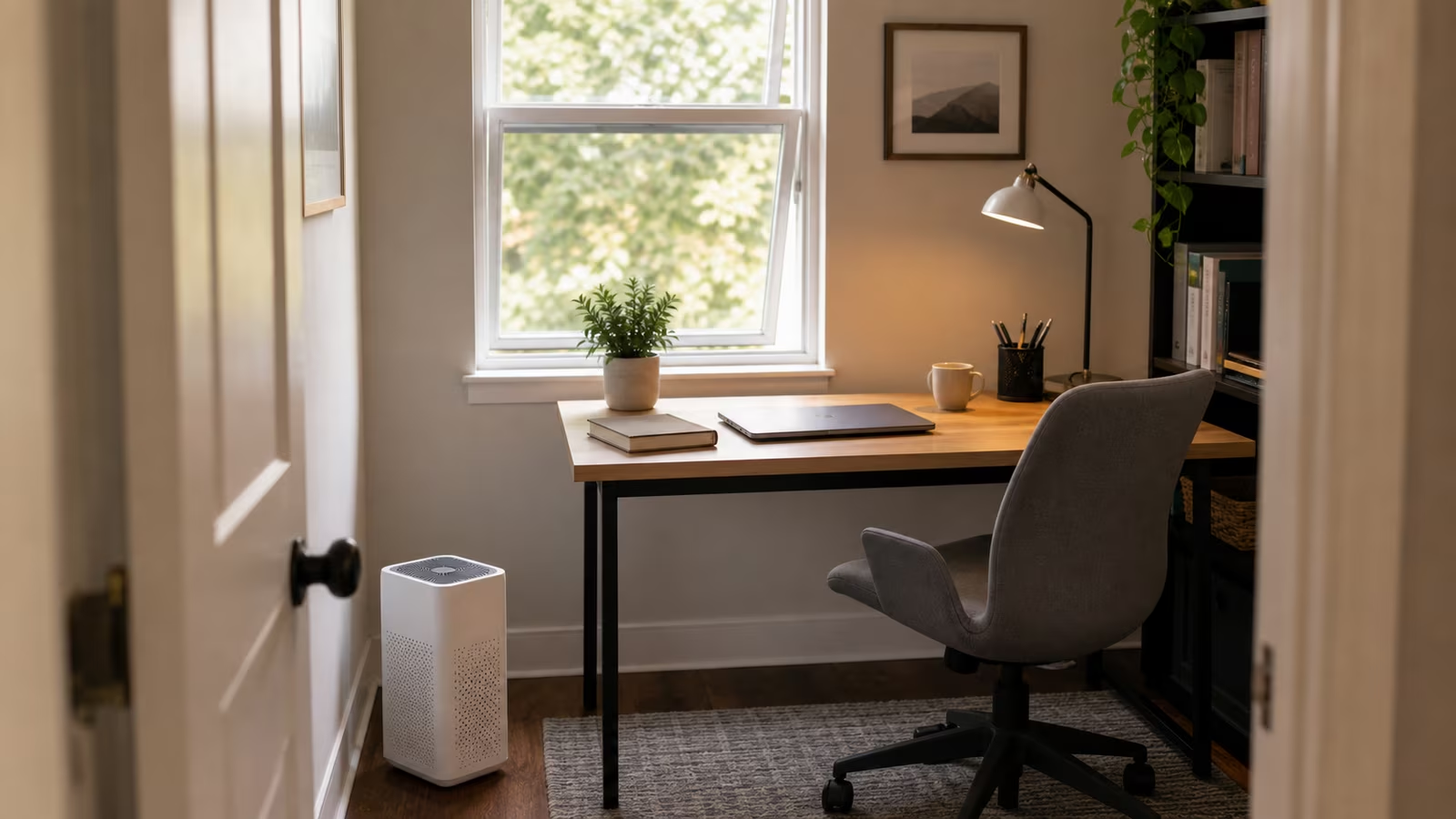
Most of what makes bedroom air feel heavy comes from the simple fact that the door stays closed for hours. Air stops exchanging, and whatever is produced in the room, moisture from breathing, warmth, dust stirred by moving in bed, dander from a pet, a lingering fragrance from laundry or lotion, accumulates in a small volume. It is the same dynamic that a closed home office faces, and the closed-door home-office air guide is a useful companion because it treats the same problem from the daytime side. The bedroom’s version is just longer and quieter, which is why the small setup choices compound over a full night.
The practical consequence is that you should think of the bedroom as a room to prepare before you close the door, not a room to fix while you are trying to sleep in it. A little bit of daytime attention, cracking a window when the outdoor air is good, running a quiet filter, keeping the soft surfaces clean, does more than any nighttime intervention, because by bedtime the room is either already in good shape or it is not.
Start With The Soft-Surface Loop
Bedrooms are dense with fabric, and fabric is where dust, dander, and skin flakes collect and where dust mites feed. Sheets, pillowcases, duvet covers, mattress protectors, and the pillows themselves make up a loop that quietly builds up between washes. The single most effective bedroom air habit is keeping that loop clean on a regular rhythm: washing bedding on a schedule that fits your household, and washing it warm enough to matter, rather than letting it ride for weeks. This is the part of the routine most people underestimate, and it is precisely the part a purifier cannot do for them.
How you clean the rest of the room matters too, because cleaning can either remove dust or just relaunch it into the air you are about to sleep in. Vacuuming that stirs everything up defeats the purpose, so the approach in vacuuming without kicking dust around is worth adopting for the bedroom especially. And a surprising amount of what settles on bedroom surfaces walked in from outside on shoes and clothing, which is why an entryway routine for shoes and outdoor particles quietly reduces what ends up on the nightstand at the far end of the home.
Get The Humidity Into A Comfortable Middle
Humidity is the bedroom variable people most often get wrong in both directions. Too dry, common in winter when heating runs, and the air feels harsh and the throat and nose dry out. Too damp, and you invite condensation on cold walls and windows and the mustiness and mold risk that follow, along with more comfortable conditions for dust mites. The goal is a comfortable middle, and the honest first purchase is a humidity gauge rather than a machine, because guessing at humidity is how people end up running a humidifier that is quietly overshooting.
If the room does run dry enough to justify a humidifier, treat the device itself as something that needs upkeep, because a neglected humidifier becomes its own air problem, spraying whatever is growing in its reservoir into the room. Clean it on a schedule, use it toward a measured target rather than continuously, and turn it off once the gauge sits where you want it. A room that trades dryness for dampness has not improved; it has swapped one problem for a worse one.
Add Fresh Air When The Outside Air Allows
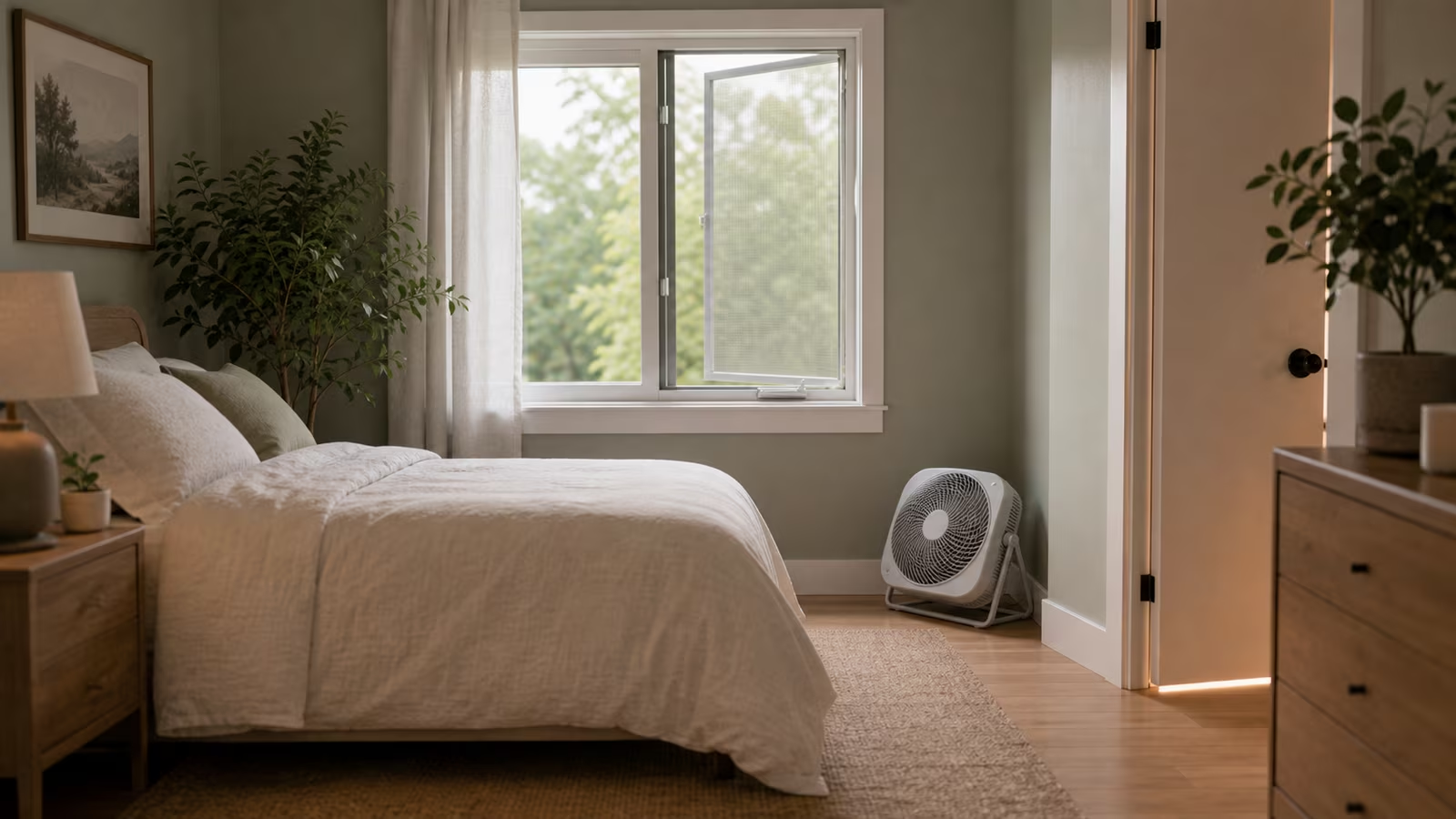
A closed bedroom benefits enormously from a little air exchange, and the cheapest version is simply opening a window for a while when the outdoor air is genuinely good, dry, clean, not full of pollen or traffic or smoke, and airing the room out before bed. This is real ventilation in a way that a fan alone is not; a fan moving air around a sealed room mixes staleness rather than replacing it. On nights when the outdoor air is bad, you do the opposite, keep the window shut and lean on filtration, which is where the last piece comes in.
Size A Quiet Filter For The Sleeping Zone
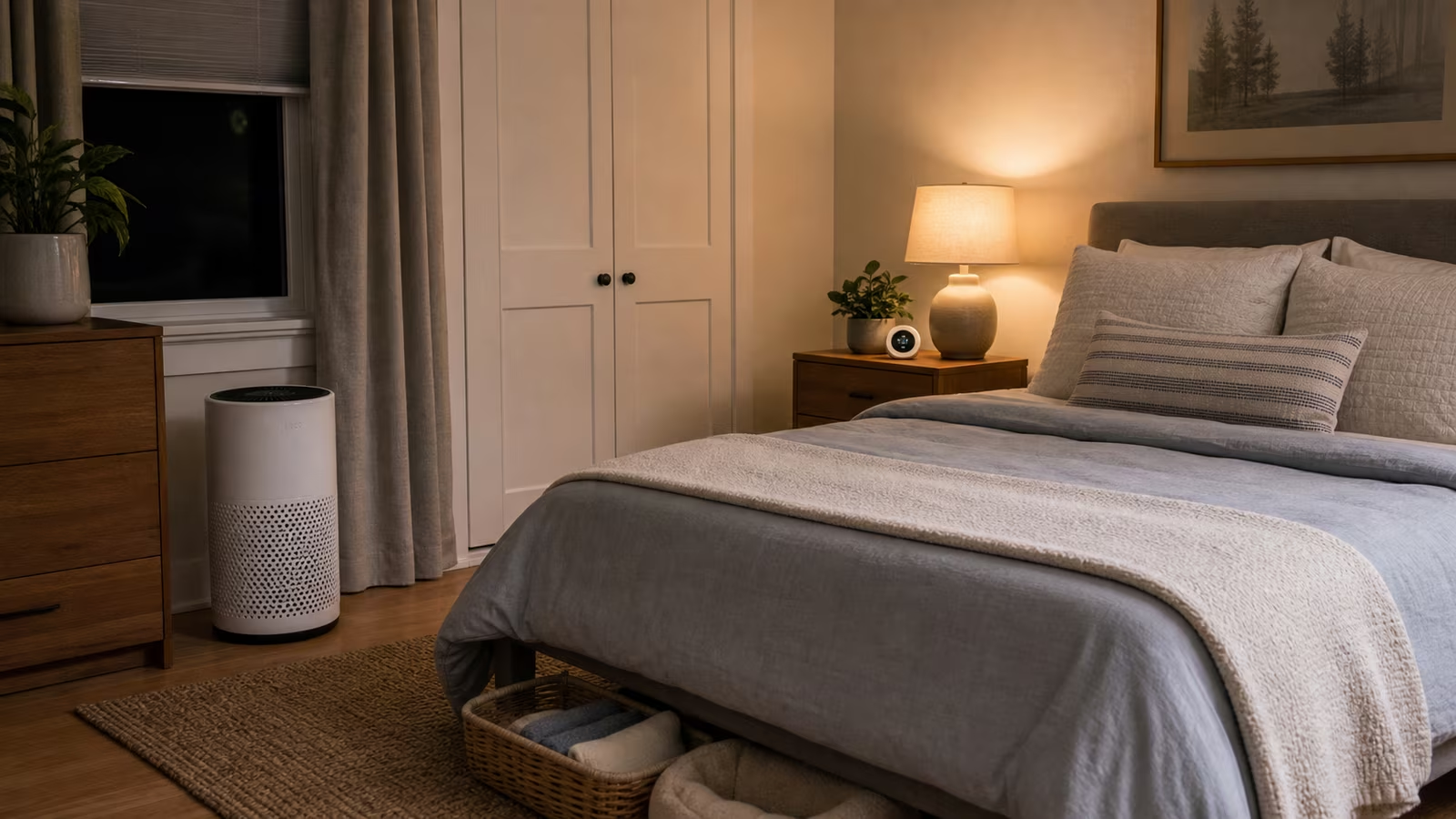
Filtration is genuinely useful in a bedroom, but only if it is sized for the room and quiet enough that you will actually leave it running all night. This is the balance that trips people up: a unit too small for the space does little, while a unit run on its loudest setting to compensate gets switched off within a week. The trick is to choose a machine whose clean-air delivery matches the room at a low, quiet fan speed, so it does its work as a soft background hum rather than a distraction. Placement matters as much as the number on the box; the unit needs clear air around it near where you sleep, not tucked behind a nightstand or buried against a wall.
Because getting that match right is the difference between a filter that helps and one that annoys, the air purifier sizing calculator is the tool worth reaching for here. Enter your actual room dimensions and be realistic about how quiet you need it to be at night, and it will help you aim for a unit that keeps up at a low speed instead of one you have to run loud. If you are unsure about a measurement, use a conservative estimate rather than a hopeful one; a slightly over-sized quiet unit is far more useful than an under-sized one straining on high. Steer clear of anything that cleans air by producing ozone, which is a lung irritant and has no place in a room where you sleep.
Keep The Claims Honest
A cleaner bedroom setup can make a room feel fresher, cut down on the dust and dander you breathe overnight, and remove some of the small irritations that make a room unpleasant. That is a worthwhile outcome, and it is where the honesty has to sit. Cleaner air supports rest; it does not treat insomnia, sleep apnea, or any medical condition, and this guide cannot promise that a bedroom is safe or that better air will resolve how anyone feels. This is practical education, not medical advice. If sleep problems are persistent or serious, or if symptoms seem tied to the room in a way that worries you, that belongs with a clinician rather than a purifier.
Some things also fall entirely outside a bedroom air routine. A gauge and a filter are for ordinary comfort, not for hazards: any sign of carbon monoxide, a gas odor, extensive visible mold, or trouble with a fuel-burning appliance is an emergency to address with alarms and qualified help, not something to sleep next to with a fan running. Make sure a working carbon monoxide alarm is present as a life-safety device, separate from any air-quality gadget, especially in a bedroom near fuel-burning equipment. Within those limits, the boring combination of clean bedding, measured humidity, a little fresh air, and a quiet, well-sized filter is what actually makes a bedroom a calmer place to breathe through the night.