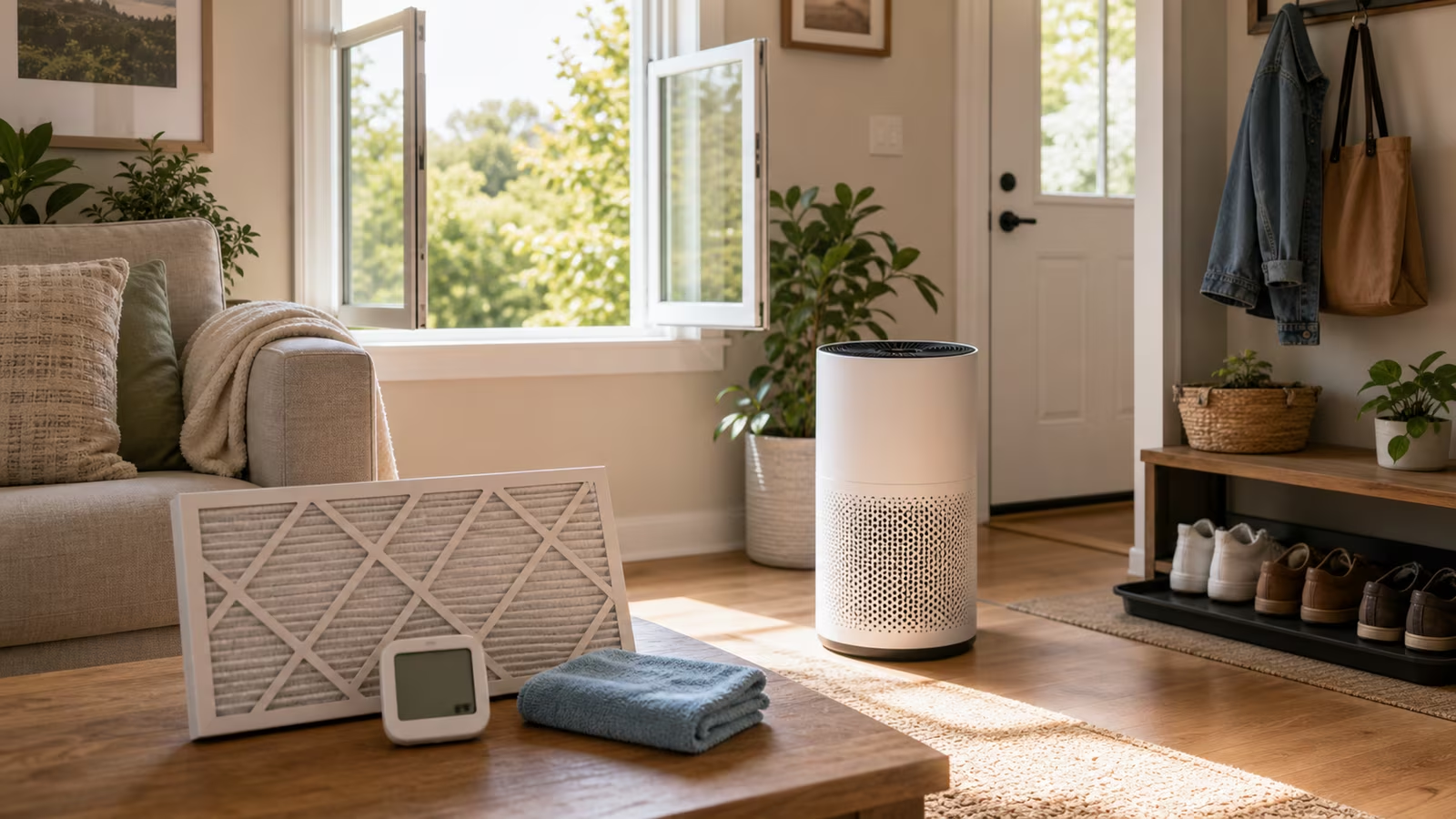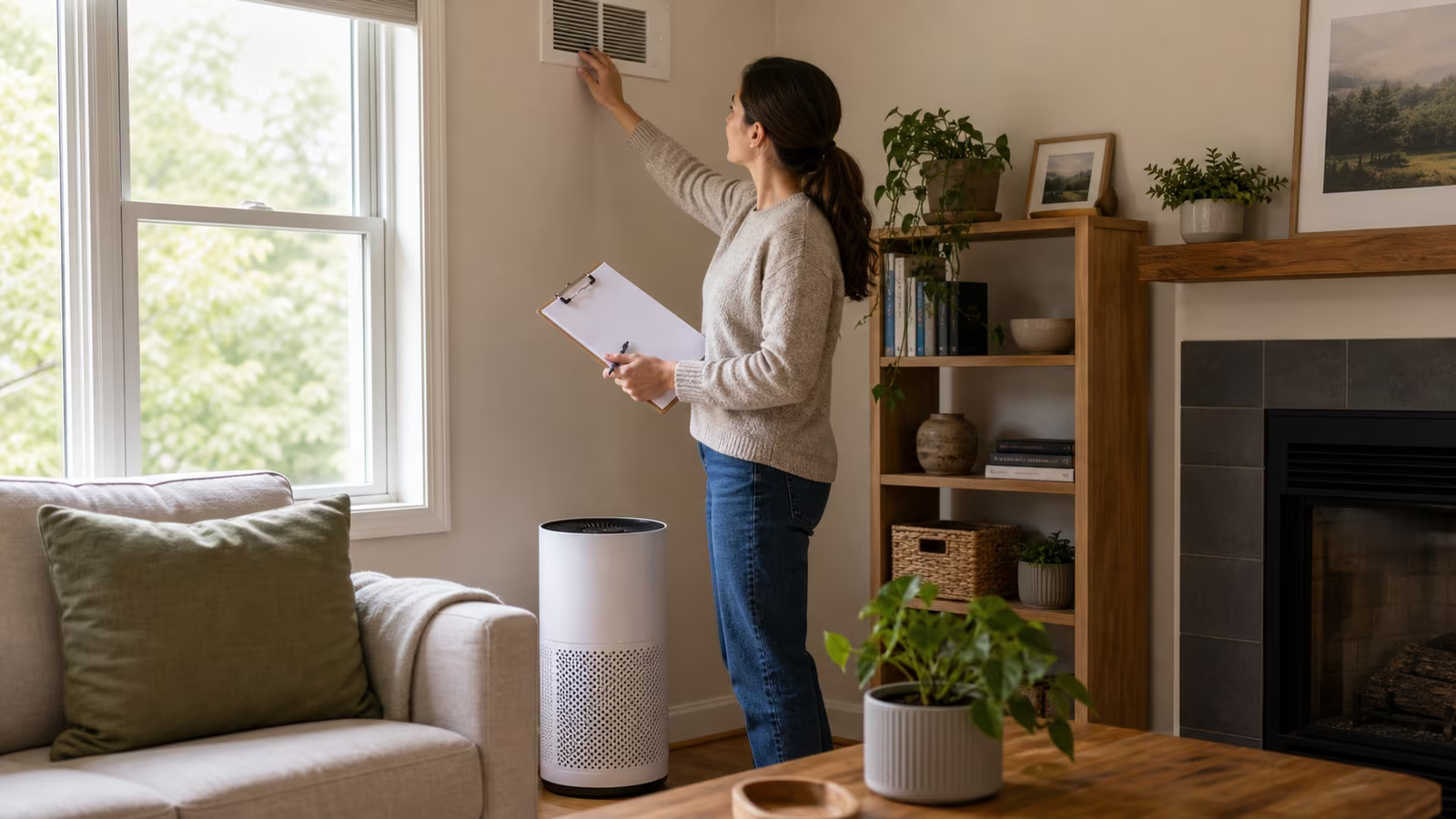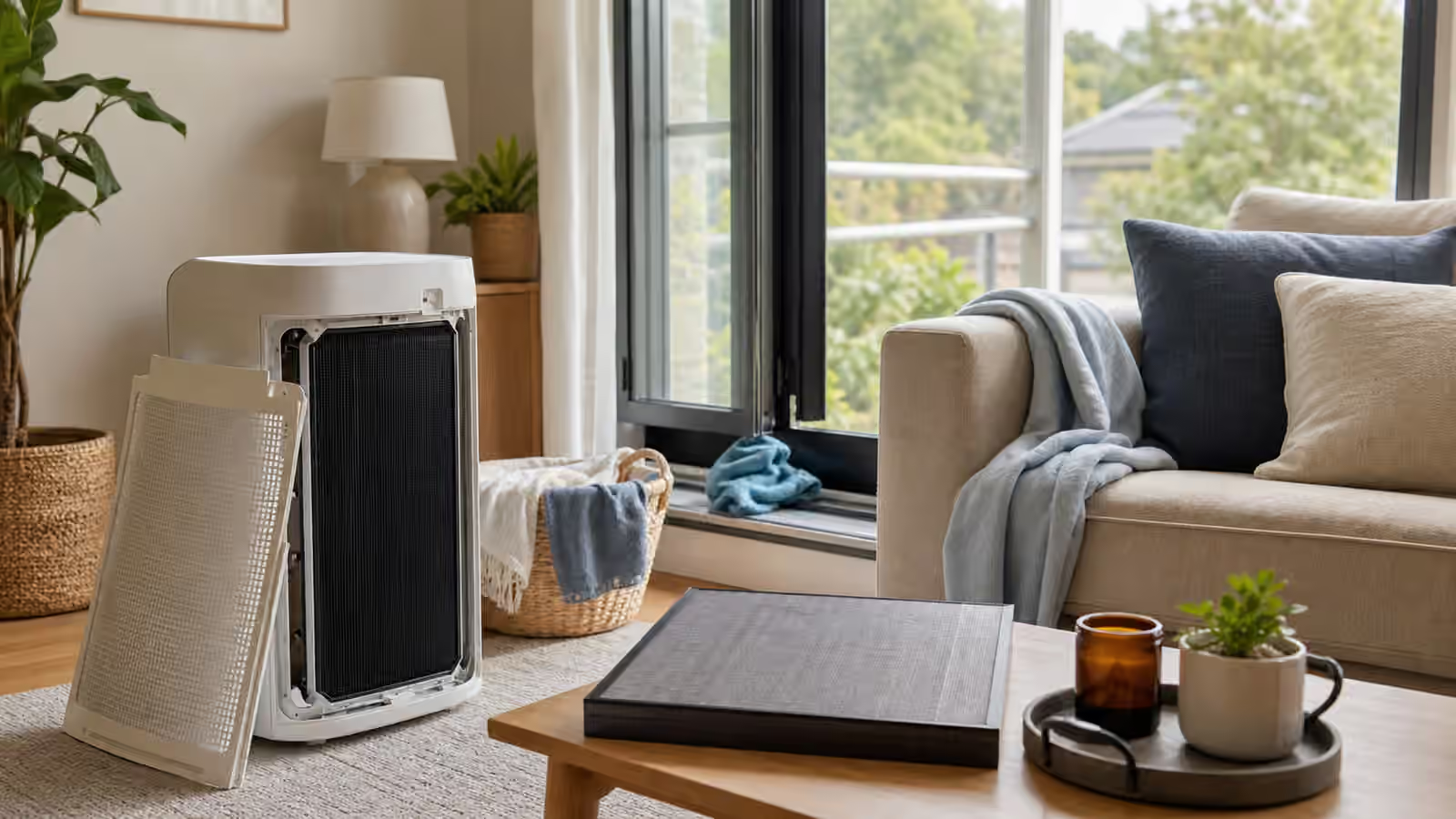
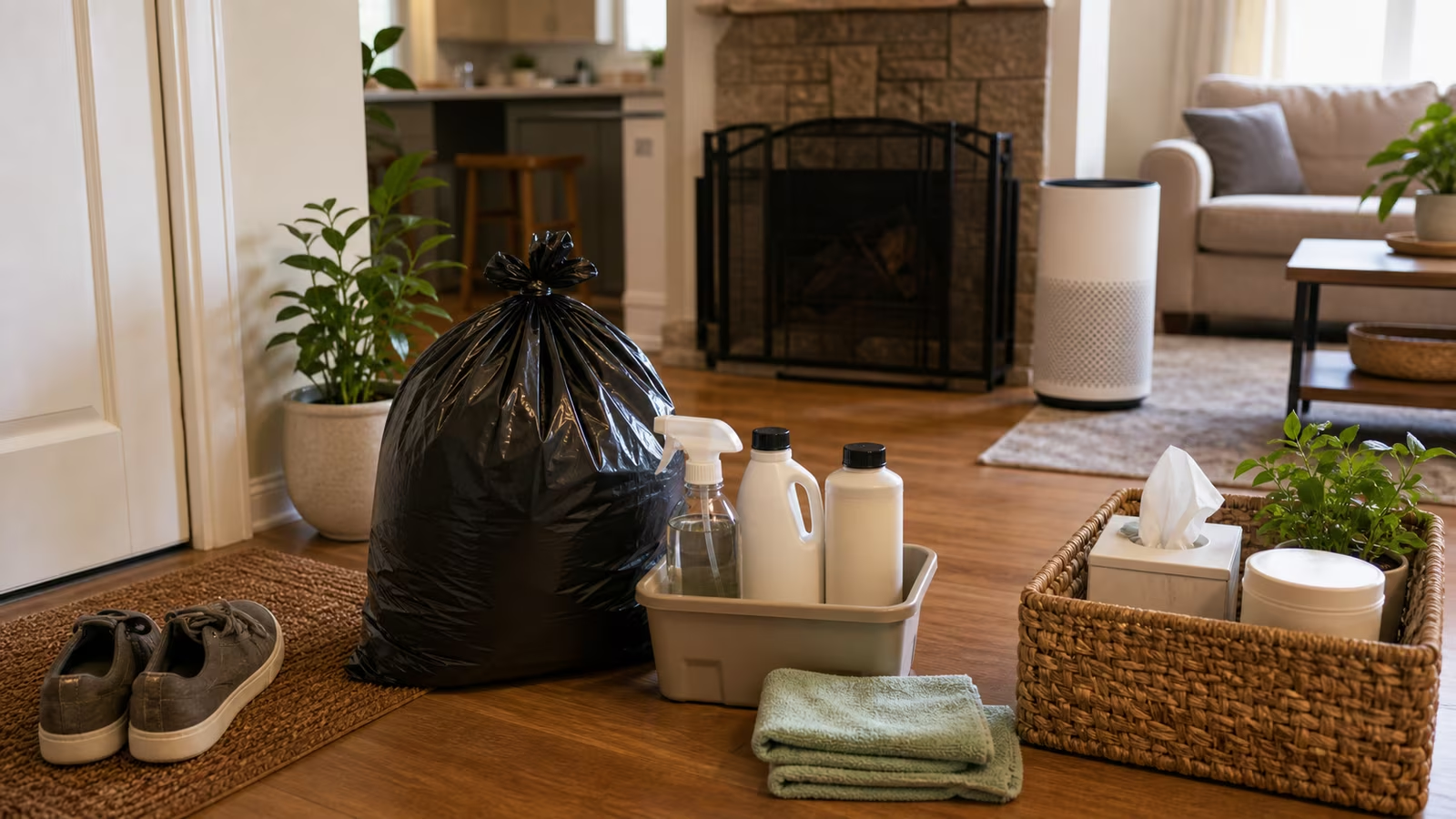
A purifier is a pump with a filter in front of it. It cannot decide what belongs in your air; it can only catch some of what is already there while the fan runs. That distinction sounds obvious, but it quietly explains why so many rooms stay dusty, stuffy, or faintly smoky even after a well-reviewed machine arrives. If the thing making the air dirty keeps making the air dirty, the filter spends its life chasing a supply that never stops. Source control is the unglamorous habit of turning the supply down first, and it is almost always the cheapest, most durable improvement available to a home.
Why The Order Matters
Indoor air agencies describe a hierarchy for a reason, and the reason is arithmetic. Imagine a room where a candle, an aerosol, or a smoldering pan is adding particles minute after minute. A filter removes a percentage of what passes through it per pass, so the room reaches a balance point where the rate of new particles equals the rate the filter clears them. Push the source rate down and that balance point drops immediately, no matter how modest the machine. Leave the source running and even a strong unit settles at a disappointing plateau. This is why a small change at the source often beats a large purchase at the outlet. You are not adding removal capacity; you are subtracting the thing that made removal capacity necessary.
Source control also outlasts everything else in the chain. Filters clog, fans get unplugged when the noise annoys someone, and windows close when the weather turns. A source you have genuinely removed does not come back on its own. Deciding not to burn incense in a small bedroom, moving a litter box out of a tight bathroom, or storing solvents in a sealed cabinet keeps working while you sleep, travel, or forget to run the purifier. It is the one layer that does not depend on a device staying powered and maintained.
Naming What The Room Actually Produces
Start by separating what enters the room from outside from what the room manufactures on its own. Outdoor entry means pollen through a screen, traffic exhaust near a busy street, wildfire smoke on a bad-air day, or humid air that arrives with the season. Indoor production means cooking, candles and incense, fragranced sprays, cleaning chemicals, cigarette or vape aerosol, shedding pets, dusty textiles, printers and hobby materials, and damp cardboard or storage that has started to smell. The two categories call for different moves: outdoor entry is a question of when to open and when to seal, while indoor production is a question of what to stop, exhaust, or reschedule.
Walk the room slowly with this frame in mind. A living room with candles on the mantel, an open cleaning caddy under the sink, and a rug that visibly puffs when someone crosses it is not a filtration problem first. It is three sources you can address before a machine ever runs. Write down what you find rather than trusting memory, because the point of the list is to rank the sources by how easily each can be reduced, not to feel guilty about any of them.
The Verbs Of Source Control
Every source responds to one of a small set of actions: stop it, move it, contain it, exhaust it, clean it, or reschedule it. Stopping is best when the source is optional, like switching off a scented plug-in or skipping the aerosol. Moving works when a source does not need to be where it is, such as relocating a printer out of a closed office or a drying rack out of a small bedroom. Containing means a lid, a sealed bin, or a closed cabinet for chemicals and damp materials. Exhausting sends the pollutant outdoors at the moment it is made, which is what a range hood and a bathroom fan are for. Cleaning reduces the reservoir of settled dust and dander that gets stirred back up with every footstep. Rescheduling shifts a source to a better time, like cooking a smoky dish when you can open a window and run the hood rather than in a sealed apartment at midnight.
Most rooms improve fastest when you pick the single easiest verb for the single largest source, do only that, and watch for a few days. Changing everything at once feels productive but destroys your ability to learn which move mattered, and learning is what makes the next room easier.
Where Filtration Earns Its Place
None of this means a purifier is pointless. After you have reduced the sources you reasonably can, a residue always remains: the dust you cannot fully eliminate, the pet dander from an animal that is part of the family, the smoke drifting in on a wildfire day when opening windows is not an option. That residue is exactly what filtration is good at, and it is where a well-placed, correctly sized machine does real work. The mindset shift is simply sequence. Filtration is the last layer that cleans up what is left, not the first layer that excuses everything upstream of it. When you reach that step, the purifier placement planner can help you decide where the unit should sit and how large it needs to be for the room, so the capacity you buy is the capacity the air can actually reach.
Common Ways The Order Gets Skipped
The most common mistake is treating smell as the whole story and reaching for fragrance to fix it. A scented spray does not remove the source; it adds a second set of compounds on top of the first while masking the clue that told you something needed attention. A second mistake is buying for the largest advertised room and assuming the number on the box settles the matter, when noise tolerance, filter cost, and placement decide whether the machine ever runs at a useful speed. A third is forgetting that a filter is a consumable: an overloaded cartridge quietly stops helping, and a unit with pricey replacements often ends up switched off. And a fourth is category confusion, expecting a particle filter to handle a gas leak, a moisture problem, or a carbon monoxide risk it was never built to touch.
A Sane First Pass
If you want a concrete starting sequence, it looks like this in prose rather than a checklist. Reduce the one source that is easiest to reduce today. Give the room a cleaner path for air, whether that is a window on a good-air day, a fan that vents outdoors, or your central system’s fan moving air through a snug filter. Then, and only then, add filtration for the residue in the space where people actually spend time. Finally, write down a short rhythm so the improvement survives past the first enthusiastic week: a filter date taped where you will see it, a cleaning cadence for the textiles that shed dust, and a note about which weather days call for windows open versus sealed.
The Honest Boundary
Source control is powerful, but it has an edge where do-it-yourself judgment should stop. Some sources are not household nuisances to manage; they are hazards to escalate. A carbon monoxide alarm, a suspected gas or fuel-burning appliance problem, extensive visible mold, sewage, a chemical spill, or fire damage all belong to alarms, official testing, and qualified professionals rather than to a purifier or a can of spray. Clean Air Society is practical education, not medical advice, diagnosis, remediation, or a guarantee that a room is safe. Follow local public health guidance during smoke, carbon monoxide, mold, chemical, radon, or building-safety issues, and treat filtration as the helpful last step it is, after the sources have been given their due. For a room-by-room way to practice this eye, the clean air room walkthrough and the smoke day indoor plan are natural next reads.