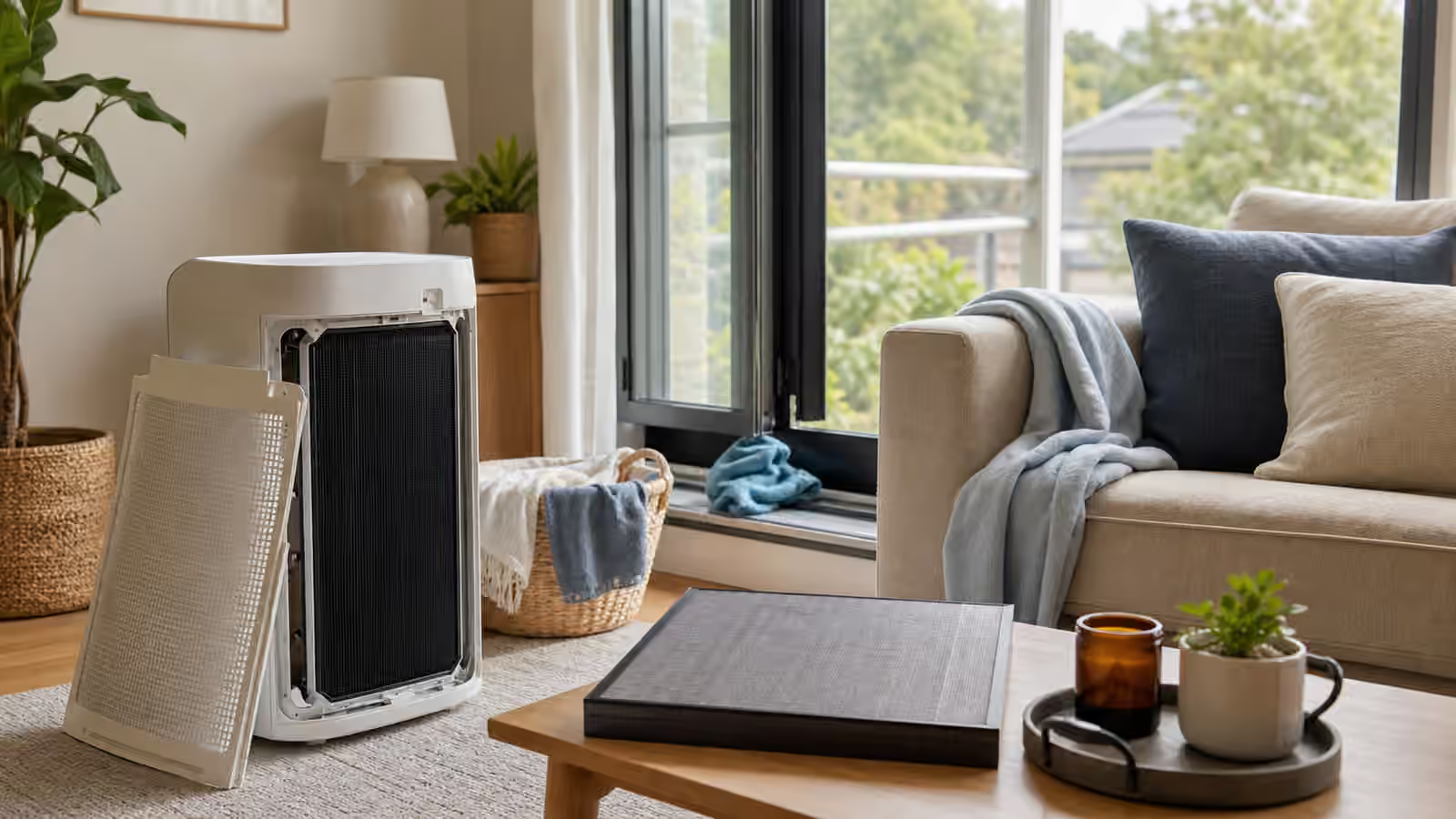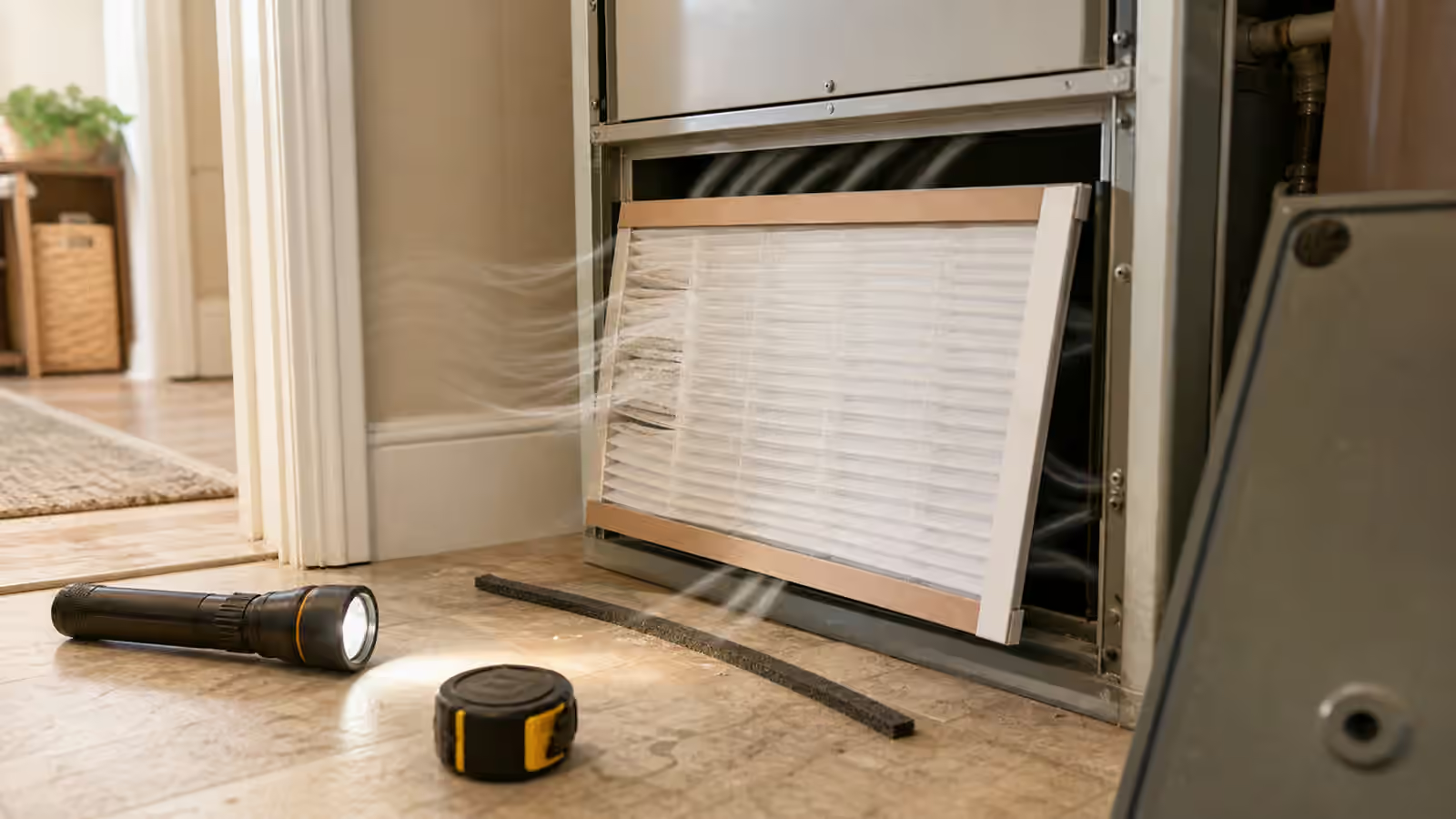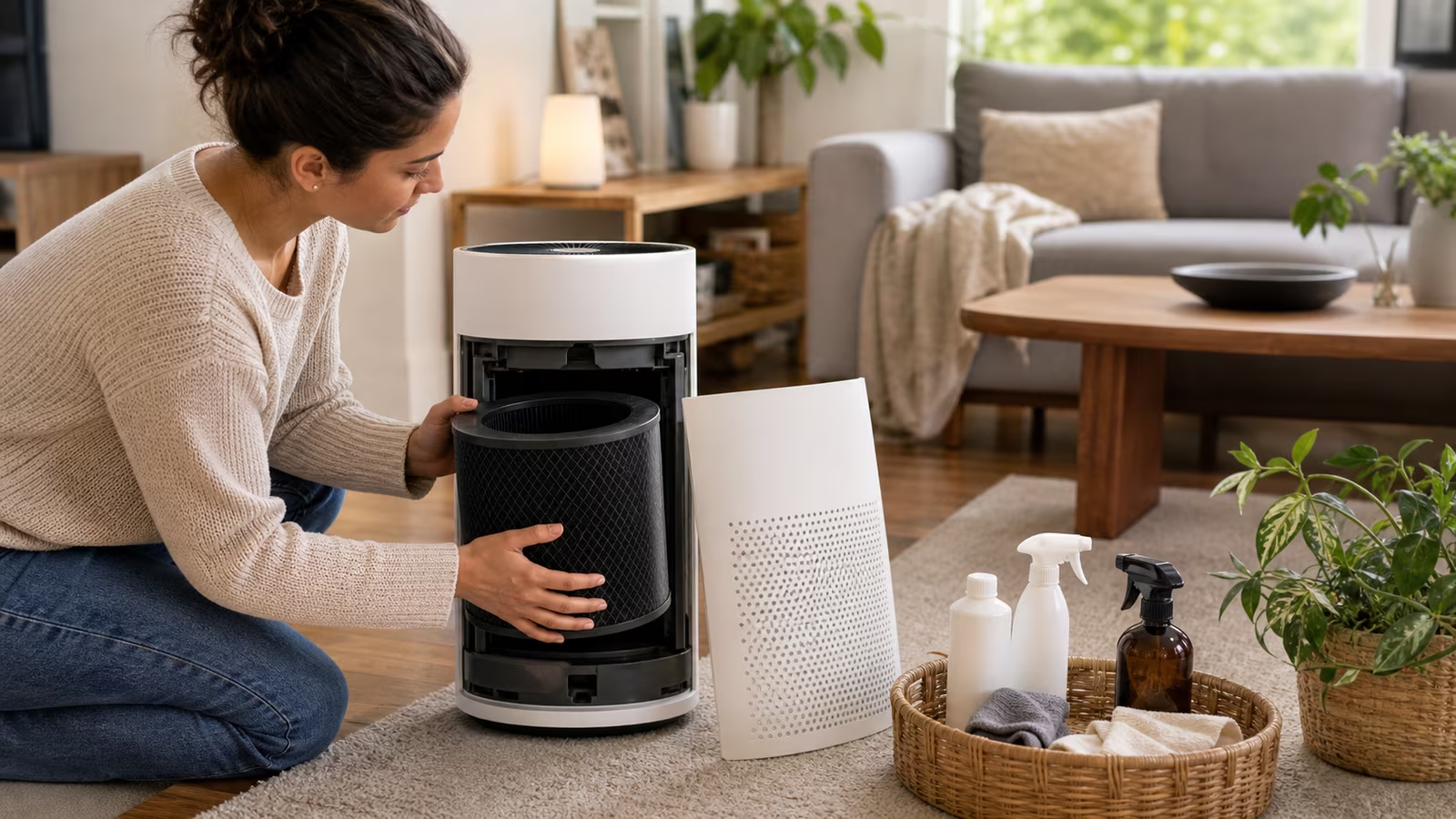
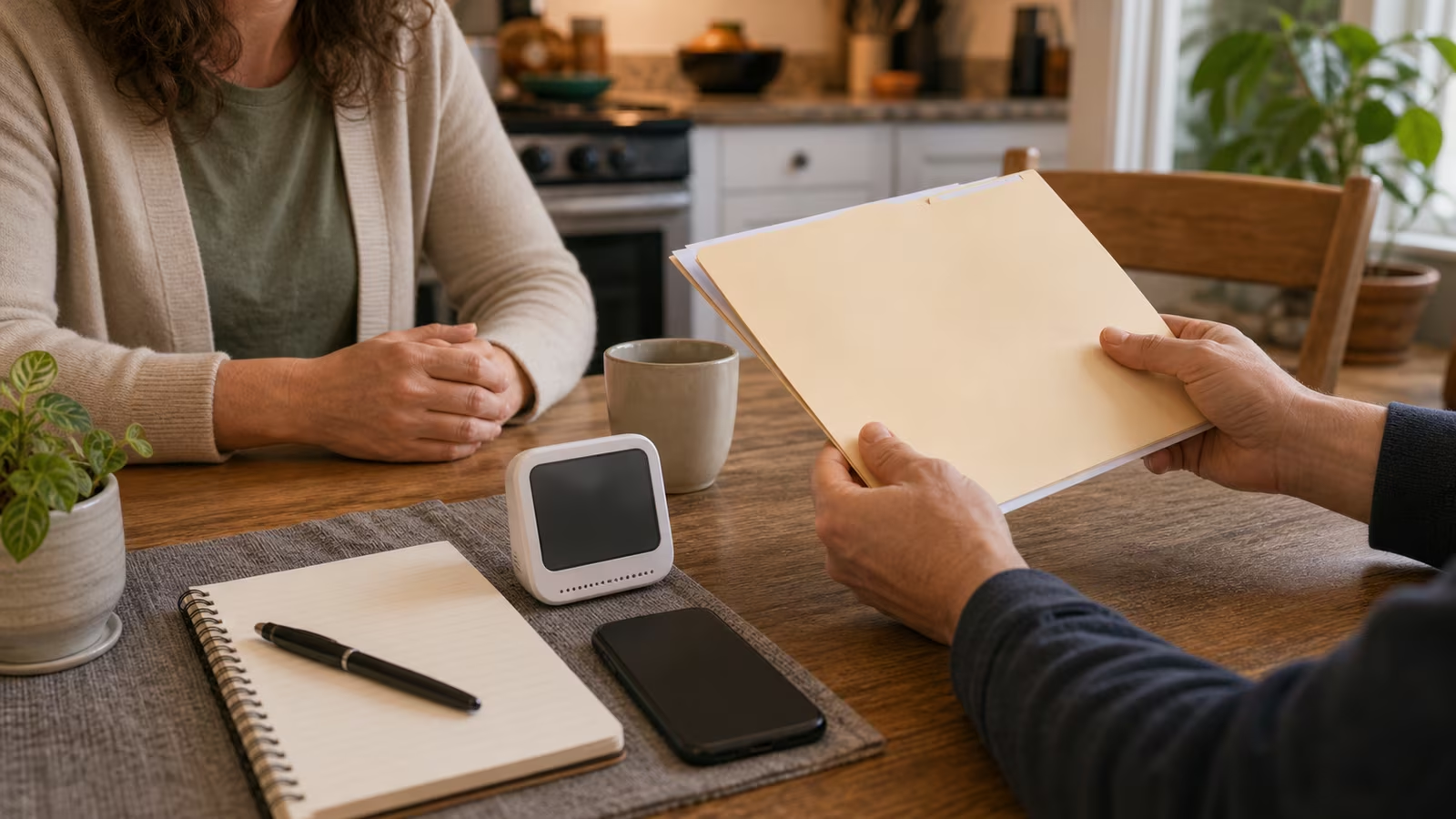
There is a moment when clean-air work quietly changes character. Up to that point you have been managing comfort and nuisance: a stuffy office, a dusty rug, a kitchen that holds last night’s cooking. Then someone in the home starts to feel it in their body, a cough that lingers in one room, a headache that lifts when they step outside, a tight chest at night, and the question stops being about tidiness. This guide is about that line. It is not a way to name what is wrong with a person, because a guidebook cannot do that and should not try. It is a way to notice when the honest next step is a phone call rather than another gadget.
Symptoms Are Signals, Not Verdicts
The uncomfortable truth is that the same symptom can point in many directions. A cough might trace to dry winter air, to a dusty return vent, to a cold, to pollen season, or to something that has nothing to do with the room at all. A headache might follow a stuffy closed-door afternoon, or it might not. This is exactly why a guidebook has no business telling anyone what their symptoms mean. What a careful reader can do is treat symptoms as information about timing and place, and then decide whether that information belongs to a clinician, to a safety device, or to ordinary air housekeeping.
The most useful thing you can bring to a doctor, and the most useful thing you can bring to your own decisions, is a plain record. Not a diagnosis, just observations. When does the feeling appear and when does it fade. Which room, which time of day, which season. Does it change when a window opens, when the heat runs, when the house is full of people, when you leave for a weekend. A short, dated note is worth more than a confident guess, because it turns a vague worry into a pattern that someone qualified can actually work with.
The Signals That Skip The Housekeeping Step Entirely
Some symptoms should never be routed through a purifier or a cleaning routine, because they can indicate an immediate hazard. Headache, dizziness, nausea, confusion, or unusual sleepiness that affects more than one person in the home, or that eases when everyone goes outside and returns when they come back in, is the classic pattern that points toward carbon monoxide, and carbon monoxide is a job for a working alarm and, if it sounds, fresh air and emergency help, not for a filter. A gas odor, a fuel or exhaust smell near a furnace or water heater, or soot around a combustion appliance is the same category. These are not air-quality projects to optimize; they are reasons to stop, get people to safety, and call the appropriate professional or emergency line. No consumer purifier or general air monitor substitutes for a certified alarm here.
Breathing symptoms deserve their own caution. Genuine shortness of breath, wheezing that is new or worsening, chest tightness, or an asthma flare that is not responding the way it usually does are medical situations. The right move is a clinician, and in an emergency, emergency care. Clean-air habits can be part of a long-term plan a doctor helps you build, but they are never a stand-in for medical treatment, and no room adjustment should delay care that a person actually needs.
Where Ordinary Air Work Still Belongs
Between the reassuringly minor and the genuinely urgent sits a wide middle, and this is where practical clean-air habits earn their keep. If a room feels stuffy and heavy-headed by mid-afternoon with the door closed, that is often a ventilation story, and it is one you can investigate. Rising carbon dioxide from people breathing in a sealed room is not directly harmful at typical indoor levels, but it is a reliable marker that the room is not exchanging much air, and stuffiness tends to track it. The ventilation and CO2 helper gives you a structured way to think about whether a room is getting enough fresh air and what to change first, whether that is cracking a window on a good-air day, running an exhaust fan, or letting the central fan circulate. Treat the output as a next observation, not a diagnosis of anyone’s health.
The same middle ground covers the familiar irritants: dust stirred up by cleaning, dander in a home with pets, fragrance from sprays and candles, cooking smoke, and drifting pollen or wildfire smoke from outdoors. Reducing those sources and filtering the residue is legitimate, useful work, and it may well make a room more comfortable to be in. What it cannot do is prove that a room is safe or resolve a symptom whose cause you have not actually identified. Comfort improving is good news; it is not the same as a health problem being solved.
Keeping The Story Honest
The temptation, when someone you care about feels unwell, is to reach for certainty and buy it. A machine with an impressive display promises exactly that, and it is easy to read a falling number as proof that the air, and therefore the person, is fine now. Monitors are genuinely helpful for spotting trends and timing, but they measure a narrow slice of the air and cannot see everything, and a good reading is not a clean bill of health. Overclaiming to yourself is its own kind of risk, because it can quietly talk you out of a call you should make.
So hold two ideas at once. Do the ordinary air work well, because much of the time it helps and it rarely hurts. And keep the boundary bright, because some situations are not yours to manage from a guidebook. The skill this page is really teaching is the discipline of noticing which situation you are in before you decide what to do.
The Boundary, Stated Plainly
Stop do-it-yourself air guessing and escalate when there is a carbon monoxide alarm or the symptoms that suggest it, a fuel-burning appliance that smells or behaves wrong, extensive visible mold, sewage, a chemical spill, fire damage, or building damage. Stop and seek care when breathing symptoms are serious, new, or worsening, or when anyone is in distress. In those moments the practical moves are alarms, official testing, dated notes, and qualified help, not another filter.
Clean Air Society is practical education, not medical advice, diagnosis, remediation, or a guarantee that a room is safe. Symptoms have many possible causes, and this guide does not identify any of them; a clinician does that. Follow local public health guidance during smoke, carbon monoxide, mold, chemical, radon, or building-safety issues. For the everyday, lower-stakes side of the work, the budget clean air plan and allergy-friendly cleaning without medical claims keep the same honest tone while you handle the parts that are genuinely yours to handle.