There is a reason opening a window feels like the honest, wholesome thing to do. It is the oldest air move we have, it costs nothing, and the rush of outside air carries an instant sense of relief. That very simplicity is the trap. A window is not a source of fresh air; it is a hole between two bodies of air, and it moves whichever one has the advantage. On the right morning it flushes out a stale bedroom and drops the sense of a sealed-up house. On the wrong afternoon it invites in a neighbor’s smoke, a wave of pollen, the fine grime off a busy street, or a load of humidity that will sit in your fabrics for a day. The whole skill lies in one question asked before the sash goes up: is the air out there actually better than the air in here, right now?
A Window Is A Switch, Not A Setting
The most useful reframe is to stop thinking of a window as something you leave open and start thinking of it as something you turn on and off. Ventilation earns its keep only when the incoming air improves the room, a point the guide to ventilation basics for stale rooms builds its whole logic around. A window makes that logic visible, and visibility can fool you into trusting it more than it deserves. The cracked window that saved a stuffy bedroom at seven in the morning is the same cracked window that lets grass pollen drift onto the pillows at noon.
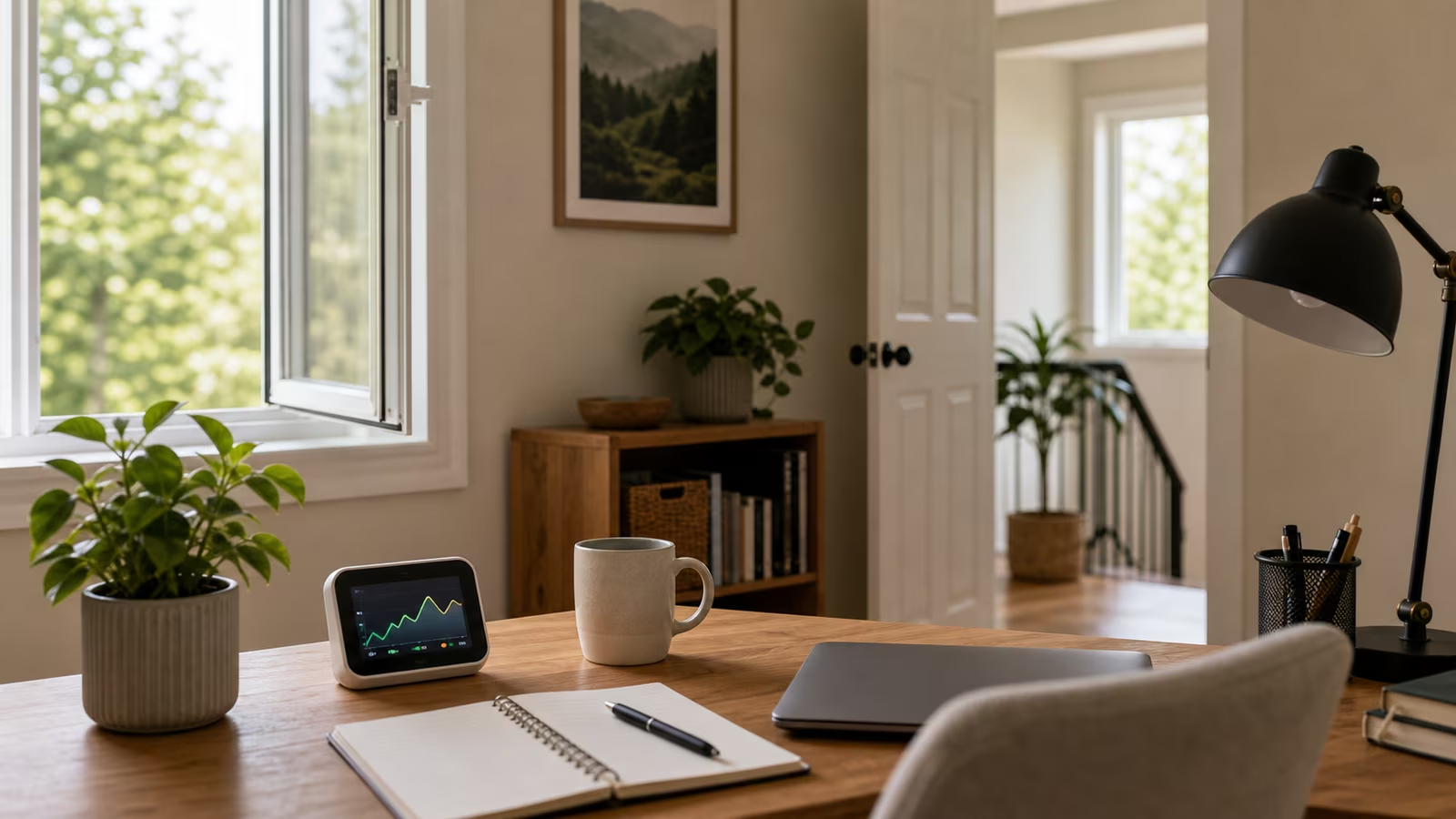
Timing, in other words, beats gesture. A short, deliberate airing done when conditions are good will do more for a room than a window left ajar all day while the outdoors quietly turns against you. When you want to reason through whether this hour is one of the good ones, the Ventilation and CO2 Helper gives you a way to weigh a stale room against the current outdoor picture instead of relying on the feeling that fresh air is always the answer. Some hours it is. Some hours the better clean-air move is to keep the window shut and let filtration carry the room.
Air Needs A Route, Not Just An Exit
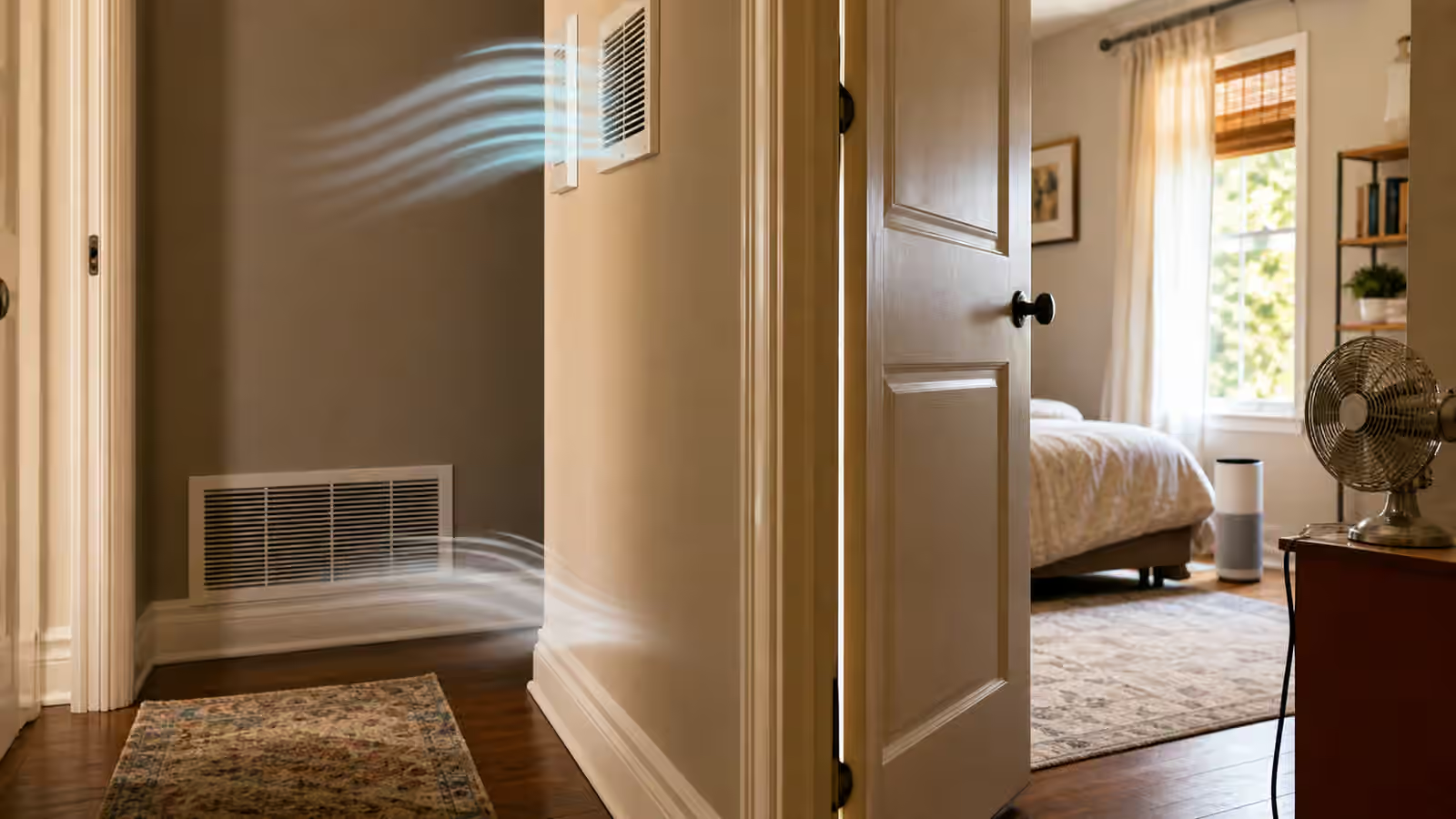
One open window in a still room barely stirs the air. Ventilation is about a path, and a path needs at least two things: an opening where air comes in and a way for air to leave, helped along by a breeze, a temperature difference, or a second window on a different wall. When you create that path on purpose, stale air actually leaves and cleaner air actually arrives. But a path is neutral about where it draws from, and that is where homes surprise people. Open a single kitchen window in an apartment and the makeup air may not come from outside at all; it may be pulled from the hallway, under the front door, out of a closet that smells of damp, or across the seam of a shared wall.
This is why the same open window can help one room and quietly foul another. A bedroom window may pull its incoming air across a litter box or a drying rack before it ever reaches the bed. A bathroom exhaust fan running at the same time may be quietly stealing the makeup air out from under the door rather than through the window you opened for it. Once you start looking for the route instead of the opening, these puzzles resolve. The guide to return paths, closed doors, and room pressure is the companion for the moment a window changes how the whole room behaves.
Outdoor Air Does Not Get A Single Grade
People tend to sort outdoor air into fresh or foul, but real outdoor air carries several scores at once, and they rarely agree. The air can be clean of particles yet so humid that opening up loads moisture into a closet or a basement-adjacent room. It can be crisp and dry and still thick with pollen. It can smell perfectly fine at street level while carrying more traffic particles than you would want a few steps from a busy road. It can be acceptable for a living room and a poor trade for a bedroom full of bedding during a pollen peak. No single instinct covers all of that, which is why the particle side of the decision belongs to the framing in PM2.5, AQI, and indoor decisions .
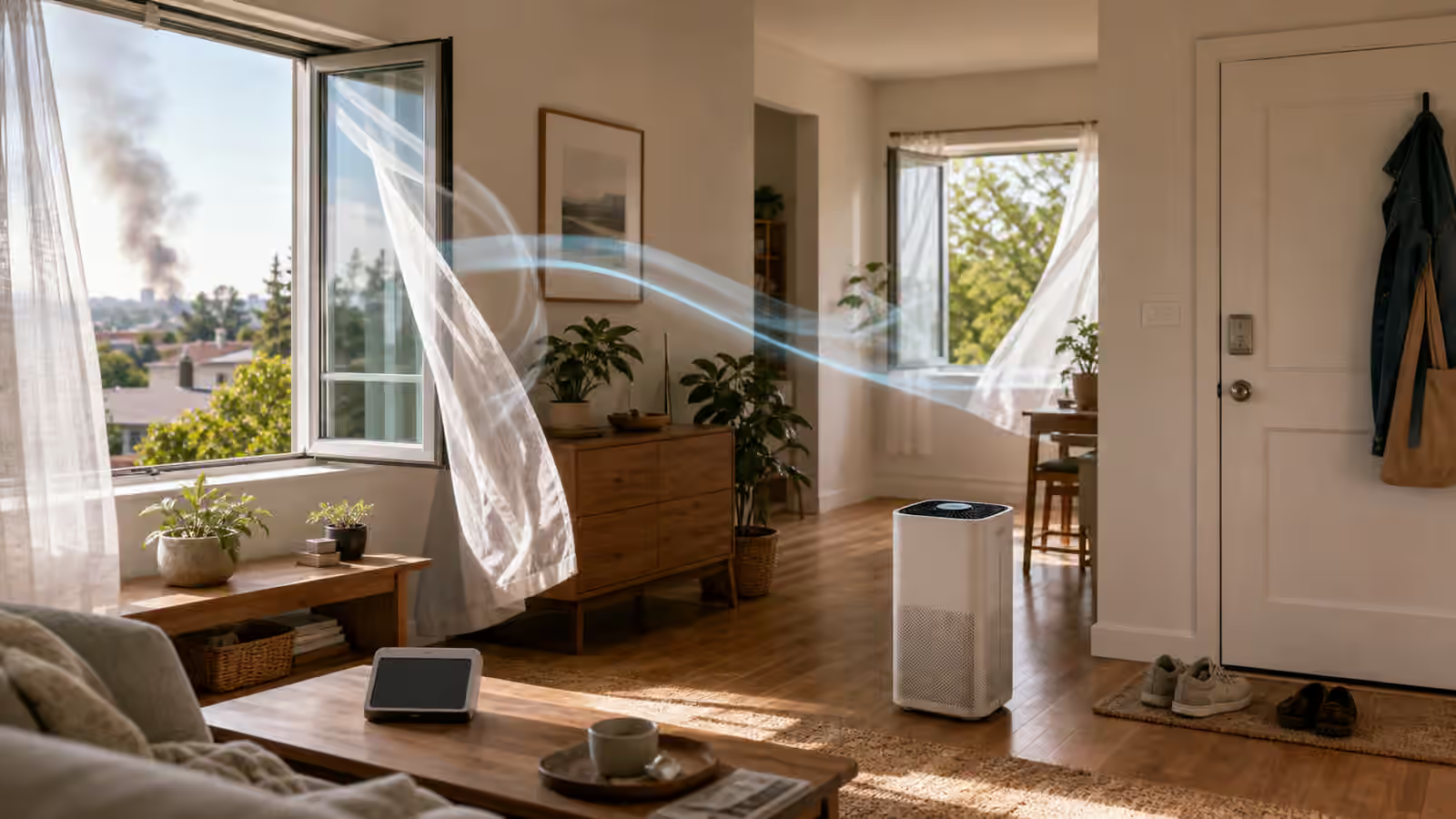
Smoke is the case where the strategy inverts entirely. During a wildfire or a nearby fire, the reflex to air out the house is exactly wrong, and window opening should follow local public health guidance and your household’s needs rather than a general habit. Pollen season asks for a different discipline: the outdoor count matters, but so does the fact that pollen rides in on screens, sills, clothing, hair, and pets and then settles into the room long after the window is closed. Humid weather asks you to weigh the lift in mood against the moisture you may be inviting into the materials that hold it longest.
Give Every Airing A Start And A Finish
The best window habits are bounded ones. You open for a reason, you watch the room respond, and you close when the reason is served or the trade turns against you. A morning bedroom airing runs while the bedding is turned back and the outdoor air is mild, then ends. A post-cooking reset happens after the range hood has already handled the worst of the grease particles and the outdoor air is worth having, not during the searing itself. A workroom clears between calls, not during the long meeting when the room is filling back up with every breath.
Leaving a window open as a permanent flag of freshness tends to quietly cost you. Screens accumulate dust that every breeze then carries inward. Sills gather pollen and street grime. Curtains turn into reservoirs. Outdoor humidity settles into upholstery and stays. And if a purifier is running the whole time, a wide-open window can hand it a steady incoming stream of outdoor particles to fight, which is not a fair contest. None of this is an argument against windows. It is an argument for treating them as the adjustable tool they are.
The Last Few Feet Outside The Glass
Before outdoor air becomes room air, it passes through the narrow zone right at the opening, and that zone has its own character. A dusty screen, a track spotted with mildew, a damp curtain, a smoking neighbor on the balcony below, an idling car, a grill, a dumpster, a dryer vent, or a flowering tree can each rewrite the result. A room that feels worse after airing has often not met the general outdoors at all; it has met the few feet just beyond the sash. This is where a two-minute look beats any purchase. Notice what your particular window faces and whether one window in the home is the one that always smells smoky when it is open. That window is telling you something specific. When the trouble persists even with everything shut, the guide to leaky windows, doors, and outdoor air takes over.
Windows And Purifiers Take Turns
Filtration and window opening are not rivals, but they do not work well at the same instant. A purifier cleans the air that stays in the room long enough to pass through it, and a wide-open window can swap out that air faster than the machine can process it, especially when outdoor particles are riding the exchange. So they trade shifts. On a genuinely good outdoor-air day, ventilation leads and the purifier can rest or idle. On a smoke or heavy-pollen day, the room closes and filtration leads. In between sits the reasonable middle move: a short, deliberate airing followed by a closed window and a purifier running where people actually sit. Do not park the purifier in the window draft and assume that counts as cleaning the room; keep its intake and outlet clear, and when a real source is at work, deal with the source rather than asking one small machine to out-argue both the source and the open window.
Keep It Ordinary, And Know The Edge
A window strategy only helps if it is plain enough to repeat without ceremony. Check the outdoor conditions when they matter. Open when the outside genuinely improves the inside. Build a real path when you want exchange rather than symbolism. Close against smoke, pollen, humidity, traffic, noise, or shared-building air whenever the trade goes poor, and clean the window zone because everything you let in has to pass through it. A window is neither a cure nor a mistake by default; it is a movable boundary between your room and the world, and reading it well is most of the skill.
One honest boundary belongs at the end of all this. Working your windows thoughtfully is practical air-quality education, not medical advice, and no amount of good timing can guarantee a room is safe. If you are dealing with a carbon monoxide worry, visible mold, a chemical spill, radon, or anything that looks like a building-safety problem, that is the point to stop optimizing airflow and call the appropriate professional. For the everyday work of a stale bedroom, a pollen morning, or a stuffy afternoon, an intentional window and a calm habit are usually all the strategy a room needs.