City Water vs Well Water: Why the Starting Point Changes Everything
A plain-language guide to the responsibility split between public water systems and private wells, and why testing plans differ.
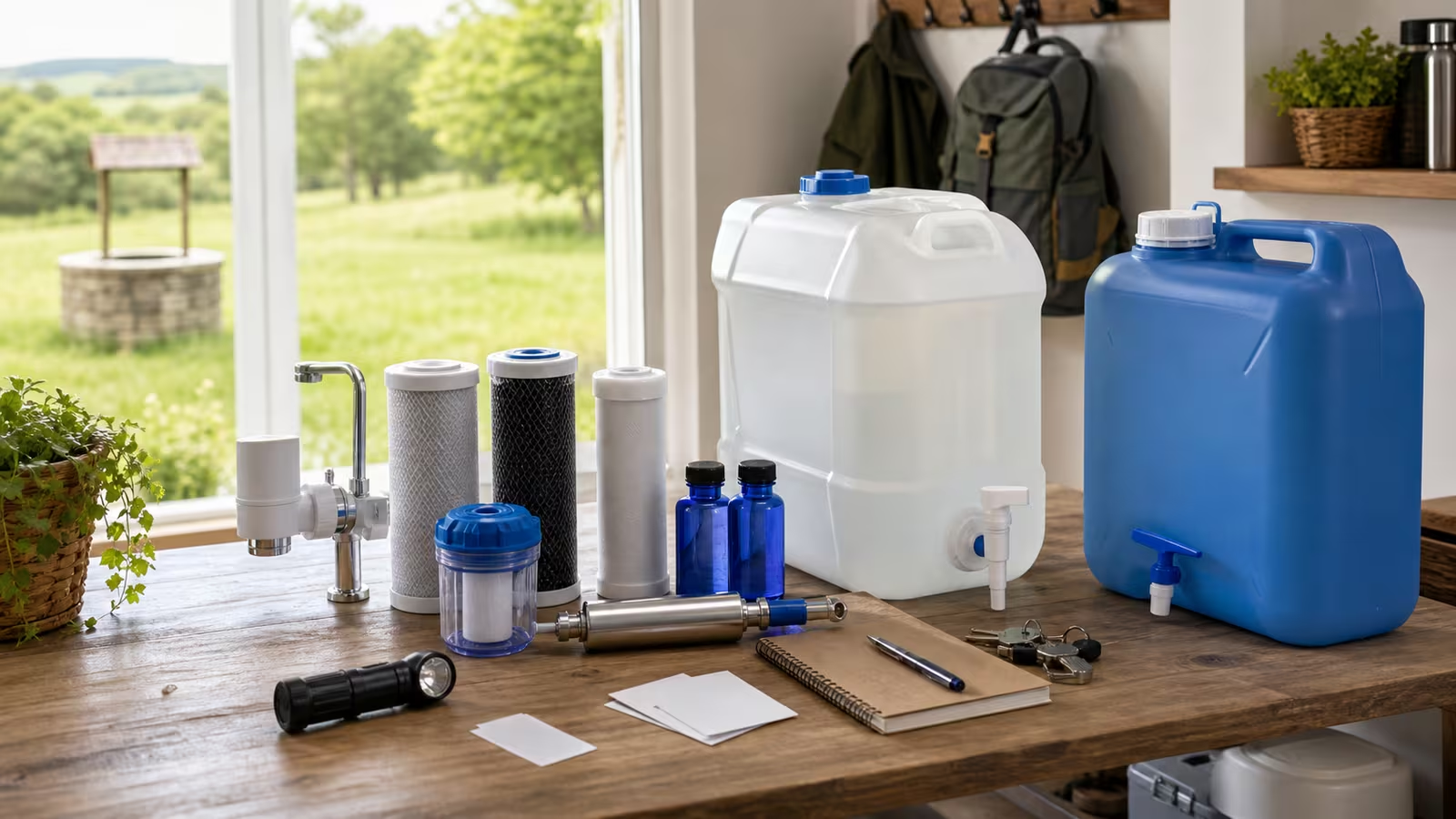
City water and private well water come with different responsibilities. In the United States, public water systems monitor under drinking water rules, while private well owners generally arrange their own testing and maintenance. The water may look the same in a glass, but the starting point for a question is different.
Heads up
Water safety boundary
Clear Water Lab helps with everyday water decisions, reports, testing, certification checks, and maintenance. It is not medical advice, legal advice, or a substitute for local boil-water notices, certified lab results, utility instructions, or health department guidance.
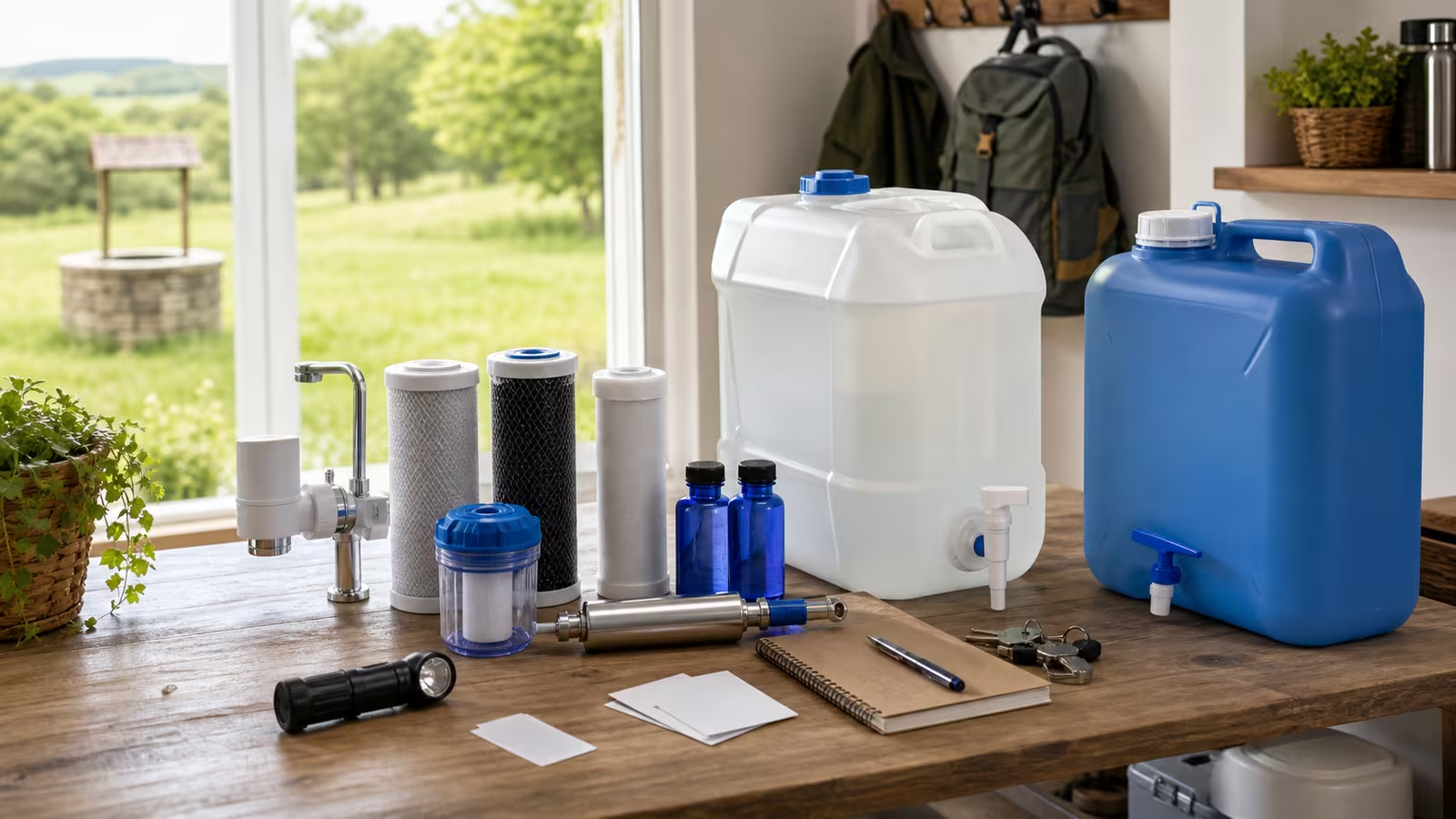
Responsibility changes the plan
A public water system may draw from groundwater, surface water, or a mix. A well does not necessarily mean a private supply: some public systems use wells too. What matters here is who operates and monitors the system, not simply whether the water came from underground.
Public systems have monitoring and public-notification responsibilities under drinking water rules. A public system can be publicly or privately owned. Community water systems provide Consumer Confidence Reports (CCRs) to customers; other kinds of public systems may have different reporting requirements. A report describes system monitoring, not every faucet or building pipe. Federal public drinking water standards do not apply to individual private wells; the owner generally handles testing, maintenance, and treatment decisions. State and local requirements can differ.
Not sure which you have? Check a water bill or ask your landlord, building manager, or homeowners association for the supplier’s name. If a shared well serves several properties, ask who operates it, whether it is a regulated public system, and where to find recent test results and notices. A bill paid through a landlord does not by itself identify the source. If the answer is unclear, the local health department or state drinking water agency can help identify the system and its requirements.
What this helps you decide
This guide helps you choose between a public report, a utility call, a laboratory test, a well inspection, or a filter claim check.
Plain definitions
| Term | Plain meaning |
|---|---|
| Public water system | A system that supplies water to the public and is subject to drinking water rules. It may use groundwater, surface water, or both. |
| Private well | An individual household water source whose owner generally arranges testing, maintenance, and treatment. |
| Point-of-entry treatment | Equipment installed where water enters a home, used to treat water for more than one fixture. |
Choose the next step
| Situation | Useful next move |
|---|---|
| Community water system | Get its latest CCR and check current notices. Ask the utility about recent changes or distribution work. |
| Private well | Ask the health department about local risks and a state-certified lab; plan regular testing and well maintenance. |
| Shared building or well | Ask the manager or operator for the supplier, recent results, notices, and any building storage or treatment. |
| RV, tank, or tiny home | Consider the fill source as well as the tank, hose, disinfection, and maintenance routine. |
If you have public water
Save the latest water quality report and note its reporting year, detected contaminants, violations, and footnotes. Check the utility’s current notices separately: an annual report is historical and may not describe a new main break or advisory. If you do not receive a report directly, ask your utility or landlord, or use EPA’s CCR resources .
A system-wide result cannot settle every plumbing question. Lead, for example, can enter water from service lines, fixtures, and plumbing. The report may show the utility’s lead monitoring results without telling you what is present at your kitchen tap. Ask the utility or building owner what is known about the service line and whether tap testing is available, or contact a certified lab. Follow the lab’s sampling instructions; a neighbor’s result is useful context, but different plumbing can produce a different result at yours. See Lead in Drinking Water .
If you have a private well
The CDC recommends testing at least annually for total coliform bacteria, nitrate, total dissolved solids, and pH. The latter two are useful indicators of water characteristics; they do not identify every contaminant. Ask your local health or environmental department what else to test for, such as arsenic or pesticides, based on geology and nearby land use. Ask for a laboratory certified for the specific tests you need.
CDC also recommends testing after flooding, well repairs, changes in taste, color, or smell, or a local contamination warning, and when someone in the household becomes pregnant or a child starts living there. Check the well for mechanical problems each spring. Follow the lab’s instructions for bottles, collection point, timing, and delivery: a sample taken before treatment answers a different question from one taken at the drinking tap after treatment. Keep the results and maintenance dates in a well water sampling log .
For example, if you want to know whether a treatment device is reducing a measured contaminant, ask the lab or health department to help plan samples before and after it. Label each location and record the device’s maintenance status. A single result describes that sample, not a guarantee of future water quality. The sample collection guide explains how to prepare for the lab’s instructions.
If a sample is positive for total coliform or E. coli, contact the health department promptly for advice on safe water, follow-up testing, and any well repair or disinfection. The results mean different things; see Private Well Coliform and E. coli Results .
When there is an urgent concern
Follow the specific public notice if one is issued. A boil-water advisory, a do-not-drink advisory, and a do-not-use advisory call for different actions; follow local instructions for drinking, cooking, bathing, and other uses. If a private well may have been contaminated by flooding, use bottled water or another safe source and contact the health department for testing and recovery guidance. Boiling can kill germs but does not remove fuel or toxic chemicals; it can concentrate nitrate. If chemical contamination is suspected, use another source and ask local officials for advice. See Private Well After Flooding and Boiling Water Limits .
Common mistakes
- Using a public system report to judge an individual private well or a particular faucet.
- Assuming clear, good-tasting water has no bacteria, nitrate, arsenic, or lead concern.
- Buying a whole-home system before identifying the contaminant and checking the treatment claim.
- Treating a sediment filter or a taste-improving pitcher as proof that health-related contaminants have been removed.
- Ignoring the service line, building plumbing, storage, and devices between the source and the glass.
Try this next
- Identify the operator and source; ask for recent results if the system is shared.
- For public water, save the latest report and current notices. For a private well, arrange the annual baseline tests and ask about local additions.
- If a test finds harmful germs or chemicals, use a safe alternative and ask the health department how to interpret the result and respond.
- Match any treatment to the specific problem, verify the exact product’s reduction claim, and plan maintenance and follow-up testing. Start with Filter Types and How to Verify a Water Filter Claim .
Related Fondsites path
- How to Read Your Water Quality Report
- Nitrates, Arsenic, and Private Wells
- Emergency Water Basics
- Tiny Home and RV Water Basics
Official references
- EPA Consumer Confidence Reports
- EPA: Information about Public Water Systems
- EPA: Drinking Water Standards and Private Wells
- CDC well water testing guidance
- CDC well water treatment guidance
- CDC well disinfection after an emergency
- CDC: Drinking water advisories
- EPA: Frequent questions about lead in drinking water