Coffee Grind Size Guide
Grind size is the most important variable you control daily. The right grind transforms good beans into great coffee. The wrong grind ruins even the best beans.
Why Grind Size Matters
Extraction Control
What Extraction Is: Water dissolving soluble compounds from coffee grounds.
How Grind Size Affects Extraction:
- Finer grind: More surface area = faster extraction
- Coarser grind: Less surface area = slower extraction
Optimal Extraction: 18-22% of coffee mass dissolved (sweet, balanced, full flavor)
Under-Extraction (<18%):
- Too coarse or too fast brew
- Tastes: Sour, salty, weak, grassy
Over-Extraction (>22%):
- Too fine or too slow brew
- Tastes: Bitter, harsh, astringent, burnt
Grind Size Scale
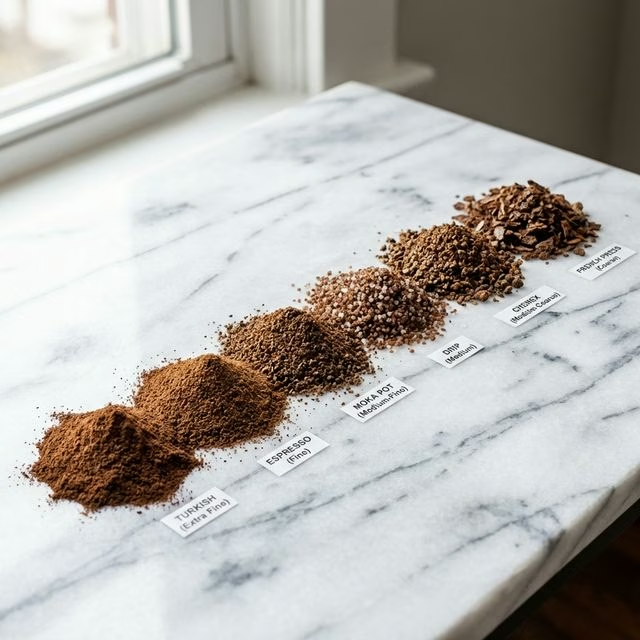
Extra Fine (Turkish)
Particle Size: Powder, like flour Texture: Talcum powder consistency Brewing Method: Turkish coffee (Ibrik/Cezve) Brew Time: 2-4 minutes
Description: Finest possible grind. Creates sludge-like coffee that’s drunk with sediment.
Fine (Espresso)
Particle Size: Table salt, fine sand Texture: Slight grit when rubbed between fingers Brewing Method: Espresso machine Brew Time: 25-30 seconds
Description: Fine enough to create 9 bars of pressure resistance, but not so fine that it chokes the machine.
Medium-Fine (Pour Over, AeroPress)
Particle Size: Slightly coarser than table salt Texture: Sand-like Brewing Method: V60, Kalita Wave, AeroPress (inverted) Brew Time: 2.5-3.5 minutes (pour over), 1.5-2 minutes (AeroPress)
Description: Sweet spot for most manual brewing methods.
Medium (Drip Coffee, Siphon)
Particle Size: Regular sand Texture: Rough sand Brewing Method: Drip coffee maker, Chemex, Siphon Brew Time: 4-6 minutes
Description: Standard grind for automatic drip machines. Most pre-ground coffee sold at this size.
Medium-Coarse (Chemex, Clever Dripper)
Particle Size: Coarse sand, rough Texture: Slightly chunky Brewing Method: Chemex (thick filter), Clever Dripper Brew Time: 4-5 minutes
Description: Slightly coarser than drip to compensate for thicker filters or longer brew times.
Coarse (French Press, Cold Brew)
Particle Size: Sea salt, breadcrumbs Texture: Chunky, distinct particles Brewing Method: French Press, cold brew, percolator Brew Time: 4-5 minutes (French Press), 12-24 hours (cold brew)
Description: Large particles prevent over-extraction during long immersion brewing.
Extra Coarse (Cowboy Coffee)
Particle Size: Peppercorns Texture: Very chunky Brewing Method: Cold brew (extended), cowboy coffee, cupping Brew Time: 18-24+ hours (cold brew)
Description: Coarsest grind. Used for ultra-long extractions or special brewing methods.
Grind Size by Brewing Method
Espresso
Grind: Fine Why: High pressure, short time (25-30 seconds) requires fine grind for proper extraction
Signs of Correct Grind:
- Shot flows like warm honey
- 25-30 second extraction for double shot (2 oz output)
- Balanced, sweet, not bitter or sour
Too Fine:
- Slow drip, >35 seconds
- Bitter, over-extracted
- Machine struggles
Too Coarse:
- Fast gush, <20 seconds
- Sour, weak, under-extracted
Adjustment: Tiny changes (1-2 clicks) make big differences. Dial in carefully.
Pour Over (V60, Kalita Wave)
Grind: Medium-fine Why: 2.5-3.5 minute brew time needs medium-fine for balanced extraction
Signs of Correct Grind:
- Water drains at steady pace
- Total brew time 2:30-3:30
- Sweet, balanced, clean cup
Too Fine:
- Slow draining, >4 minutes
- Bitter, over-extracted
- Clogged filter
Too Coarse:
- Fast draining, <2 minutes
- Sour, weak, under-extracted
Adjustment: Medium adjustments (5-10 clicks). Easier to dial in than espresso.
Drip Coffee Maker
Grind: Medium Why: 4-6 minute brew time with paper filter
Signs of Correct Grind:
- Consistent brew time
- Balanced flavor
- Not bitter or weak
Too Fine:
- Overflow risk
- Bitter coffee
Too Coarse:
- Weak, sour coffee
Tip: Most pre-ground coffee is sized for this method.
French Press
Grind: Coarse Why: 4-5 minute immersion needs coarse grind to avoid over-extraction and sludge
Signs of Correct Grind:
- Easy plunge (minimal resistance)
- Clean cup (minimal sediment)
- Balanced flavor
Too Fine:
- Difficult plunge
- Excessive sediment
- Bitter, muddy cup
Too Coarse:
- Very easy plunge
- Weak, sour, under-extracted
AeroPress
Grind: Medium-fine (versatile) Why: Short brew time (1-2 minutes) but low pressure
Options:
- Standard method: Medium-fine, 1-2 minutes
- Inverted method: Medium-fine, 2-3 minutes
- Espresso-style: Fine, 30-45 seconds
Flexibility: AeroPress is forgiving. Experiment with grind and brew time.
Cold Brew
Grind: Coarse to extra-coarse Why: 12-24 hour immersion requires coarse grind to avoid over-extraction
Signs of Correct Grind:
- Smooth, sweet, low-acid concentrate
- No bitterness
Too Fine:
- Bitter, over-extracted
- Muddy, cloudy
Too Coarse:
- Weak, under-extracted (though rare with long brew time)
Moka Pot
Grind: Fine to medium-fine (between espresso and pour over) Why: Pressure brewing but not as high as espresso
Signs of Correct Grind:
- Steady stream (not explosive)
- Balanced, espresso-like flavor
- Not bitter
Too Fine:
- Sputtering, explosive
- Bitter, burnt taste
- Safety risk
Too Coarse:
- Weak, fast extraction
- Sour, thin
Chemex
Grind: Medium to medium-coarse Why: Thick filter requires coarser grind to maintain reasonable brew time
Signs of Correct Grind:
- 4-5 minute brew time
- Clean, tea-like cup
Too Fine:
- Very slow draining, >6 minutes
- Bitter
Too Coarse:
- Fast draining, <3 minutes
- Weak, sour
Grinder Types and Consistency
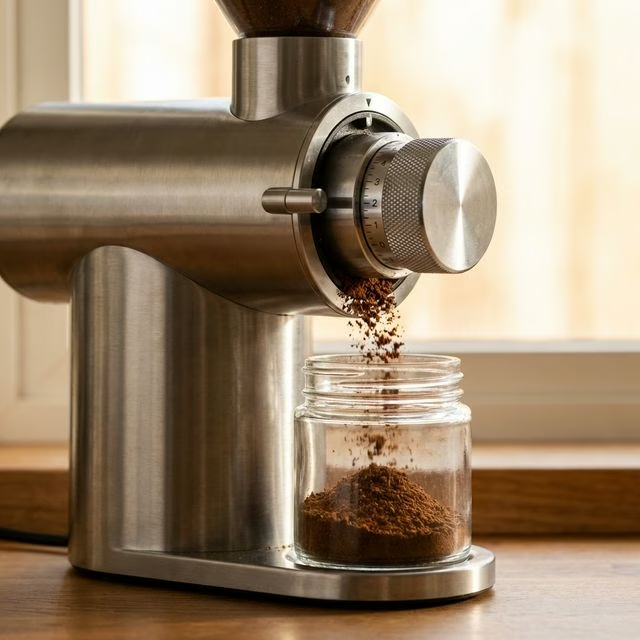
Blade Grinders
How They Work: Spinning blade chops beans (like food processor).
Cost: $15-30
Pros:
- Cheap
- Widely available
Cons:
- Inconsistent particle size (fines + boulders)
- Heats beans (degrades flavor)
- No precise grind control
Recommendation: Avoid if possible. Acceptable for French press or cold brew (coarse). Terrible for espresso or pour over.
Burr Grinders (Entry)
How They Work: Two abrasive surfaces (burrs) crush beans to consistent size.
Cost: $100-200
Pros:
- Consistent grind
- Adjustable settings
- Much better than blade
Cons:
- Still some fines
- Limited lifespan
Examples:
- Baratza Encore ($140)
- Capresso Infinity ($100)
Recommendation: Minimum for pour over, drip, French press. Acceptable for espresso (with effort).
Burr Grinders (Mid-Range)
Cost: $200-500
Pros:
- Excellent consistency
- Wide grind range
- Durable
- Better for espresso
Examples:
- Baratza Virtuoso+ ($250)
- Fellow Ode ($300)
- Breville Smart Grinder Pro ($200)
Recommendation: Sweet spot for home enthusiasts. Great for all brewing methods.
Burr Grinders (High-End)
Cost: $500-2,000+
Pros:
- Professional-level consistency
- Minimal fines
- Stepless adjustment
- Built for espresso
Examples:
- Baratza Sette 270 ($400, espresso-focused)
- Niche Zero ($700)
- Eureka Mignon ($500-800)
- Mahlkönig ($1,000+)
Recommendation: For serious espresso enthusiasts or those chasing perfection.
Manual Grinders
Cost: $30-$300
Pros:
- Portable
- Quiet
- Excellent consistency (high-end models)
- No electricity
Cons:
- Requires manual effort
- Slower
- Not practical for large batches
Examples:
- Hario Mini Mill ($30, entry)
- Timemore C2 ($70, excellent value)
- 1Zpresso JX-Pro ($170, espresso-capable)
- Comandante C40 ($300, premium)
Recommendation: Great for travel, small batches, or quiet environments. High-end manuals rival electric grinders.
Dialing In Grind Size
The Process
Step 1: Start with Recommended Grind Use brewing method guidelines above.
Step 2: Brew and Taste Note flavor: sour, balanced, or bitter?
Step 3: Adjust
- Sour/weak? Grind finer or brew longer
- Bitter/harsh? Grind coarser or brew shorter
Step 4: Repeat Make small adjustments until balanced.
Tasting for Extraction
Under-Extracted (Too Coarse):
- Sour, acidic
- Weak body
- Salty or grassy
- Short finish
Properly Extracted:
- Balanced acidity
- Sweet
- Full body
- Long, pleasant finish
Over-Extracted (Too Fine):
- Bitter
- Harsh, astringent
- Dry mouthfeel
- Lingering bitterness
Common Grind Mistakes
Mistake 1: Using Pre-Ground Coffee
Problem: Coffee stales 10x faster when ground. Pre-ground from store is weeks or months old.
Fix: Buy whole bean, grind fresh before brewing.
Mistake 2: Not Adjusting Grind for Different Beans
Problem: Different origins, roast levels, and densities extract differently.
Fix: Dial in grind for each new bag of beans.
Mistake 3: Inconsistent Dosing
Problem: Changing coffee dose without adjusting grind.
Fix: Keep dose consistent, adjust grind only.
Mistake 4: Not Cleaning Grinder
Problem: Old coffee oils and grounds build up, causing rancid flavors.
Fix: Clean grinder monthly (burrs, chamber). Use grinder cleaning tablets.
Mistake 5: Using Blade Grinder for Espresso
Problem: Inconsistent grind ruins espresso (uneven extraction, channeling).
Fix: Invest in burr grinder for espresso. Minimum: $100-150.
Grind Retention
What It Is
Grounds stuck in grinder after grinding (in burrs, chute, chamber).
Problem: Stale grounds mix with fresh grounds in next batch.
Solutions
Single-Dose Grinders: Grind exact amount needed, minimal retention.
RDT (Ross Droplet Technique): Spray beans with few drops of water before grinding (reduces static, retention).
Purge: Grind a few beans and discard before brewing dose.
Takeaway
Grind size matters more than most variables: Even the best beans brewed with wrong grind taste terrible.
Buy a burr grinder: Minimum investment for good coffee. $100-200 entry grinders work well.
Grind fresh: Grind right before brewing. Pre-ground coffee stales in days.
Dial in for each brew method: No universal grind size. Match grind to brewing method and time.
Adjust by taste: Sour = grind finer. Bitter = grind coarser.
Clean your grinder: Monthly cleaning prevents rancid flavors.
Next Steps
- Brewing Methods - Apply correct grind to each method
- Equipment Guide - Choose the right grinder
- Water Quality - Optimize other extraction variables