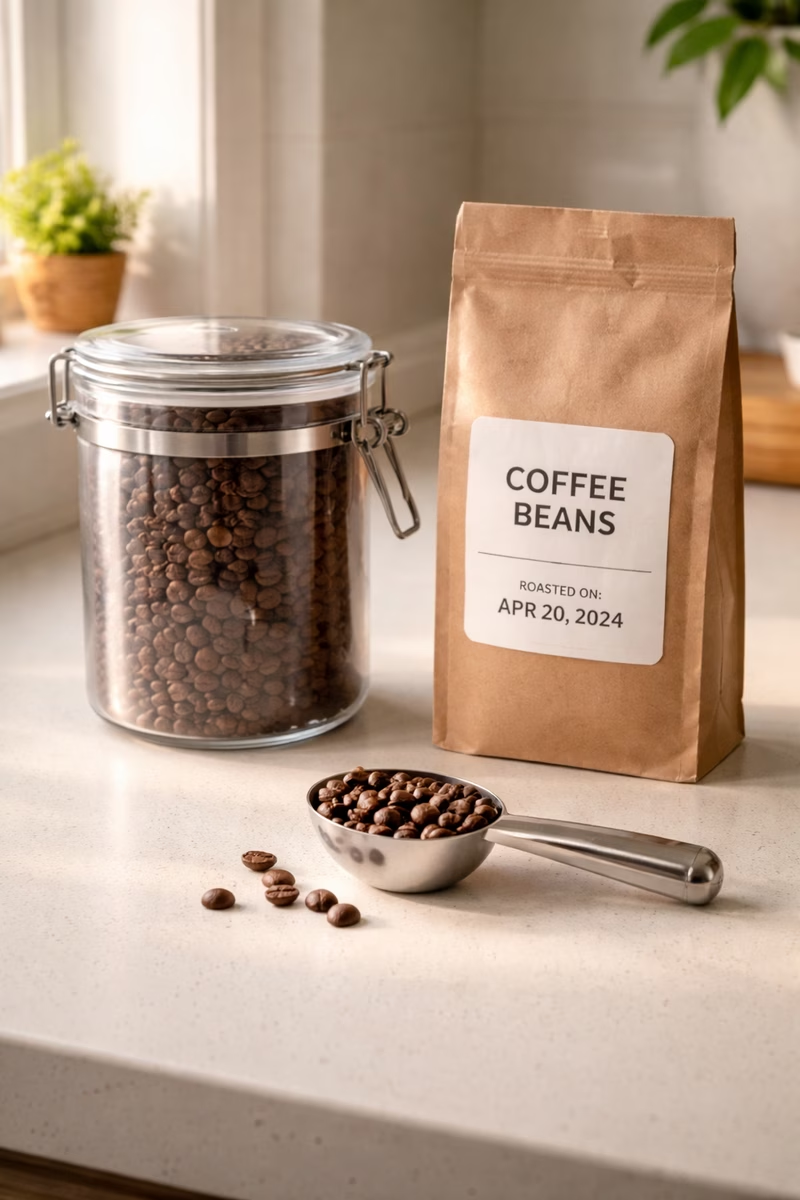
Coffee Storage Guide
Coffee is a perishable agricultural product, not a shelf-stable pantry item. Great beans can taste electric—sweet, floral, jammy, chocolatey—yet the same coffee can go flat and papery if it sits open on the counter for a week.
The goal of storage is not to “lock coffee in amber.” It’s to slow staling long enough that you drink the coffee while it still tastes like the roaster intended. That means understanding what changes in the bean, then building a simple routine that fits your actual brewing habits.
How Coffee Stales (What’s Actually Happening)
Coffee staling is a bundle of chemical and physical changes. You don’t need a chemistry degree to store coffee well, but you do need to know the enemies.
The Enemies of Fresh Coffee
Oxygen (oxidation) is the big one. Oxygen reacts with aromatics and lipids, dulling the notes you bought the coffee for. The result is coffee that tastes flatter and more “generic,” often described as cardboard-like or woody.
Moisture is the sneaky one. Beans are porous. They absorb humidity and odors, and moisture accelerates staling. It can also create clumping issues in grinders and encourage mold in extreme cases.
Light (especially UV) degrades compounds and warms containers. It matters less than oxygen, but it’s easy to control: keep coffee in the dark.
Heat speeds everything up. Think of it as turning the staling dial from slow to fast. Warm cupboards near ovens and sunlit countertops are basically staling accelerators.
Degassing: Why Fresh Coffee Behaves “Oddly” at First
Freshly roasted coffee releases CO2. That CO2 can protect coffee a little (it displaces oxygen inside packaging), but it can also disrupt brewing: too much gas can create foamy bloom, uneven extraction, and unstable espresso.
Instead of asking “how fresh is best,” ask “what brewing method am I using?” Espresso tends to benefit from a slightly longer rest than filter, because espresso is especially sensitive to gas.
A Practical Freshness Timeline
Coffee doesn’t become bad overnight—it simply becomes less interesting. These ranges are rough, but they’re good enough to plan purchases.
Whole bean coffee:
- Day 1–3 post-roast: heavy degassing; many coffees taste unsettled
- Day 4–14: peak window for most filter brewing
- Day 10–21: often a sweet spot for espresso (varies by roast level)
- Day 15–30: still good; decline becomes noticeable
- Day 31–60: acceptable, but muted; “great” coffees feel ordinary
- Day 61+: typically stale unless it was frozen early
Ground coffee:
- 0–2 days: best case scenario (especially if ground fresh)
- 3–7 days: usable, but diminished
- 8–14 days: noticeably stale
- 15+ days: severely degraded
Why the difference? Surface area. Grinding exposes dramatically more coffee to oxygen. It’s why ground coffee can stale 10x faster than whole beans.
Optimal Storage Conditions (The Simple Rules)
If you remember nothing else, remember this: cool, dark, dry, airtight, and right-sized.
Temperature
Aim for a cool, consistent environment—roughly 60–70°F / 15–21°C.
Avoid storing coffee:
- above or near the stove/oven
- on a windowsill
- next to a dishwasher (heat + humidity)
Humidity
Coffee hates damp air. Keep it away from sinks and steam. The “fridge problem” (more on that below) is partly about humidity and temperature swings.
Light
If your container is clear, store it in a cabinet. Light is an avoidable tax on flavor.
Air Exposure and Headspace
An airtight container is important, but headspace matters too. A huge jar that’s half full contains a lot of oxygen. That oxygen is going to react with your coffee every time you open the lid.
The best container size is the smallest one that comfortably holds the amount you’ll use before it goes stale.
Best Storage Containers (And What They’re Good At)
There are two jobs a container can do:
- Seal against oxygen and moisture
- Minimize the oxygen that remains (or is reintroduced) when you open it
Coffee-Specific Canisters
Some canisters are designed to reduce headspace or create a partial vacuum. That can help, especially if you open the container daily.
In general, look for:
- a reliable gasket seal
- an opaque body or a dark storage location
- a size that matches your consumption
DIY Options That Work Fine
If the container truly seals, you’re already doing most of the work.
- Mason jars: workable if kept in a dark cabinet; choose a size that fits your weekly use
- OXO-style airtight containers: often seal well; keep out of light
- Original bag (short-term): it can be okay for 1–2 weeks if you roll it tight and clip it, but it’s rarely as airtight as you think
What to Avoid
- Decorative jars that aren’t truly airtight
- Clear containers left in sunlight
- Huge containers with lots of headspace
- Loose clips on bags that slowly leak air
Portion Control: The Easiest Upgrade Nobody Does
Most people ruin coffee with a perfectly reasonable daily habit: opening the same large container every morning.
Try this instead:
- Put one week of coffee in a small “daily” container.
- Keep the rest sealed as a “bulk” reserve.
This reduces oxygen exposure to the coffee you’ll drink later. It’s a small routine change that often makes a bigger difference than buying a fancy canister.
Freezing Coffee (It Works—If You Treat Moisture Like the Enemy)
Freezing is controversial mostly because people do it in a way that creates condensation. Condensation is water, and water is both a flavor enemy and a grinder enemy.
When Freezing Makes Sense
Freezing is most useful when:
- you buy in bulk
- you travel and want “home coffee” later
- you want to preserve a peak-roast window
- you want to reduce daily oxygen exposure for espresso dial-in
If you’ll finish a bag within 2–4 weeks, freezing is optional. If a bag will sit for months, freezing can be the difference between “still great” and “why does this taste like nothing?”
How to Freeze Coffee Properly
Step 1: Portion
Portion coffee into amounts you’ll use quickly once opened. For many people, that’s 250g or smaller. Single-dose tubes can work too, but you don’t need to overcomplicate it.
Step 2: Package airtight
Vacuum-sealed bags are the gold standard. If you can’t vacuum seal, use double zipper bags with as much air removed as possible.
Step 3: Freeze and forget
Put portions in the freezer and don’t move them around. Stable temperature is your friend.
Step 4: Thaw before opening
This is the most important rule: let the portion reach room temperature before you open it. If you open it cold, moisture from the air condenses on the beans.
Step 5: Never refreeze an opened portion
Once the seal is broken, treat that portion as “active.” Keep it in a small airtight container and use it normally.
The Fridge: Almost Always a Bad Idea
People reach for the fridge because it feels “cool.” The problem is that fridges are humid, smelly, and full of temperature cycling. Coffee absorbs odors and suffers from condensation risk.
If you want cold storage, freeze with airtight portions. If you want everyday storage, room temperature in an airtight container is usually better than the fridge.
Ground Coffee Storage (If You Must)
Ground coffee is a race against oxygen. Even perfect storage can only slow the decline.
The Reality
Ground coffee stales 10x faster than whole beans.
If your coffee tastes dull, the most common “upgrade” isn’t a new brewer—it’s grinding fresh.
Best Practices
If you have to pre-grind:
- grind smaller amounts (2–3 days max)
- seal immediately in an airtight container
- keep it dark and cool
- accept that flavor will drop quickly
If you buy pre-ground from a store with no roast date, assume it was ground long before you got it.
Coffee Packaging Types (How to Use Them)
Valve Bags
One-way valve bags let CO2 out while limiting oxygen entry. They’re designed for roasters and shipping.
Once opened, the bag is only as good as your reseal. Roll it tight and clip it, or transfer the coffee into an airtight container.
Vacuum-Sealed Bags
Vacuum sealing can preserve coffee well, especially for freezing. Once opened, treat it like any other bag: transfer to an airtight container.
Nitrogen-Flushed Cans
Nitrogen replaces oxygen in the package. It can keep coffee stable longer before opening, but after opening, it behaves like any other coffee: oxygen takes over.
Buying Practices That Matter More Than Storage
Even the best container can’t resurrect old coffee. If you want consistently great cups, let buying strategy do most of the work.
Buy Whole Bean
Whole bean coffee holds its character far longer than ground.
Check Roast Date
If a bag doesn’t list a roast date, treat it as a red flag.
- Ideal: roasted within the last 2 weeks
- Acceptable: within 30 days
- Avoid: no date at all
Buy Smaller Amounts More Often
For most home brewers, a 1–2 week supply is the sweet spot. Fresh coffee weekly beats stale coffee stored “perfectly.”
Common Storage Mistakes (And Easy Fixes)
Mistake: Leaving coffee in an opened bag on the counter
Fix: move it to an airtight container, and store it in a cabinet.
Mistake: Using an oversized container
Fix: choose a smaller container for daily coffee and a separate sealed reserve.
Mistake: Fridge storage
Fix: skip the fridge. Use room temp airtight storage, or freeze portions.
Mistake: Buying bulk without a plan
Fix: portion and freeze immediately.
Signs Coffee Has Gone Stale
Stale coffee often looks normal. Trust aroma and taste.
- Aroma is weak or generic
- Flavor is flat, papery, or oddly bitter
- Sweetness disappears
- Aftertaste feels dry and short
Storage by Brewing Style
Espresso
Espresso rewards consistency.
- Let beans rest post-roast (often 5–7+ days)
- Store in smaller portions to reduce oxygen exposure
- Consider freezing portions so dial-in is more predictable across weeks
Filter (Pour-over, Drip)
Filter highlights aromatics.
- Prioritize airtight, dark, cool storage
- Buy smaller bags and drink within the peak window
Takeaway
You don’t need perfect storage—you need a routine that matches how you actually drink coffee.
The essentials:
- Airtight container
- Cool, dark place
- Whole bean when possible
- Buy fresh and buy small
- Freeze portions for long-term storage
Do those five things and you’ll preserve the flavor you paid for.
Ground Coffee Storage
The Reality
Ground coffee stales 10x faster than whole beans.
Best storage can’t save ground coffee for long.
Best Practices
1. Grind Just Before Brewing: This is the single best thing you can do for coffee flavor.
2. If You Must Pre-Grind:
- Grind small batches (2-3 days max)
- Use airtight container immediately
- Store in dark, cool place
- Understand flavor will degrade quickly
3. Avoid Pre-Ground Coffee from Store: Often ground weeks or months ago. Already stale when purchased.
Coffee Packaging Types
Valve Bags (Standard)
What It Is: One-way valve lets CO2 out but no oxygen in.
Pros:
- Allows degassing
- Prevents bag explosion
- Keeps oxygen out (when sealed)
Cons:
- Once opened, loses effectiveness
- Not resealable
Best Practice: Transfer to airtight container after opening.
Vacuum-Sealed Bags
What It Is: All air removed, completely sealed.
Pros:
- No oxygen exposure
- Long shelf life (months)
- Great for shipping
Cons:
- CO2 buildup if beans too fresh
- Once opened, must transfer to airtight container
Nitrogen-Flushed Cans
What It Is: Oxygen replaced with nitrogen gas, sealed in can.
Pros:
- Extended shelf life (years)
- No oxidation until opened
Cons:
- Expensive packaging
- Once opened, stales like any other coffee
Used By: Commercial brands, some specialty roasters for pre-ground.
Buying Practices for Freshness
Buy Whole Bean
Why: Ground coffee stales 10x faster.
Exception: If you absolutely can’t grind at home, buy small pre-ground quantities weekly.
Check Roast Date
Ideal: Roasted within last 2 weeks.
Acceptable: Roasted within last 30 days.
Avoid: No roast date listed (likely months old).
Buy in Small Quantities
Strategy: Buy 1-2 weeks supply at a time.
Why: Fresh coffee weekly beats stale coffee in perfect storage.
Find Local Roasters
Benefits:
- Fresher than supermarket coffee
- Roast dates listed
- Can buy small quantities
- Often roast to order
Common Storage Mistakes
Mistake 1: Storing in Original Bag
Problem: Once opened, valve bags aren’t airtight. Beans exposed to oxygen.
Fix: Transfer to airtight container after opening.
Mistake 2: Fridge Storage
Problem:
- Temperature fluctuations
- Moisture exposure
- Absorbs fridge odors
- Worse than room temperature storage
Fix: Never store coffee in the fridge. Room temperature in airtight container or freezer (properly sealed).
Mistake 3: Clear Containers in Sunlight
Problem: Light accelerates staling.
Fix: Opaque containers or store in dark cabinet.
Mistake 4: Oversized Container
Problem: Large container = lots of air = faster oxidation.
Fix: Right-sized container or use portion control strategy.
Mistake 5: Buying in Bulk Without Plan
Problem: 5 lb bag of coffee will stale before you finish it (unless you freeze properly).
Fix: Buy smaller amounts or portion and freeze immediately.
Signs Coffee Has Gone Stale
Visual Signs
- Oily surface disappears (beans dry out)
- Dull appearance (vs. shiny fresh beans)
- Color fades
Smell Test
- Weak aroma
- No distinct scent
- Cardboard-like smell
- Musty or rancid odor
Taste Test
- Flat, lifeless flavor
- Cardboard or papery taste
- Lacking sweetness
- Dull, one-dimensional
- Bitter without complexity
Extending Coffee Lifespan
Best Practices Summary
- Buy fresh: Roasted within 2 weeks
- Buy whole bean: Grind right before brewing
- Buy small amounts: 1-2 weeks supply
- Store airtight: Quality canister or container
- Keep cool and dark: Pantry, not countertop
- Minimize air exposure: Portion control strategy
- Freeze for long-term: Vacuum seal, single-use portions
- Grind fresh: Right before brewing
Coffee Storage by Volume
Single Person (1-2 cups/day)
Weekly Consumption: 100-150g beans Storage: Small airtight canister (8-12 oz) Buying Frequency: Every 2 weeks (buy 250-300g)
Couple (3-4 cups/day)
Weekly Consumption: 250-350g beans Storage: Medium canister (12-16 oz) or dual canisters Buying Frequency: Weekly (buy 250-350g)
Family (6-8 cups/day)
Weekly Consumption: 500-700g beans Storage: Large canister (1-2 lbs) + freezer portions Buying Frequency: Weekly (buy 1 lb) or bulk + freeze
Special Cases
Espresso
Considerations:
- Degassing important (wait 5-7 days post-roast)
- Freshness critical (10-21 days post-roast is peak)
- Store in small portions (dial-in wastes beans)
Best Practice: Buy 1 lb, portion into 4 x 250g bags, freeze 3, use 1.
Office Coffee
Considerations:
- Multiple users
- Frequent opening
- May sit for weeks
Best Practice:
- Buy smaller bags (12 oz instead of 5 lb)
- Use airtight canister
- Replace every 2-3 weeks regardless of usage
Travel
Considerations:
- Portable
- Secure sealing
- Small quantities
Best Practice:
- Small airtight container (8 oz)
- Bring 3-5 days supply
- Vacuum-sealed bag for longer trips
Takeaway
Freshness matters more than storage: Even the best storage can’t save old coffee. Buy fresh, buy small, use quickly.
Essential storage principles:
- Airtight container
- Cool, dark place
- Whole bean (grind fresh)
- Use within 2-4 weeks
Freezing works if done right: Vacuum-sealed, single-use portions, thaw before opening.
Don’t overthink it: Good airtight container + fresh beans from local roaster = 95% of the way there.
Next Steps
- Brewing Methods - Brew your fresh coffee properly
- Equipment Guide - Grinders and storage canisters
- Coffee Bean Guide - Choose the right beans