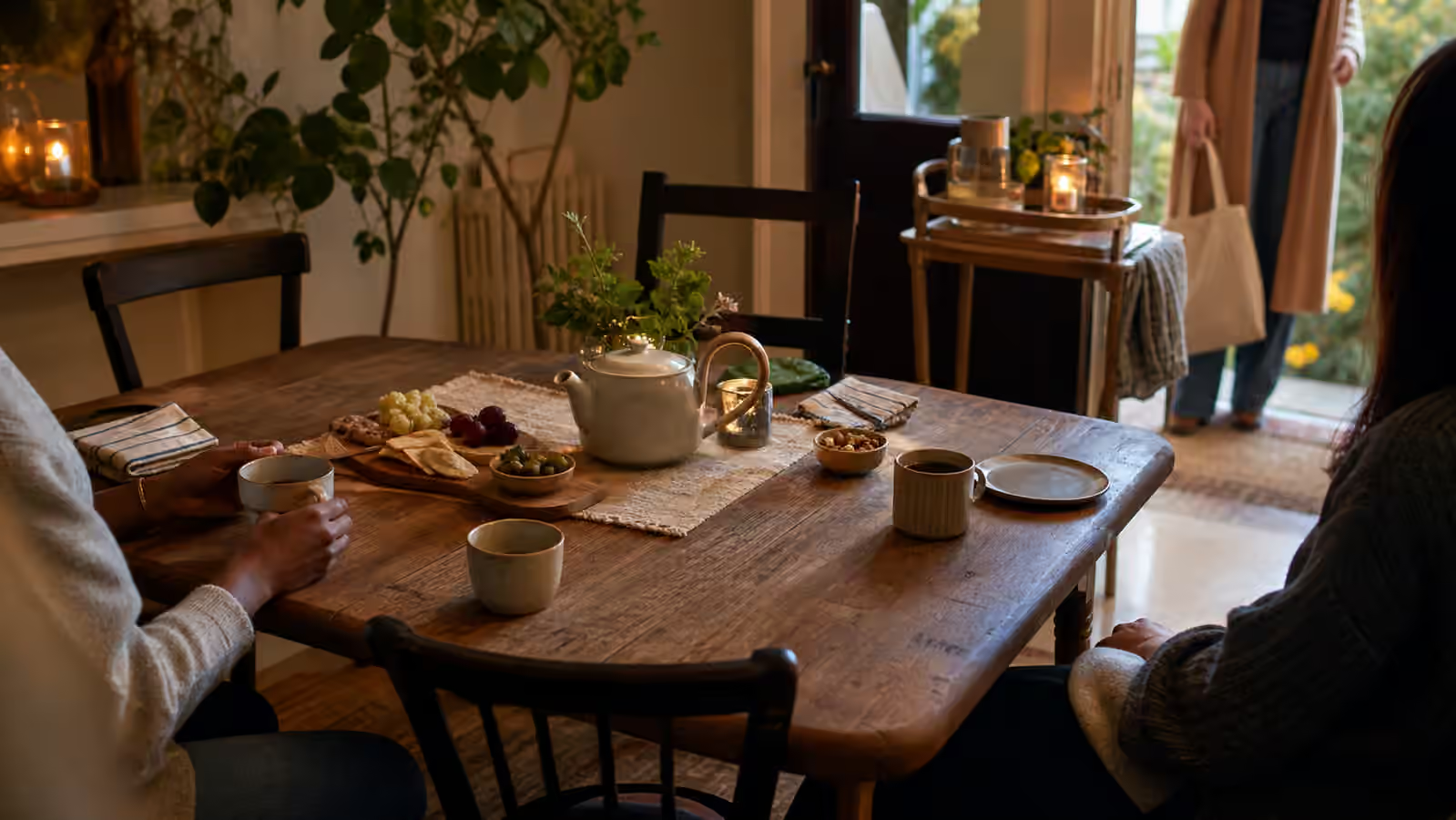
Most hosts think about access only after something goes wrong: a guest who could not manage the stairs, a friend who left early because the music made conversation impossible, a regular who quietly stopped coming once the venue moved upstairs. Accessibility is easier and far less awkward when it lives inside the ordinary planning of a gathering rather than arriving as an emergency patch. The aim of this guide is to make access a normal part of how you invite, arrange a room, plan food, choose timing, and follow up, so that no guest has to perform their needs in front of everyone to be included.
The most useful reframe is this: access is logistics, not a favor. You already tell people where to park and what time to arrive. Adding a plain sentence about stairs, seating, noise, or scent belongs in exactly the same place and the same register. When you treat it as ordinary information, guests can make honest decisions without the exhausting calculus of deciding whether asking will mark them as difficult.
Describe the space instead of promising perfection
You do not have to make your walk-up apartment step-free to be a good host. You have to describe it honestly. A description lets a guest decide for themselves, and self-determination is the heart of real access. Say how many steps lead to the door, whether there is a handrail, how far the walk is from the nearest drop-off, whether the bathroom is on the same floor, how bright and loud the main room tends to get, and whether there is a pet or heavy fragrance in the home. None of this is confession. It is the same courtesy as saying dinner starts at seven.
The trap to avoid is the vague reassurance. “It should be fine” and “don’t worry about it” force the guest to either trust a stranger’s judgment about their own body or interrogate you to get the real picture. Plain facts are kinder than optimism. If you genuinely do not know a detail, say you will check, then check.
Ask privately, and ask everyone the same way
The failure mode worth naming directly is waiting for a guest to disclose in public, or assuming access begins and ends with stairs. Hearing, sensory load, chronic fatigue, food restrictions, chemical sensitivity, and the plain need for a chair with a back are all access questions, and most of them are invisible. If your only accommodation is a ramp, you have solved one problem and missed a dozen.
Build one quiet question into the invitation that goes to everyone, not just the person you assume needs it. Something like “Tell me if there’s anything that would make coming easier, food, seating, timing, anything” does the work without singling anyone out. When the whole guest list receives the same line, answering costs nothing socially. The person managing a flare-up and the person who simply prefers a firm chair are treated identically, which is exactly the point. Invitations Without Pressure has more on writing that ask so it invites an honest reply rather than a polite deflection.
Set the room so options already exist
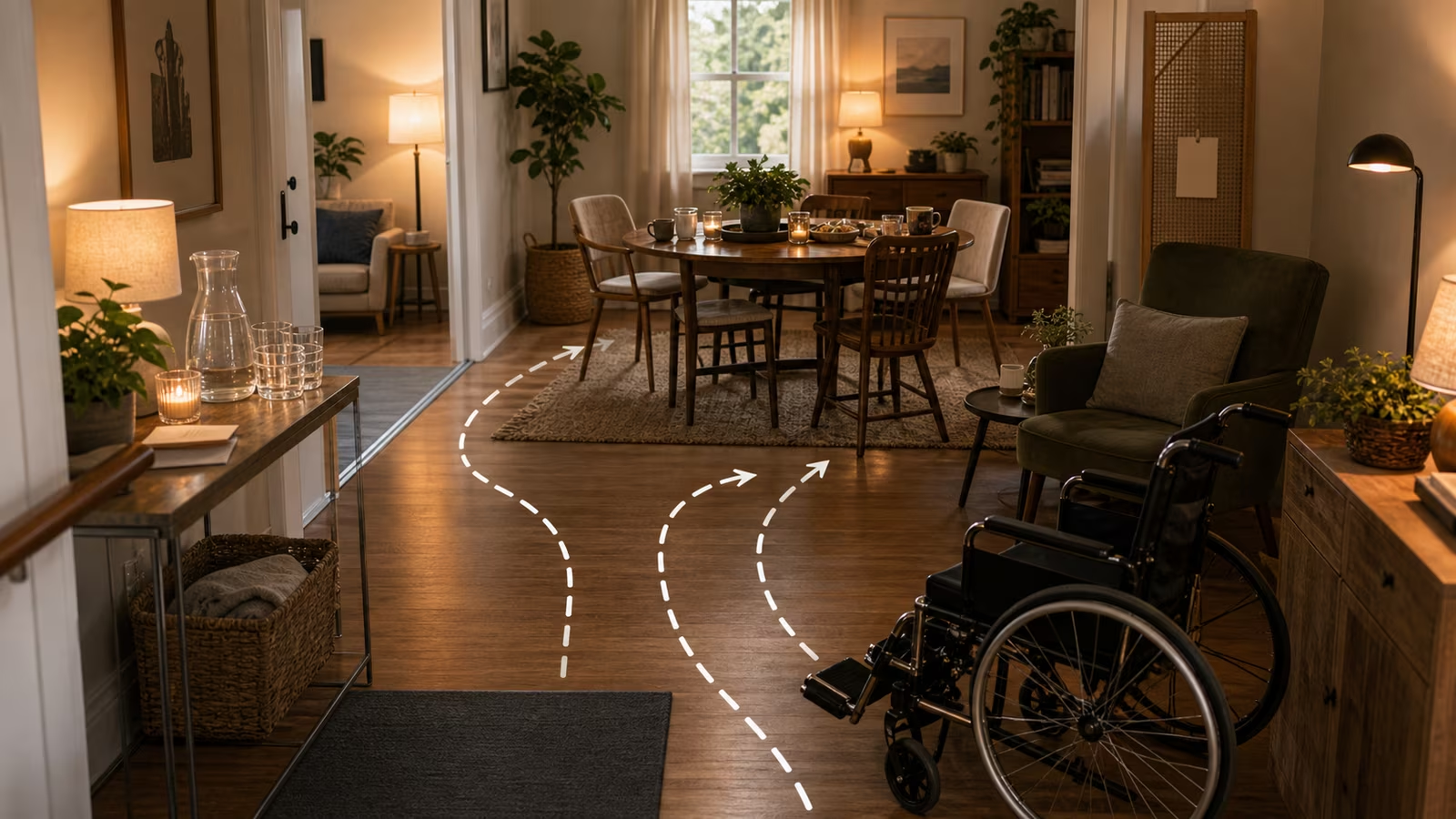
A great deal of access is decided before anyone arrives, in the arrangement of the room. Offer a range of seating without commentary: a couple of firm chairs with arms, something softer, a spot with back support, and enough space that a walker, cane, or wheelchair has a clear path to the table and the bathroom. Keep the walkways actually clear, not clear-once-you-move-the-bags. Put water somewhere reachable without asking. Reserve one quiet corner or a second room where a guest can decompress from noise and still feel part of things.
Sound is the most underrated variable in a small gathering. Background music that feels cozy to you can erase a hard-of-hearing guest’s entire evening, and hard floors with bare walls turn ordinary chatter into an exhausting wash. Softer surfaces, a lower volume, and a room shape that lets people face each other do more for inclusion than any single ramp. Lighting matters too: warm and steady beats dim-and-flickering, and a face that can be seen is a face that can be lipread.
Let food carry welcome, not risk
Food is where access and hospitality meet most directly. You do not need to cook for every restriction, but you do need to make it safe and unembarrassing to eat. Ask about allergies and needs privately, label dishes plainly, and keep at least one substantial option that works for the most common restrictions so no guest is left assembling a meal from side dishes. Keep serving reachable, and resist plating everything so elaborately that a guest with limited grip or energy cannot serve themselves.
Drinks belong to the same logic. Make the nonalcoholic option something you would happily drink yourself, kept where everyone can reach it, poured with the same care as anything else. A guest avoids alcohol for reasons that are entirely their own, and a well-designed table simply lets them move through the evening without a single explanation. Recovery-Aware Hosting goes deeper on building that ease into the center of a gathering rather than the edge.
Accept a decline as information, not rejection
Sometimes, despite a warm invitation and an honest description, a guest decides the gathering is not workable for them this time. Receive that gracefully. A quick “totally understand, the door is open whenever it works” keeps the relationship intact and makes the next yes easier. Guests who trust that declining is safe are the guests who eventually return. A decline is feedback about fit and timing, not a verdict on your welcome.
Practice one change and watch what it does
Start smaller than a full overhaul. Add a single access sentence to your next invitation that describes the space and asks what would make attendance easier, then notice who replies and what shifts. Afterward, jot a few honest lines: what people asked for, what was simple to provide, what strained the plan, and what you would keep. One warm evening is not proof you have solved access, and one awkward moment is not evidence you failed. How to Tell If a Gathering Worked can help you read those signals without overcorrecting.
If this is your first recurring table, The Common Table Quickstart sets up the wider rhythm this access work fits inside. For making the whole system easier to begin and resume, see the Startable Life Lab , and when social-media hosting advice starts turning inclusion into pressure, the Reality Check Desk is a calm place to sort real practice from performance.