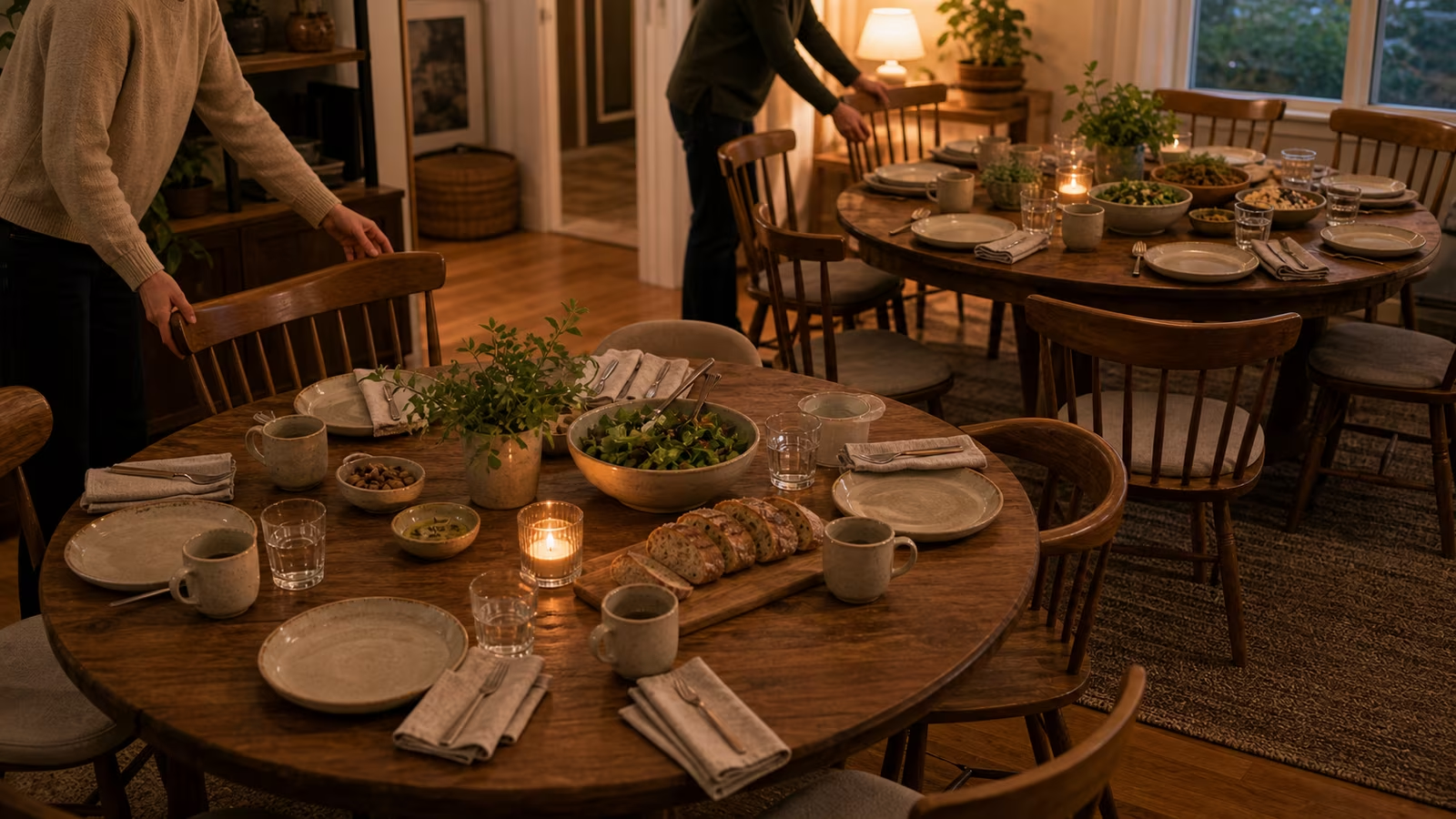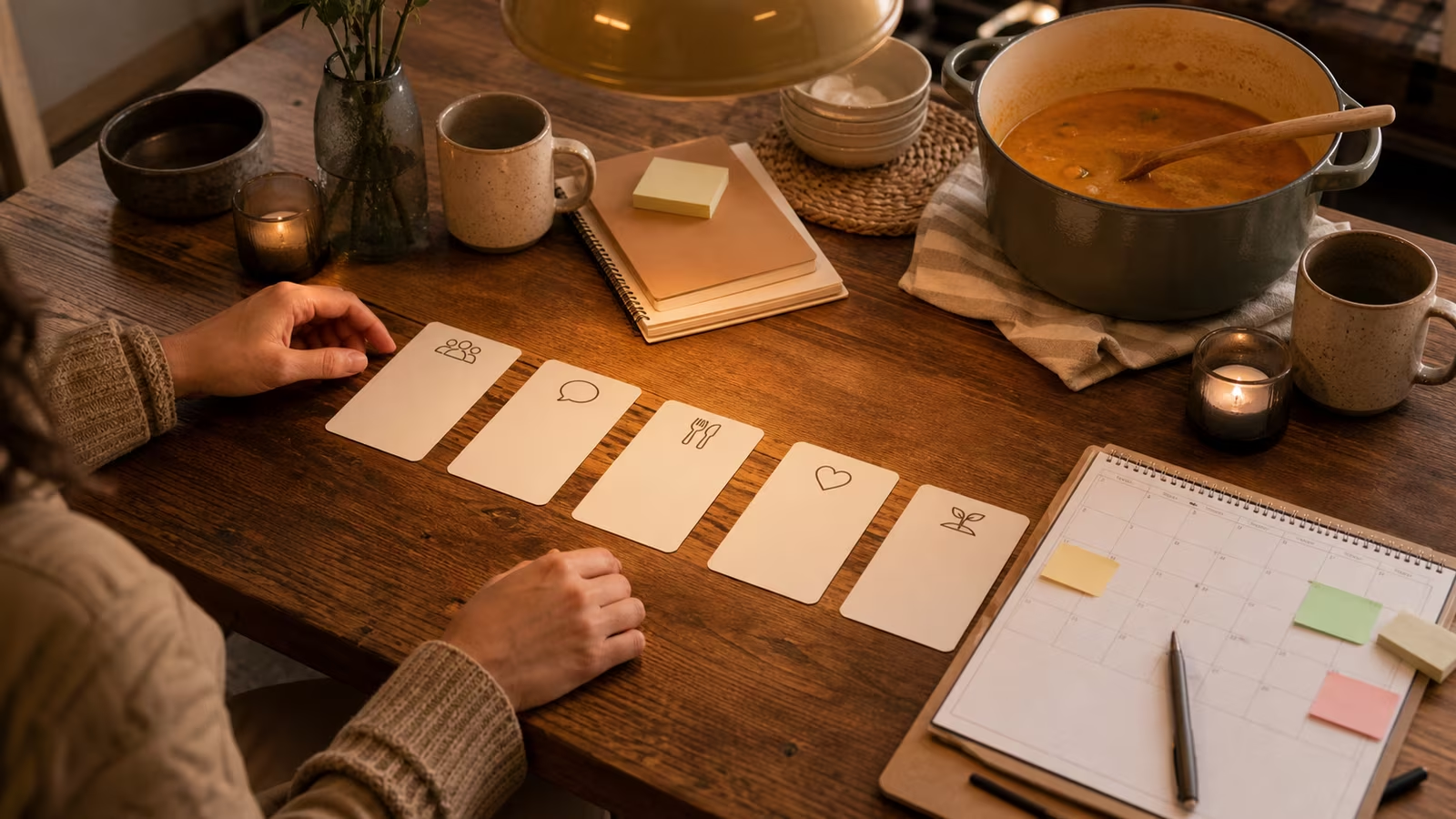
The morning after a gathering is a small, quiet fork in the road, and most hosts do not notice they are standing at it. One path is silence: the dishes are done, life resumes, and nobody hears anything until the next invitation. The other path is a flood: an anxious message asking whether everyone had a good time, a string of apologies for things nobody noticed, a request for reassurance dressed up as a thank-you. Neither serves the table. This guide is about the third path, a short follow-up note that closes the loop, remembers something real, and leaves the door propped open for next time.
Aftercare is not customer service, and it is not a performance review. Its whole job is to make returning feel easy and expected. A good note lowers the activation energy for the next yes without asking the guest to do any emotional labor on your behalf. It should take you two minutes to write and cost the reader nothing to read.
Thank, remember, invite
A follow-up note that works usually does three quiet things and stops. It thanks the person for coming in a way that sounds like you and not like a template. It remembers one specific thing, the story they told, the plant cutting they promised, the book they mentioned, the fact that they walked in the rain to get there, so the note proves you were actually paying attention rather than blasting the same line to twelve people. And it names, lightly, that there will be a next time. That is the whole architecture. Thank, remember, invite.
The remembering is the part that carries the warmth, and it is the part templates cannot fake. “Thanks for coming” is fine and forgettable. “Thanks for coming, and I keep thinking about that thing you said about your grandfather’s soup, I’m going to try his trick with the bay leaf” tells the guest they were seen as a person. You do not need to remember something for everyone. One real detail per note, when you have it, is plenty.
Do not turn the note into a survey
The failure mode here is specific and common: turning follow-up into a questionnaire, an apology tour, or a quiet campaign to extract proof that the evening was a success. “Did you have fun? Was the food okay? Sorry the music was too loud, sorry I talked too much, was it awkward?” These messages feel humble but they invert the roles. Now the guest, who came to relax, has to manage the host’s anxiety the next morning. That is a tax on attendance, and people pay it by drifting away.
If you genuinely want feedback, gather it for yourself and keep it out of the thank-you. Jot your own honest notes about what worked and what strained, the way Shared Notes and Table Memory describes, so the learning happens in your notebook and not in your guests’ inboxes. The follow-up note and the after-action review are two different documents with two different readers. Never let the guest read the review.
Timing and channel
Send it while the evening is still warm but not so fast that it feels automated, roughly the next morning or that afternoon. A note that arrives three days later has lost its heat; one that arrives before the guest has even gotten home reads as a reflex. Match the channel to the relationship: a group that already shares a thread can get a short collective line, but a genuinely personal detail belongs in a one-to-one message where it does not become a public performance. When you do write the group, keep it to the essentials, one warm line and the practical bits, so nobody feels obligated to reply-all with their own round of thanks.
Resist the urge to require a response. A follow-up that ends with a real question demands labor; a follow-up that ends with an open door does not. “No need to reply, just wanted to say it was good to have you” is more generous than any prompt.
Fold in the practical without killing the warmth
Aftercare is also where a little logistics can ride along gracefully. If someone left a dish, mention it. If you promised to send a recipe or a link, this is the moment. If the next date is set, drop it in as an invitation and not an obligation: “Next one’s the second Sunday, come if it works, and no worries if it doesn’t.” That last clause matters. The point of naming the next date is to make returning easy, not to enroll anyone in a commitment. A hint outperforms a headcount request every time, because it lets the guest picture coming back without feeling tracked.
As a table grows, this small note does structural work you might not expect. It is one of the threads that lets a gathering scale from a handful to a fuller room without losing intimacy, because it keeps each person feeling individually held even as the group gets bigger. Scaling From Four to Eight leans on exactly this kind of per-person touch to keep a larger table from feeling like a crowd.
Practice the two-sentence note
Try writing a single two-sentence after-note that would make one specific guest feel genuinely welcome to return, then read it back and cut anything that asks them for reassurance. If it still sounds like you and it still names one real thing, send it. Over a few gatherings you will find a rhythm that fits your voice, and you will stop dreading the morning-after fork because you will already know which path you take.
If this is your first recurring table, The Common Table Quickstart frames the whole cycle this note lives inside, and Invitations Without Pressure is its bookend, the same low-pressure spirit applied to the ask instead of the thank-you. For making the habit easy to keep, the Startable Life Lab is useful, and the Reality Check Desk helps when hosting advice online starts insisting that follow-up must be elaborate to count.