A guest arrives at your table having already run a small gauntlet you never see. They left on time or late, guessed at parking, circled the block twice, hunted for a number that was hidden behind a hedge, hesitated at a door with a broken bell, and stood for a beat wondering whether to knock or text. By the time they reach you they may have spent most of the social energy they brought. Arrival logistics are the quiet front half of hospitality, and getting them right means your guest walks in with attention to spare instead of relief that the ordeal is over.
The move that changes everything is to treat arrival as part of the invitation rather than as private homework you leave the guest to do alone. You already tell people the time. Tell them the rest of what a first-time or tired arriver actually needs, where to leave a car, which door, how many stairs, what to do with a coat, how to reach you from the curb, and you convert a stressful approach into a smooth one. None of it is fussy. It is the same courtesy as saying dinner is at seven.
Write the route note for a tired person
A good route note is not a travel brochure; it is the two or three facts a tired guest needs at the exact moment they are deciding whether coming is realistic. If parking is easy, say where. If it is unreliable, say that plainly so nobody is blindsided. If the nearest stop is a short but poorly lit walk, do not smooth that over. If the building has two entrances, name the one to use. If the bell does not work, say to text from the door. If the elevator is slow, the stairs are narrow, or the place is hard to spot from the street, make it ordinary information rather than a surprise. The whole note can be three sentences.
This kind of unglamorous detail is a real form of welcome. A guest who already knows where to park arrives with more of themselves intact. A guest who knows there are stairs can decide honestly rather than discovering them mid-climb. A guest who knows you will answer a text from the curb does not have to rehearse the small embarrassment of being lost outside your home. The route note lowers the amount of performance the evening demands before it has even begun, which is why it belongs in the same low-pressure spirit as Invitations Without Pressure . Arrival is also, very often, the first access question of the night, and describing the approach plainly is where Accessibility for Small Gatherings actually starts.
Make the door teach the room
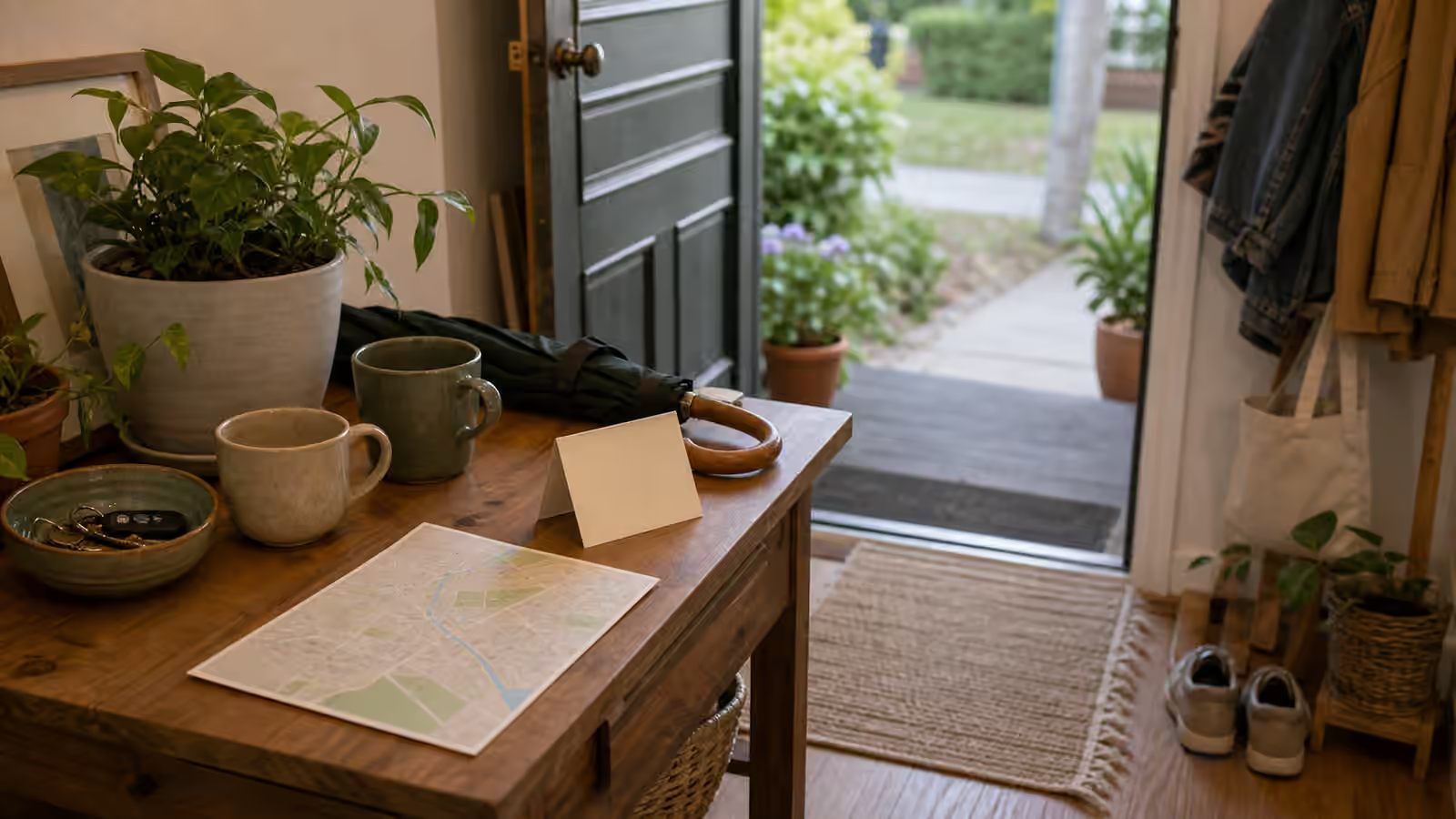
The first minute at the threshold sets the tone for everything after it. A guest crossing your door is reading fast: shoes on or off, coats where, bag where, bathroom which way, kitchen open or private, dog behind a gate or loose, another housemate present or not, host ready or still cooking. If none of that is legible, they end up standing in the entry holding a dripping coat while you try to finish three tasks and answer five silent questions at once.
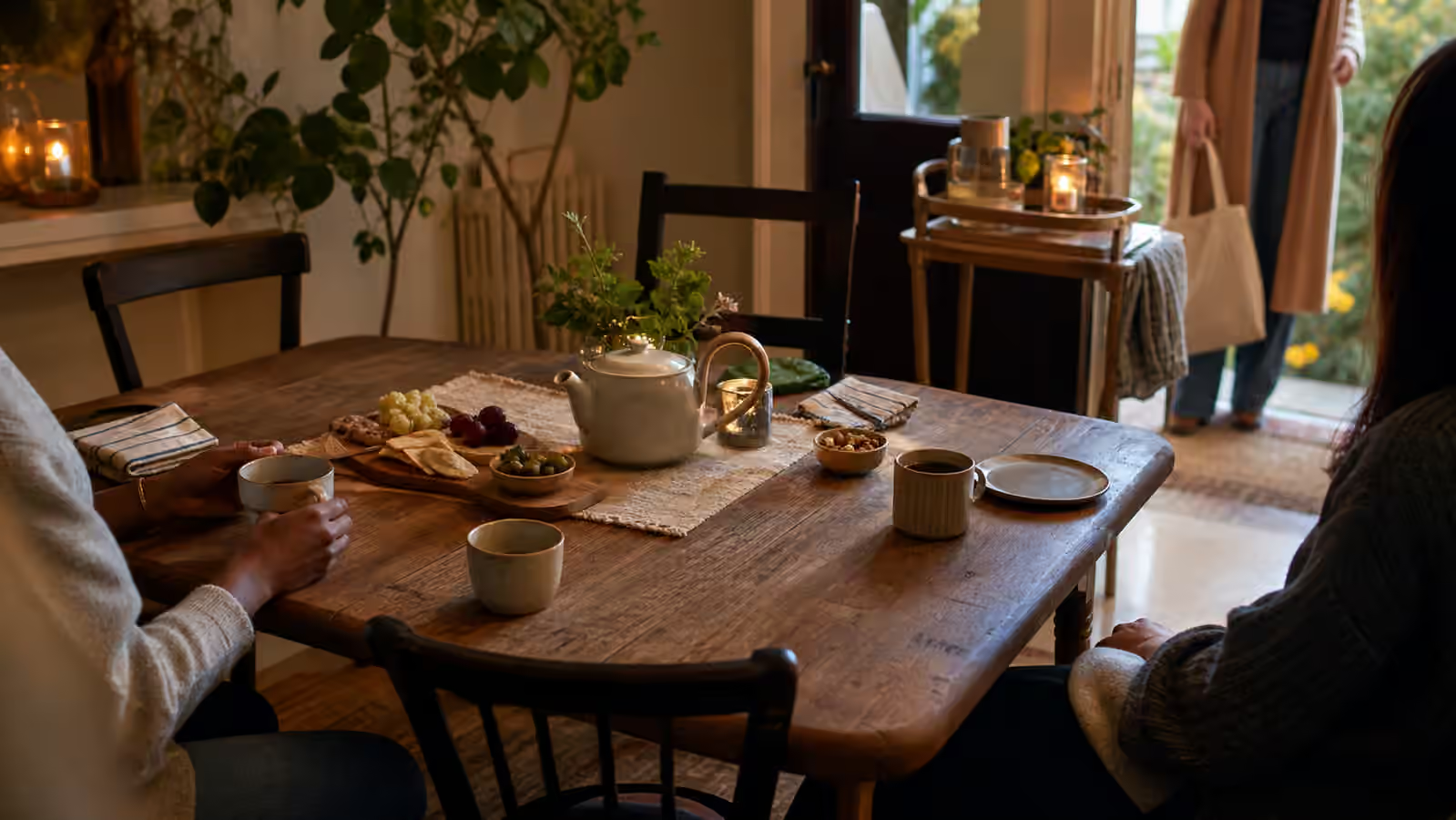
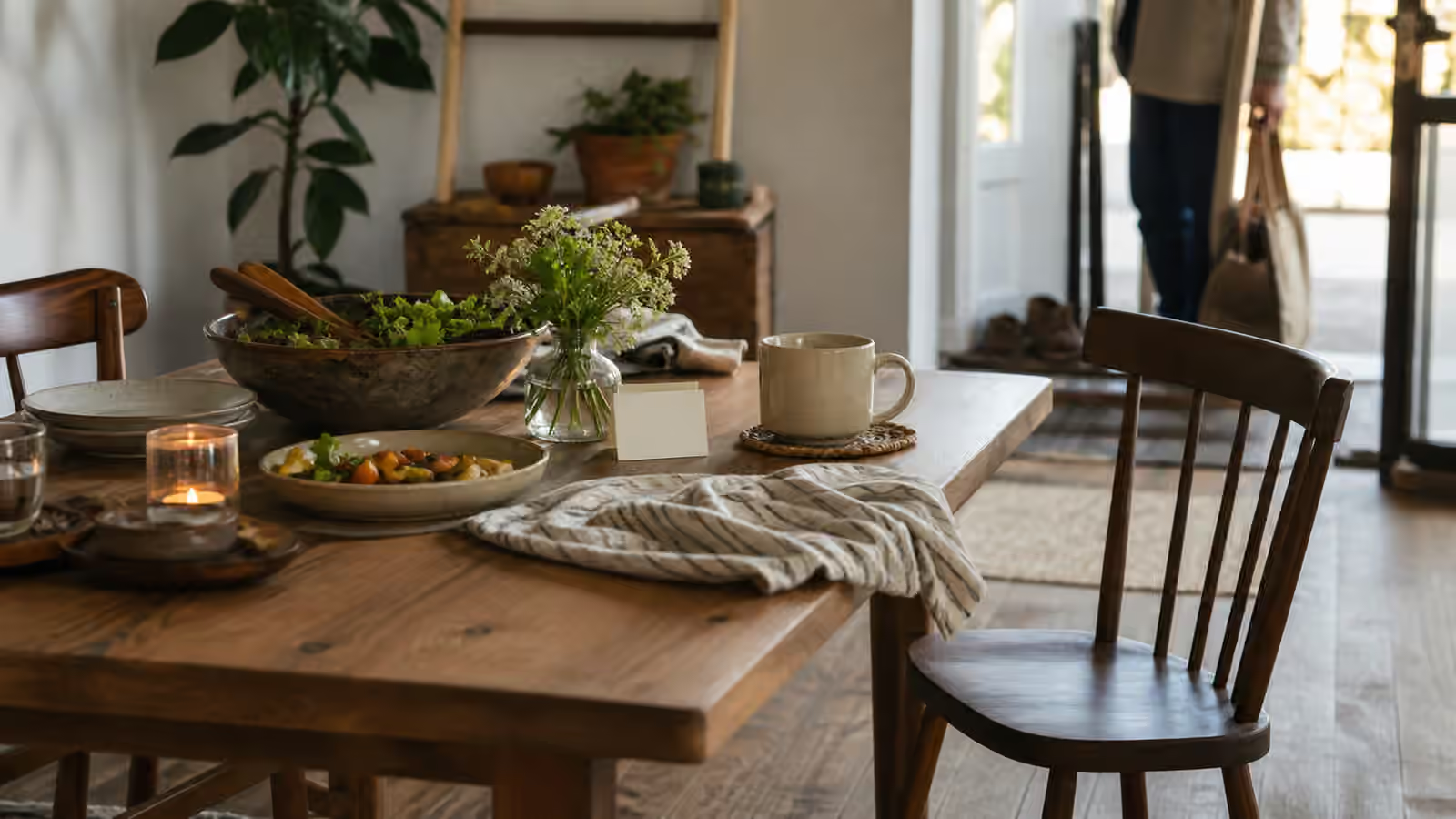
Solve it before anyone arrives by letting the entry do the explaining. Put a hook, chair, basket, or obvious coat spot right where a guest can use it without asking. If shoes come off, make that unmistakable and give them somewhere to go; if shoes stay on, do not leave a suggestive row of household shoes by the mat. If the gathering happens away from the door, lay a simple trail: a light on, the interior door open, cups in view. Then greet with one orienting line that tells the body what to do, something like “come in, coats here, tea’s on the table, we’re starting in a few minutes.” That single sentence spares the guest the tiny ordeal of needing answers before they have even set down their bag, and it hands them cleanly to The Opening Beat , which works far better when the threshold has already been crossed without friction.
Do not make the non-driver apologize
Arrival notes drift toward drivers without anyone meaning them to. The parking directions get three careful sentences while the transit rider gets a shrug and “you can probably bus it.” A table that wants to keep recurring should notice how its people actually get there, on foot, by bike, by transit, dropped off, on a shared ride, or some combination, and make the non-driving approach just as visible. You do not have to solve everyone’s transportation. You do have to keep the invitation from quietly assuming a car.
Name the nearby stop or the walkable landmark when it helps, and say honestly whether the walk from it is flat and simple or steep, dark, or confusing. If there is somewhere to leave a bike, mention it. If people sometimes share rides, keep that offer optional and private enough that nobody has to explain money, disability, anxiety, or a safety concern in a group thread. This is a sober-ish design point too: guests should never have to sort out transport under social pressure at the end of an evening. When nonalcoholic drinks are simply normal and the transit information is plain, leaving stays easy, and no one is nudged toward driving impaired, an expensive ride, or pretending the last mile is nothing.
Plan for the early and the late
Good logistics account for the people who miss the ideal window, because someone always does. Awkward transit timing lands a guest on your step ten minutes early; a failed parking hunt lands another one late. A host who has thought about both once can meet either without treating it as a small crisis.
For early arrivals, decide in advance whether they come in or wait, and say so. If arriving early would expose household mess, childcare, work, prayer, or your own setup scramble, name the arrival window clearly in the invitation. If early guests are welcome to sit while you finish, hand them a small, finite landing task, pour water, set out cups, so they feel useful rather than stranded, and make sure it is genuinely optional. For late arrivals, borrow the approach in Late Arrivals Without Resetting the Room and add one disarming line to the route note: if you’re late, just text and come in quietly, there’s a chair by the door. That sentence prevents the whole apology theater and tells the latecomer the table did not become impossible the moment they missed the first pour.
Keep repeating the boring details
Recurring hosts often drop the logistics once the regulars know them by heart, and then a newcomer, a returning guest, or a frazzled regular has to reconstruct the basics from memory. Repeat the boring details every time anyway. The address, the entry cue, the parking note, the transit hint, the arrival window, the door text, none of it is clutter; it is the part of the invitation that lets people arrive without doing detective work. Repetition protects you as much as them: fewer stray messages asking where to park, fewer guests turning up flustered, fewer first minutes burned solving preventable confusion, and more of your attention free for actually greeting people.
For your next gathering, rewrite the invitation so a guest can picture the whole approach, parking or transit, the entrance, and the first two minutes inside, before they ever leave home. Arrival logistics are not the glamorous part of hosting; they are the hinge. When the hinge sticks, everything after it feels heavier than you intended. When it swings freely, guests barely notice it at all. They simply arrive, set down a coat, find the tea, and step into the small shared rhythm you meant to offer all along.