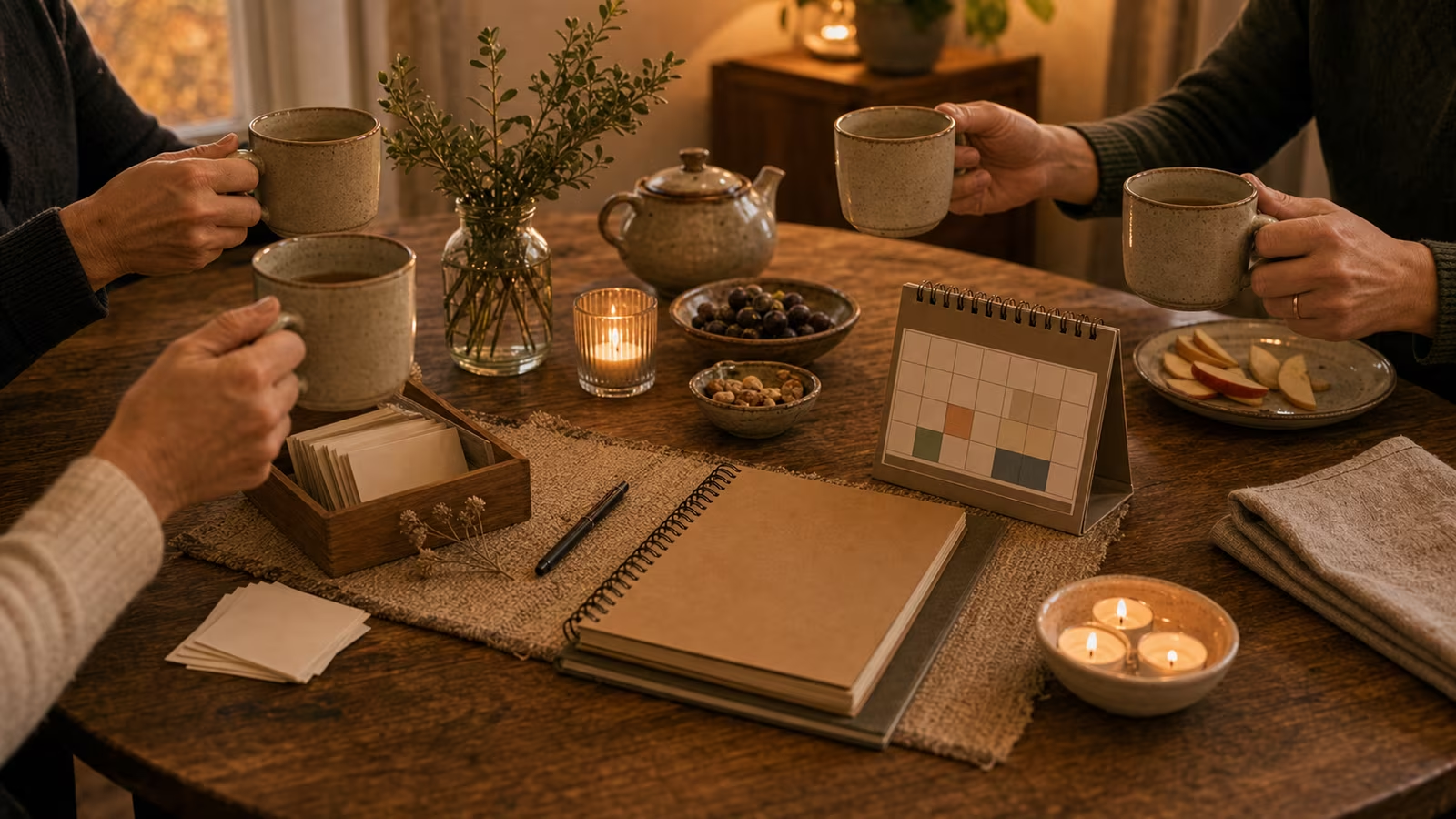
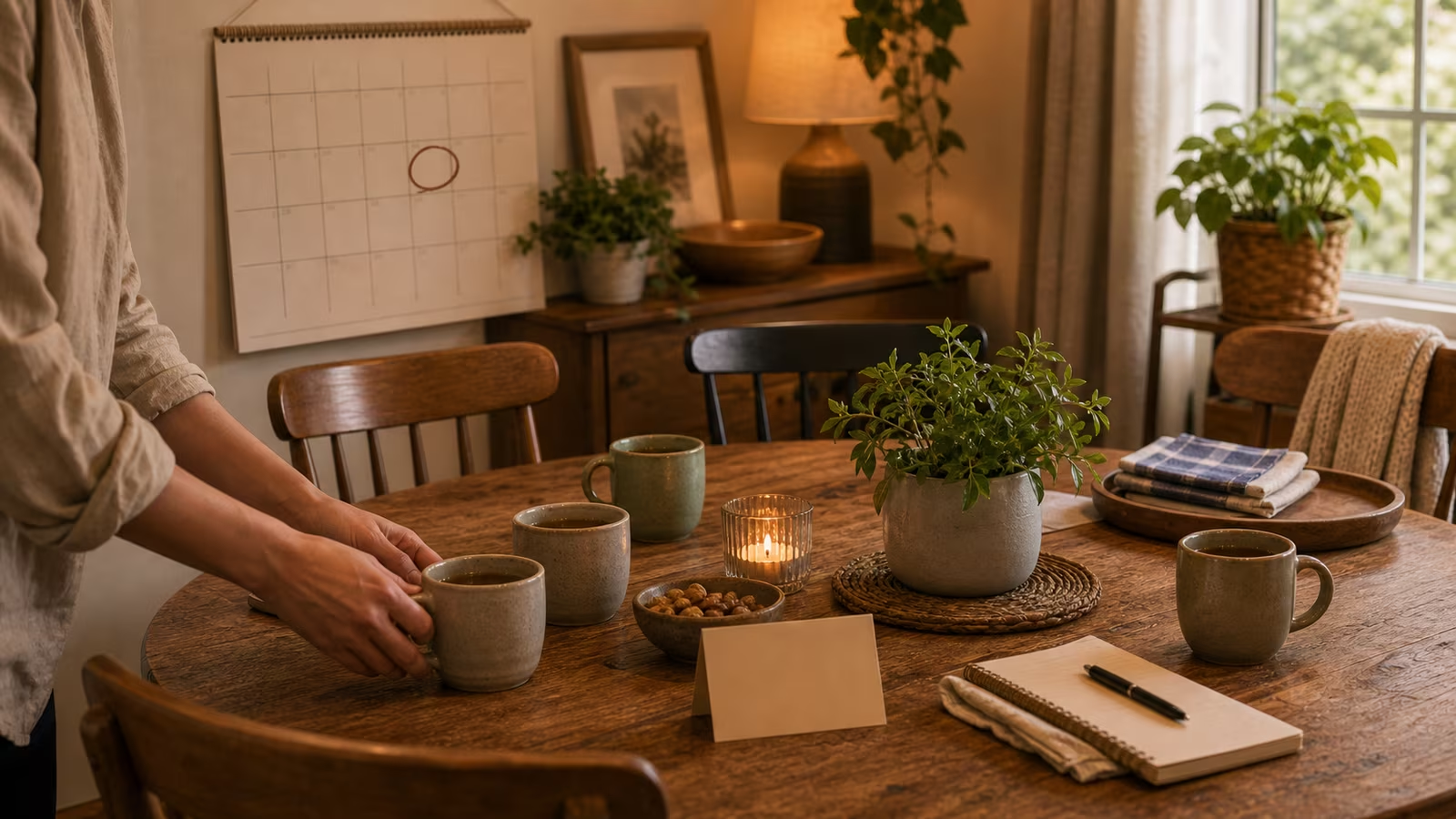
The quiet killer of recurring gatherings is not conflict or boredom. It is guilt. A person misses one month because of a deadline, then feels sheepish about the second month, then decides that showing up after two absences would require an apology they cannot face, and so they never come back. Nobody fought. Nobody was unwelcome. The gathering simply built up a small debt in each person’s head until returning felt like settling an account. This guide is about designing recurrence so that debt never accrues, so that missing is genuinely free and returning is genuinely easy.
The core move is to make the ritual strong enough to continue on its own momentum without turning attendance into a loyalty test. A table that needs every regular present to feel worthwhile has quietly told those regulars that their absence damages it. A table that runs beautifully with whoever shows up has told them the opposite: come when you can, the door does not keep score.
The apology tax, and how to abolish it
Watch the language people use when they miss a gathering. They apologize, they over-explain, they offer medical detail or work drama they owe no one, and they brace for a cool reception when they return. All of that is the apology tax, and every host has the power to abolish it with a single consistent policy: absences are not events. You do not remark on them, you do not tally them, you do not greet a returning guest with “look who finally showed up,” even as a joke, because the joke lands as an invoice.
The failure mode to name plainly is treating each absence as a small rejection and, worse, requiring people to repair the relationship before they are allowed back. If a guest has to perform contrition to re-enter, most will simply not re-enter. The healthiest recurring tables have a short memory for absence and a warm reflex for return. When someone comes back after two months away, the correct response is “so glad you’re here,” full stop, with no accounting attached.
Build the same rhythm so nobody has to catch up
Guilt thrives on the fear of having missed something irreplaceable. You defuse that fear with sameness. When the table keeps the same rhythm, the same rough shape, the same opening, the same core of what happens, a returning guest never has to catch up on plot. They walk back in and immediately know how to be there. That predictability is not boring; it is mercy. It means missing three sessions costs a person nothing but three pleasant evenings, not a thread they can no longer follow.
This is where a steady cadence earns its keep. A gathering on the second Sunday of every month, or every Tuesday, becomes a fixture people can rejoin at any point rather than a serialized event they fall behind on. Reminder Rhythm covers how to keep that cadence visible with gentle, non-nagging nudges, the kind that say “this is happening, come if it works” rather than “we noticed you weren’t here last time.”
Make declining as easy as accepting
An invitation that is hard to decline is an invitation that breeds guilt, and eventually avoidance. If saying no requires a paragraph of justification, people learn to dread the ask itself. Write invitations that hand the guest an easy exit right inside the welcome: “come if you can, no need to say why if you can’t.” When a decline costs nothing, people decline honestly and cleanly, and honest declines are the raw material of durable attendance, because the person who felt free to say no this month feels free to say yes the next. Invitations Without Pressure works through the exact phrasing that keeps a yes real and a no cheap.
Real lives are the reason this matters. Illness, caregiving, money, weather, a bad mental-health week, a stretch of pure exhaustion, none of these are failures of loyalty, and a recurring table that lasts is one that expects them. The guest managing a chronic condition, the parent whose evenings evaporate, the person quietly rationing their social energy all need the same thing from you: a gathering that does not punish the ebb.
Lower the return threshold on purpose
Design a soft place to land for the person coming back. The return point should ask nothing extra of them, no explanation, no contribution to make up for lost time, no ceremony marking their reappearance. If your table sometimes involves bringing food or a passage, make it explicit that returning guests can arrive empty-handed. If regulars have inside references, fold newcomers and returnees into them without making anyone feel behind. The lower the threshold, the more people cross it.
This same forgiving logic extends to the whole household ecosystem around a recurring table, the kids who sometimes come and sometimes don’t, the neighbor who drops in irregularly, the friend whose pet situation shifts month to month. Children, Pets, and Neighbors treats those fluctuations as normal rather than as problems to be solved, which is the same spirit that keeps adult attendance guilt-free.
Practice one forgiving sentence
Add a single line to your next invitation and keep it there every time: come when you can, no need to explain, the next table will be here. Then hold to it in practice, most of all in how you greet the people who return after a gap. Notice, over a few months, whether attendance actually loosens up, whether people start declining honestly instead of ghosting, and whether the room fills with a mix of faithful regulars and happy returnees rather than a shrinking core of the guilt-immune.
If this is your first recurring table, The Common Table Quickstart lays out the rhythm this forgiveness protects. For keeping the habit sustainable on your end, see the Startable Life Lab , and when online advice starts implying that a real community demands perfect attendance, the Reality Check Desk is a calm correction.