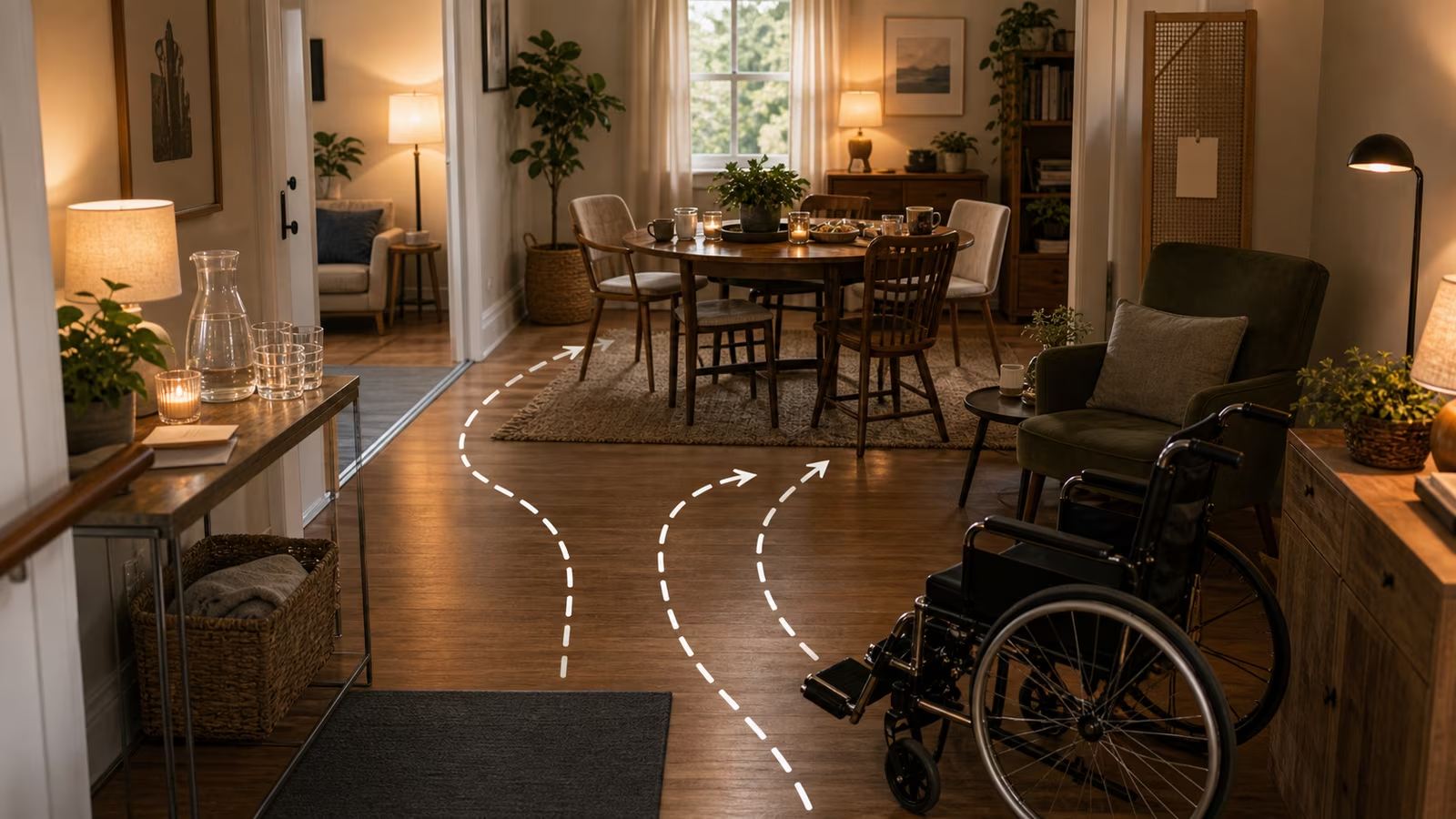

Sooner or later the week wins. Someone gets sick, a storm rolls in, a parent needs help, or the host simply reaches Thursday with nothing left in the tank. New hosts tend to read that moment as a small failure, proof that they overcommitted or that the whole idea was too fragile to hold. It is nothing of the kind. A recurring table that never once has to cancel is almost certainly a table being run by a person quietly burning out to keep the streak alive. The durable question is not whether you will ever miss a week. It is how gracefully you handle the week you miss.
If you are only a table or two into this, the quickstart lays out the underlying idea: a good gathering is a system, not a performance, and systems are supposed to include a plan for the days they cannot run.
Cancellation is a design feature, so design it
The mistake that damages trust is not cancelling. It is cancelling badly, which almost always means cancelling late. A host feels the week slipping, dreads the message, and puts it off, hoping energy will return or the fever will break. It rarely does, and now the note goes out at six in the evening for a seven o’clock table, after people have already left work early, arranged a sitter, picked up bread on the way, or talked themselves out of the other plans they set aside. The lateness, not the cancellation, is what people remember and quietly resent.
So the first move is to lower your own bar for calling it. Decide, ideally in advance, that a canceled table sent out with a day’s notice is a small, ordinary thing and not a betrayal of anyone. When you stop treating the message as a confession, you send it earlier, and early notice is the single kindest thing you can offer. It returns to each guest the one resource a late cancellation destroys: the ability to make other plans with the evening you just handed back to them.
Say less than you want to say
Guilt makes people over-explain, and over-explanation is its own small burden on the reader. A cancellation note does not need the full medical history, the saga of the week, or three paragraphs of apology that a guest now feels obliged to answer with reassurance. It needs only a few honest things: that this week is off, roughly why in a phrase, when the next one is, and that you are looking forward to it. “Not feeling well enough to host tonight, so we’ll skip this week. Same table, same time, next Wednesday. See you then.” That is a complete message. It closes the loop instead of opening a new conversation.
The apology spiral is worth naming directly, because so many well-meaning hosts fall into it. It reads as considerate but actually asks something of everyone who receives it: now each guest must reply, must tell you it is fine, must manage your feelings about a routine change. A brief, warm, unfussy note asks nothing back. It respects your guests’ time in exactly the way the gathering itself is supposed to. If phrasing invitations and their withdrawals in a low-pressure register is the part you find hard, invitations without pressure works the same muscle from the other direction.
Always hand over the next date
A cancellation that names the next date is completely different, emotionally, from one that does not. Without a forward date, “we’re skipping this week” quietly reads as a small ending, and people’s minds fill the blank with worse stories than the truth: maybe the host is losing interest, maybe the group is winding down, maybe I did something. With a date attached, the same cancellation reads as a pause inside an ongoing thing. The table did not stop; it exhaled. Nothing reassures a recurring group more cheaply or more reliably than a concrete next Wednesday sitting at the bottom of the note.
This is where a real rhythm earns its keep. A table that meets on a predictable cadence, which the seasonal ritual calendar is built to help you hold, barely needs to announce its next date because everyone already knows it. The cancellation becomes a single skipped beat in a pattern people can feel, rather than a gap in something formless. The more legible your rhythm, the less any one missed week can shake it.
Offer a lighter substitute only when it is truly lighter
Sometimes you do not want to lose the week entirely, and a smaller substitute can carry the connection through: a short walk instead of the full soup night, tea at a nearby table instead of cooking, a brief window where anyone who wants to can drop by. This can be lovely. It becomes a trap only when the substitute is secretly as much work as the thing you canceled. If you are too depleted to host the table, you are also too depleted to quietly host a whole second event dressed up as a casual alternative. Offer the substitute when it genuinely costs you little, and let the week simply be skipped when it does not. A clean skip is always better than a substitute that pushes you further into the ground.
Whatever you offer, keep it optional in both directions. Nobody who cannot make the moved date should feel they have fallen out of the group, and nobody should feel obligated to show up to a rescheduled slot that no longer fits their week. The whole point of handling this gracefully is that a missed table costs people nothing, including the guilt of missing it.
Guard the reschedule against quiet resentment
Rescheduling has one failure mode worth watching: the host who reschedules out of duty, then arrives at the moved table already drained and faintly aggrieved. Guests feel that. A gathering hosted from obligation carries a different air than one hosted from a bit of restored energy, and no amount of good food covers it. If moving the date only relocates your exhaustion to a different evening, the honest move is not to reschedule at all but to skip cleanly and return at full strength next cycle. Grace toward your guests includes grace toward yourself; a host who protects their own capacity is protecting the table’s future too.
Drinks and food, if you do reconvene, stay exactly as low-key as the format ever was. A reschedule is not an occasion to make up for the missed week with more of everything. Keep water easy to reach, keep any nonalcoholic option feeling like a real choice rather than a consolation, and let people arrive at the moved table without any sense that they owe extra warmth to compensate for the change. The rescheduled evening should feel like the ordinary one, just on a different night.
Practice the note before you need it
The best time to learn this is before a real cancellation forces your hand. Write a practice note now: name the change, give the next date, skip the apology spiral, and keep the whole thing to a few warm lines. Read it back and cut anything that asks the reader to reassure you. When a genuine sick day or storm arrives, you will already have the shape in hand and will send it early instead of dreading it into lateness.
Afterward, notice what actually happened. Almost always, the group is fine. People appreciated the notice, showed up to the next date, and thought about the missed week far less than you did. That evidence is worth keeping, because it slowly retrains the guilt reflex that makes hosts cancel late. A table strong enough to survive a skipped week is a table people can actually count on, and countable is worth far more than uninterrupted. When you are ready to grow the group rather than pause it, scaling from four to eight picks up where a steady, forgiving rhythm leaves off.