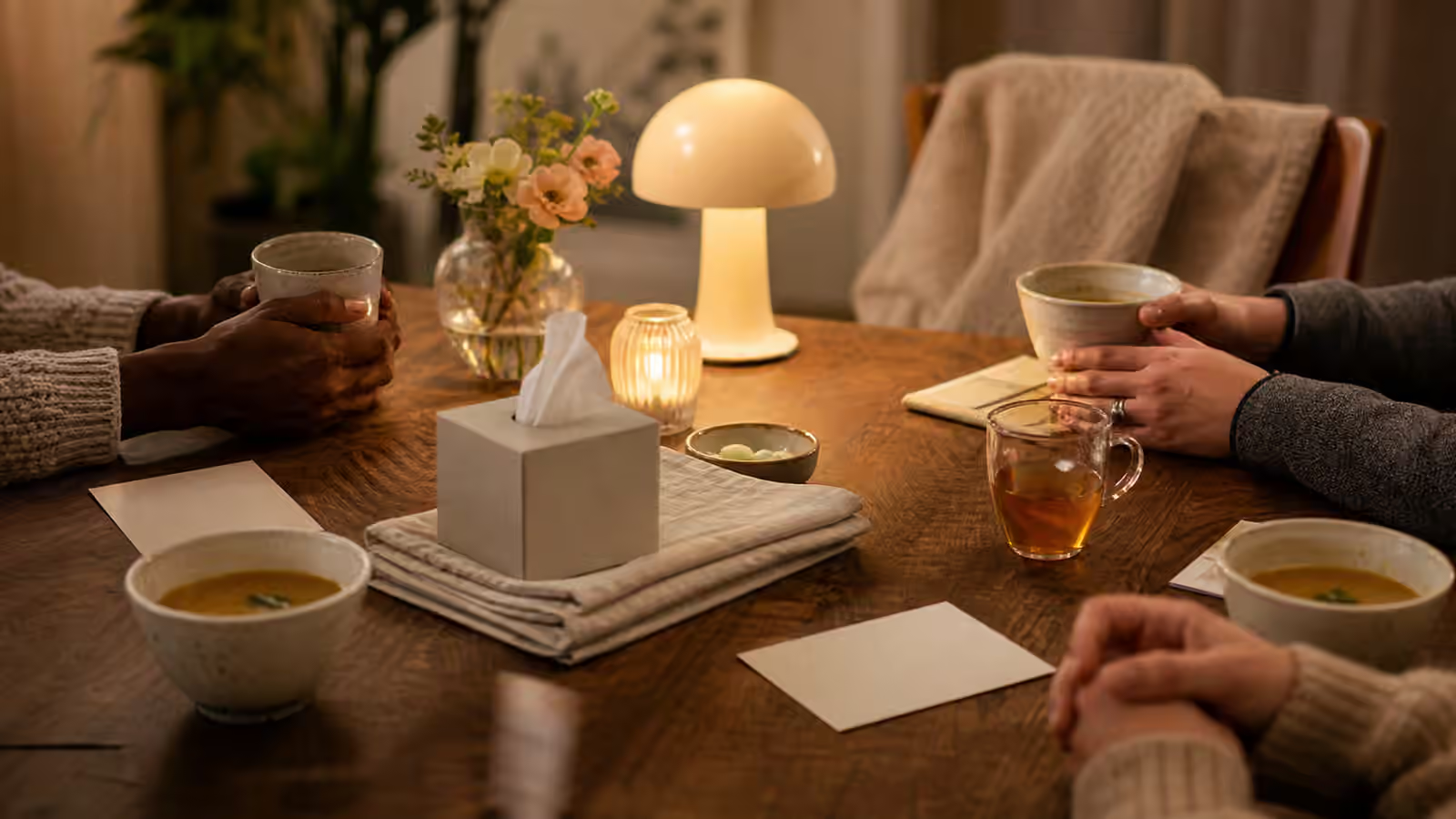
Every home gathering happens inside a real household, and the household does not politely disappear when guests arrive. There is a dog who has opinions about the doorbell, a toddler with a bedtime, a roommate whose room opens off the same hallway, a downstairs neighbor whose ceiling is your floor, and a street where parking is a small daily war. None of this is a flaw to hide. It is simply the truth of gathering in a lived-in place, and the hosts who handle it best are the ones who name it early rather than hoping nobody notices. Boundaries set before the doorbell rings are gifts; boundaries discovered mid-evening are stress delivered to everyone at once.
If this is among your first tables, the quickstart covers the underlying habit at work here: a little clarity offered up front spares everyone a great deal of guessing later, and household boundaries are just clarity about the room your gathering actually lives in.
Say the household truth in the invitation
The single most useful move is also the easiest: put the relevant household facts in the invitation, plainly, before anyone commits. Whether children are welcome, and if so for how long. Whether there is a dog or cat in the home, since a guest with allergies or a real fear needs to know before they arrive, not after. When the evening needs to wind down for the sake of a bedtime or a shared wall. Where to park, or where not to. A guest reading these details is not being managed; they are being trusted with the information they need to say yes honestly, or to decline without a fuss.
The reason this matters is that people do not share a single set of household norms, and the gaps between them are invisible until they cause friction. To one guest, “family gathering” obviously means bring the kids; to another it obviously means the opposite, a rare grown-up evening. One person assumes the dog will be part of the fun; another has spent years quietly dreading other people’s dogs. When you leave these things unstated, every guest fills the blank with their own default, and someone’s default will be wrong through no fault of theirs. Correcting it in the moment, in front of others, is far more awkward than a plain line in the invitation ever would have been. If naming these boundaries warmly is the part that feels stiff to you, invitations without pressure is built precisely for phrasing a clear ask without it landing as a rule sheet.
Give children and pets a real plan, not a vague hope
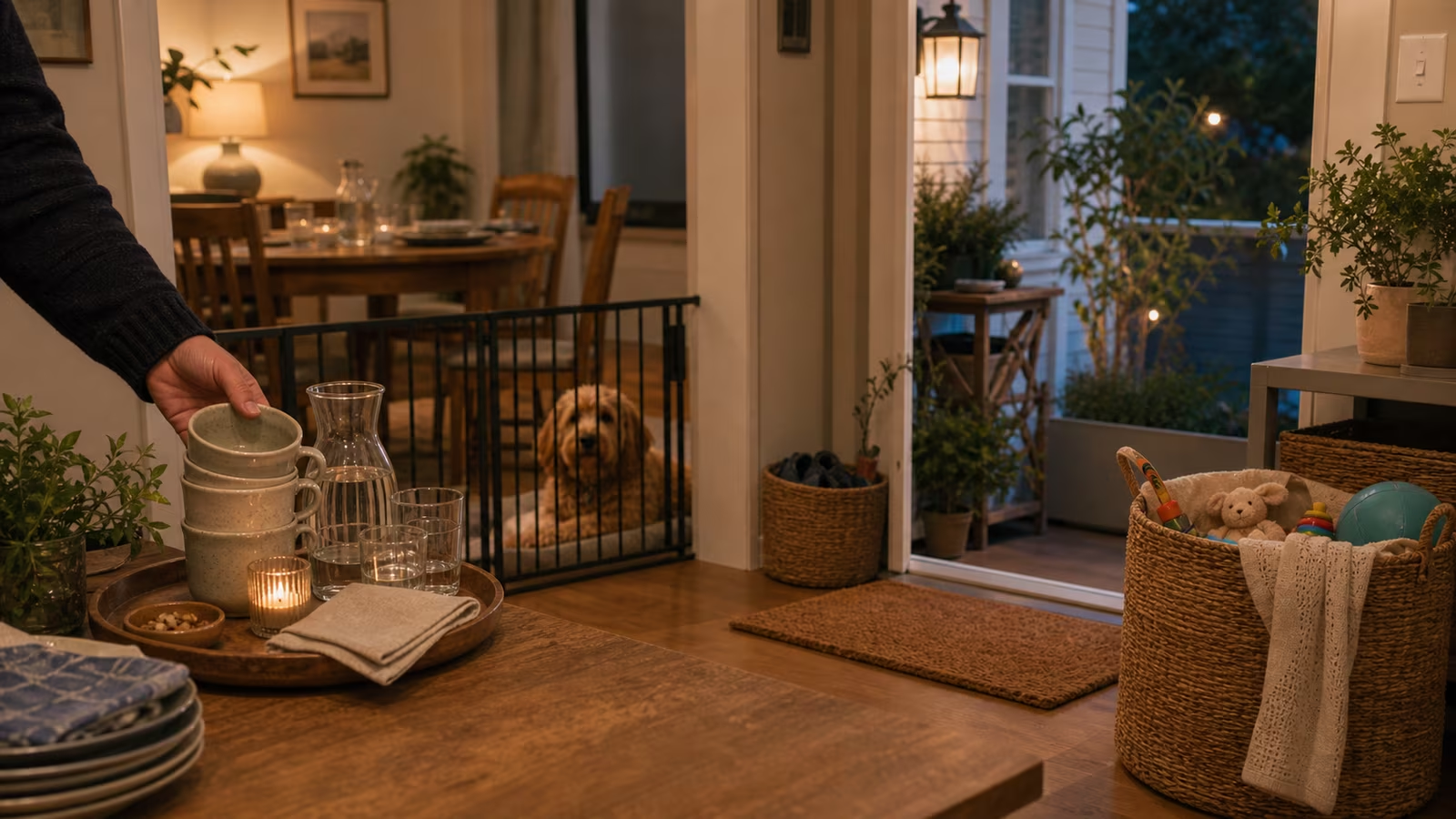
“Kids are welcome” is a kind sentence that quietly commits you to more than it says. Welcome to do what, exactly, and until when? A home table that includes children goes far better with a small, honest plan: a basket of quiet things in a corner, a first hour where the young ones are part of it and a later stretch where the evening settles into adult conversation, a clear sense of which rooms are in play and which are off. This is not coldness toward children. It is the opposite; it is taking their presence seriously enough to design for it, so that parents can actually relax instead of spending the night as anxious lifeguards.
Pets deserve the same honesty in the other direction. A dog you adore is still, to some fraction of your guests, an allergy, a phobia, or simply a large uncertainty in a room they are trying to feel comfortable in. Decide before the evening whether the animal is part of the gathering or gently away behind a door or gate, and then tell people which it is. Both choices are fine; the unfair thing is the surprise. A guest who learns on the doorstep that there is a dog they must navigate has been handed a problem at the exact moment they were hoping to relax, and no amount of “he’s friendly” fully fixes it.
Host for the people on the other side of the wall
A home gathering has neighbors, and in an apartment those neighbors are extraordinarily close: your floor is their ceiling, your late laughter is their interrupted sleep, your guests’ cars are their missing parking spot. Good hosting quietly includes these people even though they will never sit at your table. The main tool is the end time. A table that reliably winds down at a neighborly hour buys you enormous goodwill over the months, while a gathering that regularly runs loud and late slowly turns the people around you into adversaries. Name a quiet close, mean it, and let the evening’s energy taper toward it rather than crashing past it.
Sound is the thing to watch, because it travels further than it feels like it does from the inside. A room that seems pleasantly lively to you can be genuinely disruptive through a shared wall. If your walls are thin, favor the gentler shapes: conversation over a loud game, music kept low enough that people talk under it rather than over it, and a real softening of volume as the end time approaches. On the way out, a word to guests about keeping the goodbye quiet in the stairwell or on the street costs nothing and spares your neighbors the worst part of any gathering, which is the loud, cheerful, oblivious departure beneath their window.
Keep the household boundaries steady across the group
A home also contains other people who did not necessarily sign up to host: a roommate, a partner, a family member whose space and evening are being borrowed. Their boundaries count too. Know which rooms are shared and which are private, and make that legible so a guest looking for a coat or a bathroom does not wander into someone’s bedroom. When more than one person’s home is in play, sorting out who is responsible for what ahead of time prevents the quiet resentment that builds when one household member ends up absorbing all the disruption; co-host roles works through how to share that load deliberately instead of by accident.
Drinks, as everywhere at the Common Table, stay simple and off to the side, which matters doubly in a home where children may be present for part of the evening. Keep good water and a real nonalcoholic option easy to reach, let anyone’s choice be their own private business, and never let the interesting drink be the alcoholic one in a room that includes kids or guests who would rather not. A household-aware table is by nature a gentle one, and gentleness in what fills the cups belongs to the same instinct.
Let the boundaries make attendance easy
The reason to set all of this out plainly is not control; it is forgiveness. When guests know the real shape of your household before they commit, they can match their own life to it honestly. The parent knows whether to arrange a sitter. The person with the dog allergy knows to sit this one out without drama or guilt. The neighbor sleeps. And because everyone chose in with clear eyes, the evening itself carries far less low-grade tension. A gathering that people can decline cleanly is also one they can accept wholeheartedly, and attendance without guilt is the companion habit that keeps a recurring home table forgiving rather than obligatory.
The practice is small and worth doing before your next invitation goes out. Add two concrete boundary lines to it — something like “pets will be tucked away, kids welcome for the first hour, quiet close at nine” — and notice how much calmer the evening runs when nobody has to guess. Boundaries stated before the doorbell are not walls around your hospitality. They are the frame that lets it hold.