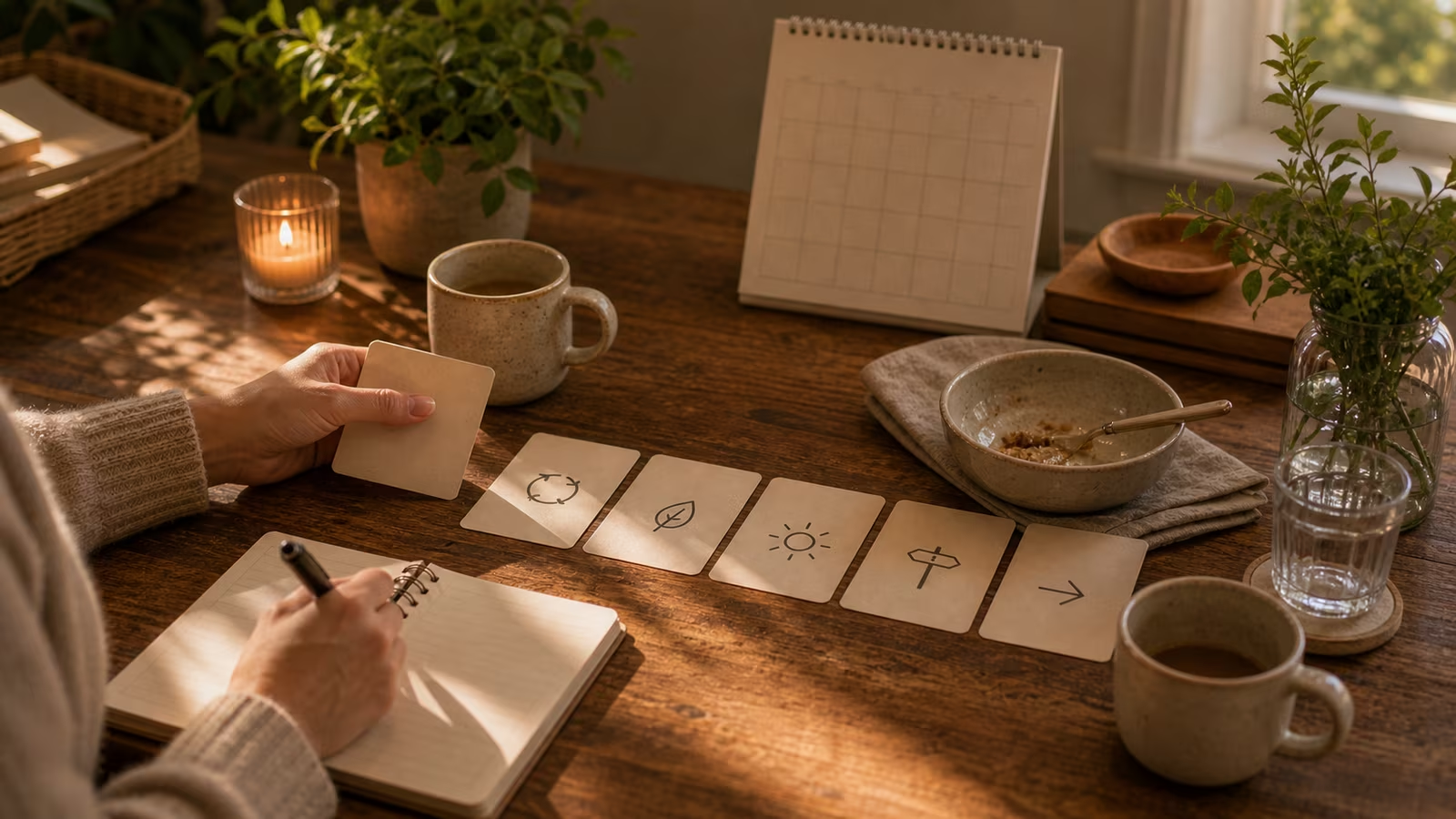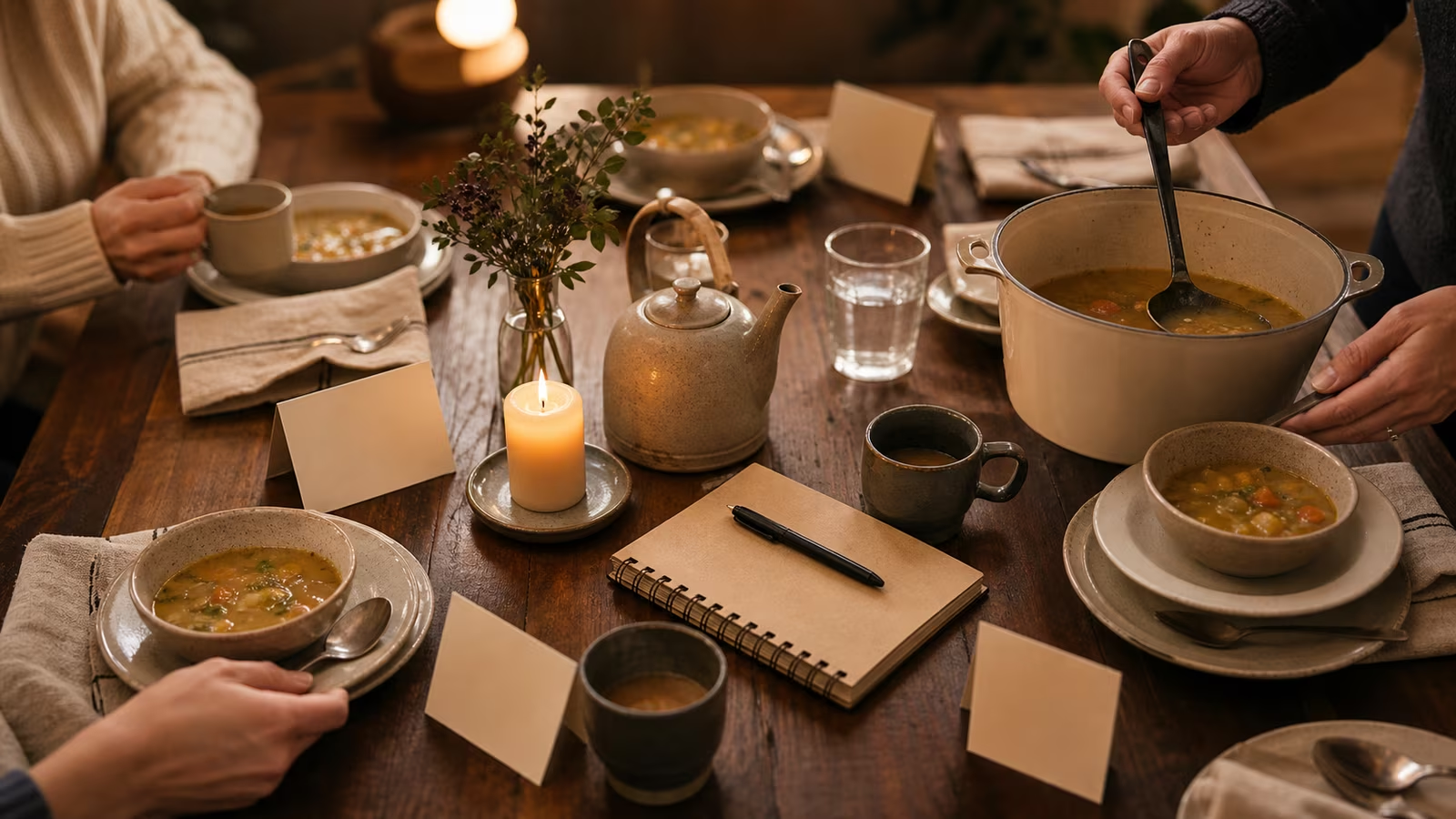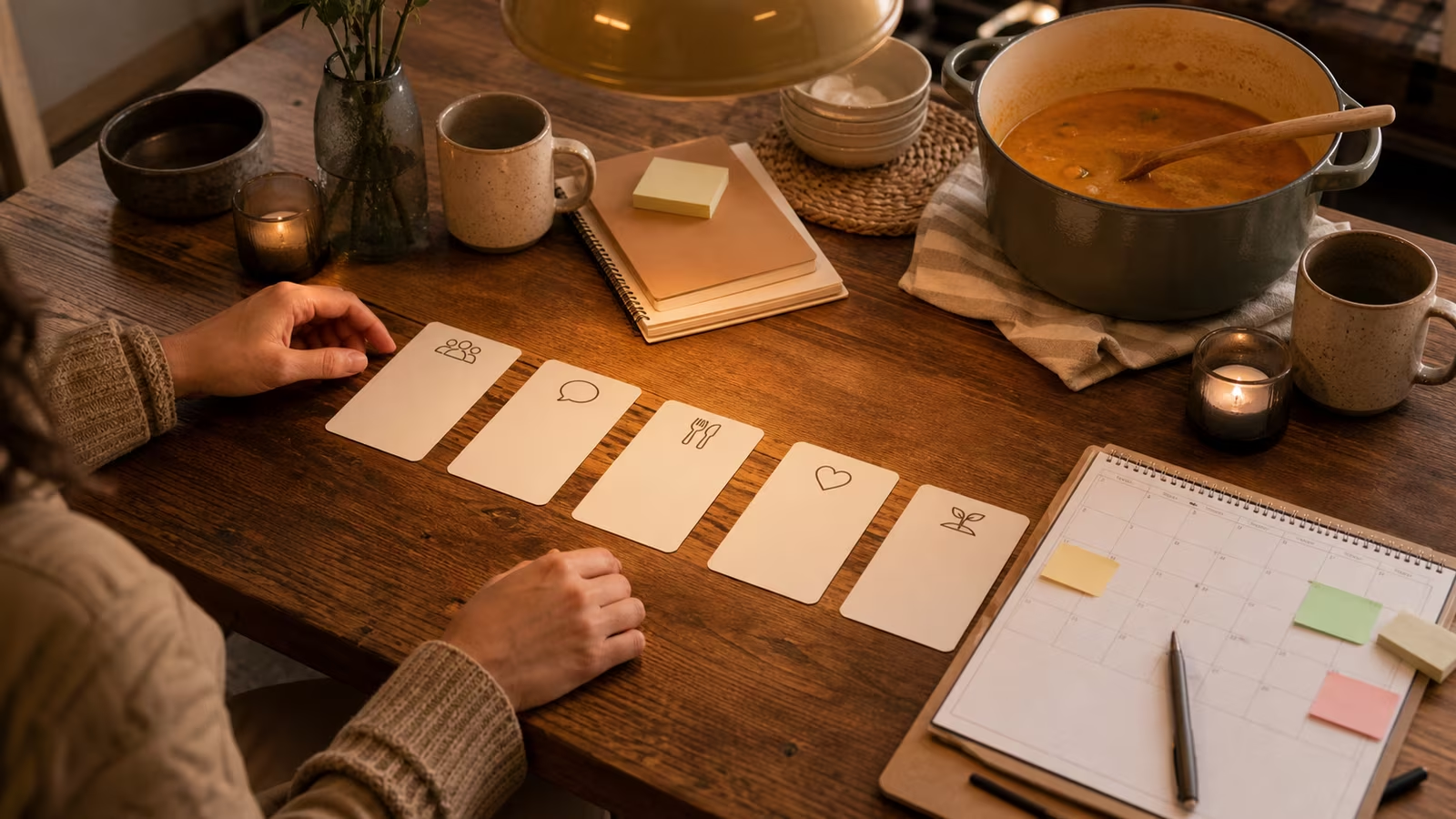
Most people plan a gathering by starting with the food. They picture a menu, get excited or intimidated by it, and only afterward work backward to the who and the when. This is exactly the wrong order, and it is the reason so many hopeful first gatherings never become second ones. The menu is a detail. The format — the underlying shape of the thing, the part that stays the same every time — is the decision that determines whether your table can survive a normal, tired, ordinary week. Choose the format first, and the menu becomes an easy afterthought. Choose the menu first, and you have quietly signed yourself up for a performance you will not want to repeat.
This guide sits near the very start of the Common Table sequence for that reason, and it pairs naturally with the quickstart : before you cook anything, decide what shape you are actually committing to hold on a recurring basis.
The format is what repeats, and the menu is what varies
A format is the small set of things that stay constant every time you gather: roughly when it happens, how long it runs, how it opens, what people gather around, and how it ends. The menu is everything else, the part free to change from week to week. The whole art of a repeatable table is putting the load-bearing decisions into the format, where you only have to make them once, and leaving the low-stakes decisions in the menu, where variety keeps things alive without costing you anything.
Consider a few honest shapes. A soup night: the same evening most weeks, one big pot, bread, a two-hour window, ending when the pot is scraped. A porch hour: a fixed late afternoon, drinks and whatever snack is around, an easy come-and-go that closes at dusk. A walk-and-tea: meet, walk a familiar loop, come back for tea, done in ninety minutes. A shared reading: everyone brings a short passage, one person pours, you read and talk and close on time. A skill swap: someone shows a small thing, others try it, and you eat something simple around it. Notice that in every one of these the repeating structure is doing the work, and the food is almost incidental. That is the sign of a format that will last.
Decide precisely what stays the same
The move at the heart of format design is choosing which element repeats hard, because that constant is what lets people build a habit around your table without thinking about it. For some hosts it is the day: the same Wednesday, so reliable that guests stop needing to be reminded. For others it is the duration: always two hours, always short enough to say yes to. For some it is the opening gesture, the first pour or the first stirring of the pot that tells everyone the evening has begun. For others it is the shared object at the center — the soup, the book, the thing being mended — and for still others it is the closing action, the small ritual that ends the night cleanly every time.
You do not need all of these to be fixed. You need at least one to be genuinely reliable, because reliability is what turns a series of separate invitations into a single thing people belong to. A gathering where everything is different each time is not a ritual; it is a string of unrelated events that happen to involve the same host. Pick the one or two elements you can honestly keep constant even on a low-energy month, hold those without apology, and let the rest breathe.
Try the one-sentence format test
A good format can be said in a single sentence, and if it cannot, it is probably too elaborate to repeat. The shape is simple: every X, we gather for Y, with Z effort, and end by doing one small close. “Every other Sunday, we gather for soup and bread for two hours, and end by everyone helping clear the pot.” “Every Thursday evening, we meet for a short walk and tea, ninety minutes, and end back at the porch.” Say your sentence out loud. If it flows, you have a format. If you find yourself adding clauses and exceptions, you are describing a production, and productions do not survive contact with an ordinary tired week.
The sentence is also your best defense against the most common failure, which is starting from an ambitious menu and discovering, three courses deep in the planning, that the format underneath cannot bear repeating. The elaborate first gathering goes beautifully, everyone is delighted, and then it quietly never happens again because the host cannot face doing it a second time. A format you can state in one breath is one you can run again next month without dread, and running it again is the entire point. As you shape that sentence, invitations without pressure helps you carry the same clarity into how you actually ask people, so the ask is as legible as the format itself.
Build the format for your lowest-energy self
The real test of a format is not how it performs on the night you are excited and rested. It is how it performs on the night you are tired, the month you are stretched thin, the week when hosting is the last thing you have energy for. If the format only works when you are at your best, it is not a repeatable ritual; it is an occasional treat that depends on good weather in your life. Design instead for the version of you that has had a long day and still wants a few people at the table. That means keeping the effort genuinely low, the food genuinely simple, and the shape genuinely fixed, so that showing up requires no fresh act of planning.
Drinks belong to this same low-effort discipline. A format that leans on an elaborate bar is a format that quietly costs money and energy every single time, and one that excludes the guests who would rather not drink. Keep it simple and keep it welcoming: good water within reach, a nonalcoholic option that feels like a real choice rather than a consolation, and no sense that the interesting thing in anyone’s cup has to be alcohol. If a bottle appears because someone brought it, fine, but let it sit at the edge of the format and never at its center. A shape that works completely well when nobody drinks is a shape that works for more people, more often, which is exactly what a repeatable table needs.
Choose the shape, then let it teach you
Once you have your one sentence, the rest of hosting gets dramatically easier, because every other decision now has something to answer to. The food only has to serve the format. The invitation only has to describe it. The opening and the close are already decided. The work of thinking about who fits at the table and how to welcome a first-timer, which guest fit and kindness takes up, and the small craft of the first few minutes, which the opening beat covers, both become far simpler once the underlying shape is settled rather than improvised each time.
So do the practice before you plan a single menu. Write three format sentences — three different honest shapes your life could hold — and then choose the one you could still run on a low-energy month, not the one that sounds most impressive on a good day. That is your format. Hold it steady, let the menu vary on top of it, and give it enough repetitions to prove itself. The shape you can keep is worth infinitely more than the shape that dazzles once, because only the shape you can keep ever becomes the thing people count on.