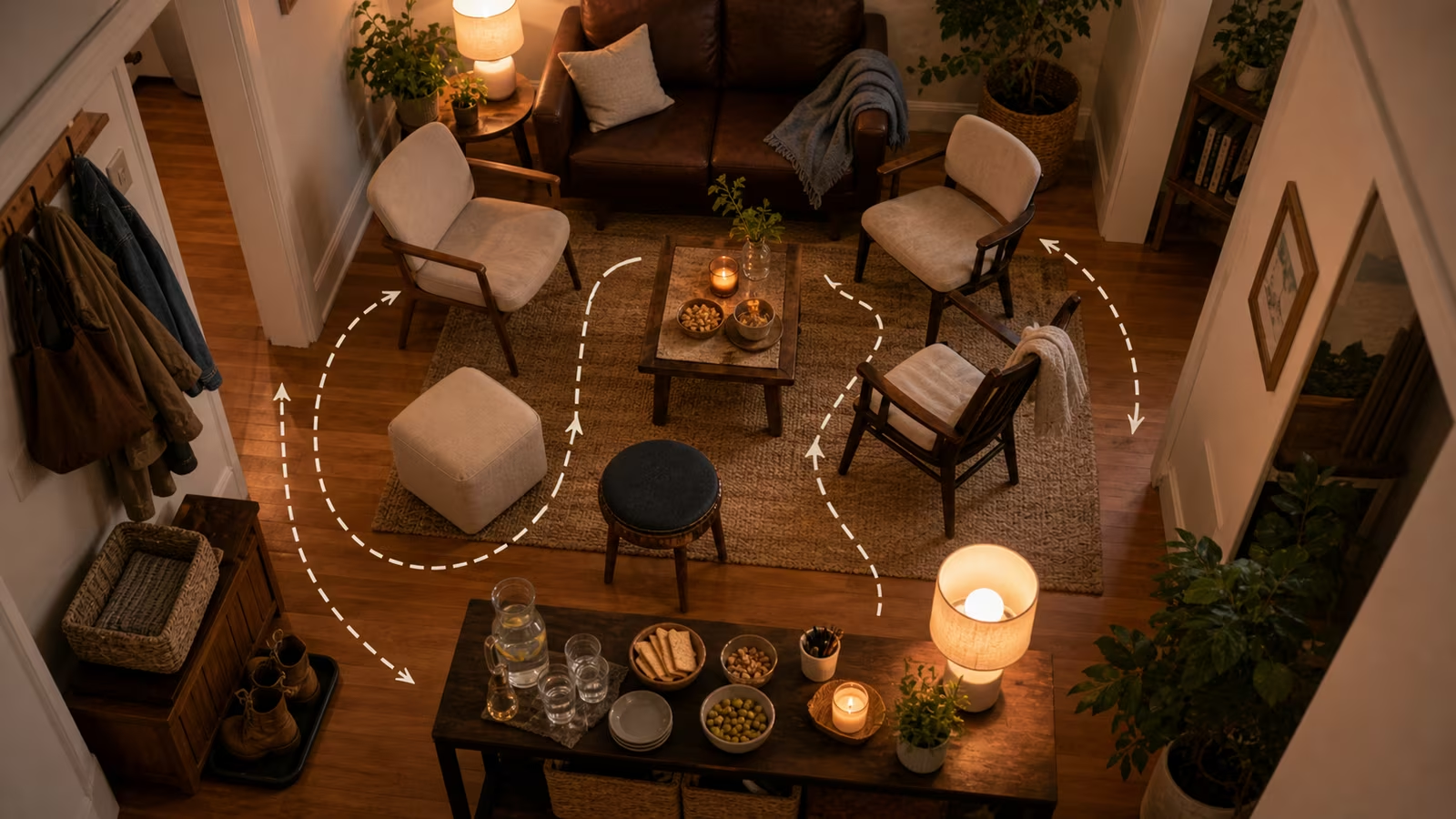
Cleanup is the part of hosting nobody photographs and almost everybody dreads. It is also, quietly, where a recurring table is won or lost. A gathering can be warm for two hours and still leave a bad aftertaste if the last ten minutes turn into the host scraping bowls alone while guests hover in the doorway apologizing, or into a well-meaning crowd that dismantles the kitchen so thoroughly that leaving becomes its own awkward negotiation. The cleanup ritual is how you close a small meal, soup night, tea circle, or repair share so the room gets restored, guests get a light and genuine role, and you do not wake up the next morning resenting the people you invited. If you are just starting out, The Common Table Quickstart sets up the larger shape this beat lives inside.
Why the last ten minutes carry so much weight
Endings are sticky in memory. People tend to remember how a gathering felt as it broke up more vividly than how it felt in the comfortable middle. If the close was smooth and the goodbye was warm, guests leave with a sense that the whole evening was easy, and they say yes faster next time. If the close was chaotic or guilt-laden, that residue attaches itself to the invitation, and the next reply comes back a little slower and a little more hedged.
For the host, the stakes are practical rather than sentimental. Cleanup is the single task most likely to convert a lovely gathering into a private grievance. You do the shopping, you make the soup, you set the room, you carry the conversation, and then everyone drifts off and you are standing at the sink at eleven with a full counter and a quiet flat. Do that three or four times and the warmth curdles. A designed cleanup beat is not about neatness. It is about keeping the host willing to host again.
The one-tray, one-station, one-cue spine
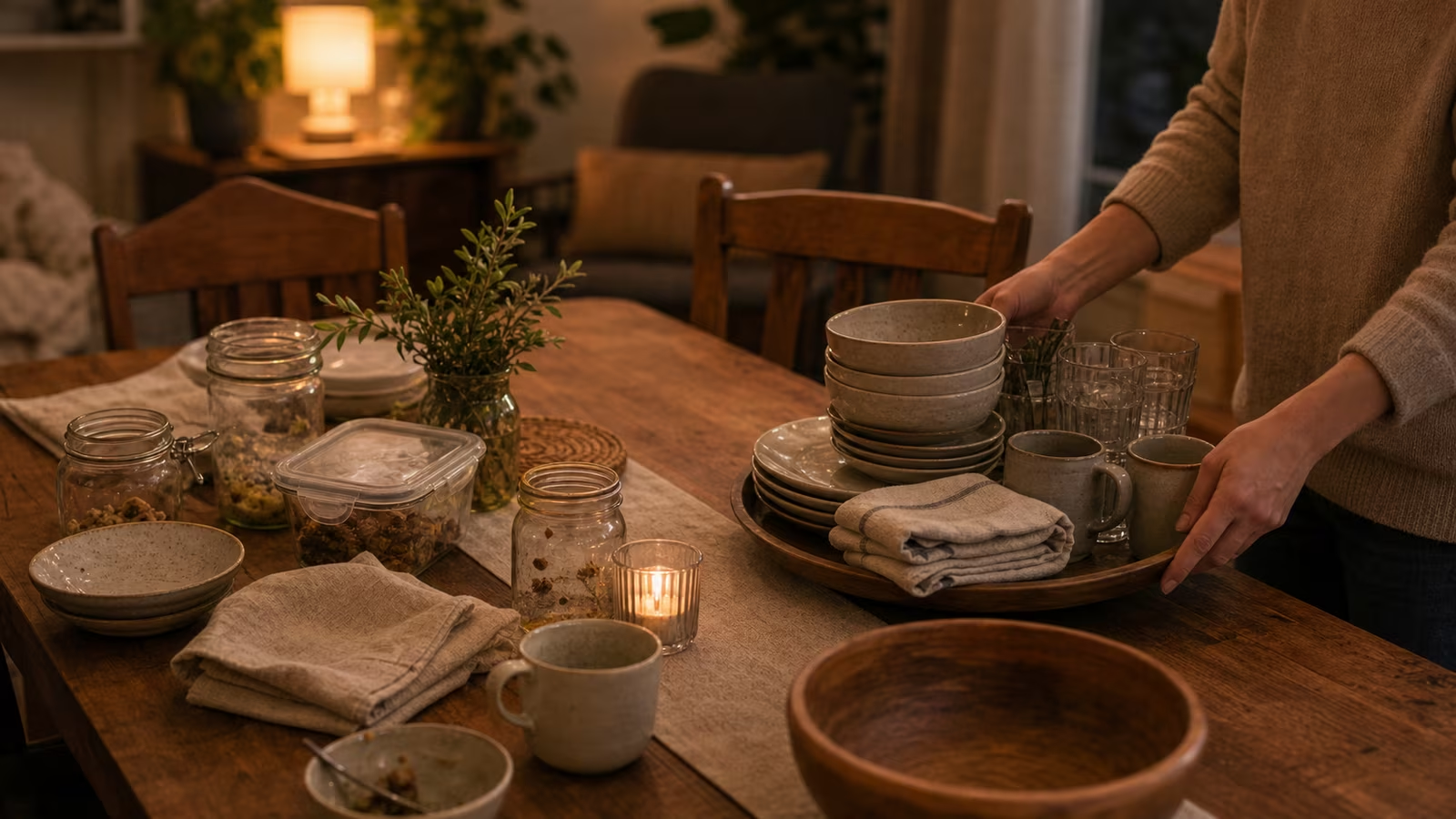
Keep the mechanics almost embarrassingly simple: one tray for dishes, one leftover station, one trash cue, one last drink, and a host who says what is enough. The tray does the heavy lifting. When there is a single obvious surface where cups and bowls go, guests can help without hunting through your kitchen or asking where things live. They stack, you carry, and the table clears in one pass instead of a dozen anxious trips.
The leftover station matters more than it sounds. Set out a couple of clean jars or containers before the meal ends, and sending people home with soup or bread becomes a small generosity rather than a scramble through cabinets. It also solves a real problem: leftovers you do not want and cannot finish. The trash and recycling cue is just knowing, and being able to point to, where things go, so a guest holding a used napkin has somewhere to put it instead of setting it back down guiltily. The last drink is the signal, more on that below. And the host who says what is enough is the whole point: someone has to declare the room restored, or cleanup expands to fill all available time.
Give one job, not the whole kitchen
The instinct when guests offer to help is either to refuse everything or to accept everything, and both go wrong. Refuse everything and you exhaust yourself while signalling, however unintentionally, that guests are company to be waited on rather than people who belong. Accept everything and your kitchen fills with well-meaning strangers reorganizing your dish rack, and nobody can find the natural exit because there is always one more thing to wipe.
The better move is to hand out one bounded job and mean it. “Would you carry those cups to the tray?” is a complete request. So is “the compost is under the sink if you’re up.” When the job is done, it is done; the guest is not now the kitchen manager for the evening. Bounded help is the difference between contribution and conscription. It lets a guest feel useful for ninety seconds and then feel free. For the wider version of this idea, where help is spread across several people and several kinds of care, see Contribution Without Scorekeeping .
Notice, too, that not every guest should be doing dishes. Someone who arrived drained, who has mobility limits, or who is simply not a kitchen person can still belong fully by choosing the music for the last stretch, folding a cloth, or just staying in their chair and keeping the conversation going while two others clear. Belonging is not measured in scrubbed pots.
The last drink as a soft closing bell
Cleanup and closing are joined at the hip. The tidy version of an ending is not “okay, everyone out,” it is a small ritual that tells the room the evening has reached its final movement without anyone having to announce it bluntly. A last round of tea, a final glass of water, a shared bit of something sweet: this is the closing bell dressed as hospitality. When you pour the last drink and say “this is the last pot,” people orient themselves toward leaving on their own, which is far kinder than being told to go.
Keep that last drink genuinely optional and genuinely inclusive. Water or tea is a perfectly good closing note, and it should never feel like the lesser choice. Nobody at your table owes you an explanation for what they are or are not drinking, and the close is exactly the wrong moment to make anyone feel watched.
Say the sentence that ends it
The hardest and most important skill here is a single spoken line: the one where you declare the room restored enough. Hosts get stuck because they cannot tell when to stop, so they keep tidying, guests keep half-helping, and the goodbye stretches into a slow, sticky twenty minutes at the door. Decide in advance what “enough” looks like. Often it is: dishes on the tray, leftovers claimed or fridged, chairs roughly back, floor fine for tomorrow. Then say so. “This is honestly perfect, I’ll do the rest in the morning with coffee, thank you for the hands.” That sentence releases everyone at once. It tells guests they helped, it tells them they are not abandoning you, and it makes leaving the obvious next move.
Resist the urge to reach a spotless kitchen before anyone departs. A room that is restored enough to sit in tomorrow is the target, not a photo-ready surface. The dishes will keep. The willingness to host again will not, if every gathering ends with you alone and quietly annoyed.
Practice it once, then keep it
For your next table, decide the one cleanup action guests may do and the exact line you will use when the room is restored enough, and write both down before anyone arrives. Afterward, notice what actually happened: did the tray get used, did anyone feel stranded, did you resent anything, did the goodbye drag. A single smooth close is not proof and a single clumsy one is not a verdict; run the same shape a second time before you change it. The cleanup ritual gets better precisely because it is boring and repeatable, and a table that ends well is a table people come back to.
For more on the atmosphere of a good close, see Lighting, Music, and Temperature Are Social Infrastructure and Cheap Hosting Without Apology ; for keeping the invitation itself low-pressure, Invitations Without Pressure . The full shelf lives at The Common Table guidebooks .