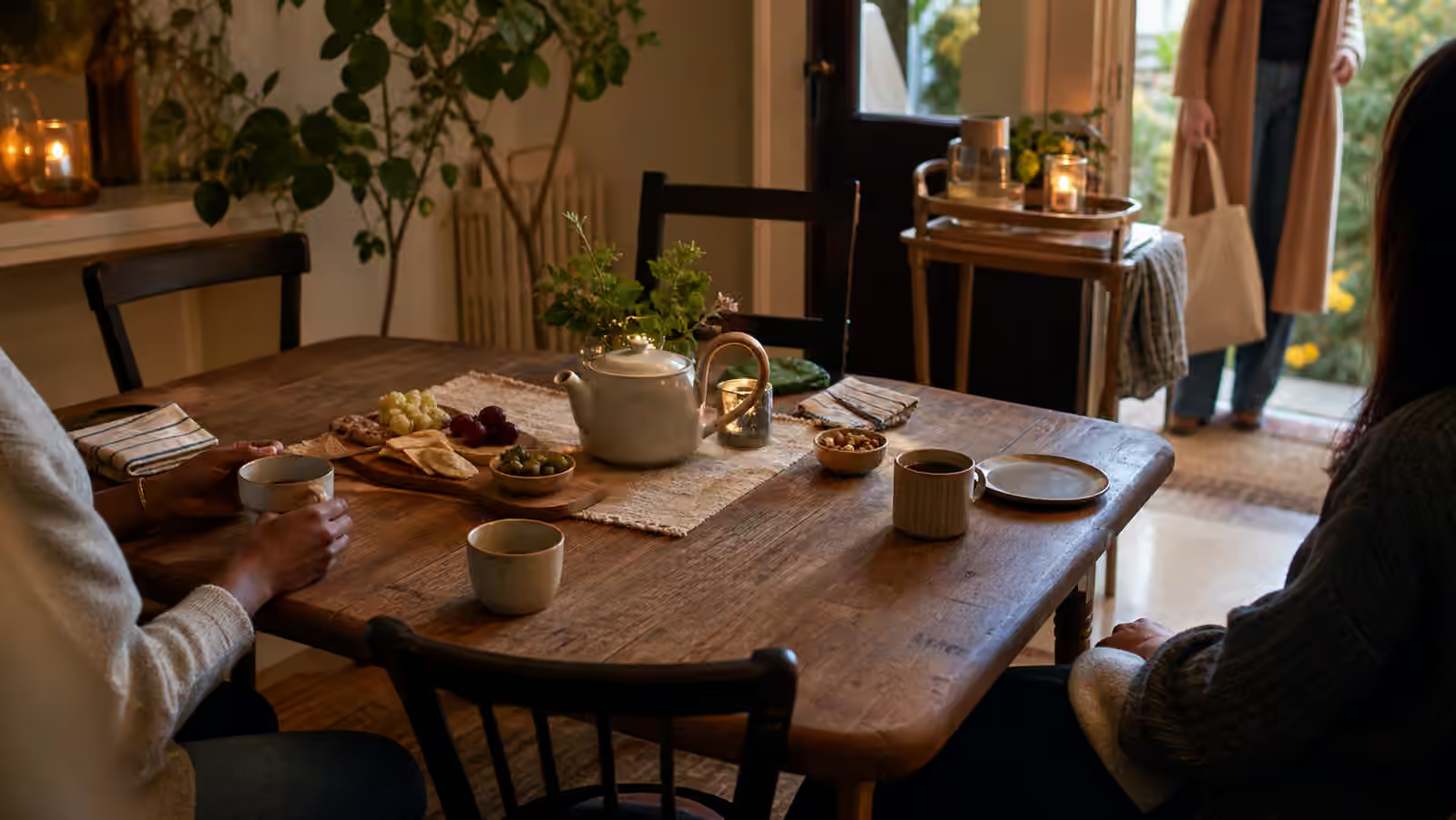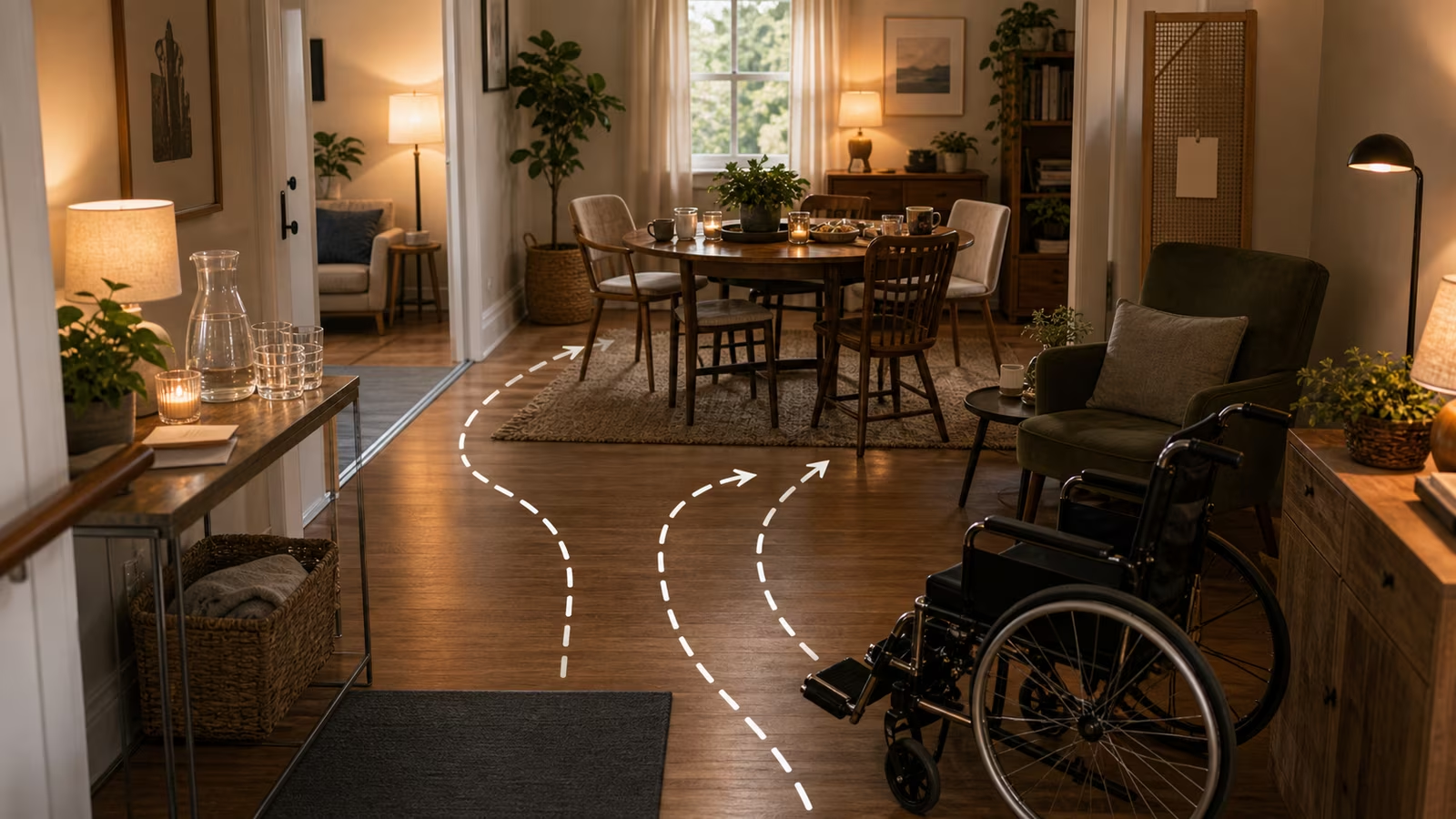

This is the front door to the whole Common Table shelf, and it exists to get you from wanting more in-person connection to actually having a small gathering on the calendar, without the project ballooning into something you dread. The Common Table is about social ritual design: the small, repeatable formats and gentle cues that let people meet face to face without every invitation becoming a performance. If you have been meaning to host something for a while and keep not doing it, the problem is almost never that you lack the skill. It is that the version in your head is too big. This quickstart shrinks it back down to something you can start this month and, more importantly, keep doing.
Choose the shape before anything else
The single move that makes the rest easy is counterintuitive: decide the repeatable shape of your gathering before you think about food, decor, or the guest list. Most people start from the opposite end. They imagine the menu, or the mix of friends, or how the room should look, and the logistics spiral until hosting feels like producing an event. Start instead with a plain container. One host, three to six guests, seventy-five to a hundred and ten minutes, one anchor activity, and one line that ends it. That is a complete gathering. Everything else is optional decoration.
The anchor activity is whatever gives the time a center: a pot of soup, a round of tea, a short walk, an evening of eating up leftovers, mending one small broken thing side by side. It matters less what the anchor is than that there is one, because an anchor answers the anxious question every guest silently carries, which is “what will we actually do.” A table with a clear anchor never has to manufacture forced fun. People know why they are there.
Make it small on purpose
The instinct that ruins first gatherings is the urge to prove the thing matters by making it bigger: more people, a later start, a fuller menu, more to drink, more moving parts. Every one of those additions raises the cost of hosting and lowers the odds you will do it again. Three or four guests around a small table is not a lesser version of a real gathering; for building connection it is often the better one. Small rooms let everyone talk. They forgive a plain meal. They let a nervous host relax, because there is no crowd to manage and no performance to sustain.
Small is also what makes a gathering repeatable, and repeatability is the whole game. A dazzling dinner party for twelve that exhausts you into never doing it again builds far less community than a modest soup night for four that happens every three weeks for a year. The relationships form in the repetition, in the low-stakes accumulation of ordinary evenings, not in the peak intensity of any single event. Design for the tenth time you will host, not the first. The case for staying small is worth reading on its own in Tiny Table, First Four .
Write an invitation people can picture
A good invitation does one job: it lets the person picture the whole evening before they answer, so saying yes feels safe rather than like a leap. Name the anchor, the length, the size, and how to bring nothing. “Come for soup on Sunday, four of us, about two hours from six, no need to bring anything,” tells someone almost everything they need to decide. They can see the effort, the mood, and the exit. Vague invitations, by contrast, make people anxious, because an unclear ask hides unclear expectations, and unclear expectations feel risky.
Crucially, make declining genuinely easy, and mean it. An invitation that punishes a no, even subtly, is not really an invitation; it is pressure. When people know they can decline this one without cost, they can also accept the next one freely, and that freedom is what keeps a recurring table healthy over time. The full craft of the low-pressure ask lives in Invitations Without Pressure .
Keep it sober-ish by default
Build your table so that it makes complete sense when nobody is drinking, and you solve a dozen problems at once. A sober-ish default does not mean an alcohol-free rule; it means alcohol, if present at all, sits at the edge and never at the center of belonging. Water and tea should be easy to reach and offered as real choices, not consolation. Nobody should have to explain, justify, or narrate what they are or are not drinking, because people have private reasons of every kind and owe the room none of them. A table where the good part is the soup and the conversation, rather than what is in anyone’s glass, is a table almost anyone can join.
Open gently and end on time
Two small hosting moves carry a surprising amount of the evening. The first is a gentle opening beat: a visible first action that lets people arrive without having to perform. Pour the first cup, point to where coats go, name roughly when things will end, and give everyone a minute to land before any deep conversation begins. Guests are most nervous in the first five minutes, and a clear, low-stakes entry dissolves most of that nervousness on its own.
The second is ending on time, while the room still feels good. Have one line ready that thanks people, marks a last shared action, and makes leaving feel permitted, then use it before the evening sags. Ending on the upswing is what sends people home glad and makes the next yes easy; it is worth the short read in Closing Before It Drifts . Naming the next date in that warm final stretch is how a one-time dinner quietly becomes a recurring table.
Run it once, then run it again
Here is your actual assignment, and it is deliberately small: invite three people to a two-hour soup, tea, walk, or leftovers night, and afterward write down what should repeat. Not what was perfect, not what was impressive, just what worked and is worth doing the same way next time. A gathering becomes a ritual through that quiet act of keeping the good parts and letting go of the rest.
Then resist the urge to scale. If the first table felt too small or too plain, run it again at the same size before changing anything. The second time teaches what the first cannot: whether the invitation still lands, whether the shape holds, whether people come back. Community is built in the second, fifth, and tenth gatherings, not in one ambitious debut. When you are ready to think about how a ritual grows, pauses, or gracefully ends, Ending or Evolving a Ritual is waiting, and the full shelf lives at The Common Table guidebooks .