
A great many people have quietly opted out of social life not because they dislike company but because so much of it happens after dark. Evening is the default setting for gathering, and for a large slice of the population the default does not fit: the person who is done at nine, the one on medication timed to the night, the parent whose bedtime routine is non-negotiable, the neighbor who will not drive after sunset, the one in recovery who finds late rooms harder, the person whose fatigue or sensory limits make a long night genuinely costly. A daytime table makes a different promise. It says friendship, neighborliness, and recurring warmth do not have to wait until after everyone is already tired. The shorter-evening cousin of this idea lives in the Weeknight Tea Circle ; here the move is bolder, pulling the whole gathering into the light.
Daylight is a different room
Hosting in daylight is not evening hospitality with the lights left on; it has a different nervous system entirely. People arrive with errands stacked before and after, carrying groceries or a work bag or a hard stop. Some bring the crisp alertness of morning, others the slightly exposed feeling of walking into a social room without the soft cover that darkness lends. Daylight makes mess, silence, and transitions more visible than candlelight ever does. But it also does generous things: it makes leaving easier, it makes conversation clearer, and it quietly removes the assumption that a drink is what the occasion is for.
So do not simply take the shape of a dinner and slide it to noon. A daytime table usually wants a lighter anchor, a firmer ending, and fewer expectations about lingering. Late-morning tea, a simple lunch bowl, a two-hour afternoon table, a reading-and-snack hour, a thermos on a park bench, these carry real warmth without demanding that the host produce a brunch performance. And none of this is about being morally superior to nightlife. Evening gatherings can be generous and real. The point is only that a community which knows just one way to meet, late, will keep excluding everyone whose body, duties, or recovery does not run on that clock. That is why daytime belongs squarely beside Accessibility for Small Gatherings : the time of day is itself an access decision.
Choose the window by recovery, not by charm
The most charming time is rarely the most repeatable time, and repeatability is what you are actually after. A Saturday brunch sounds effortless until you realize it eats the morning shopping, the cooking, the cleanup, and half the afternoon, and after three of them you are done. A weekday lunch delights the neighbors with flexible schedules and quietly excludes everyone else. A Sunday tea feels gentle right up until it collides with family obligations or a gap in the bus timetable. The romance of a slot tells you nothing about whether you can keep offering it.
So choose the window by recovery instead. Ask when you can prepare without resentment, when guests can arrive without a dangerous rush, and when everyone can leave with some daylight still left to spend. Ninety minutes is plenty for many tables; two hours is generous. A daytime gathering that drifts to four hours can cost the host as much recovery as a late night did, especially when the room still has to be reset, a household fed, and the week prepared for. Put the end time in the invitation, because daytime guests plan the rest of the day around your table and a clear finish is a gift, not a coldness. Ending well matters just as much at noon as at midnight, which is why Closing Before It Drifts applies here in full.
Keep food from becoming the whole promise
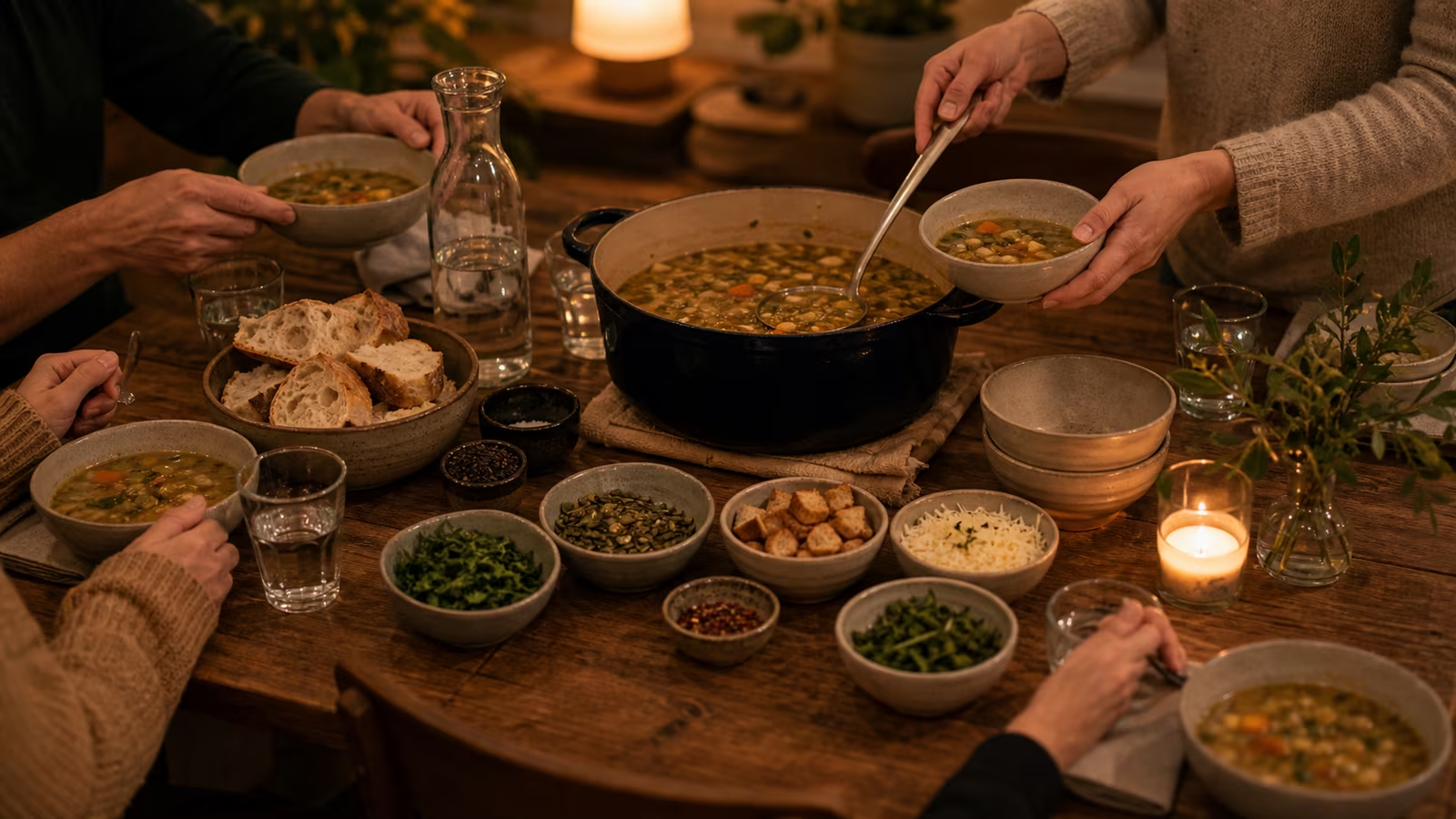
Daytime gatherings get pulled, almost gravitationally, toward brunch: abundant food, polished tableware, a special drink, a menu elaborate enough that the host feels judged before anyone has knocked. Resist the pull unless cooking is genuinely the point of the day. A daytime anchor is allowed to be plain, and plain is usually what makes it repeatable. Tea and toast. Soup and bread. Fruit, crackers, and a spread. Yesterday’s cake. A pot of rice with a few toppings. The food only needs to answer the questions a guest is actually carrying: should I eat first, may I bring something, and will my needs be simple to name here. It does not need to become a display.
Daylight is also where a sober-ish default becomes effortless rather than pointed. In the light of the afternoon, water, tea, coffee, citrus, herbs, broth, or a chilled fruit drink read as completely ordinary, not as a corrective substitute for something missing. The host never has to explain why there is no alcohol, because the format itself carries the message: the good part is the table and the company. If you want the evening version of that same ease, Sober-ish Happy Hour works the same muscle after dark.
Design the arrival, and keep it adult
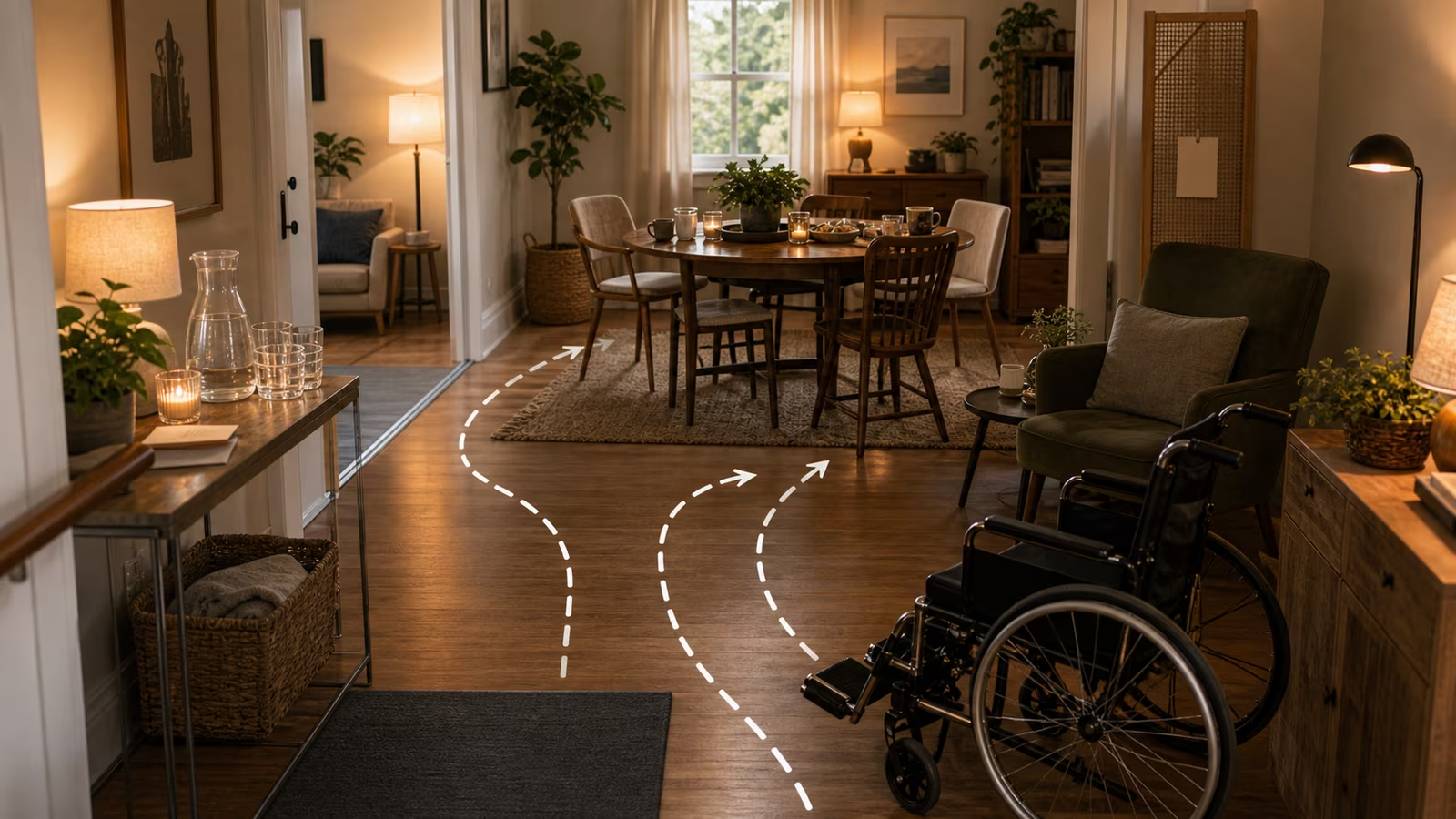
People land differently in the daytime. One guest has come straight from a school drop-off, another is wedged between errands, a third is carrying a stroller and a firm departure time. The arrival beat should give them somewhere to set all of that down before anything is asked of them. Keep the first move visible and low: pour the first cup, point to where coats go, name the end time, and let people settle for a minute. A daytime table can feel jarring if the host opens with a deep question before anyone has put their keys down. Offer a practical entry instead, choosing a cup, slicing citrus into water, cutting bread, taking a chair in the sun. The daylight version of warmth is very often just clarity: whether shoes stay on, whether children are expected, whether the room has stairs or strong scents, whether leaving early is normal. Name these lightly rather than leaving guests to read them off your mood.
And take care not to let a daytime gathering slide into feeling less than fully adult. Hosts sometimes overcorrect away from nightlife signals straight into a classroom mood, a wellness mood, or a children’s-party mood, and adults notice. A daytime table can be quiet, funny, serious, and textured without alcohol, dim light, or late hours. Use adult materials and adult pacing, ceramic cups, real napkins if you have them, a calm playlist or none, a clear topic boundary, and a proper close. Do not tease anyone for leaving before dinner, and do not undersell the gathering as “just coffee” if you mean it to matter. This is where daytime hosting quietly serves the fatigue-aware and recovery-aware guest best: it offers them belonging without making their limits the theme of the day. The best version simply feels normal, here is the table, here is the time, here is the welcome.
Write one confident daylight invitation
For your practice run, choose one two-hour daytime window and write the invitation without a single apology for the hour. Name the anchor, the end time, what to bring, and how to decline, and if the gathering is an experiment, say so plainly without burying the whole thing under explanation. A confident small promise is always easier to accept than a nervous long one. Afterward, notice what the daylight revealed: did people talk more easily, did anyone leave sooner and with less awkwardness, did you recover faster, did food creep toward center, did the end time actually hold. Write the answers down before you change anything.
A daytime table is not a lesser dinner. It is a different ritual with its own access gifts, and when it is designed on purpose it hands recurring community back to people who have been quietly missing from late-night social life, the host very much included. The full shelf lives at The Common Table guidebooks .