The drama around dietary needs almost never comes from the food itself. It comes from the staging. A guest mentions they cannot eat something, and the host, meaning well, turns it into a scene: a long apology, a flurry of substitutions announced to the table, a running commentary about how hard it was to find the right bread. Now the guest who simply needed to eat safely is the temporary center of attention, cast as the reason the menu got complicated. Handled that way, an allergy feels like an imposition and a preference feels like a demand. Handled quietly, both are just information a competent host folds into the plan before anyone arrives.
Ask early and ask privately
The single most useful habit is to move the question upstream, into the invitation, where it can be answered in a text message rather than out loud at the table. A line as plain as “Anything I should keep off your plate?” does most of the work. It signals that you expect to hear something and that you would rather know now than improvise later. Asking privately matters as much as asking early. A guest who would happily text you about a shellfish allergy may not want to announce it to eleven strangers, and a guest observing a religious food practice should not have to defend it as a curiosity in front of the room. The private channel lets people tell you what they need without turning their body, their faith, or their history into a topic.
Keep your own reply light. “Good to know, I will make sure there is plenty you can eat” is enough. You do not need to promise a bespoke dish or narrate your grocery run. The goal is a guest who arrives already confident there is food for them, not a guest who arrives braced to manage your anxiety about their needs.
Know the difference between safety and preference
Not all food information carries the same weight, and a good host holds two categories at once without ranking the people attached to them. A true allergy or a medical restriction is a safety line: crossing it can send someone to the hospital, so it deserves genuine care about ingredients and cross-contact. A religious or ethical practice is a boundary you honor because the person has asked you to, no justification required. A preference or a sensory aversion is softer, and you accommodate it when you reasonably can. What these have in common is that none of them is up for debate at your table. You do not need to understand why someone keeps kosher or halal, why gluten wrecks them, or why they cannot abide cilantro. You need to know what to do about it, and then do it without a referendum.
The safety category deserves one honest caution. A home kitchen is not an allergen-controlled facility, and it is kinder to say so than to overpromise. If a guest has a severe allergy, tell them plainly what you can and cannot vouch for: that you kept the nuts out of the salad, but that the kitchen is not nut-free and they know their own risk best. Let them make the call. Quiet honesty about what your kitchen can guarantee protects the guest far better than a confident reassurance you cannot actually back up.
Build one flexible base everyone can inspect
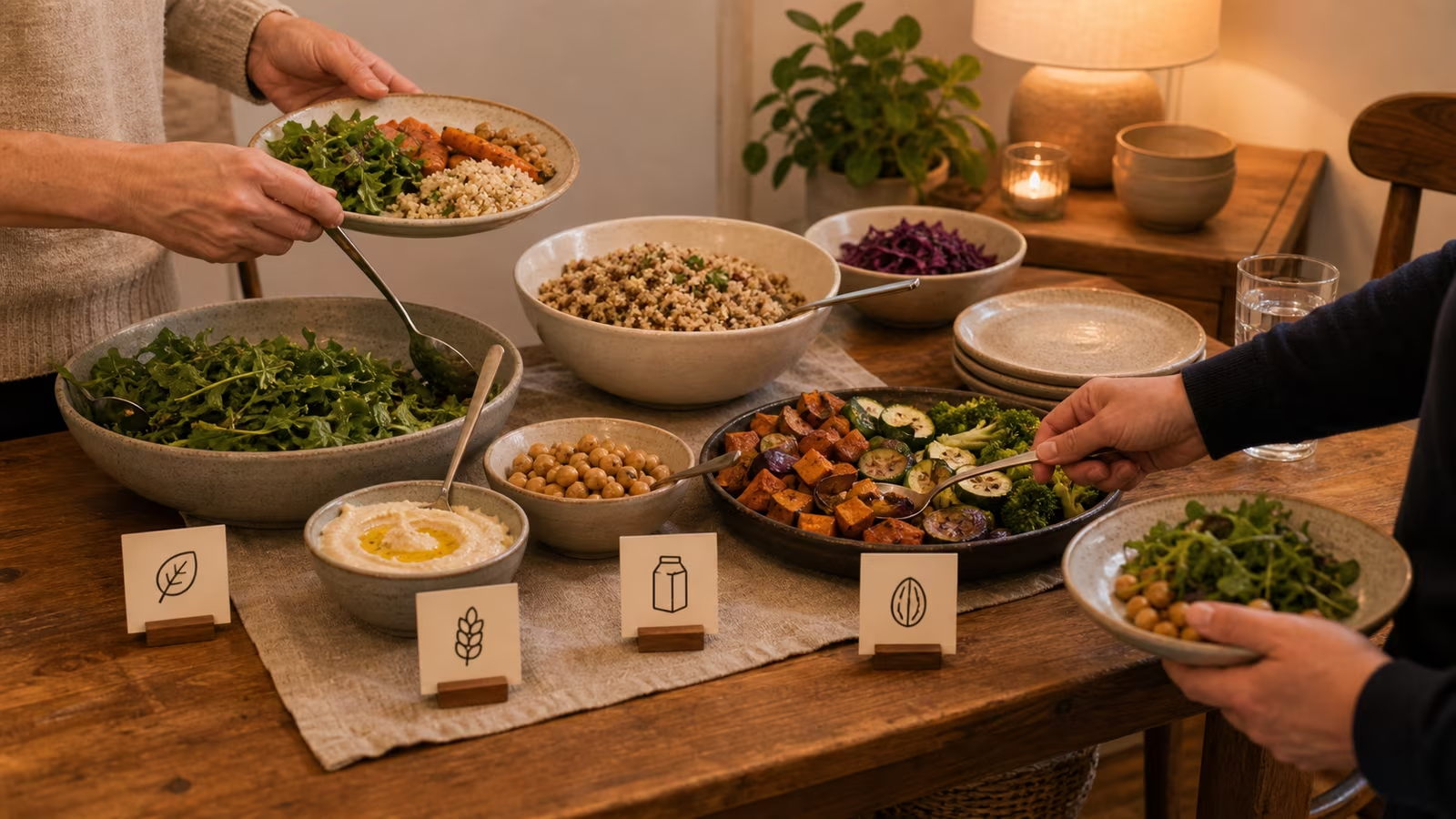
The structural trick that keeps this from becoming a nightly puzzle is to design food that comes apart. Instead of a single finished casserole with everything cooked in, build around a plain base and add-ons kept separate: a pot of rice or a bowl of greens, then proteins, sauces, cheese, nuts, and dressings in their own dishes with their own spoons. A build-your-own bowl, a taco spread, a soup with toppings on the side, a bread-and-spreads table. When the components are visible and separate, a guest can see what is in front of them and assemble a plate that works, rather than interrogating you about a mixed dish. This is why the buffet in the image above has separate serving spoons and simple labels: it lets people read the table themselves.
Label the common allergens simply and without fuss. A small card that says “has nuts” or “contains dairy” beside a dish spares everyone the game of asking. You are not writing an ingredient audit; you are flagging the handful of things that most often matter. Keep at least one substantial option that clears the widest set of needs at once, so no one is left grazing on side dishes. If most of the table eats everything and one person needs the base to be plain, the plain base should be good in its own right, not an obvious afterthought.
Do not make the guest teach the room
When a need does come up in the moment, the host’s job is to absorb it, not amplify it. If someone quietly reminds you they do not eat pork, you do not announce it, quiz them, or invite the table into a discussion of their reasons. You point them to what works and move on. The failure to avoid is turning a guest into the room’s unpaid instructor, made to explain, justify, or reassure everyone that they are not offended. That is exhausting to be on the receiving end of, and it teaches people that mentioning a need here comes with a tax. A table people can return to is one where saying “I can’t eat that” costs nothing more than a nod.
The same restraint applies to drinks. Keep water within easy reach and offer at least one nonalcoholic option made with real care, so that stepping away from alcohol is as ordinary as skipping the cheese. People decline a drink for reasons ranging from medication to pregnancy to simple preference, and none of that is owed to the room. A table that treats the alcohol-free choice as normal is running the same play as a table that treats the nut-free plate as normal: it removes the spotlight and lets the person just eat, drink, and stay.
Practice this once
Add a single food-needs line to your next invitation and plan one flexible base that everyone at the table can look at and understand. Run the gathering, then jot a few honest notes afterward. Did anyone have to ask you what was in a dish? Did anyone end up with a thin plate? Did a need surface at the last minute that you could have caught in the invitation? Adjust the system rather than your feelings about it. Over a few rounds you will find that the same separated-components approach handles most of what comes up, and that the drama you were bracing for was mostly a staging problem you have now designed away.
Related guidebooks
For the drinks side of the same principle, see Nonalcoholic Drinks That Feel Considered, Not Special . When guests bring the food, Potluck Without Coordination Chaos keeps the same needs legible across many kitchens, and Invitations Without Pressure is where the early, private ask begins. If this is your first recurring table, start with The Common Table Quickstart , and the wider Common Table guidebook shelf has neighboring formats when you want them.