A drop-in hour is the format for busy, unsynchronized lives, and its whole design problem is contained in a single tension: you are inviting people to arrive at different times, which is generous, but a gathering with no shared beginning can easily have no shape at all. Porch and Stoop Hour shows how a low-threshold neighbor ritual can start at the very edge of a home; a drop-in hour borrows that softness but needs a firmer spine underneath it, because without one a staggered arrival turns into a long, shapeless open house that exhausts the host and never quite becomes a table.
The thing that makes it work is a strong, stable center that guests can arrive into at any point. Done well, a drop-in hour lets a person with kids, a commute, a shift, or an unpredictable evening slip in for the part they can manage and leave without apology, while the host is spared the misery of treating every late arrival as a small crisis. Done poorly, it is a host standing near the door for two hours, re-explaining the evening to each new face while the actual gathering never coheres.
Build one obvious center
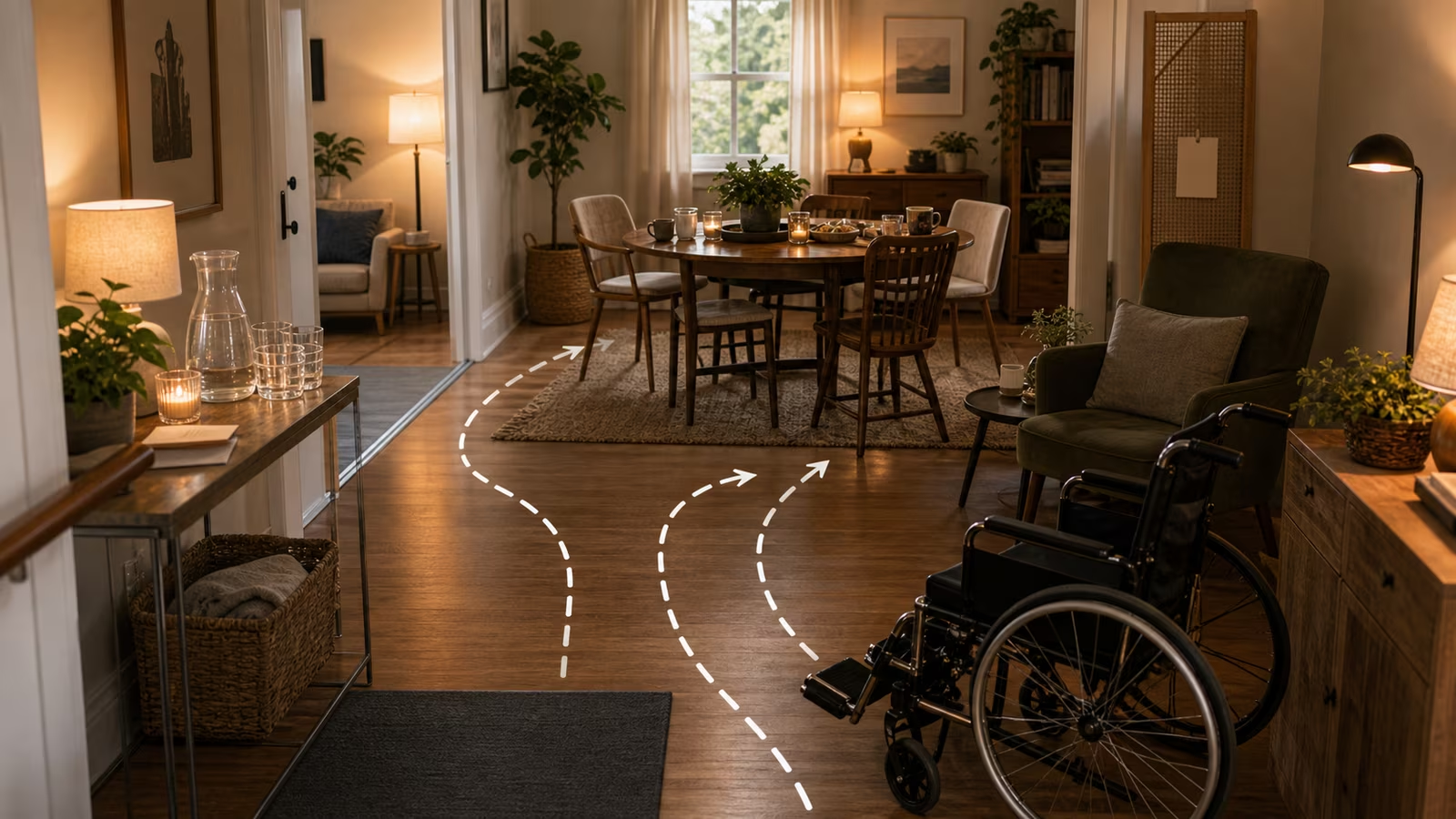
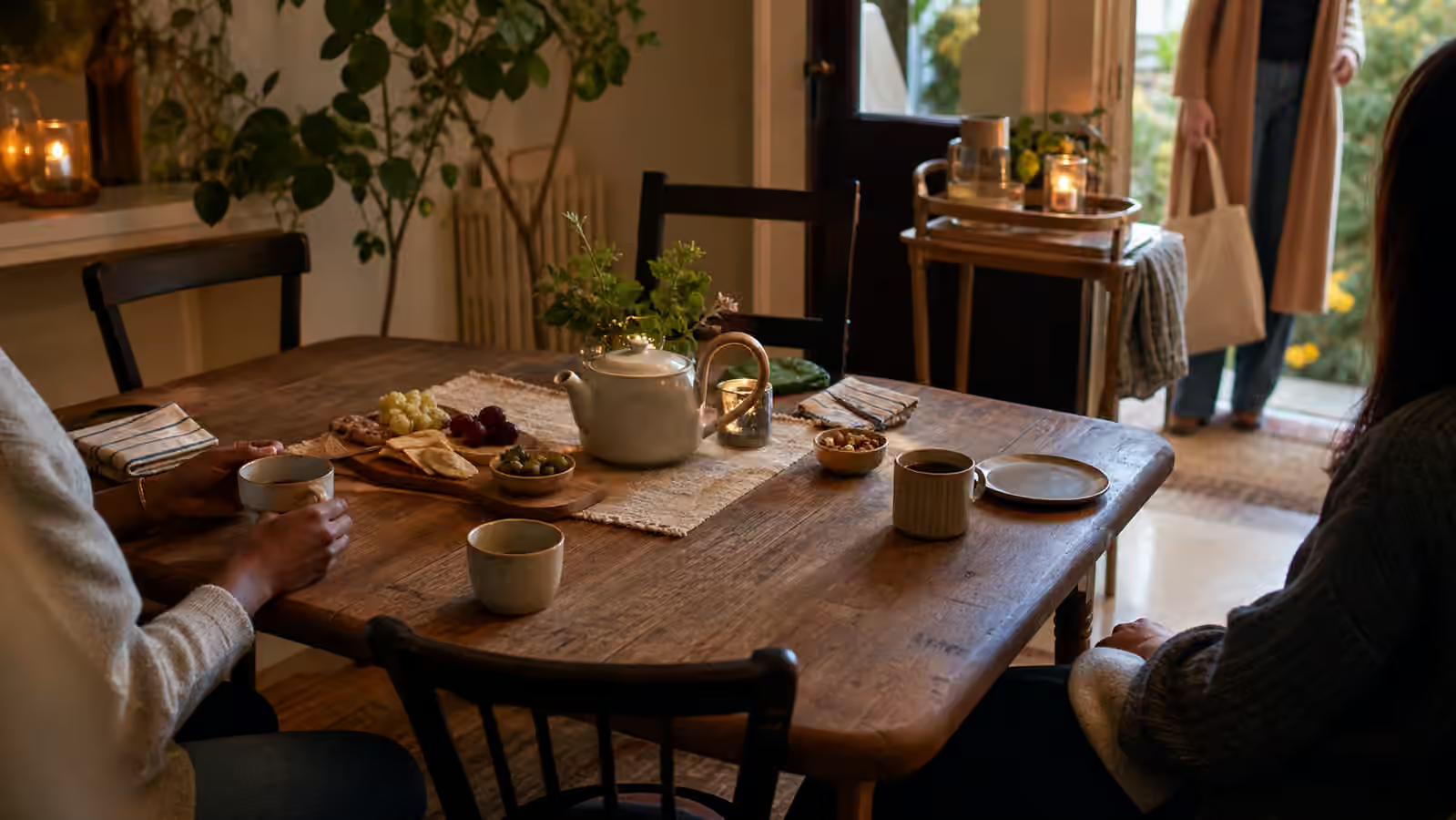
The single most important decision is to give the room a center that is visible from the doorway. A table with tea and a pot of soup, a snack board, a bowl of fruit, a half-built puzzle, a stack of mugs: something that plainly says the gathering is happening here, join it. That center is what replaces the shared start you have deliberately given up. Without it, a new arrival stalls in the hallway wondering whether they are early, whether they missed the real thing, whether they should have come at all, and the host burns the evening ferrying people from confusion to a chair.
The center does not need to be impressive; it needs to be stable and self-sustaining. Pick a food or drink anchor that can sit unattended for an hour without spoiling or needing fuss. Pick a seating arrangement that looks right with two people and still works with six, so the room never feels either cavernous or crammed as the count shifts. And rehearse one warm line you can repeat a dozen times without a trace of impatience: “Come in, tea’s on the table, we’re keeping it easy until eight.” That sentence hands each arrival permission to fold into a room that already exists rather than restart it. Because drop-in guests rarely have the cover of arriving in a group, the practical legibility that Arrival Logistics covers, where to park, whether shoes come off, which door, matters more here than almost anywhere, or the host becomes a switchboard instead of a participant.
Do not put early guests in a waiting room
The most common way a drop-in hour fails happens before it is even full. Two people arrive on time, the host says “let’s wait for everyone,” and those two punctual guests are quietly conscripted as lobby staff, making thin small talk while the host glances at their phone. The lesson they absorb is that showing up on time means sitting through the least-formed, most awkward version of the evening, and next time they will come late or not at all.
So start the ritual the moment the first guest walks in. Pour the tea, open the snack, sit down, begin whatever the soft activity is. The first half hour should feel like a genuine small table, complete in itself, not a pre-show holding pattern that only becomes real once enough people gather. This is also why a conversation-only anchor is risky for a drop-in format: a heavy question or a vulnerable round makes every subsequent arrival feel like an interruption of something delicate. A visible, resumable action is far friendlier. Pouring, tasting, sorting, mending, working the puzzle, passing a photo around, sliding over a chair: a newcomer can join an action in seconds, long before they could decode the mood of a serious discussion. Late Arrivals Without Resetting the Room is the companion piece, and its rule is compact: arrivals are welcomed, not centered. A smile, a gesture at the cups, and “we’re in the easy middle, grab tea and land wherever” keeps the warmth without forcing a fresh opening ceremony on the whole room.
Make leaving as easy as arriving
A format built around flexible entry needs an equally easy exit, or the flexibility is only half true. If the invitation says come for any part of the window, then slipping out after twenty minutes cannot carry a whiff of betrayal. Put the permission in writing beforehand and then actually honor it in the room, because “stay ten minutes or the whole time” only works if the host does not say “already?” when someone stands. The mechanics help: a chair near the edge, a coat spot that does not require a march across the whole room, a short goodbye that lets the table keep breathing. “So glad you made it, see you next month” beats a long public farewell that briefly makes one person the center of everyone’s attention on their way out.
This ease matters especially for the guest managing their own social dose. People leave early because they are tired, overstimulated, protecting their sleep, watching a bus schedule, or stepping away from a scene where drinking is the main event, and none of that is owed to the room as an explanation. Keep water and a good nonalcoholic option easy to reach and unremarkable, so that neither staying nor going hinges on what anyone is holding. A drop-in hour at its best lets each person meter their own contact with the group and still feel they were fully part of it.
Keep the ending clear even though the start was not
Here is the counterintuitive part: precisely because a drop-in hour has no shared beginning, it needs a clearer ending than a dinner does. The close is the one moment the whole room can experience together, so it has to be real and legible: a final pour, a ten-minute warning, a shift in the porch light, a plain closing line, or the quiet reset of cups and chairs. Drift is especially tempting here, because someone may have only just arrived, or the talk may have finally caught fire, or the host may feel a guilty pull toward the guests who came late. Resist it. If the invitation named seven to nine, closing around nine is what teaches people the ritual can be trusted, and trust is exactly what makes a forgiving format repeatable. Closing Before It Drifts is worth keeping close for this.
Say which kind of drop-in it is
“Drop by whenever” sounds gracious and helps almost no one, because there are several different things it could mean. It might be a true open door across the whole window, a first-half arrival window with a firm end, or a gathering where people should really come near the start but will not be shamed for running late. Name the actual version. “Tea and snacks out from seven to nine, arrive any time before eight” gives a guest something to plan around. This is the broader lesson of Invitations Without Pressure : make the effort and the timing visible before anyone has to decide, including the practical bits like parking, whether kids are welcome, and whether you need a rough headcount. A small room may still need a quick yes or no just so the host sets out enough chairs, and asking for that does not make the evening any less casual. Casual and unclear are not the same thing.
To try it, host a single ninety-minute tea, snack, or porch hour where arrivals are welcome through the first half and the closing time stays fixed. Afterward, trace three people through the evening: the first guest, the last guest, and yourself. If each of them had a clear path into the room, through it, and back out again, the format earned its place on the Common Table guidebook shelf , and you can run it again without dread.