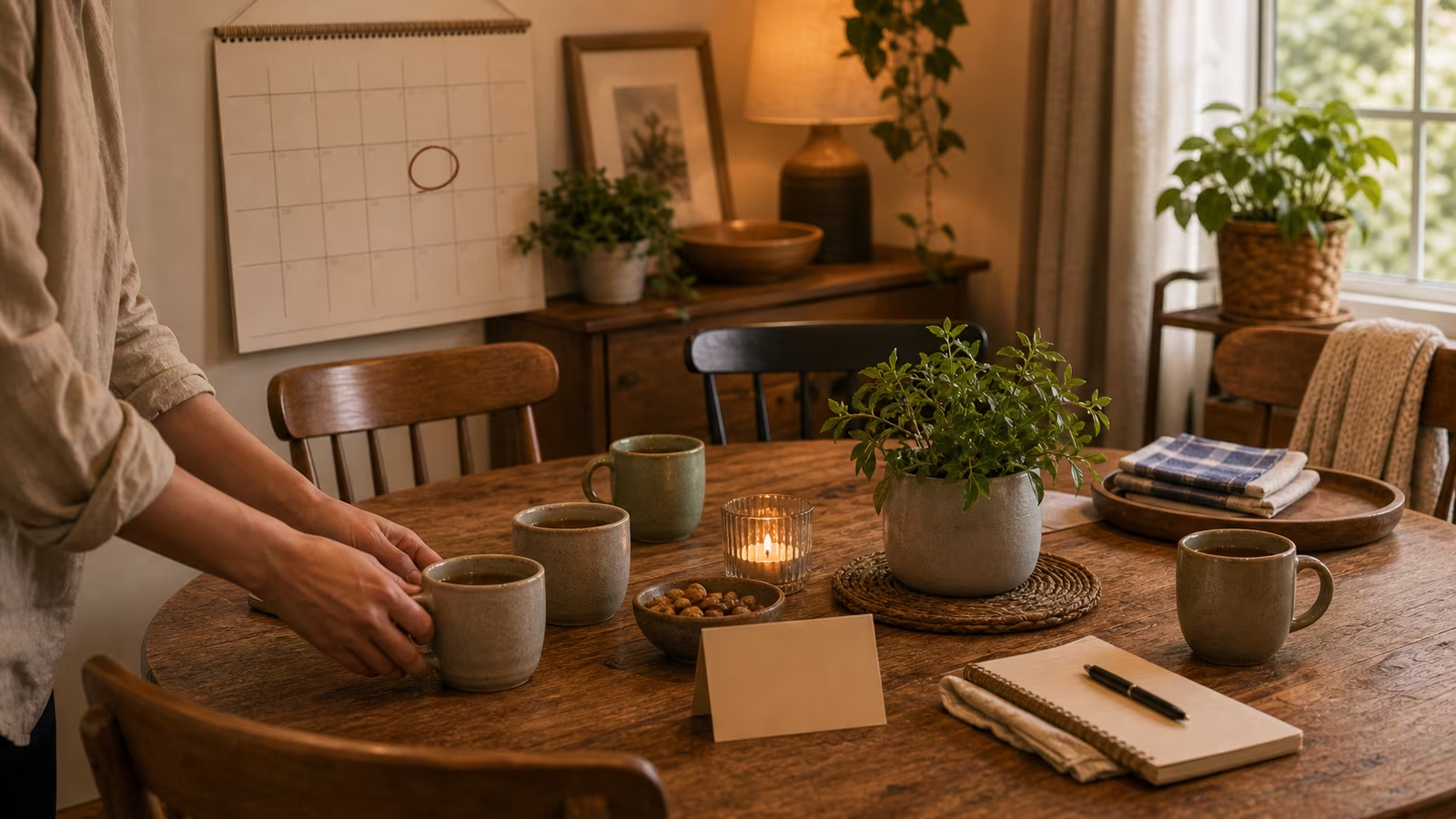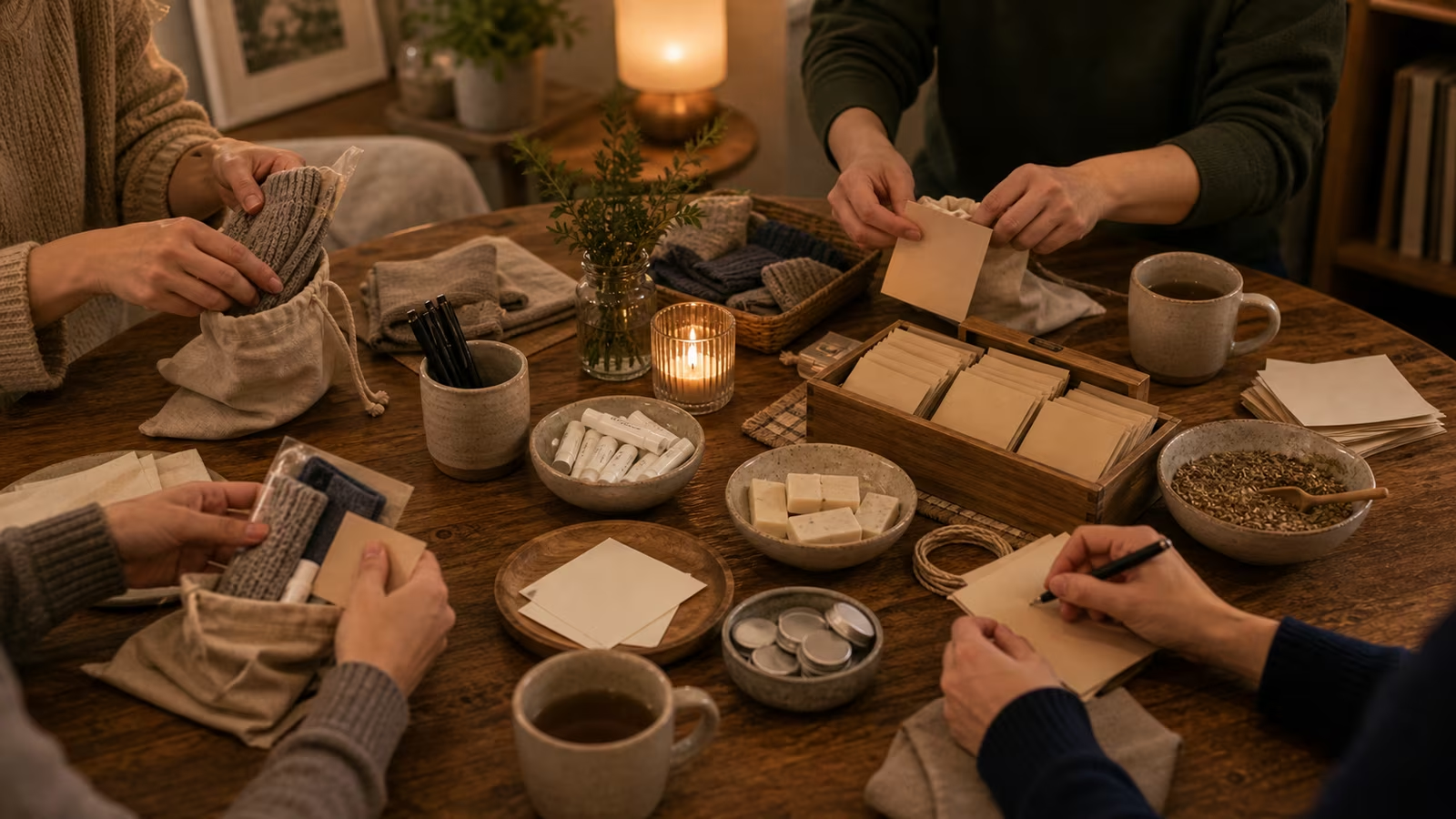

There is a particular guilt that settles over a host when a once-lively gathering starts to fade. Attendance thins. The replies get slower. The host is tired in a way that a good night no longer fixes. And yet stopping feels like a betrayal, as if ending the ritual means telling the people it was never worth much. So the host keeps sending the invitation out of obligation, and the table limps along in a diminished form that serves no one well. This guide is about the alternative: treating the end or the change of a recurring gathering as an act of stewardship, a decision made on purpose and out loud, rather than a slow collapse everyone pretends not to notice.
A ritual ending is not a verdict on the people
Start by separating two things that grief tends to fuse. The value the gathering created and the question of whether it should continue in its current form are different questions with different answers. A monthly soup night that ran happily for two years and then wound down did not fail. It did what it was for, during the season it fit, and then the season changed. People moved, had children, took new jobs, drifted into other rhythms. None of that erases what the table gave anyone. A ritual can be complete without being permanent, and confusing the two is what traps hosts into dragging a gathering past its useful life. The most generous thing you can often do for a group is to let a good thing end while the memory of it is still warm, rather than stretch it until everyone associates it with obligation and half-empty rooms.
Reading the signs honestly
Before deciding anything, look at what the table is actually telling you, not at the story you fear. A dip is not a death. Attendance sags in December and after a move and during a hard stretch at work, and often recovers on its own. What matters more is the pattern underneath. Are the same few people carrying every session while the rest quietly drift? Does the host feel dread rather than mild reluctance in the day before? Has the reason the group first gathered been quietly met or outgrown, so that the format is now a costume the friendships no longer need? Are you adding more and more effort to hold flat or falling energy? Those are signals that the ritual has changed underneath you, and the honest move is to change it deliberately in response, rather than push harder against a current that is not going to turn.
The menu of evolutions
Ending is only one option, and rarely the first one to reach for. Between running unchanged and stopping entirely lies a whole range of gentler moves. You can pause: name a clear break and a rough return, which lets a tired host rest without dissolving the group. You can lighten the cadence, dropping from weekly to monthly or from monthly to seasonal, so the ritual costs less and can survive a busy life. You can shrink the table back to the small core who reliably show up, and stop straining to fill chairs that were only ever occasionally warm. You can rotate the host, which is often the single most powerful change, because a format that has become one person’s burden can be reborn as a shared one the moment someone else pours the first cup. You can split a group that has grown two moods into two tables. Or you can hand the whole thing off to someone with fresh energy and become a happy guest. Choosing among these deliberately is the work; the point is that “keep going as before” and “quit” are the two ends of a long shelf, and most of the good answers live in the middle.
When a graceful close is the right call
Sometimes the honest answer really is to end it, and a good ending is a design problem worth a little care. The worst version is the fade, where the invitation simply stops appearing and no one is ever told whether the thing is over, leaving a small residue of confusion and mild hurt. The better version is a named last gathering. Tell the group this one is the closing one, hold it with a touch more warmth than usual, and let people say goodbye to the ritual on purpose. A closing note afterward does a lot of quiet good: a few honest sentences thanking the group, naming what the table gave over its run, and, if there is one, pointing to the lighter path forward, whether that is an occasional reunion, a group chat that keeps the thread, or simply an open door for whoever wants to start the next thing. That note turns an ending into a completion, and completions are far easier to carry than disappearances.
Keep the values intact through the change
Whatever you choose, the small courtesies that made the table trustworthy should survive the transition. If you pause or downshift, keep the invitation as clear as it ever was, so no one has to guess whether they are still welcome. If you hand off the ritual, brief the next host on the things that made it work, including the plain ones: that water and a good nonalcoholic option were always within reach and that no one was ever put on the spot about what they drank or why. Those habits are part of what made the gathering safe to return to, and they are worth carrying forward into whatever comes next. A table can change its size, its rhythm, and its host and still feel like the same kind of place, as long as the care underneath stays constant.
Practice this once
If a gathering you run is fading, resist both the reflex to force it and the reflex to let it vanish. Instead, sit down and write the closing-or-evolving note you would send. Thank the group plainly, name what the table gave, and offer the next lighter path if one exists. Writing it is clarifying even if you do not send it yet, because it forces you to say what you actually want, and often what you want is not to quit but to change the cadence or pass the host’s chair to someone else. Give any real change one full cycle before you judge it. A single quiet session after a change is not proof it failed, just as a single lively one is not proof it is saved.
Related guidebooks
To decide whether a gathering is genuinely working before you change it, see How to Tell If a Gathering Worked . The instinct to end a single evening cleanly is a smaller version of the same skill, covered in Closing Before It Drifts . If a change means restarting the ritual in a new shape, Invitations Without Pressure and The Common Table Quickstart will help, and the full Common Table guidebook shelf holds the neighboring formats you might evolve toward.