Most hosts treat the first ten minutes of a gathering as weather: a mood that will either settle or sour on its own while they hover near the kitchen and hope it turns. It is far more useful to treat that opening stretch as a design problem. The start of a small table is the moment with the least shared context and the most self-consciousness in the whole evening, which is exactly why it rewards a plan. If you leave it to charm, you are asking the most nervous version of the room to manufacture warmth out of nothing. If you give it a shape, warmth has something to stand on.
Why the threshold is genuinely hard
Awkwardness at the door is not a flaw in your guests or a verdict on your hosting. It is the ordinary result of a transition. A person has just come in from the street, from traffic or a train or a long day, still carrying whatever mood they arrived with. They do not yet know where to put a coat, whether shoes come off, who else is here, or what the evening is going to ask of them. Their hands are empty and their attention has nowhere to go, so it turns inward, and inward attention at a social threshold reliably reads as unease. The classic mistake is to try to dissolve that feeling with personality: a burst of chatter, a rapid-fire introduction, a demand for a fun fact. That raises the social stakes at the precise moment the guest has the least to work with.
The gentler move is the opposite. Lower the stakes and hand the guest a small job. People settle faster when their hands are occupied and their next action is obvious. You are not trying to erase the awkwardness, which is mostly harmless and passes on its own. You are trying to build it a short bridge, and the bridge is made of doable tasks that carry a person from the doorway into the room before anyone expects them to be interesting.
An arrival built from actions, not vibes
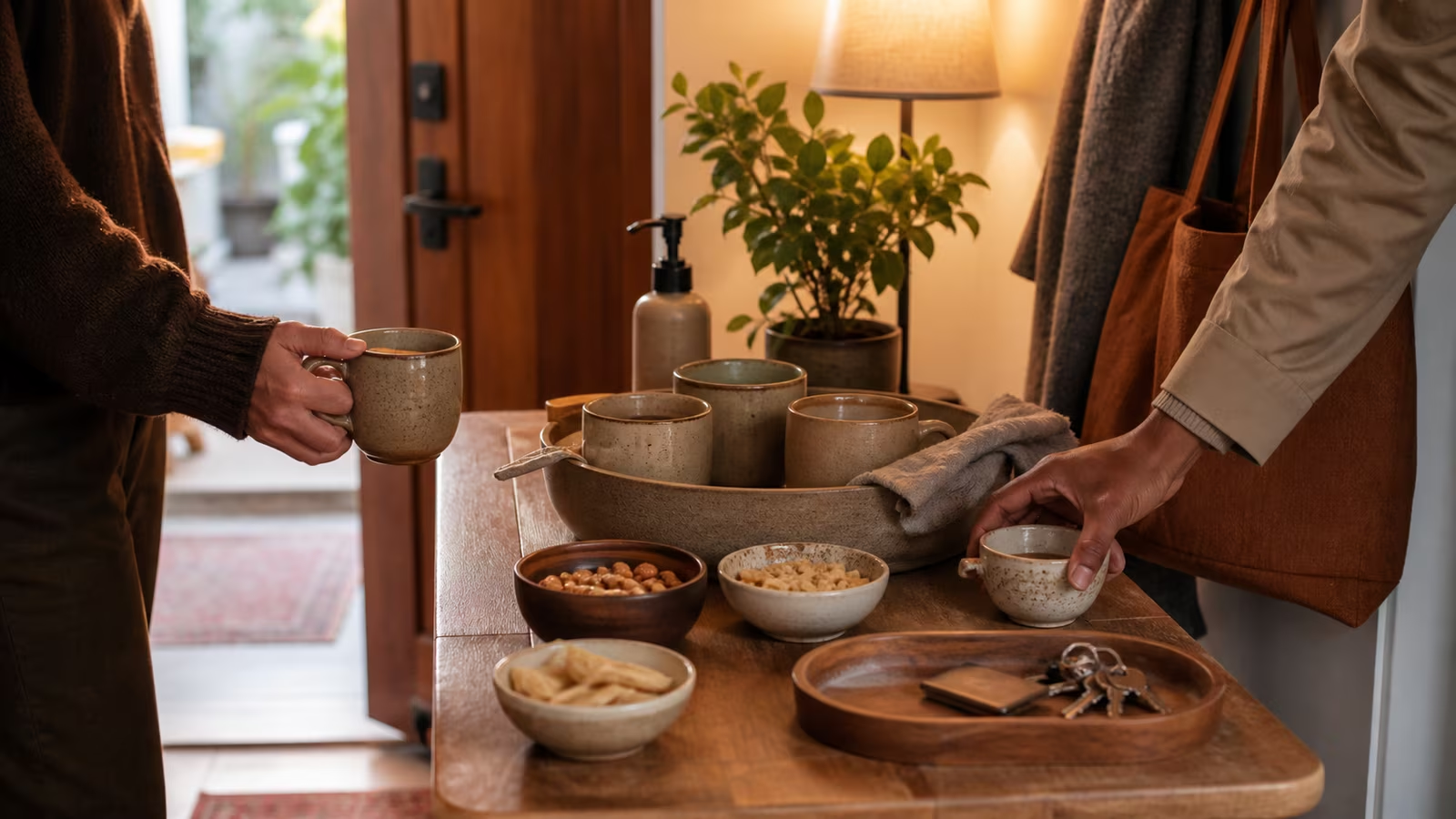
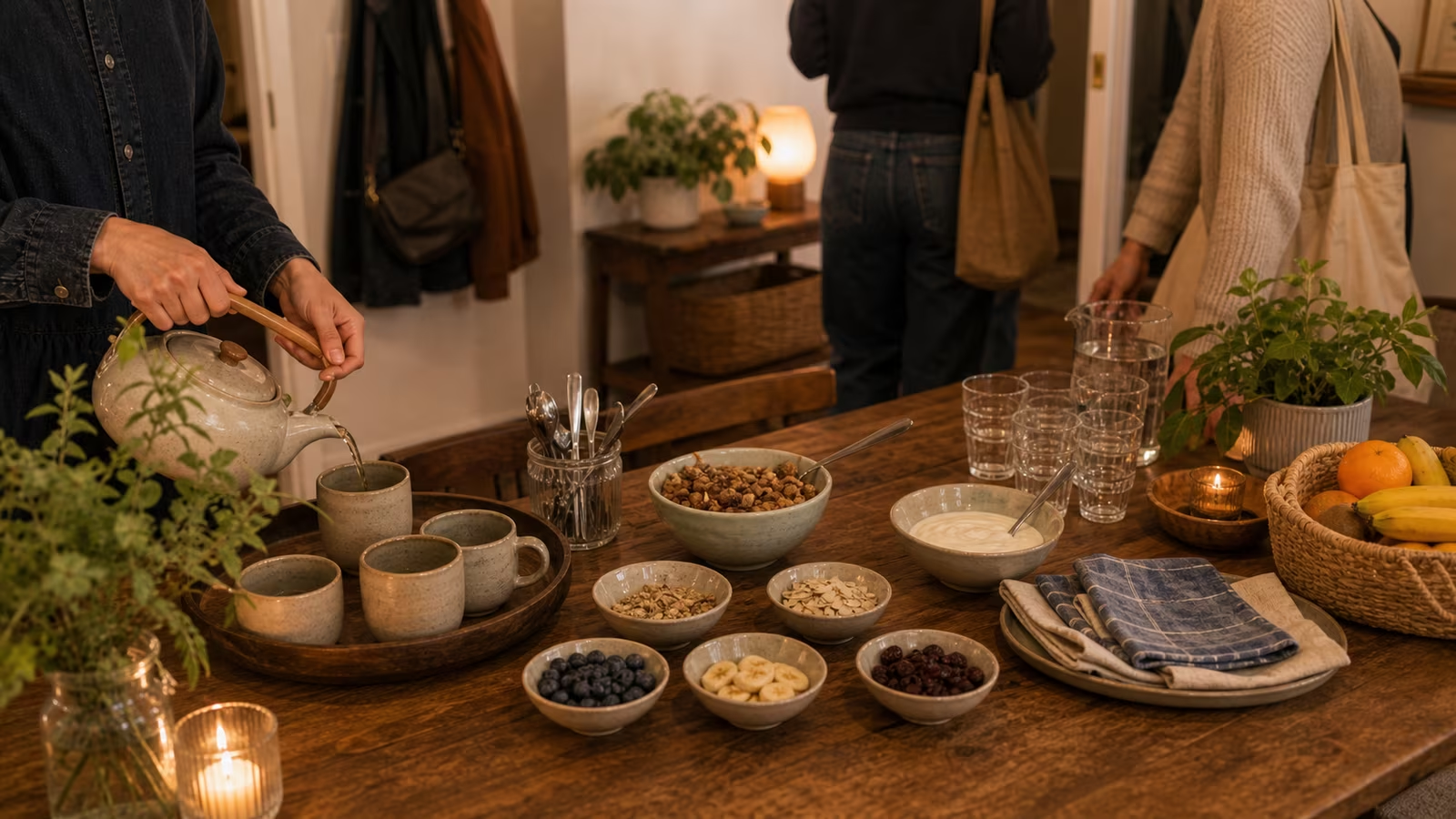
Design the opening as a plain sequence almost anyone can follow. A drink offered or poured. A clear place to set a coat. A seat to choose. One small thing to do at the table, such as adding a topping to a bowl, spooning something onto a plate, or pouring for the person beside them. Then one easy, practical question before the real format begins. Each of these gives the body a task, and a busy body quiets a busy mind. The person who has just poured tea and sat down has already crossed most of the distance that felt so wide from the hallway.
Notice that none of these steps asks for disclosure. Adding a topping is not a performance. Choosing a chair is not a test. This is the whole point of sequencing arrival as actions rather than as a vibe you are hoping to conjure. Vibes are unevenly distributed; on a good night the host feels magnetic and on a tired night they do not, and a ritual that depends on the host’s nightly supply of charisma is not really a ritual. A short arrival sequence works on the tired nights too, which is when it matters most.
Make the first move, and make it visible
Guests take their cues from the host’s body more than from the host’s words. If you stand near the door apologizing for the state of the kitchen, the room learns to be anxious. If you pour the first cup, take the first bowl, and sit down in an ordinary way, the room learns that it is allowed to begin. Do not wait for the group to become comfortable before you start; comfort usually arrives a few minutes after the first shared action, not before it. Waiting for it is like waiting for a fire to warm you before you light it.
It also helps to say the shape of the evening out loud, briefly, without ceremony. Something as light as, “Grab a drink, find a seat, and we will start once everyone has landed” tells a newcomer where the edges are. Quiet guests, late guests, first-timers, and anyone who is not sure whether they belong here all relax when the structure is legible. Clarity is not stiffness. It is one of the kindest things a host can offer in the first few minutes.
The one practical question
Resist the temptation to open with a deep question. “What is something you are grateful for this year” lands like a spotlight on a person who has not yet found their chair. The first question should be practical and answerable in a sentence: what someone had to reroute around to get here, whether they want the tea steeped strong or weak, what the weather was doing on their walk over. These questions ask nothing intimate, so nobody has to be brave to answer them, and yet they get voices into the room. Once a person has spoken once, even about traffic, the second time is far easier. Save the questions that reward reflection for later, when the room has warmed and people have chosen to stay. Question Cards That Do Not Turn Guests Into Interviews covers that later stretch; the opening minutes are not the place for it.
Design for the person who arrives alone
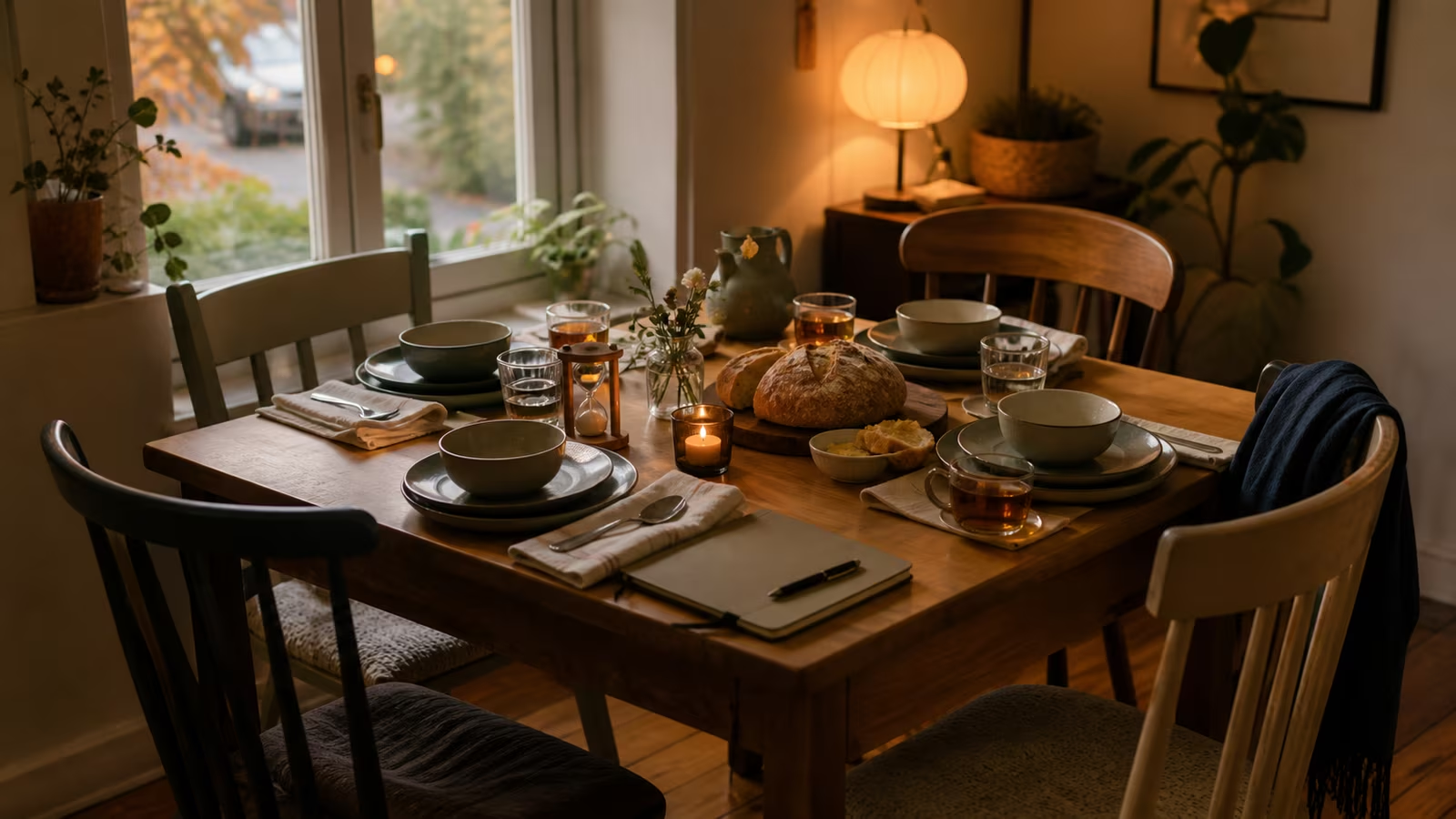
The hardest arrival belongs to the guest who knows no one but the host. They cannot drift into an existing knot of friends, and the host cannot stand beside them all night. The arrival sequence solves this quietly. A task at the table gives the solo guest a legitimate reason to be doing something, next to other people, without needing an opening line. Seat them near a job rather than near a wall. If you can, hand off a small role as you greet them: they can top up the water, hold a serving spoon, or slice the bread. A role is a raft. It lets someone participate before they have found anything to say, and it spares them the specific misery of standing empty-handed while everyone else looks occupied.
Keep the arrival drink easy and unloaded
The first drink is part of the sequence, so make it frictionless and make it genuinely optional in kind. Have water within reach without anyone having to ask, and offer at least one warm or interesting nonalcoholic thing that was clearly made with the same care as anything else on the table. When the drink you hand a newcomer is a good one and happens to be alcohol-free, you have told the room, without a speech, that the evening does not run on drinking. People step away from alcohol for reasons that are entirely their own, and a well-set arrival simply gives everyone a comfortable thing to hold on the way in. No explanations required, no separate childish option in a corner, no attention drawn.
When someone arrives late
Late arrivals test the opening design, because the sequence has already run once. Keep a version of it ready to hand: a cup, a seat, a one-line summary of where the room is. “We are just settling in, tea is on the table, come sit wherever” folds a latecomer in without restarting the evening for everyone else or making them feel like an interruption. The same principle applies here as at the door. Give them an action first and a conversation second.
Practice this once
Plan a real opening as actions rather than atmosphere: enter, set down the coat, take a drink, choose a seat, do one small thing with your hands. Run it once, then write yourself five plain lines afterward. What did people do in the first few minutes? Where did the room go quiet in a bad way versus a comfortable way? Which small task seemed to help most? Did the solo guest find a raft? Did anyone get stranded empty-handed near the door? A single awkward beat is not a failure and a single warm one is not proof, so resist redesigning everything after one night. Repeat the same opening once more before you change it, because the second run teaches you what was the format and what was just the particular people in the room.
Related guidebooks
The natural companions here are Cheap Hosting Without Apology , which frees you to keep the arrival table modest, and Invitations Without Pressure , which starts the clarity long before anyone reaches the door. If this is your first recurring table, begin with The Common Table Quickstart , and browse the rest of the Common Table guidebook shelf when you want a neighboring format. For the wider habit of making a small ritual easy to begin and resume, Startable Life Lab is a good next stop.