Most hosting advice is written for a person who does not exist: someone who finishes work with energy to spare, keeps an apartment that is always nearly guest-ready, cooks without stress, converses without effort, and bounces back from a late night by morning. That imaginary host designs gatherings the real one then has to survive. The Host Energy Budget is the correction. It asks you to plan the gathering around the person who will actually be standing in the kitchen on the night, tired from the day, working with a real amount of space, sleep, and patience, rather than the idealized version you picture while the invitation still feels exciting. If you are just starting out, The Common Table Quickstart covers the first steps; this guide is about making sure whatever you start is something you can afford to do again.
The core move is to treat your attention as a real, finite material, the way you would treat money or floor space, instead of assuming enthusiasm will quietly cover every task. Enthusiasm is a terrible budget. It is highest before the first gathering and lowest by the third, which is precisely backwards from what a recurring ritual needs. A table people can attend on an ordinary week builds more genuine community than a spectacular event that happens once and leaves the host too depleted to reopen the door.
Hosting costs more than the visible hours
The reason hosts burn out is that they only count the party. The real bill is longer than that. There is the anticipatory load in the days before, the mental thread that keeps running while you buy groceries and tidy and rehearse who sits where. There is the decision cost of a menu with too many moving parts, each choice a small tax paid in advance. There is the emotional labor of the evening itself, of being warm and attentive and slightly on-duty for two or three hours. And then, after everyone leaves and the glow fades, there is the cleanup and the day-after flatness that nobody sees, which is often where the true expense hides.
When you add those up honestly, a gathering that looked light on paper turns out to have been costly, and a gathering that felt indulgent to keep simple turns out to have been the sustainable one. The point of a budget is not to make hosting joyless. It is to make sure the joy is affordable more than once. Count all the columns before the night, not just the pleasant middle one, and design so that no single column, especially the invisible recovery column, quietly bankrupts the rest.
Cap the load in advance, on purpose
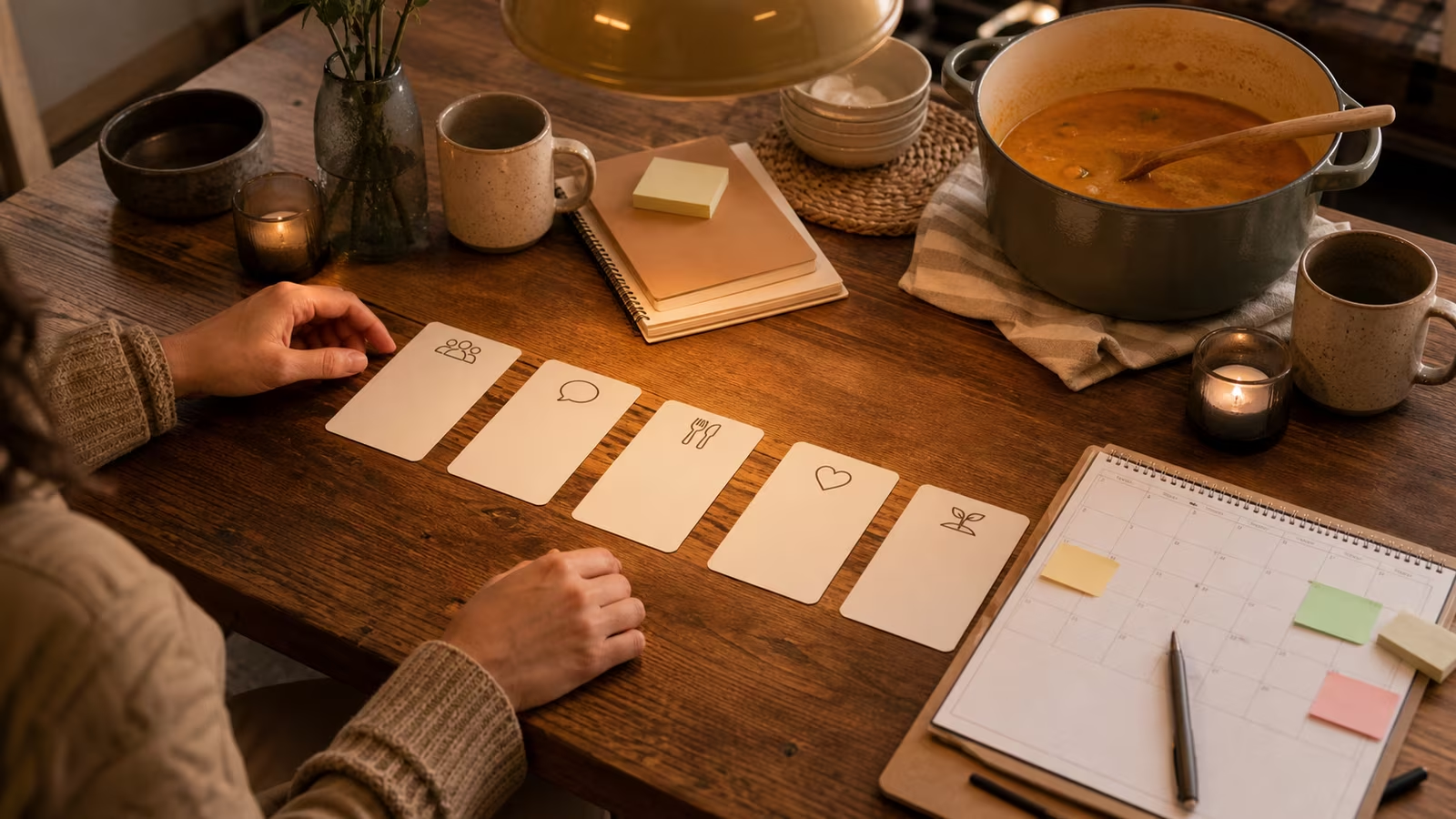
A budget only works if it sets limits before desire arrives. So decide your caps while you are calm: how complex the food is allowed to get, how many prep minutes you will spend, how many decisions the menu is permitted to demand, how much cleanup you are willing to face, and how much recovery time you will protect afterward. Write these down, because the version of you standing in the grocery aisle at the last minute will happily overspend all of them in the name of making the evening a little more special. The written cap is a promise your rested self makes to your tired self.
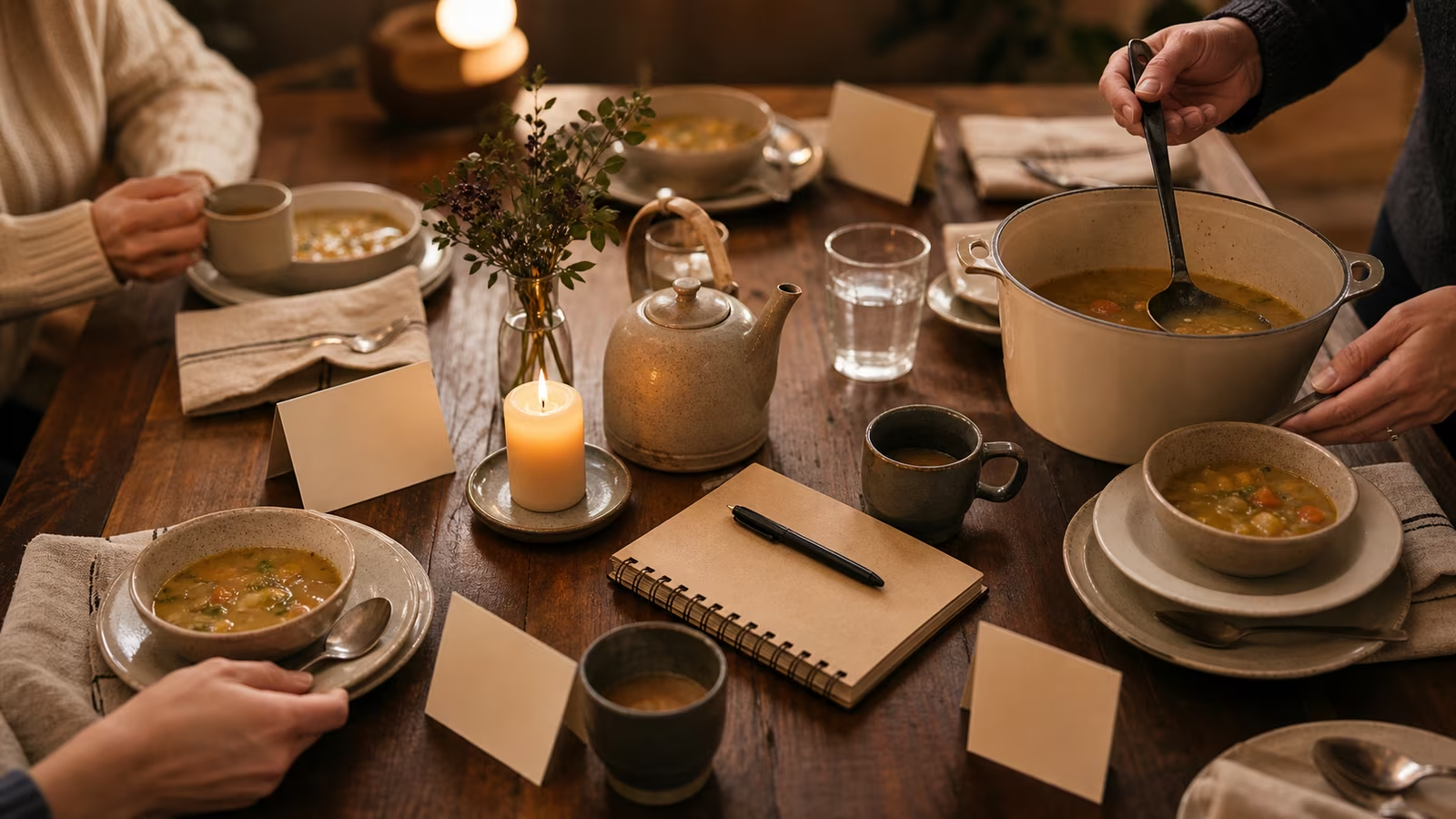
Practical caps tend to look humble and work beautifully. One pot rather than three courses. A single thing you make plus a few things guests bring. Chairs you already own instead of a seating plan that requires borrowing. A playlist chosen once and reused. None of this reads as stingy to guests, who came for the company and the reliability, not for the degree of difficulty. What they actually feel is a host who is present rather than frazzled, which is worth more than any elaborate dish. A ritual that survives the ordinary week is one whose caps were set low enough that a normal amount of tiredness does not break it.
Design so it does not depend on your best day
A useful test for any format is whether a trusted friend could run it if you were briefly unavailable. If the ritual depends on your particular menu, your specific apartment, your personal charm, and your ability to stay up late, then it is not really a repeatable system; it is a performance that happens to have friendly people in the audience, and it will end the first time you have a genuinely bad week. That fragility is not a character flaw. It is a design flaw, and design flaws are fixable.
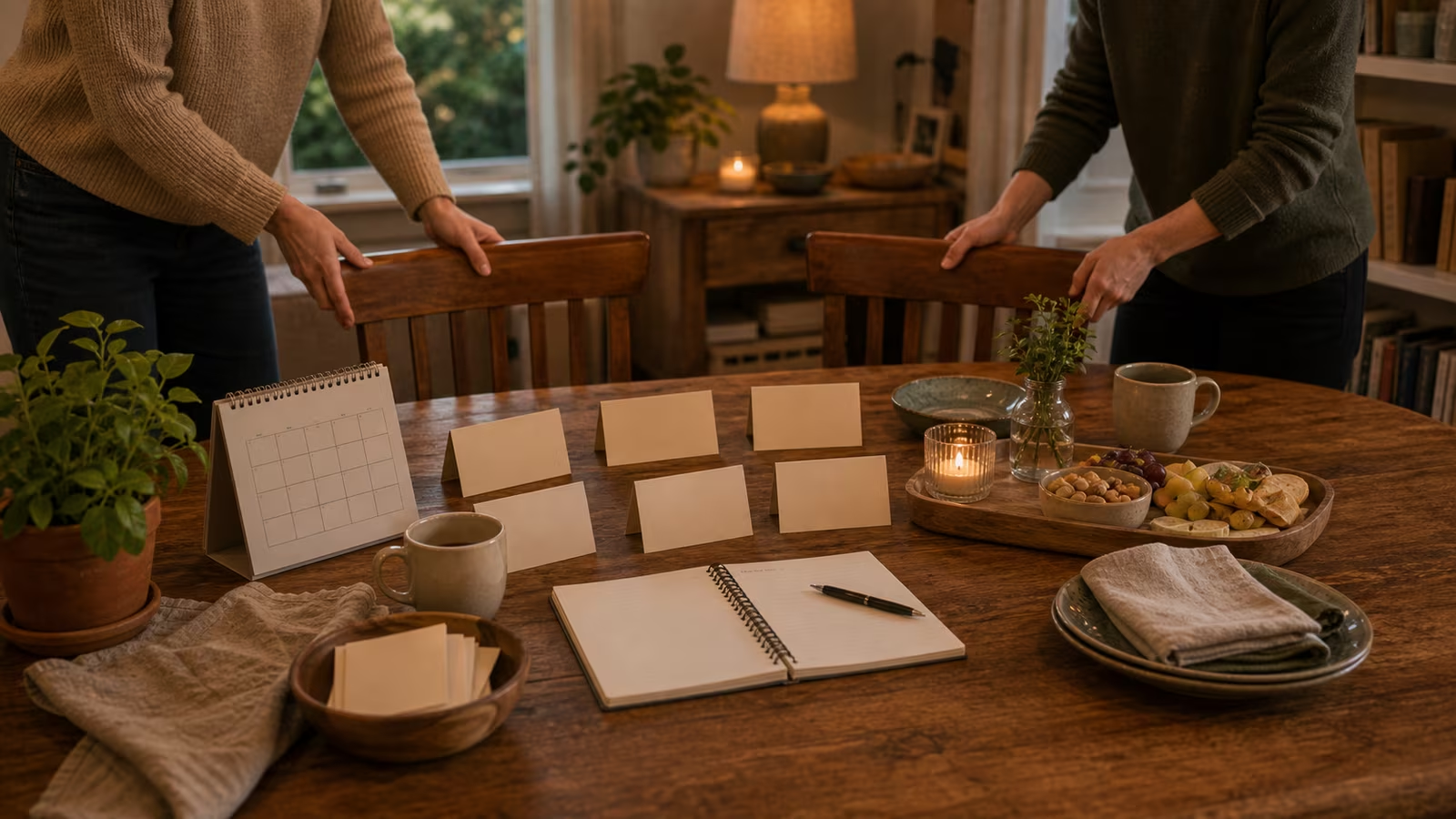
Build for the average day, not the exceptional one. Ask what still works if you had a hard shift, if one guest cancels an hour before, if the weather ruins the plan, or if the group needs to skip a month. A format that answers those questions gracefully is one you can hand off, pause, and resume, and that resilience is what turns a nice evening into an actual community habit. This is closely tied to the idea in Rituals, Not Themes : the repeatable skeleton matters far more than any one occasion’s flourish, precisely because the skeleton is what carries you through the days when you have nothing extra to give.
Keep the drinks from inflating the budget
Alcohol has a way of quietly enlarging a host’s workload and the evening’s social stakes at the same time. Once drinks become a centerpiece, the host inherits a bar to stock, glasses to wash, refills to track, and a room whose warmth starts to depend on a substance rather than on the company. It is worth designing against that drift for the sake of the budget alone, quite apart from anyone’s private choices. A gathering that makes complete sense with no alcohol at all is a gathering that costs the host less and asks less of every guest.
Make the non-alcoholic option something you genuinely considered, so it feels like a real part of the table rather than an afterthought, and keep refills quiet enough that no one’s choice becomes a topic. People decline alcohol for reasons that are entirely their own and that they owe to no one, and a well-run table simply gives everyone an easy, unremarkable path through the evening. Keeping alcohol at the edge rather than the center is both hospitable and, not coincidentally, cheaper in every column of the host’s budget.
Score it, then trust the number over the memory
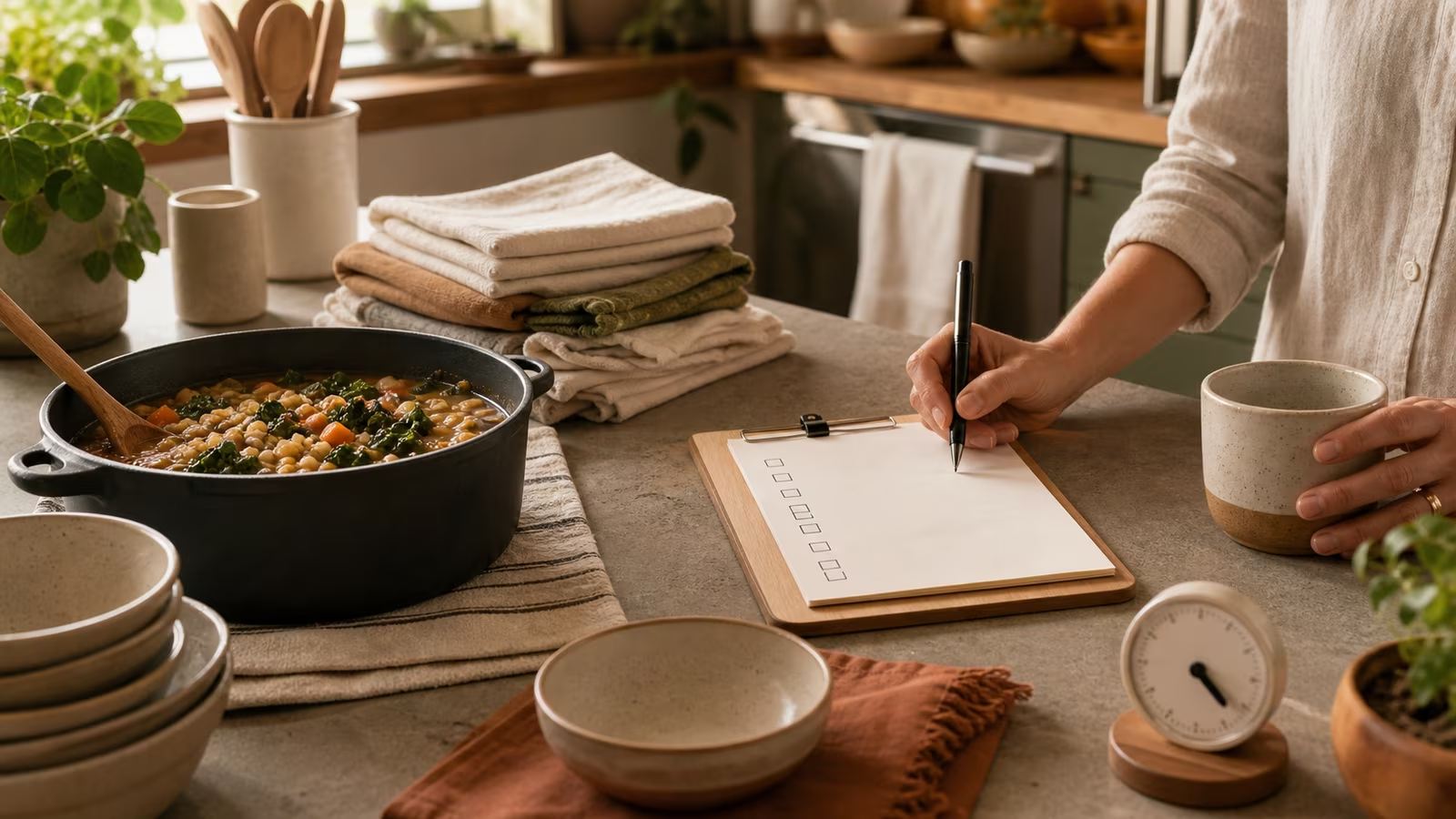
The night itself is a poor witness, because a warm evening flatters its own design. So before you invite anyone, do one small honest thing: score the coming gathering from one to five on prep, on hosting, on cleanup, and on recovery. A format that scores gently across all four is one you can repeat; a format that scores a five on recovery cost is telling you something the compliments never will. After it happens, keep the review just as short, a few plain lines on what repeated easily, what felt too heavy, what made guests visibly more comfortable, and what should stay next time.
Then resist two temptations. Do not scale up because one evening went well, and do not scrap the format because one moment felt awkward; run the same size a second time, since the second gathering is the one that reveals whether the invitation still lands, whether the cleanup is truly tolerable, and whether the close comes naturally. Pair the budgeting habit with the clarity of Invitations Without Pressure and the calm structure of Social Safety House Rules , and the whole thing starts to run on far less of you than the first attempt demanded. That, in the end, is what a host energy budget buys: not a smaller life, but a table you can still afford to open next month, and the month after that.