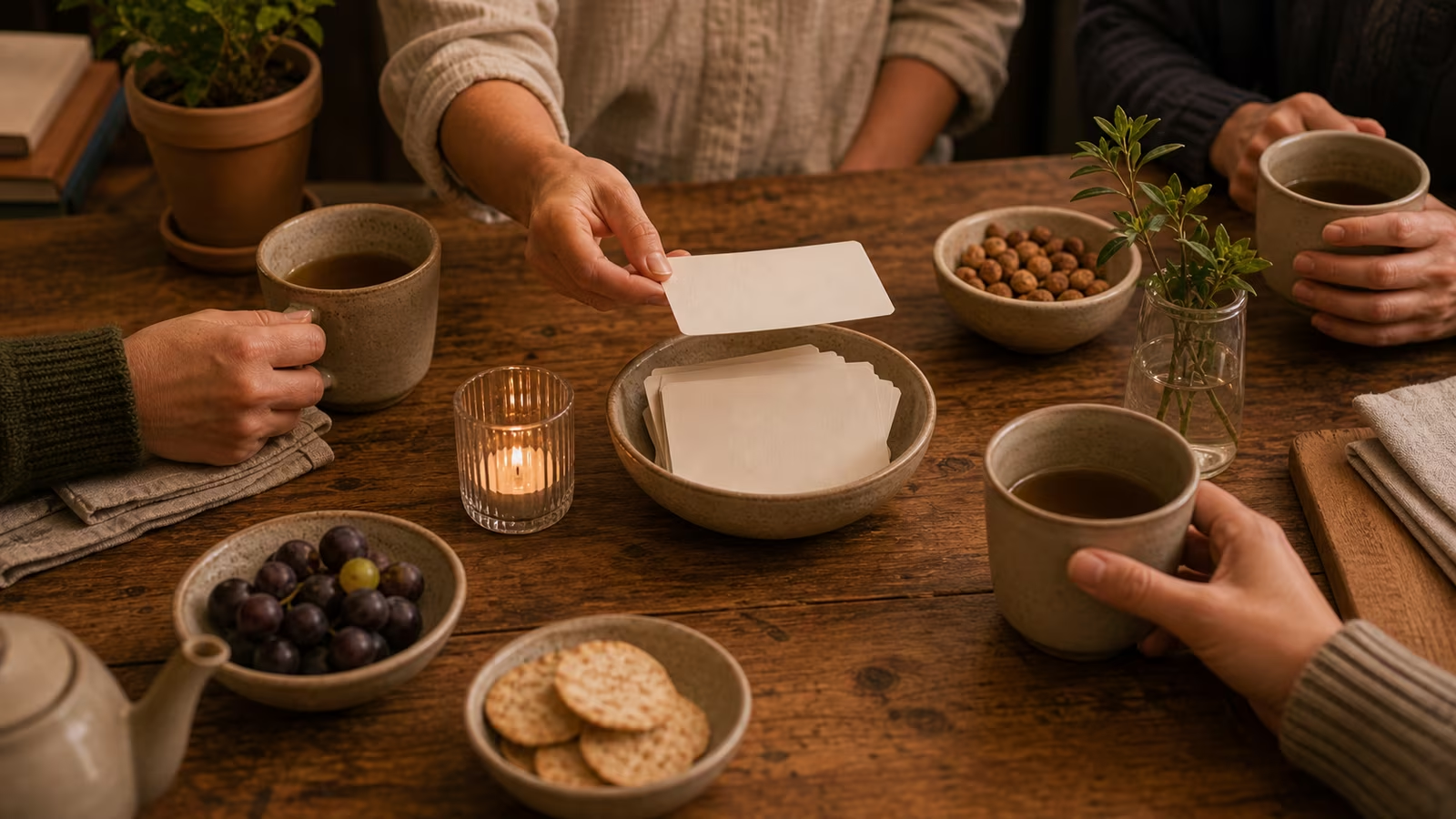

An invitation is a small promise, and most of the awkwardness around invitations comes from making that promise deliberately vague. We soften the ask because we want to seem generous and easygoing, and the softness quietly backfires. The guest cannot tell what they are agreeing to. Is this coffee for two or dinner for twelve? A quick hour or a whole evening? Will there be pressure to drink, to bring something impressive, to stay late, to be entertaining on cue? When those questions go unanswered, a yes becomes a gamble, and plenty of people decline a genuinely good evening simply because they could not see its shape from the outside.
The Common Table Quickstart covers building a recurring table from nothing. This guide is narrower and more mechanical. It is about the sentence or two you actually send, and how to write them so a guest can picture the room, weigh the real effort, and decline without bruising anything between you.
Clarity is the kindness
There is a persistent myth that specific invitations feel cold and vague ones feel warm. The opposite is usually true. “Come by sometime, it will be super chill” sounds friendly and lands as a small puzzle: the guest now has to guess the date, the scale, the dress, the food, and whether “chill” means they can slip out at nine. A specific invitation does that work for them. “Soup and bread at my place Thursday, seven to nine, four of us, come as you are, tea and water on the table” is not colder. It is a host taking the guessing off the guest’s plate. Warmth lives in the tone and the follow-through; clarity lives in the facts. You can have both at once, and the facts are what let the warmth actually register instead of reading as a demand for interpretation.
The four things every invitation should settle
Most invitations only need to answer four quiet questions. What is this — the format, and roughly who else will be there. When is it — a start time and, just as important, an end. What is expected of me — bring nothing, bring a thing, food central or incidental, and what the drink situation is. And how do I get out of it — the decline path, which most invitations leave dangerously implicit. You do not need a paragraph for each. One clean sentence per point is plenty, and you can often fold two into a line. The discipline is simply not to leave any of the four to the guest’s imagination, because their imagination will usually invent a version that costs more than the real one, and then decline that invented version instead of the real evening.
Naming the end time deserves its own mention, because hosts resist it. It feels ungracious to announce when people should leave. But a stated end is a gift to anyone with a sitter at home, an early shift, limited social stamina, or a quiet worry about overstaying. “Wraps up around nine” is exactly what lets a tired person say yes to a seven o’clock start they would otherwise refuse. The end time is not a countdown clock; it is permission to come knowing there is a floor under the evening.
Build the easy no into the ask
The single most useful phrase in low-pressure hosting is a pre-written exit. “No pressure at all if it is not your week” or “totally fine to catch the next one” written directly into the invitation does something structural: it tells the guest that a decline will be received cleanly, so their yes, when it comes, is real rather than cornered. People can feel the difference between an invitation that wants their company and one that needs their compliance, and the easy no is how you signal the first. It also protects the friendship from slow erosion, because nobody has to manufacture an excuse or ghost a thread to protect your feelings.
This matters most in group chats, where declining is public. In a thread of ten people, a “sorry, can’t” can feel like a small defection witnessed by everyone. You can defuse that by normalizing partial and rotating attendance up front — make it clear that nobody is expected every time, that the table survives a light turnout, and that dropping in and out is the design rather than a failure. Closing Before It Drifts works the far end of the same principle: a gathering, and a guest’s run of attendance, can wind down gracefully without anyone having done something wrong.
Match the ask to the format, not your hopes
A common failure is letting a large emotional hope ride on a small logistical ask, or the reverse. If you are quietly hoping this becomes a close weekly ritual, do not load that hope into the first text. Ask for one modest evening and let the ritual earn itself over a few repeats. If you are just clearing leftovers with two neighbors, do not dress it up as an event with a theme and a required dish, or people will over-prepare and quietly resent it. Tiny Table, First Four makes the case that small scale is an advantage rather than a limitation, and small scale is far easier to invite honestly. The ask should describe the actual evening, at the actual size, with the actual effort — nothing inflated to sound worthy, nothing shrunk to sound casual.
Sober-ish by default, without a speech
Say the drink situation plainly and neutrally, then move on. “Tea, water, and a couple of sodas; bring a bottle if you like” tells everyone what the center is without making a production of it. The goal is that a guest who does not drink, for any of a dozen private reasons that are none of the table’s business, can read the invitation and see a normal, unremarkable path through the evening laid out for them. You do not achieve that by announcing a sober theme or by making the absence of alcohol conspicuous; both just draw a spotlight to the thing you meant to make ordinary. You achieve it by making the nonalcoholic options obviously real and by not organizing the evening’s appeal around a drink. Assembling the room works the same way: Guest Fit Without Gatekeeping is about gathering people who can relax together, and people relax fastest when the basic terms are stated plainly and left undramatic.
Practice on an old one
Rewrite an invitation you have actually sent so that it names the time, the scale, the food expectation, the alcohol default, and the easy no — five facts, ideally in three or four sentences. Send that version next time and notice what changes. Usually two things do: more people reply promptly, because you removed the decoding work, and the ones who decline do it earlier and more warmly, because you gave them a clean way to. Neither result proves anything on its own, so run the same wording twice before you decide it works. But a legible invitation reliably lowers the temperature of the whole exchange, which is the entire point. The invitation is not where you impress anyone. It is where you make it safe to show up, and safe to stay home. More formats are on the Common Table guidebook shelf .