A leftovers night is one of the most honest gatherings you can host, and one of the easiest to get quietly wrong. The premise is generous and a little countercultural: instead of cooking to impress, everyone brings the safe surplus already sitting in their fridge, and the table turns what would have become waste into an evening. Done well, it is cheap, warm, low-effort, and mildly radical about food. Done carelessly, it becomes a row of unlabeled containers of uncertain age that nobody quite trusts, and the generosity curdles into a game of culinary roulette.
The Common Table Quickstart covers standing up a recurring table in general. This guide is about the specific thing a leftovers table has to get right that other formats do not worry about: keeping food safety plainly visible so the thrift reads as care rather than corner-cutting.
Make freshness the first rule, not an afterthought
The rule that makes a leftovers night work is simple enough to fit in the invitation: bring only what you would happily eat yourself. That means food cooked within the last day or two, kept properly cold on the way over, and nothing you are privately unsure about. A pot of soup from last night, rice from a takeout order two days ago that lived in the fridge the whole time, half a tray of roast vegetables — these are exactly the point. The mystery tub shoved to the back of the shelf, the dish that has been reheated three times, the thing you are hoping is still fine is not a contribution; it is a question mark, and question marks do not belong on a shared table.
State this plainly because a leftovers night lowers the bar for effort, and people sometimes hear low effort as low standards. It is not the same thing. The other half of the rule is timing on the table itself: keep hot food hot and cold food cold, and do not let the spread sit out at room temperature for the whole evening. A useful thing to remember is that perishable food should not linger out for more than about two hours. When in doubt, throw it out. Rescuing every last scrap at any cost is not the goal; sharing the good surplus is.
Label everything, especially the allergens
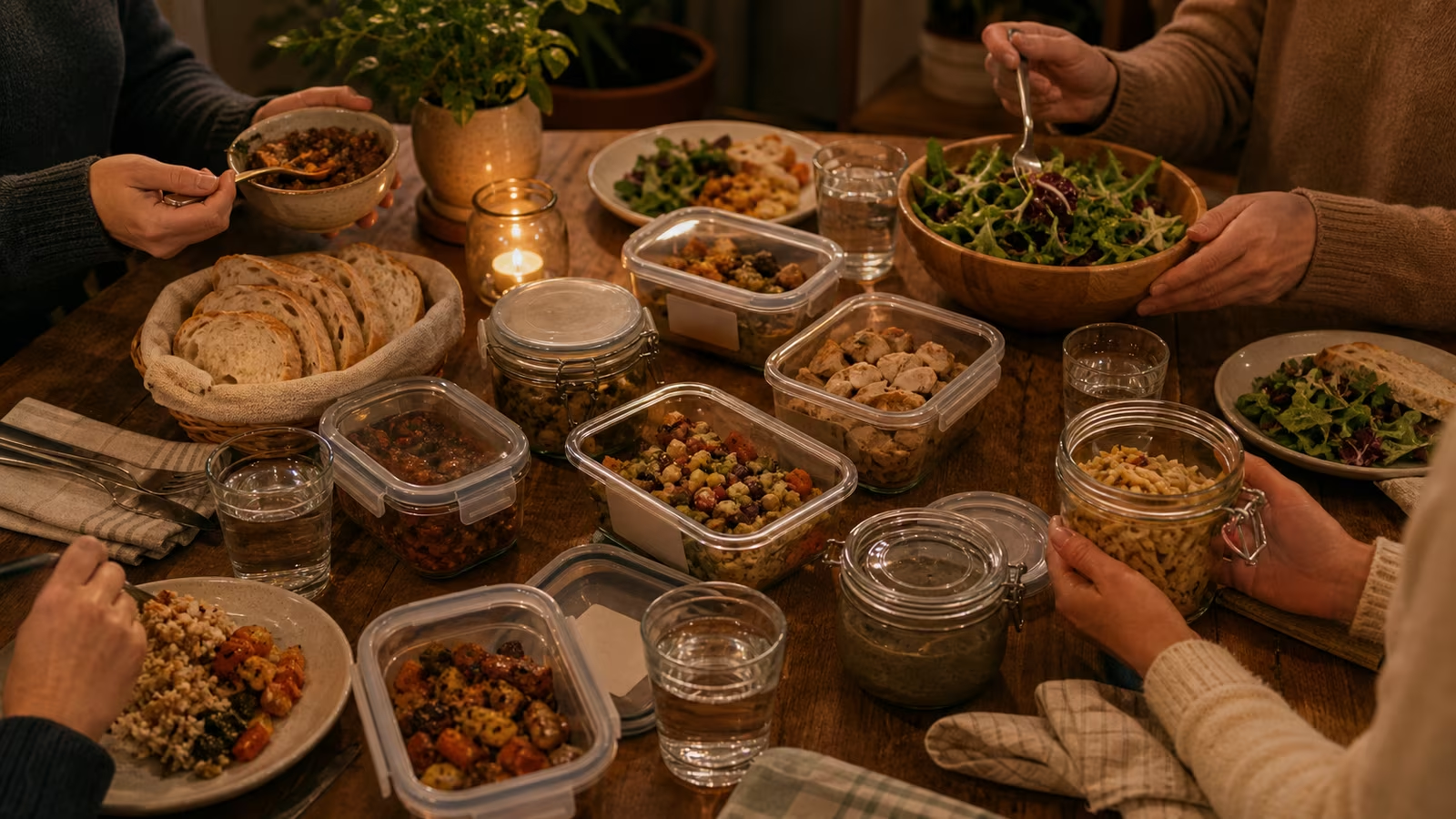
Because leftovers arrive without menus, labeling is the difference between a relaxed table and an anxious one. A guest with a nut allergy, celiac disease, a pork restriction, or a strong dislike should be able to read the table rather than interrogate each dish or its owner. A scrap of tape or a small card on each container is enough: what it is, roughly when it was made, and the loud allergens — nuts, dairy, gluten, shellfish, egg. This is not fussiness. It is what lets people serve themselves without twenty questions and without quietly going hungry to avoid making a scene. On a table where the containers are deliberately mismatched and unglamorous, the labels are the one bit of order that lets everyone else stay easy.
Add one fresh anchor
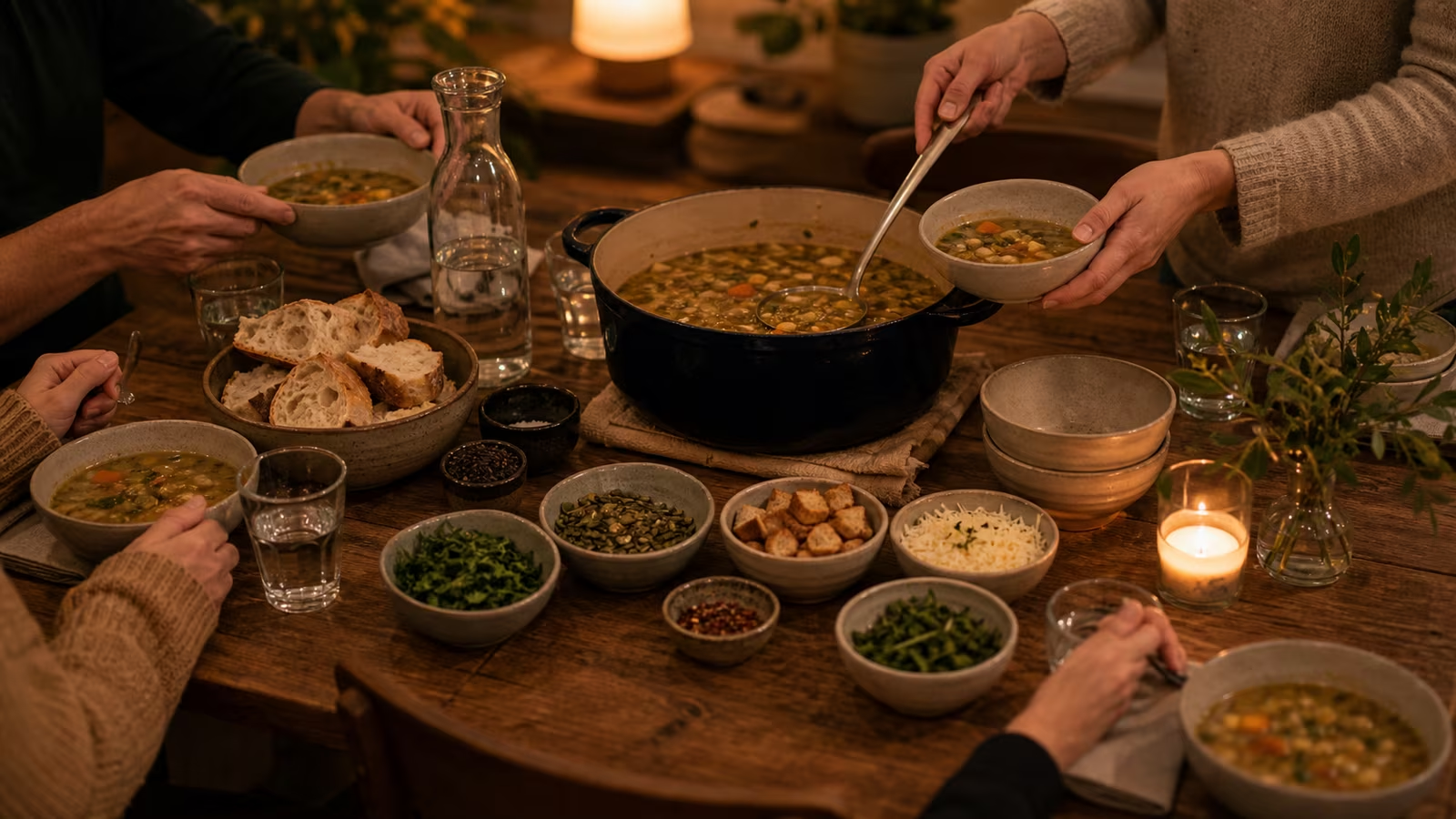
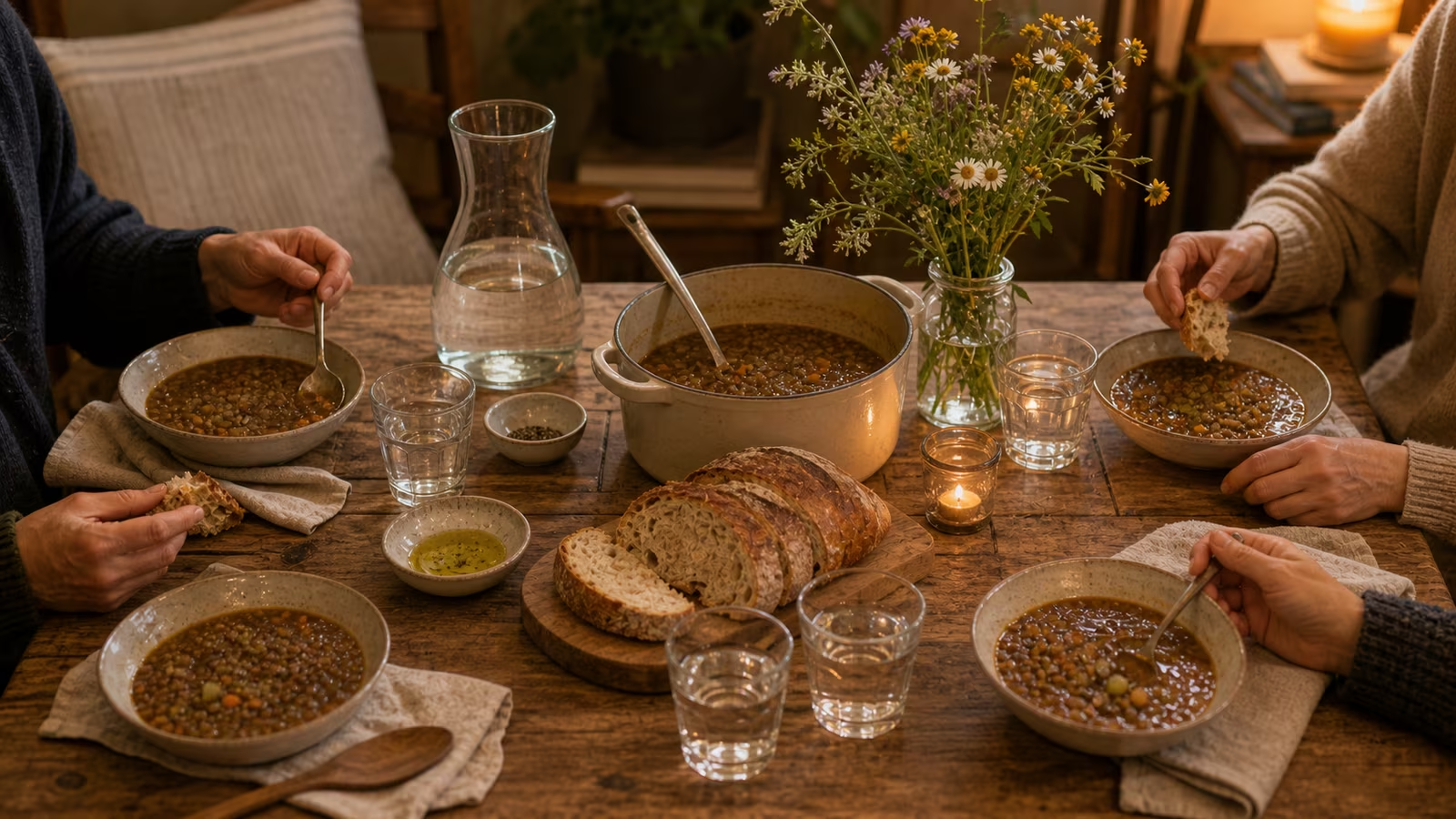
The move that turns a scrappy fridge-clearout into an actual meal is a single fresh anchor: a pot of rice cooked that afternoon, a big green salad, a warm loaf of bread, a bowl of cut fruit. The anchor does two jobs. It gives the miscellaneous dishes something to sit against, so three unrelated leftovers become a plate rather than a pile. And it makes sure that even if the surplus is thin or strange that week, nobody leaves hungry. The host usually provides the anchor, because it is cheap, simple, and the one thing genuinely worth cooking fresh. Skill-Swap Supper builds a whole table around trading one small useful move, and a good fresh anchor is a fine thing to teach or hand off if you would rather not always be the one making the rice.
Keep portions and expectations modest
Leftovers nights fail when they inflate. Suddenly people feel they should bring something special, or cook fresh food and pass it off as leftovers, or produce enough to feed the whole room single-handedly — and the cheap, easy premise collapses under quiet competition. Keep it honestly small. A few dishes, modest servings, no pressure to fill the table. Low-Effort Shared Snacks That Do Not Become Dinner Theater makes the related case that a table does not have to become a performance to be worth attending. A leftovers night is at its best when it stays proudly unimpressive, because that is what makes it repeatable on an ordinary Sunday rather than a special occasion nobody has the energy to mount twice.
Send the surplus home
Set a few reusable jars and containers near the door, and make it normal for anything safe and unclaimed to go home with whoever wants it. This keeps the host from inheriting a mountain of cleanup, and it quietly closes the food-safety loop: leftovers of leftovers, sitting out all evening and then forgotten in someone’s fridge for another week, are exactly the kind of second-generation food the freshness rule was meant to prevent. Sending the surplus home also lets a guest who is short on money or time leave with a real meal for tomorrow without anyone framing it as charity. It is just what the table does.
Cheap and sober-ish by the same logic
The economics of a leftovers night pair naturally with alcohol-optional hosting. The whole appeal is low cost and low pressure, and an elaborate drinks spread would contradict both. Water on the table, tea in the pot, maybe a few sodas or a single shared bottle at the edge for anyone who wants it. People skip alcohol for a long list of reasons that are theirs to keep, and a thrifty, food-forward table makes the nonalcoholic path the obvious default rather than a consolation prize. Nobody has to explain a preference at a table whose entire premise is using what you already have.
Design a leftovers invite with clear freshness rules, plain label expectations, and a fresh rice, salad, or bread anchor, then run it once and watch whether people relax into the honesty of it. If they do, it will want to repeat. Invitations Without Pressure can help you word the freshness and labeling asks so they read as ordinary care rather than an inspection, and the wider Common Table guidebook shelf has more recurring formats to pair it with.