
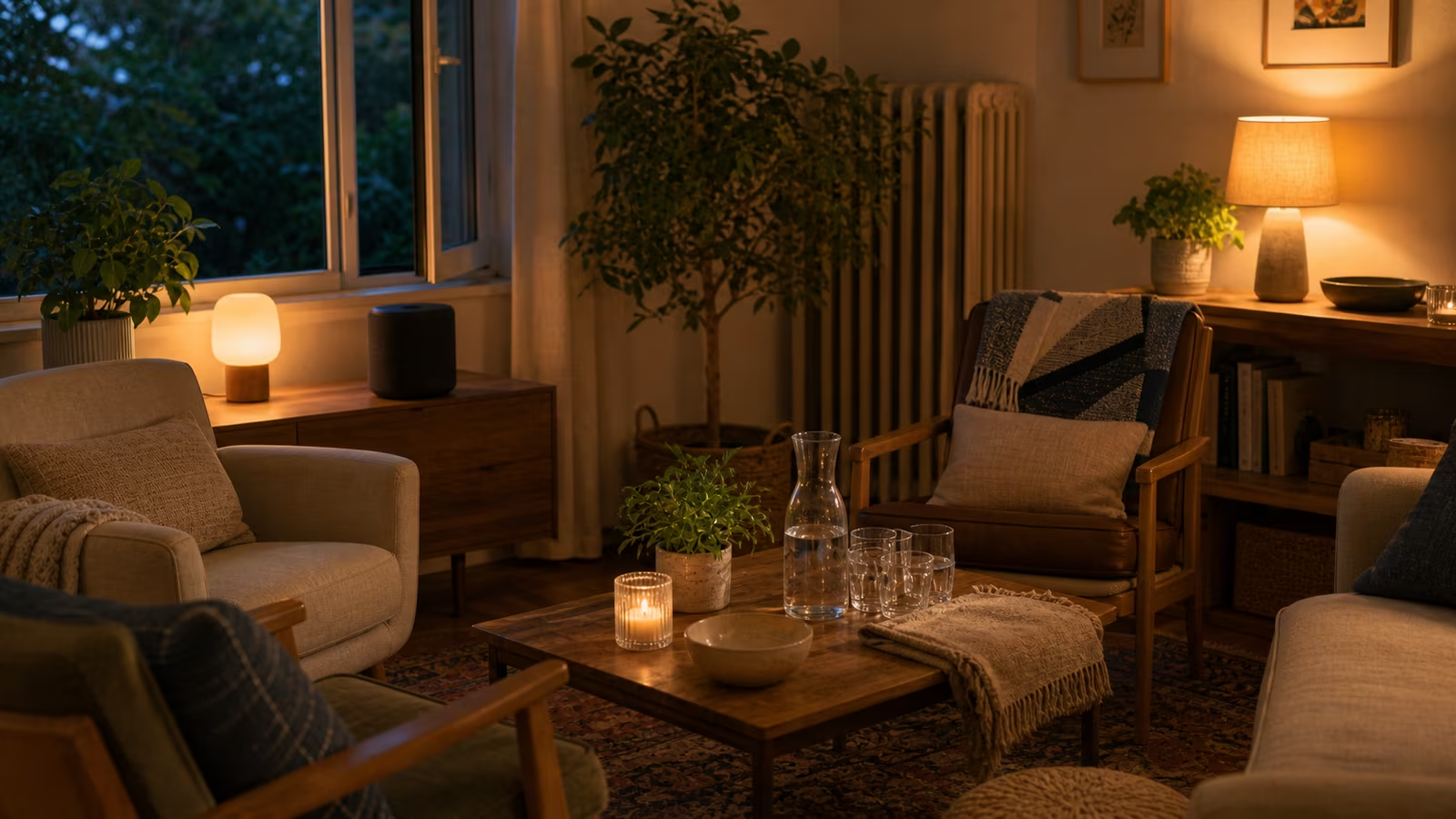
Guests rarely thank you for the lighting, the volume, or the temperature, and that is exactly the sign you got them right. Sensory conditions are invisible when they work and quietly exhausting when they do not. A room that is too dim to read faces, too loud to hear a name, too hot to think, or too cold to relax makes everyone spend a slice of their social energy just coping with the space — squinting, leaning in, repeating themselves, keeping a coat on and one foot toward the door. That spent energy never reaches the conversation. Comfort is not decoration; it is the infrastructure the whole evening quietly runs on.
The Common Table Quickstart covers the shape of a recurring table. This guide is about the layer underneath it: the physical conditions you set before anyone arrives, which decide how much effort the room itself demands from the people in it.
Light warm enough to read a face
Faces carry most of a conversation. When people cannot clearly see each other’s eyes and expressions, they read each other less accurately, mirror less, and warm up more slowly. Aim for light that is warm in tone but genuinely bright enough to see across the table. A single overhead fixture tends to be flattening and a little clinical, so a few lamps at different heights, or a couple of warm bulbs, do more for the room than any one ceiling light ever will. Avoid both extremes. The dramatic near-darkness that reads as moody or romantic actually makes people faintly anxious about who is where and what they are missing, and the harsh overhead flood feels like a waiting room. You want to be able to see the soup and the person across from you without the smallest bit of effort.
Music under the conversation, not over it
The test for music is simple: can two people say their names once and be heard? If a name has to be repeated, the music is too loud, and it will wear everyone down by the second hour without anyone naming the cause. They will just feel tired and leave a little early. Keep it low, keep it instrumental or familiar enough that nobody is straining to place the song, and point the speaker away from the table rather than straight into it. Music’s job at a small gathering is to soften silence and keep the room from feeling like a stage where every pause is public — not to be the entertainment itself. When conversation is genuinely flowing, you can usually turn it down further than you would expect, and often you can let it drop away entirely.
Air, temperature, and the coat question
A room warms up as bodies, food, and conversation fill it, so set the temperature a touch cooler than feels right when the space is empty. A close, warm, still room makes people drowsy and vaguely uncomfortable in a way they will blame on their own tiredness rather than on the air. Crack a window, run a fan on low, keep the air moving. And solve the coat question before anyone arrives: a clear, obvious place to put coats and bags means guests are not sitting on their belongings or holding them in their laps like they might need to bolt. Where a person is invited to put their coat is a small signal about whether they are allowed to settle in, and settling in is most of what you are trying to make possible. Once bodies are comfortable, Small-Room Seating Flow handles where they go and how the conversation moves between them.
Water in sight, and a neutral nose
Visible water changes behavior. A pitcher and glasses already on the table mean nobody has to ask, interrupt, or open cupboards to stay hydrated, and it quietly makes the nonalcoholic path the plain default rather than something a guest has to request. Thirst and stuffiness are two of the most common low-grade discomforts at gatherings, and both are cheap to solve in advance. Scent is the flip side of the same idea and the sensory mistake hosts most often make with the best intentions. Candles, diffusers, plug-ins, and heavy cleaning products can trigger headaches, allergies, and asthma, and unlike a loud playlist a guest cannot politely ask you to turn a smell down once they are in the room. Keep the air neutral and let the food be the scent of the evening. The same restraint applies to anything a body cannot opt out of — a flickering light, a television left blaring in the corner, a heater roaring at one end of the table.
Run the room test
Before guests arrive, sit down where a guest will actually sit and check whether you can hear, see, breathe, and leave. Can you read the face of the person who will be across from you? Say a name at normal speaking volume — is it clear over the music? Is the air moving, or is the room already close? Do you know where your coat and a glass of water are, and can you find the door and the bathroom without having to ask? Ten minutes in the guest’s chair catches almost every sensory problem while it is still easy to fix, which is the whole advantage of doing it before rather than during. The Cleanup Ritual takes care of the other end of the evening; the room test is the setup that makes the entire middle easier for everyone in it.
None of this needs to be perfect or expensive, and it does not need announcing. Guests should never notice that you tuned the light, lowered the music, opened a window, and set out the water — they should simply find that the room is easy to be in and stay a little longer than they meant to. When you get it right, run the same setup again next time before changing anything, because a room that quietly works is worth repeating. You can word the practical details of the evening cleanly with Invitations Without Pressure , and find more of the underlying systems on the Common Table guidebook shelf .