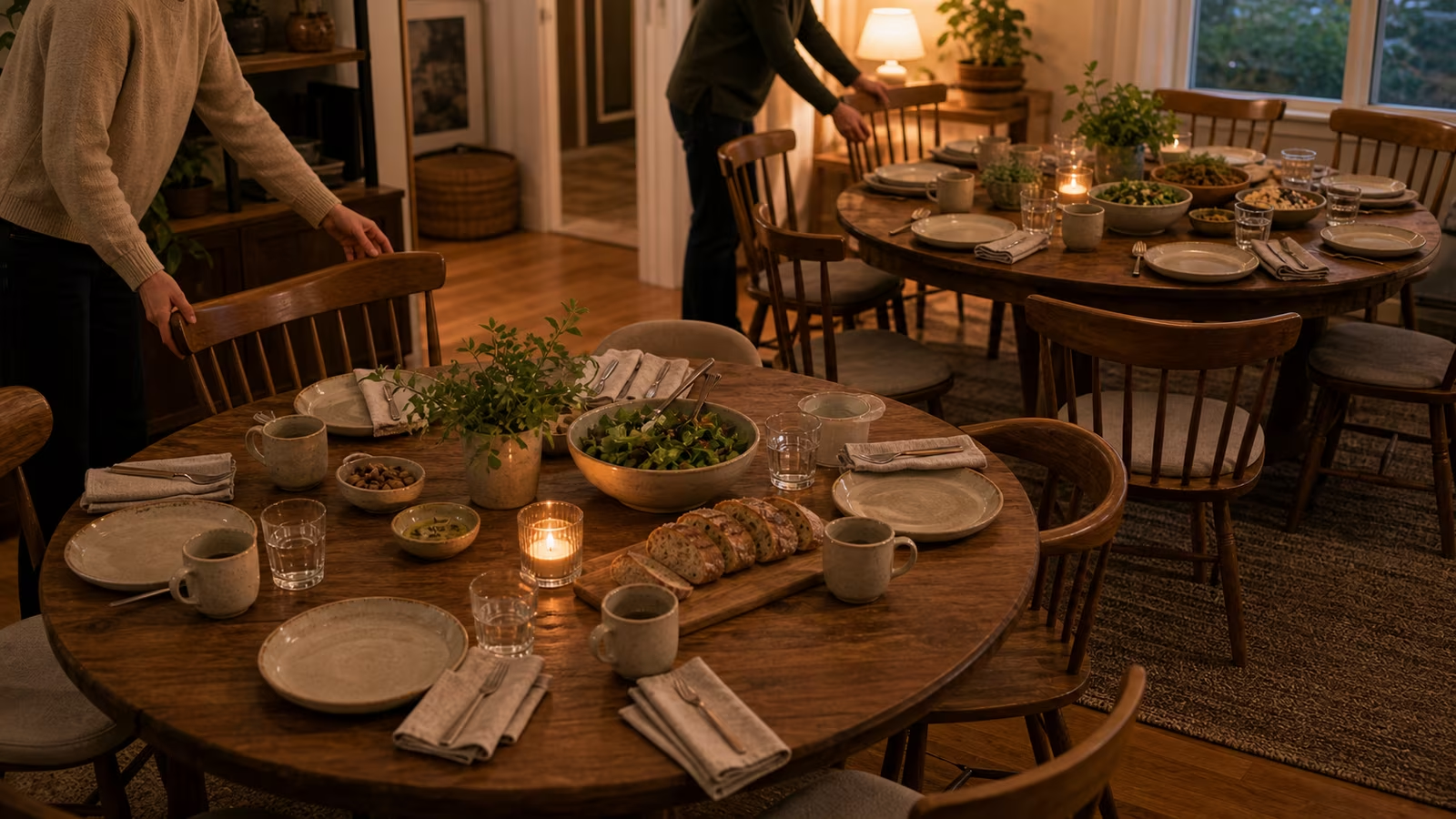
The morning after a gathering is a strange little tribunal. You wake up with a leftover feeling that is not quite a thought, and depending on how you slept, that feeling declares the whole evening either a triumph or a quiet embarrassment. Neither verdict is trustworthy. The mood of the host the next morning is one of the least reliable measures of whether a gathering actually worked, because it is mostly a report on your own nervous system, not on the room. If you are going to keep hosting, you need a way to judge the evening that does not depend on how anxious you happen to feel over your coffee.
The wrong scoreboard
Most of us grade gatherings on the loudest and least meaningful signals. We count compliments at the door, because a warm goodbye feels like proof. We notice whether anyone took a photo, as if documentation were the same as enjoyment. We replay the one flat moment, the lull after someone told a long story, and let it stand in for the whole night. And underneath all of it runs the real question we are secretly asking, which is not did this work but was I liked. That question is a trap, because you can be perfectly likeable at an event that no one wants to repeat, and you can host something a little awkward that people quietly build their month around.
Delight is an especially bad target. If your standard is that every guest looked happy every minute, you will over-correct forever, adding entertainment and food and forced warmth to smother the ordinary quiet stretches that every real gathering has. A room where people feel safe enough to be a little bored for two minutes is often healthier than a room being relentlessly delighted by a host who cannot sit down.
Measure the system, not yourself
The better question is whether the gathering, as a system, can happen again. That reframe takes the pressure off your personality and puts it on the design, which is the only part you can actually improve. Five plain checks tell you most of what you need to know.
First, was the promise clear? Did guests seem to know what they had come for, or did you spend the first half hour explaining and reassuring? Confusion at the start is a design problem in the invitation, not a character flaw in your guests. Second, was the effort repeatable? Look honestly at how tired you are right now. If pulling this off cost you two days of preparation and left you wrecked, the answer is no, no matter how nicely it went, because you will not do it again next month and a ritual you cannot sustain is not a ritual. Third, could people leave easily? Notice whether the end was clean or whether guests trailed off apologetically, unsure if leaving was rude. An evening that traps people is not as kind as it feels in the moment. Fourth, did the room mostly run itself, or did it stall every time you stepped into the kitchen? Fifth, and simplest, does the next date feel possible, or does the thought of doing this again make you tired? That flinch is real information.
Read the quiet signals
Beyond those five checks, the most honest evidence is behavioral, not verbal. Did anyone ask when the next one is, without prompting? That single unsolicited question outweighs a dozen polite thank-yous, because it is a person voting with their calendar. Did someone offer to bring something next time, or take on a small job while they were there? People invest in things they intend to keep. Did a guest linger a few extra minutes at the door, not because they were stuck but because they did not quite want to go? Warmth shows up in these small frictions far more reliably than in the compliments people say because compliments are what you say at any door.
Return is the truest metric of all. A gathering worked if the people you hoped to see come back, and if they do, it does not much matter that the soup was a little thin or that the conversation had a slow patch. Over a few rounds, watch who returns and who quietly drifts, and treat that pattern as data rather than judgment. Some people are not a fit for this table, and that is fine; you are measuring whether a durable small group is forming, not whether you charmed everyone once.
Write it down before you change anything
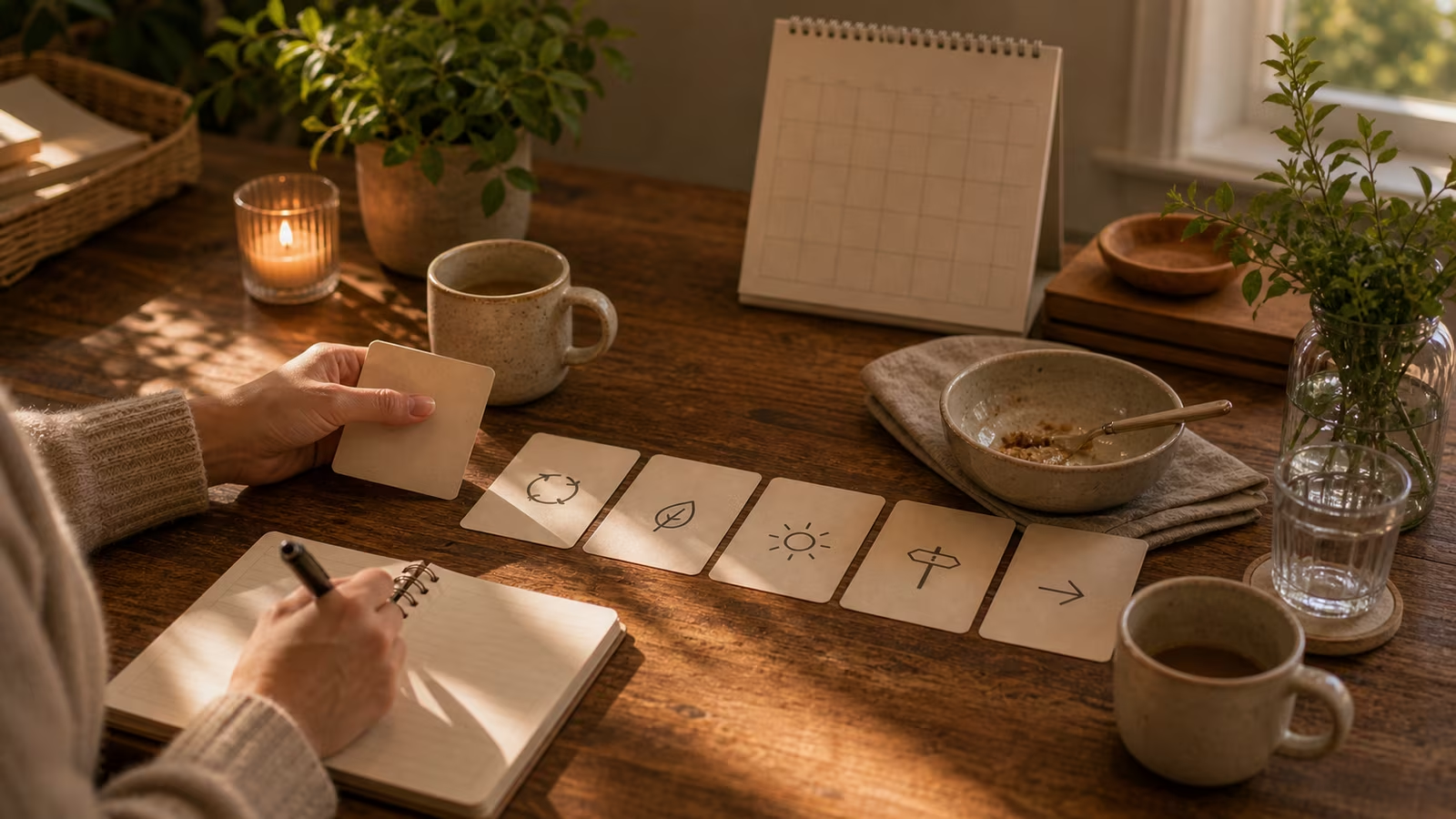
The discipline that ties all of this together is a short after-action note, written the same morning while the details are still warm. Five lines is enough: what repeated well, what felt easy, what felt too heavy, what visibly made a guest more comfortable, and what should stay exactly as it is next time. Writing forces you past the vague morning feeling and into specifics you can act on. It also protects you from your own memory, which will smooth over the two hours of good talk and fixate on the one clumsy introduction.
And then, crucially, resist redesigning after a single round. One warm evening is not proof the format is perfect, and one awkward evening is not proof it is broken. Both are a sample size of one, distorted by weather and moods and who happened to be free that night. If something felt too small or too stiff, repeat it once at the same size before you change the machinery. The second round is where the real signal lives, because it tells you whether the invitation still lands, whether the cleanup is genuinely tolerable, and whether the close feels natural once the novelty has worn off. When the evidence has accumulated and the format is clearly done or clearly outgrown, that is a separate skill covered in ending or evolving a ritual .
If you are still early, revisit The Common Table Quickstart to check your promise against your practice, keep the door genuinely open by tending to accessibility for small gatherings , and make sure your ask still gives people room to say no in invitations without pressure .