If you want a recurring gathering that survives busy months, tired weeks, and your own fluctuating enthusiasm, it is hard to do better than a pot of soup. Soup is the most forgiving food a host can build a ritual around. It stretches to feed whoever shows up, it does not punish you for being a little late with the chopping, it reheats without complaint, and it asks for almost nothing in the way of plating or timing. A soup night is not the most impressive gathering you could throw. It is something better: the one you will actually keep throwing.
Why one pot changes everything
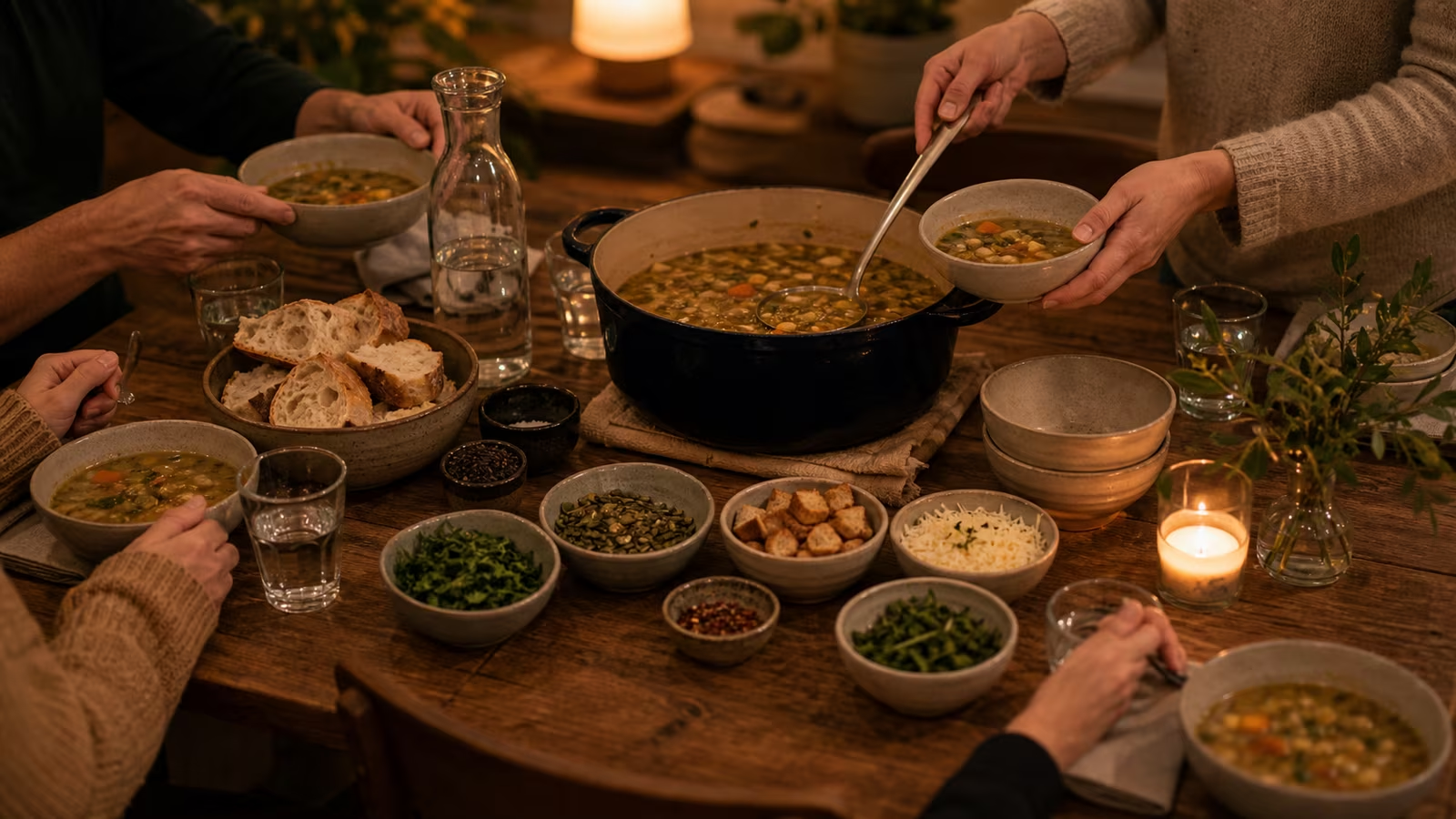
The genius of soup as an anchor is that the pot carries the evening so you do not have to. A dinner party asks the host to perform: courses timed to land together, portions counted to the plate, a hot dish that punishes anyone who arrives ten minutes early or late. A pot of soup on the stove is the opposite of all that pressure. It sits there, warm and patient, and it does not care whether six people come or nine, whether the first guest is prompt or the last is an hour behind. Serving is self-service. A guest ladles their own bowl, which quietly makes them a participant rather than a customer, and it takes you out of the role of waiter so you can sit down and be a person at your own table.
That single structural fact, that the food takes care of itself, is what lets soup night stay low-drama across a whole year. You are not carried by your performance. You are carried by the pot. And because the pot is patient, so is the room; the mood of a soup night tends to be unhurried in a way that plated meals rarely are.
The forgiving spine
Keep the format to five things: one soup, one bread or grain, one bowl of toppings, tea or sparkling water, and a fixed two-hour window. That is the whole machine. The single soup is deliberate, because the temptation to add a second pot is the first step toward turning this back into a project. One good pot, made a little larger than you think you need, is plenty.
The toppings bowl is the quiet workhorse of the format, because it lets one pot serve many bodies. A crock of soup with crusty bread and a spread of add-ons at the side, chopped herbs, grated cheese, a squeeze of lemon, chili flakes, croutons, a swirl of yogurt or cream, means each guest builds a bowl that suits them. That same design solves dietary variation without a separate menu. Keep the base soup itself vegetarian and let dairy, meat, or richer toppings live in side bowls, and suddenly the vegan guest, the guest avoiding gluten with a grain instead of bread, and the guest who just wants it plain are all fed from the same pot without anyone being singled out. Nobody has to announce a restriction; they just build their bowl and sit down.
Fix the window and hold it
The two-hour window is not a minor detail; it is what makes the night repeatable and kind. Soup at seven, most people gone by nine, and everyone knows it walking in. A clear, modest window lets a guest with an early morning, a babysitter on the clock, or a low social battery say yes without fear of being trapped until midnight. It also protects you, because a host who knows the kitchen closes at nine can give the first ninety minutes their full warmth instead of rationing energy against an open-ended evening. Announce the shape of the night as people settle: soup first, help yourself to seconds, and we will wrap up around nine. That small sentence does a great deal of quiet work.
The failure mode is upgrading it
The way soup night dies is not neglect. It is ambition. The most common failure is slowly upgrading it into a dinner party, adding a first course, then a dessert you plated, then a matching this and a homemade that, until you are back in the kitchen for the whole evening, plating and fussing, exactly where soup was supposed to keep you from standing. Each upgrade seems small and generous in the moment. Together they rebuild the pressure you started this format to escape, and the first busy month, you will quietly cancel because it has become too much to face.
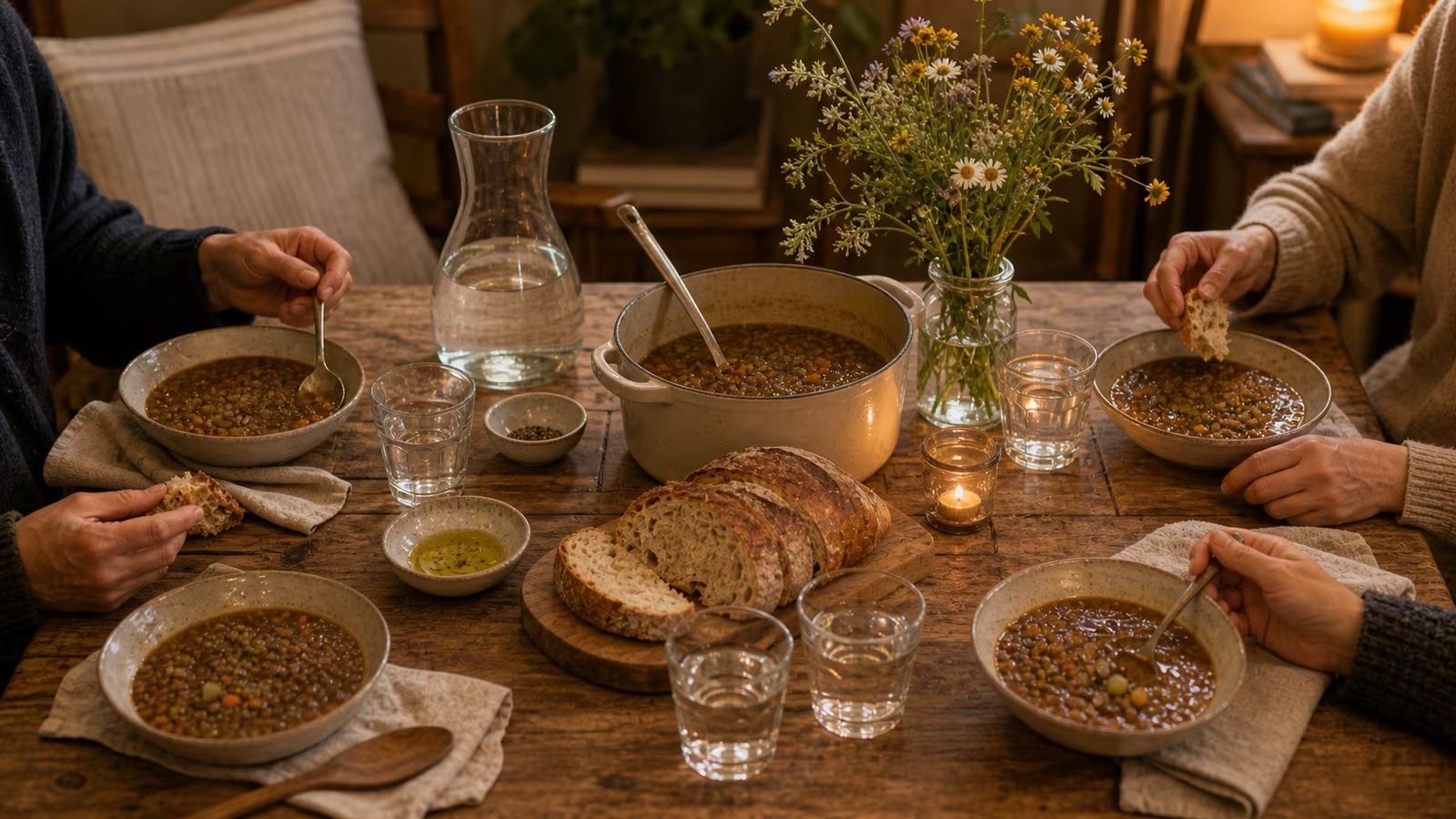
The correction is a kind of discipline about staying humble. When you feel the urge to make it fancier, remember that the plainness is the feature. A slightly imperfect soup served in a relaxed room where the host is present beats an elaborate meal served by a host who is frazzled and absent. If you want to vary something, vary the soup itself, not the scale of the production. Let it be lentil this month and minestrone the next; that is novelty enough.
Keep alcohol at the edge
A soup night makes it easy to keep drinks in their proper, minor place. Tea and sparkling water belong at the center precisely because they suit the food, warm and light against a warm bowl. If someone wants to bring wine or beer, that is fine, but it sits at the side like any other topping, not at the heart of the evening. The measure of a good soup night is that it makes complete sense when nobody drinks anything but tea, and nobody has to say a word about why. That is what sober-ish hospitality actually looks like in practice: not a rule, just a table where the interesting thing on offer is the soup and the company.
Once soup night is running, it becomes the backbone other rituals can lean on. Pair it with the calm rhythm of a weeknight tea circle for a lighter month, keep the room easy with a few social safety house rules , and if this is your first recurring table, ground the whole thing in The Common Table Quickstart and invite people using the gentle approach in invitations without pressure .