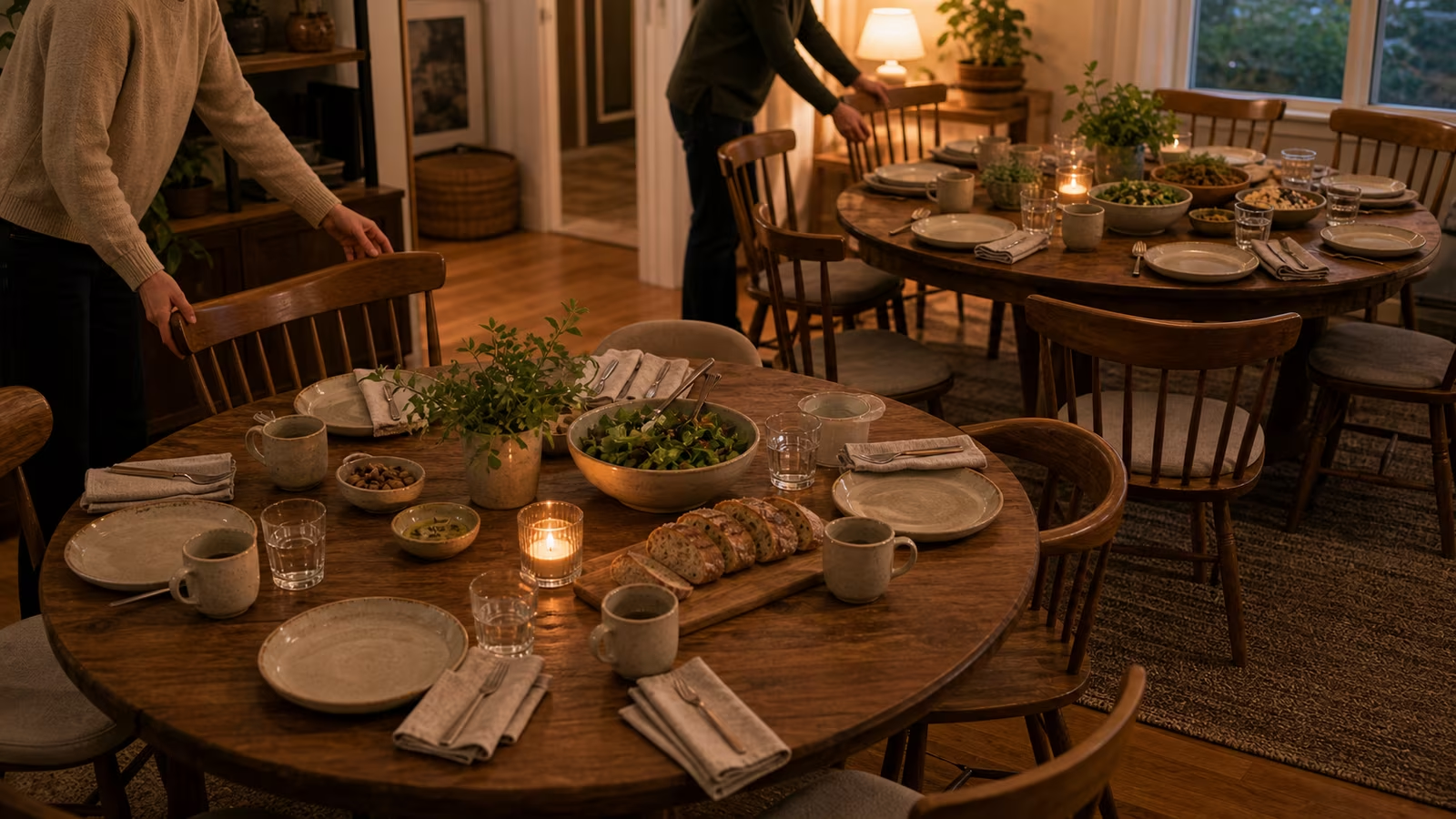
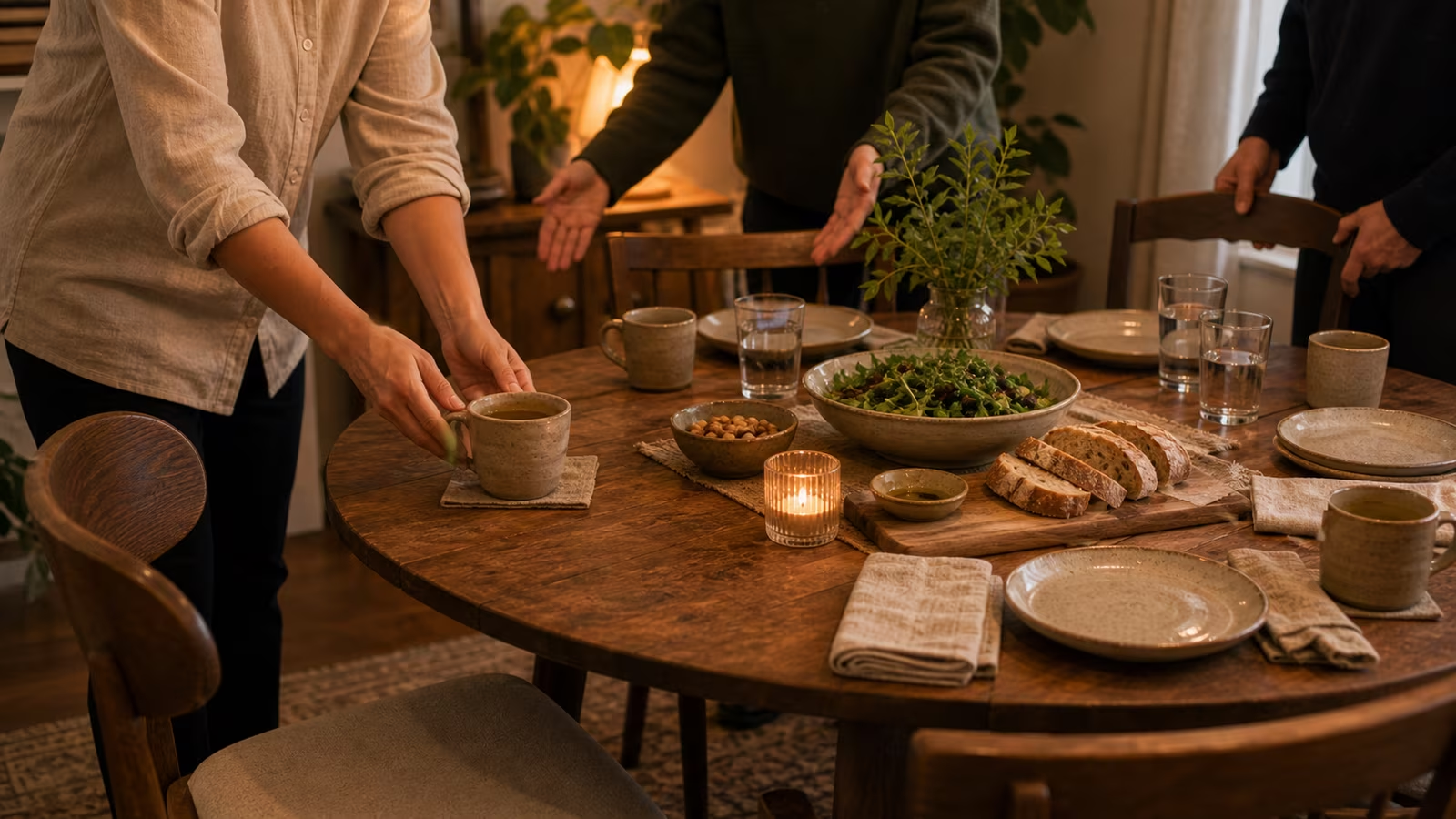
A small group that has met a few times develops something precious and fragile at the same time: a rhythm. There are running references, a settled seating pattern, a shared shorthand, a sense of who tells the long stories and who asks the good questions. That rhythm is exactly what makes the group worth belonging to, and it is also exactly what makes adding a new person risky. Bring someone in carelessly and you can accidentally do one of two harms: make the newcomer feel like they have walked into a private club mid-conversation, or make your regulars feel like the thing they loved just got reset to zero. The bridge is the small set of moves that lets one new person join without either of those things happening.
Add one, not a crowd
The first principle is restraint about numbers. Widening a group of four to five, or five to six, is a gentle stretch that the existing rhythm can absorb. One new person has to learn one room; the room has to make space for one new person. But bringing three newcomers at once, or letting the group balloon to double its size in a single evening, is not widening, it is replacing. Suddenly the regulars are outnumbered by strangers, the familiar rhythm has nothing to stand on, and everyone spends the night in the effortful small talk of a first meeting. Add people one at a time, let each one settle over a session or two before you add the next, and the group grows without ever losing itself.
Translate the ritual before the table starts
The single most important move happens before the newcomer arrives, and it is this: translate the ritual for them in advance. Every recurring gathering accumulates unspoken rules, and what feels obvious and warm from the inside is invisible and intimidating from the outside. A quick note or a short conversation beforehand does an enormous amount of quiet work. Tell them the shape of the evening, what usually happens and roughly when it ends. Tell them what to bring, or that they need bring nothing. Tell them the small logistics that regulars never think to mention, like where to park or which door to use. And tell them, plainly, that passing is welcome, that they can sit quietly, skip a question, or leave early without it being a problem.
This pre-brief matters because the alternative is asking a newcomer to infer everything from the room in real time. Nobody actually learns a group’s history, rules, names, and rhythm by silent observation while also trying to seem relaxed and likeable; they just feel lost and work very hard to hide it. Writing it down ahead of time is a kindness that costs you five minutes and saves them an hour of anxiety. It is the same clarity the Common Table Quickstart asks you to build into any invitation, applied to the particular case of someone joining a group already in motion.
Assign a gentle bridge person
Do not make yourself the newcomer’s only tether, because as host you will be pulled a dozen directions. Instead, quietly ask one warm, unhurried regular to be the bridge for the evening: to greet the new person, to sit near them, to loop them into conversations, and to translate the occasional reference before it lands as an inside joke that excludes. A good bridge person is not a chaperone and not an interviewer. Their job is simply to make sure the newcomer is never marooned, never left standing at the edge of a conversation with no way in. Choose someone with the temperament for it, someone who naturally includes rather than performs, and let them know it is a real, if invisible, job for the night.
Repeat the opening beat
Whatever small ritual opens your gatherings, an intro round, a shared first pour, a single question to start, repeat it faithfully on the newcomer’s first night rather than skipping it because the regulars already know each other. The opening beat is where a newcomer gets their footing. If the group waves off the introductions because everyone else is familiar, the new person is stranded at a table of people who all know each other, having missed the one structured moment designed to place them. Running the opening beat every time, including and especially when there is someone new, means the group never has to improvise a welcome; the welcome is already built into how the evening starts. Pair this with the memory habits in name memory and reentry so the newcomer’s name actually sticks the second time too.
Do not let inside jokes become the structure
Shared references are the natural fruit of a group that has spent real time together, and there is nothing wrong with them until they become load-bearing. The danger is when the inside jokes stop being seasoning and start being the actual structure of the evening, the main way the group signals its bond. At that point every reference is a small wall, and the newcomer spends the night on the wrong side of dozens of them. You do not have to ban the references; that would be sad and impossible. You just have to make sure the evening also runs on things a newcomer can join, real questions, present-tense conversation, the actual task or food in front of you, so that belonging is available through participation and not only through history you were not there for.
Protect the regulars too
A bridge that only thinks about the newcomer misses half the point. Your regulars are trusting you not to keep resetting their table to a first-meeting every month. So keep the additions occasional and paced, honor the existing rhythm rather than apologizing for it, and let the group have stretches of stability between newcomers where nothing has to be explained to anyone. When you do add someone, a quiet heads-up to the group beforehand helps, so a new face is a small pleasant event rather than a surprise that puts everyone on their formal behavior. Growth should feel like the table getting a little warmer and a little wider, not like starting over.
Handled this way, adding a person becomes one of the most satisfying things a small group does, a sign the table is alive and generous rather than closed. If a newcomer’s arrival raises tender differences in the room, the light-touch approach in topic boundaries without policing the table helps, and when you make the actual ask, keep it easy to decline using invitations without pressure .