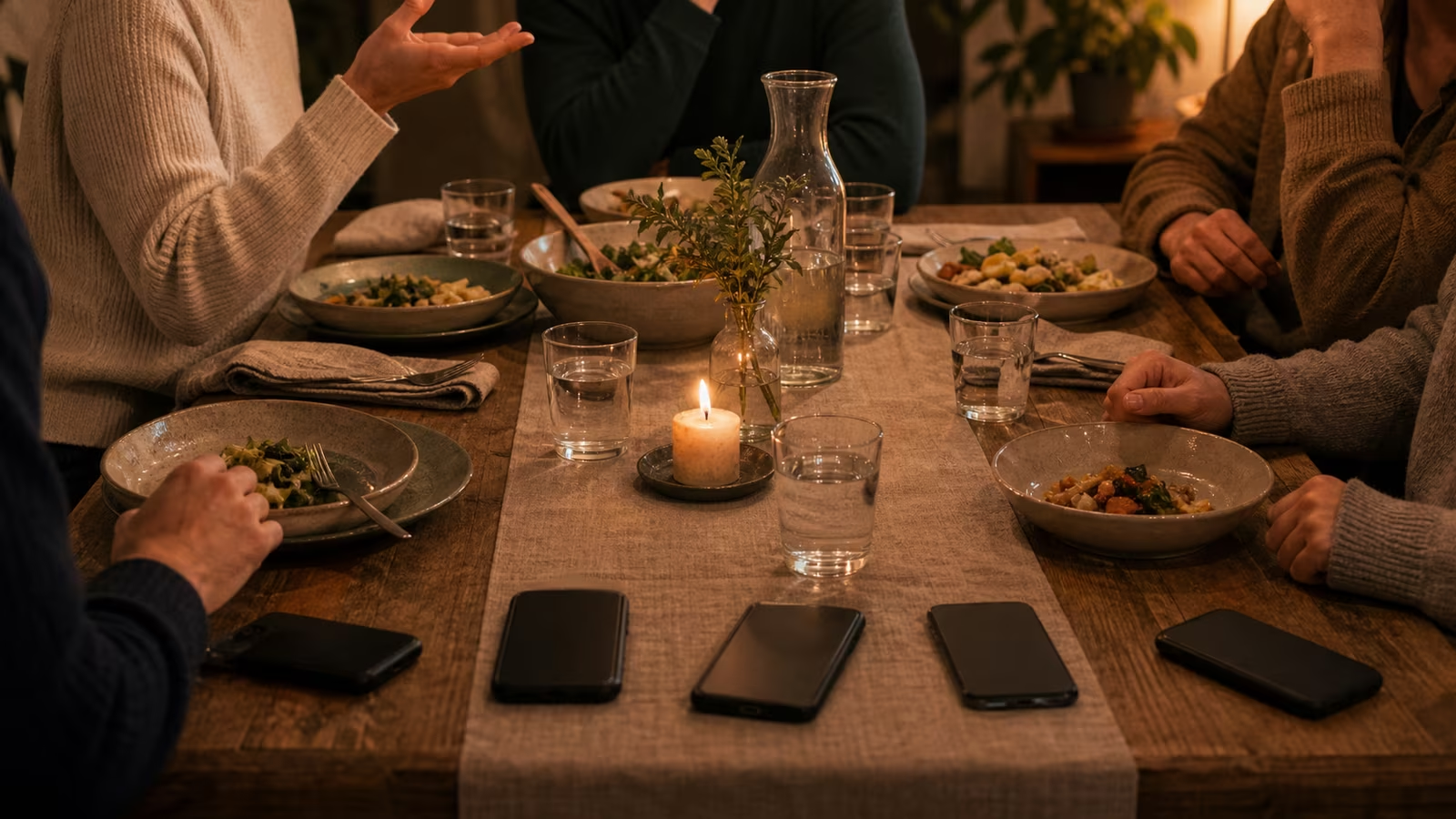
Most tables do not lose their phones to rudeness. They lose them to habit. A pause opens in the conversation, a hand drifts toward a pocket, a screen lights a face, and the small warmth the room was building leaks out through six lit rectangles at once. Nobody meant it. That is exactly why a blanket ban tends to backfire: it treats an unconscious reflex as a moral failing, and it makes the one guest waiting on a sick kid or a late ride feel like a criminal for keeping a lifeline within reach. If you are new to running a recurring table, The Common Table Quickstart is a gentler place to begin than a rule about devices.
The move that actually works is smaller than a ban. You ask for a window, not a lifestyle. A window has a start, a length, and a clear edge you can see coming. It is a bounded request that any reasonable adult can grant without rearranging who they are, and it lets people who genuinely need to stay reachable do so without a confession.
Ask for a window, not a lifestyle
The phrase to hold onto is “for about the first forty-five minutes.” That is long enough to matter and short enough to survive. A whole-evening ban asks people to override a reflex for hours, and reflexes win eventually, so the ban breaks quietly and the host is left enforcing a rule that half the room has already abandoned. A window is different because it ends. When people know the phone-light stretch closes after the main course, they stop rationing their attention and spend it. Waiting is easy when you can see the far side of it.
Name the window by what it protects rather than what it forbids. “Let’s keep the table to ourselves while the soup is hot” tells people the reason and the duration in one breath. “No phones” tells them only that they are being managed. The first version invites; the second polices. Guests can feel the difference before they can explain it.
Name the exception before anyone needs it
The fastest way to make a phone-light window humane is to say out loud that emergencies are exempt, and to say it before the window starts. “If someone’s on call, waiting on a kid, or expecting a ride, keep your phone close and step away if you need to. Nobody has to explain.” That single sentence does an enormous amount of work. It tells the parent, the caregiver, the person whose sibling is in the hospital, and the guest whose ride is unreliable that this room already thought about them. They can set the phone face down and still breathe, because leaving is pre-approved and un-narrated.
Without that sentence, the window becomes a test the anxious guest is quietly failing. They keep the phone in their lap, half-watching it, not really present and not really absent, and they read every glance from the host as a verdict. You wanted more presence and you produced more guilt. The exception is not a loophole that weakens the ritual. It is the thing that lets people who love the ritual actually relax into it.
Give the phones somewhere to go
A rule that lives only in the air is hard to keep. A rule with a physical home keeps itself. A shallow basket by the door, a folded cloth in the middle of the table, or a simple face-down stack near one corner gives the phone a destination that is not a pocket. The object does the reminding so the host does not have to. When a phone has a resting place three feet away, checking it becomes a small deliberate act instead of a twitch, and most twitches never survive the extra second of deliberation.
Keep the container relaxed. A basket you pass around as people sit reads as part of setting the table. A locked box or a phone jail with a timer reads as a gimmick and makes guests feel they are being confiscated from rather than hosted. The point is a soft cue, not a security checkpoint. If a guest keeps their phone out because they need it, let the basket hold everyone else’s and let that person be. The container is an invitation, not an inspection.
Build in a clean restart
Every window needs an edge people can trust, and the edge should be a positive cue rather than a countdown. Do not announce “you can have your phones back now,” which frames the whole stretch as deprivation that has finally ended. Instead, let the restart ride on the natural beat of the meal: clearing the main plates, putting the kettle on, moving to the couch, bringing out something sweet. “I’ll get tea going, grab your phones if you need them” hands the time back without ceremony and without regret.
This clean restart is what makes the ritual repeatable, which is the whole game. A one-time heroic evening of total presence proves nothing and exhausts everyone. A modest window that reliably closes on schedule can happen every week, and the reliability is what people come to trust. They arrive already knowing the shape: phones rest for a while, emergencies are fine, and the reach for the screen becomes ordinary again once the shared middle of the evening has done its work. If you want a version of this that never needs the rule at all, a walking table gathering puts hands and eyes to use so completely that phones rarely surface.
When someone breaks it anyway
Sometimes a guest checks their phone mid-window for no emergency at all. The correct response is almost always nothing. A window is a norm, not a law, and enforcing it turns a warm host into a hall monitor faster than any single distracted guest could damage the table. If one person scrolls, the room does not collapse; it simply has one quieter member for a minute, and they usually rejoin on their own once they notice the conversation has moved somewhere they want to be.
Save any word at all for the rare case where a guest is not present in the room at all, night after night, and it is starting to cost the people around them. Even then, keep it private, keep it light, and keep it about the table rather than the person: “I love having you here and I want more of you at dinner, not the screen. Help me hold the first stretch?” That gives them a role in protecting the room instead of a citation for violating it. A phone-light window works best when it feels like a shared kindness the table extends to itself, not a standard the host imposes and then has to defend all evening.
The whole design rests on one honest premise: you are not trying to fix anyone’s relationship with their phone, and you cannot. You are trying to protect a short, specific stretch of shared attention, name the exceptions so nobody has to plead their case, give the devices a resting place, and hand the time back before anyone resents you for taking it. Do that consistently and the window stops feeling like a rule. It starts feeling like the part of the evening people came for. For more on keeping the whole invitation low-pressure, see Invitations Without Pressure and, for the sober-ish side of the same table, the Sober-ish Happy Hour guide.