There is a particular indignity in being the adult at the table handed a glass of juice while everyone else gets stemware. The drink is not the problem. The framing is. A grown person who is not drinking alcohol has usually not reverted to childhood, and the moment a host reaches for the apple juice or the neon soda, the whole room quietly learns that not-drinking is a lesser category serviced with lesser things. The goal of a considered nonalcoholic offering is not to dazzle. It is to make the no-alcohol path so ordinary, so evidently designed for grown palates, that choosing it announces nothing at all. If drinks are new territory for your table, The Common Table Quickstart sets the wider frame first.
The design principle is quieter than a cocktail menu: build in the sensory qualities that make an adult drink feel like an adult drink, and let alcohol be one optional variable rather than the axis the whole tray turns around.
What makes a drink read as grown-up
Alcohol does several sensory jobs at once, and sweetness is not one of the important ones. It brings bitterness, warmth, dryness, a little edge, a slow finish. When people say a nonalcoholic drink feels childish, they almost always mean it is too sweet and too simple, all sugar and no structure. So the fix is not to imitate a cocktail; it is to supply the qualities adults actually reach for. Bitterness is the biggest lever. A splash of citrus bitters in sparkling water, strong cold-brewed tea, tonic, grapefruit, a few dashes of something aromatic, and the drink stops tasting like a treat and starts tasting like a choice.
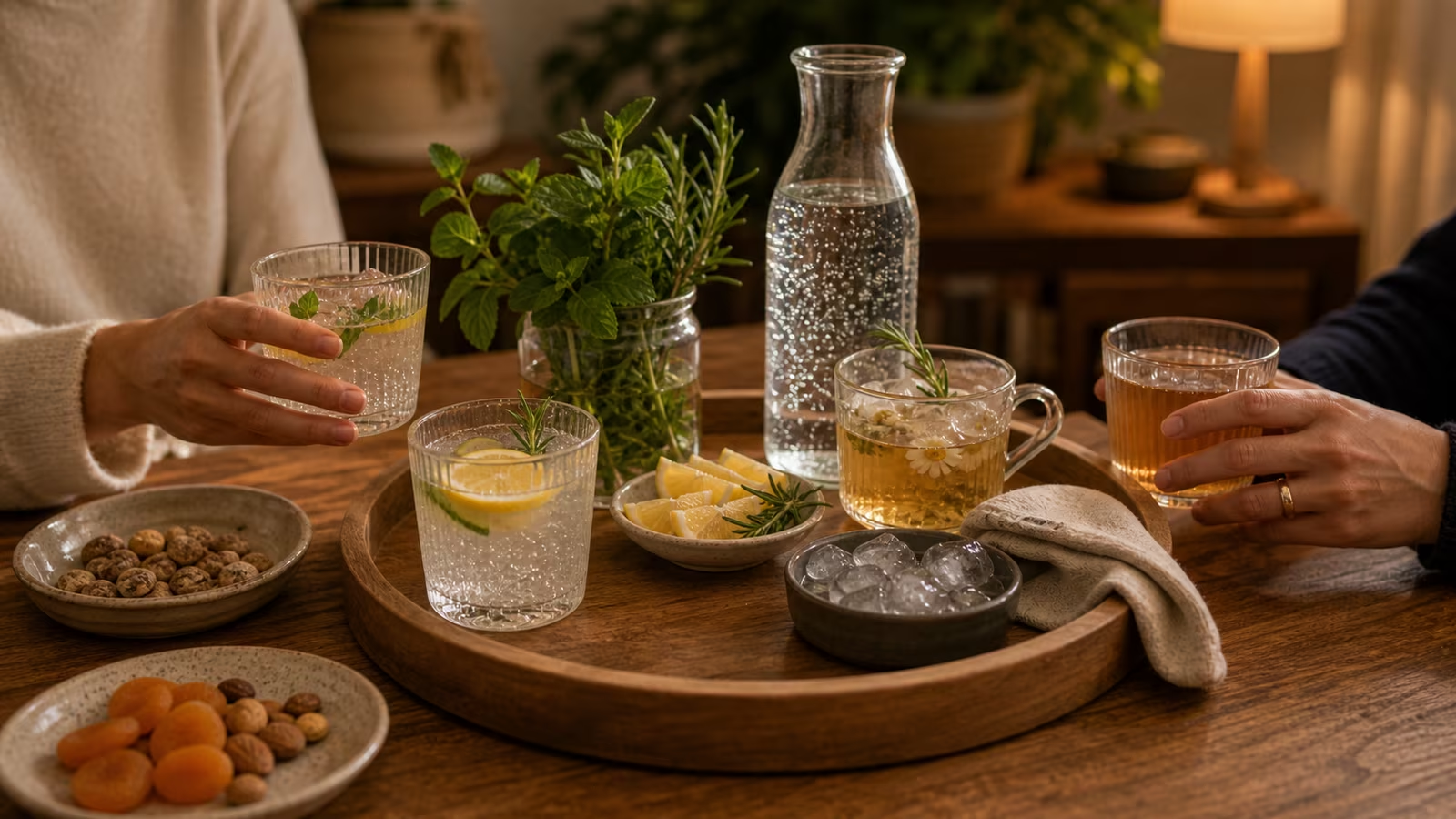
Texture and temperature carry more weight than most hosts expect. Cold carbonation feels deliberate in a way that flat juice never will. A warm drink held in two hands has its own gravity on a cool evening. Real ice, a thin wheel of lemon, a bruised sprig of mint, a pinch of salt on the rim of a citrus cooler, these are small labors that signal the drink was made rather than poured. None of it requires skill. It requires only the decision that the person not drinking deserves the same three seconds of assembly as the person who is.
Serve it before the alcohol, not after
Sequence is a form of speech. If the wine is opened first and the nonalcoholic option appears later, as an afterthought or a rescue for the person who “isn’t drinking,” the room has already established a default and an exception. Reverse it. Have a good nonalcoholic drink poured and within reach before any bottle is uncorked, so that the first thing every guest encounters is a drink they can all take. When someone arrives, the offer is a considered nonalcoholic option, and alcohol is the follow-up question rather than the assumption.
This single ordering choice does more for an inclusive table than any amount of clever mocktail engineering. It means the person in recovery, the guest who is pregnant, the friend who is driving, the one on medication, and the one who simply slept badly all pick up the same glass as everyone else at the same moment. No one has to be the person who waves off the wine. There is nothing to wave off yet. Belonging is easiest to protect at the very start of the evening, before anyone has had to opt out of anything.
Skip the elaborate mocktail station
It is tempting to overcorrect into spectacle: a dedicated bar cart, a printed list of house nonalcoholic cocktails, three syrups and a muddler and a theatrical shake. Resist it. An elaborate mocktail station does the opposite of what you want, because it turns the nonalcoholic choice into an event that demands notice and gratitude. The guest who did not want their abstinence to be a topic is now standing at a themed station while a host performs care at them, and the kind thing has become a small spotlight. Effort aimed at a person is not always a gift; sometimes it is a bill for thanks.
Considered means integrated, not staged. Two or three genuinely good options, poured into the same glassware as everything else, refilled with the same easy attention, are worth more than a dozen engineered drinks that announce their own inclusiveness. The measure of success is that nobody comments. When a nonalcoholic drink is simply one of the good things on the table, the guest who needs it can take it and vanish back into the conversation, which is exactly where they wanted to be. For the food side of this same low-key logic, see Low-Effort Shared Snacks .
Match the drink to the glass
Vessels are the cheapest way to erase the hierarchy. If wine comes in stemware and the nonalcoholic drink comes in a plastic cup, no recipe will overcome that gap; the glassware has already ranked the drinks. Pour the sparkling citrus into the same wine glass. Serve the cold-brew cooler in the same tumbler the whisky would use. Give the warm spiced tea a proper cup. Weight, clarity, and the shape in the hand tell a guest what the host thinks their drink is worth, and matching glassware quietly says: the same.
This costs nothing and is one of the most reliable ways to keep a boundary from becoming a broadcast. A guest sipping an amber tea from a rocks glass reads to the room as an adult with a drink, full stop. Their reasons stay theirs. The Dietary Needs Without Drama guide takes the same posture toward food, and the two together cover most of what makes people feel either quietly welcome or quietly on display.
Refill evenly and let reasons stay private
The final piece is ongoing rather than up-front: keep offering. A drink refilled once and then forgotten tells a guest their glass is not really being watched, and evenness of attention is its own kind of hospitality. Move around the table topping up the nonalcoholic drinker with the same rhythm you top up the wine, and the whole distinction dissolves into the ordinary care of a good host. What you are protecting is the right of every guest to keep their reasons to themselves. Recovery, pregnancy, medication, faith, a long drive home, a bad week, a preference, or nothing they owe anyone an account of, all of it is private, and a well-designed drink tray makes it stay private. When the no-alcohol path is genuinely as good and as available as any other, nobody has to explain, decline, or perform. They just drink something they like, and the table goes on. For keeping the whole invitation equally pressure-free, Invitations Without Pressure is the companion piece.