
The camera almost always comes out at the best moment. The room has finally warmed, the light is good, someone laughs, and a phone rises to catch it, and in that instant a guest who did not want to be photographed has to choose between ruining the moment and being in it. That is a cruel little decision to hand anyone, and it is entirely avoidable. The problem is not the photo; it is the timing. A boundary named after the phone is already up is a boundary that costs the person raising it something in front of everyone. A boundary named before phones appear costs no one anything. General Social Safety House Rules can list photos among several norms, but a recurring table usually needs this one handled with a little more care than a single line.
Phones arrive with the guests. They sit beside the cups, wake up in the pauses, and grow tempting precisely when the evening gets good. So the move is to name the expectation early and plainly, not as suspicion but as ordinary hospitality, the same register in which you would ask about food needs or say when the night ends.
Why the reasons are none of your business
People keep themselves out of photographs for a hundred private reasons, and a good host never needs to know a single one. Someone may be avoiding an ex, an estranged relative, or a person who once made them unsafe. Someone may be in a recovery context they do not want geolocated. Someone may hold a job, a custody arrangement, or an immigration situation where a tagged image is a genuine risk rather than a mild preference. And plenty of people simply want one room in their week where they are not managing an image of themselves for an audience. All of these deserve the same frictionless respect, and the way you guarantee it is to build a default that never asks anyone to explain.
That last point is the quiet heart of this. The instant a guest has to give a reason for not being photographed, their privacy has already been breached, because now the table knows there is a reason. A boundary that requires justification is not really a boundary; it is a request the room gets to evaluate. The design goal is a table where declining a photo is as unremarkable as declining a second helping, met with “of course” and nothing more.
Make the default ask-first
The workable boundary is not a ban, which reads as severe and makes the host a warden. It is a default: pictures of people are ask-first, and sharing anything beyond this room is ask-again. Stated once, warmly, near the start, please check before you photograph anyone, and check again before it goes anywhere outside tonight, it gives every guest a usable norm before the first camera moment, and it puts the small labor of asking on the person with the phone rather than the person in the frame.
Defaults matter because in their absence people read silence as consent. A friendly room feels like permission; a beautiful table feels like it wants to be shared; and once one guest takes a picture, others tend to follow before the quieter person can find a way to object. A clear ask-first default interrupts that chain without making any single guest responsible for stopping it. Put the sentence in the invitation when you can, sitting beside the time and the food notes, so guests who need a moment to think have it in advance and you are not inventing policy while ladling soup. If your group keeps a standing thread, Group Chat Boundaries helps you decide which memories belong there and which do not.
Separate the memory from the display
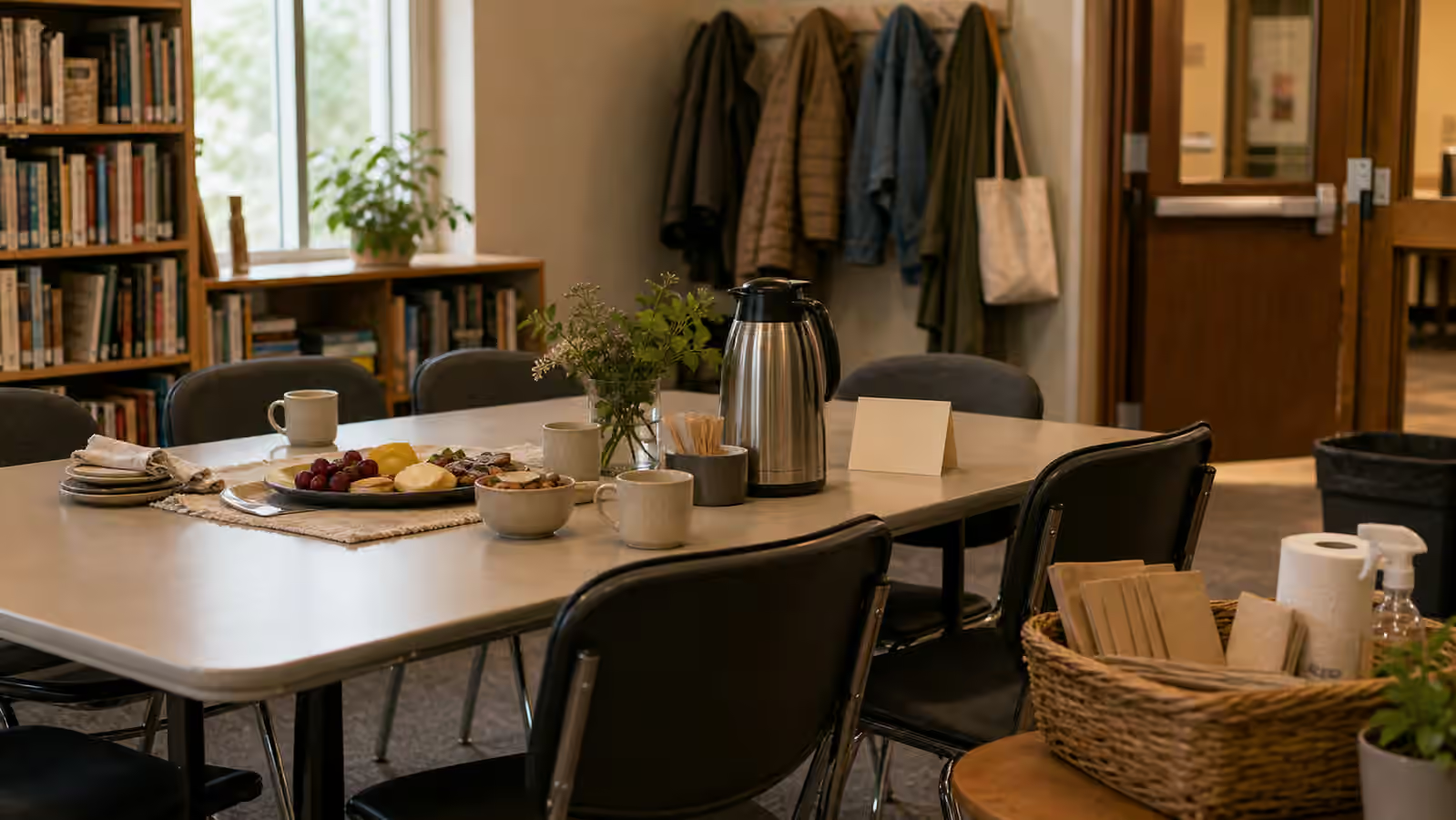
Small gatherings deserve to be remembered; the real question is where the memory lives and whether it needs anyone’s face in it. Most of what makes a table worth keeping can be photographed without a single person in the shot: the soup pot before it is served, hands passing bread, the stack of cups after everyone has gone, the empty chairs in the last good light, a card someone filled in. These images let people return to the evening without turning guests into content. A public post, by contrast, usually serves a different appetite, proof that the host is generous, evidence that the group exists, a signal to people outside the room, and those appetites, whatever their merit, should never quietly outrank the comfort of the people actually present.
So design your memory to run on objects rather than faces, and treat any group photo as strictly opt-in with an easy way out of frame, someone can always be the one refilling the kettle or holding the door. This matters doubly in sober-ish and recovery-aware spaces, where a guest might be perfectly comfortable at an alcohol-light table and still want no trace of their whereabouts online. Recovery-Aware Hosting grows stronger when your photo defaults protect discretion without ever asking for the story behind it.
Treat taking and sharing as two consents
A photograph taken is not a photograph cleared to post, and collapsing the two is where most well-meaning hosts go wrong. A guest may happily appear in a picture meant for your own memory and want no part of it on a public feed. They may be fine in the private group thread and not fine anywhere searchable. They may feel one way tonight and differently next month. Consent attaches to a specific use at a specific time, not to a person’s general willingness to be seen, so ask at each step rather than banking a yes.
Model it in plain words. “Mind if I get a shot of the table, no faces?” is a different act from lifting the phone and asking afterward, and “can I put this in the group thread?” is a different act from “posting this unless anyone objects,” which forces refusal to interrupt momentum and lands the burden back on the guest. When someone says no, keep the room moving and leave it there. Do not ask why, do not guess their reason aloud, and do not reassure them that they “look fine,” since appearance is rarely the point. “Of course,” phone down, frame changed. The boundary works when holding it makes no one interesting.
Repair fast, and keep no-photo attendance ordinary
Even careful tables slip. A picture goes up too quickly, a guest turns out to be in the corner of a shot, a host forgets to ask because the moment was charming. The repair should be quick, direct, and proportionate: “I should have checked before I shared that, I’ve taken it down and I’ll ask first next time,” which beats a long defense of your good intentions every time. Repairability is part of what makes a table trustworthy; a room that cannot correct a small privacy mistake loses trust silently, with guests who keep coming but stop relaxing, choosing seats out of frame, wondering who else is recording. Follow up privately and lightly if it is warranted, thanking the person for naming the boundary and confirming the fix without asking them to console you, and let the next gathering prove the change. Aftercare Follow-Up covers this gentle after-the-fact register well.
The larger aim is to keep no-photo attendance completely ordinary, so the table never splits into the fun people who document and the difficult people who decline. You do that by making the default visible every single time, one object photo for memory and the phone away, a written note to the thread instead of a picture, the same photo sentence in every invitation, unapologetic, right next to the address. Repeated, the boundary stops being a rule and becomes part of the table’s texture: warmth here does not require display, memory can be designed without exposure, and newcomers absorb the norm before they ever have to protect themselves. A Common Table is built from small predictable mercies like this one, and people come back to rooms where they can stop guarding every edge of themselves and simply belong, privately or visibly or somewhere in between.