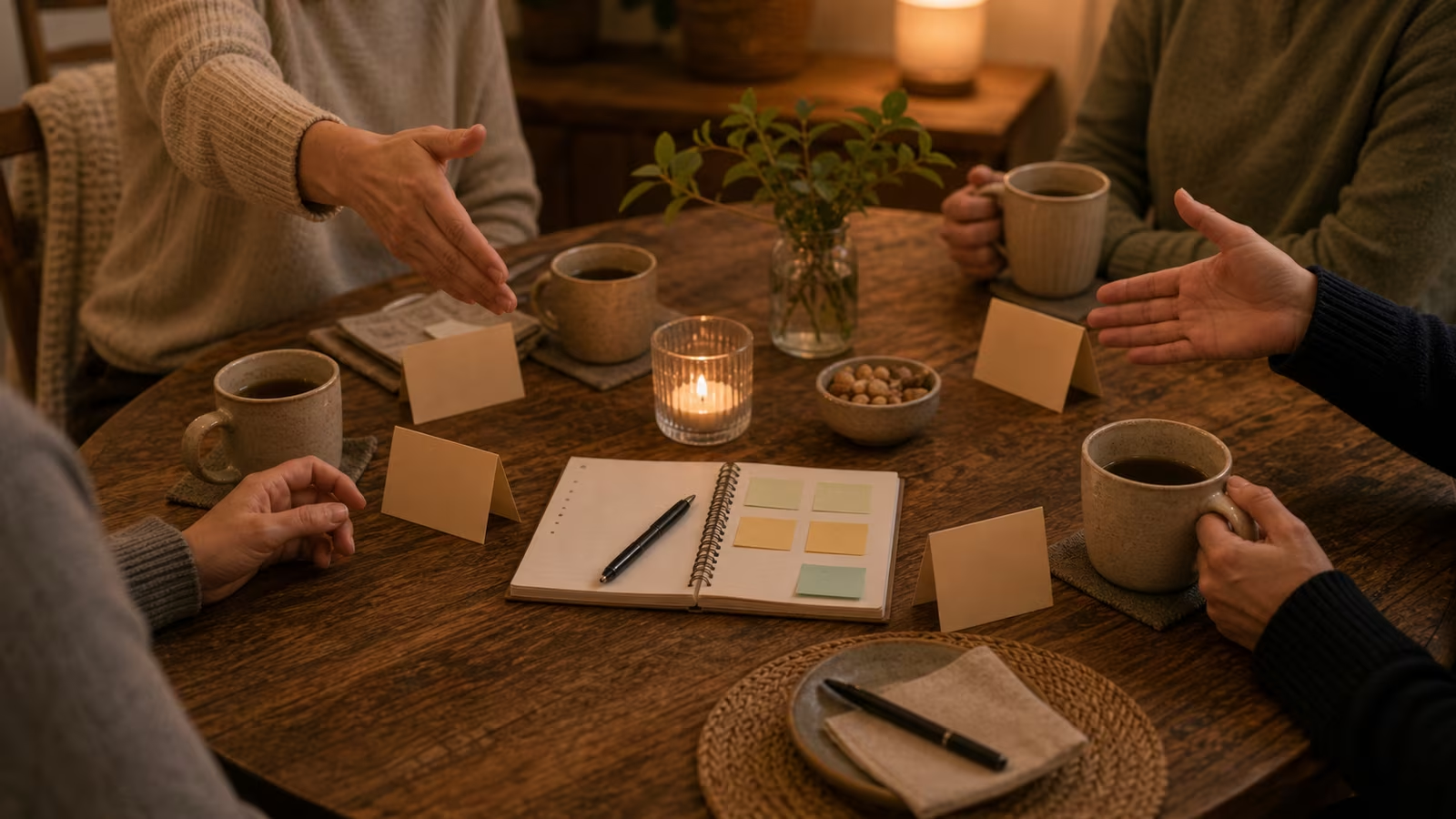

A plus-one is not a stranger you chose; it is a stranger who arrives through someone you trust, and that is what makes it delicate. A regular guest’s partner is in town, a visiting friend has a free evening, a lonely roommate could use somewhere to be, a sibling is curious what the table is like. The request is almost always warm and reasonable. It is also a change to the room, and it usually lands on the host with no time to design for it, sometimes at the door itself. The Newcomer Bridge covers folding any new person into an established ritual; the plus-one is the sharper version of that problem, because the invitation is already halfway made before you hear about it.
The move that keeps a table intact is to treat a plus-one as a hosted addition rather than an automatic expansion. Hosted means you get to think about it: the food, the chairs, the access, the privacy, the size. Automatic means the room changes shape before anyone decided it should, and the people who built the rhythm end up quietly defending it.
Ask first, and make asking the easy path
The kindest plus-one policy is one plain rule stated up front: check with the host before inviting anyone. This is not gatekeeping, and it helps to say so, because guests can hear “ask first” as suspicion if you do not frame it as capacity. One extra person changes seating, portions, bathroom flow, the speed and volume of the conversation, whether the household consented to this many strangers, and how much recovery the host needs when everyone leaves. A small recurring gathering is allowed to have a size, and protecting that size is how it keeps working.
Give the rule warm, specific language so the path is obvious. “Sometimes we can add a person, just check with me first because the table stays small” hands the regular guest a route and heads off the doorway ambush, the moment someone arrives with an unannounced extra and the host has to absorb the change while smiling. Surprise generosity is still pressure; it just wears a nicer face. This is really an extension of Invitations Without Pressure : a clear invitation does not only serve the person receiving it, it protects the gathering from accidental growth. “This month is just the regular four; next month I might open a spot” leaves nothing to interpret, and “partners welcome this time, tell me by Tuesday” lets the food and the chairs match reality.
Tell the new person what they are walking into
A plus-one should never have to reverse-engineer the room. The regular who brought them knows the ritual so intimately that they have forgotten it has rules at all, so they under-explain, and the new person arrives blind to the format, the length, the food, whether alcohol is optional, and how the table handles phones, photos, or private talk. That blindness is where plus-ones flounder, not because they do not fit but because no one told them what fitting looked like. A few sentences in advance solve almost all of it.
Send those sentences directly when you can, or ask the regular to pass along a clear version, but lean toward direct if the new person has access needs or food boundaries, since those are yours to accommodate and awkward to route through a third party. Keep the tone ordinary and unfussy: “we do a small tea table, four to six, very low-key, no need to bring anything, and we keep photos ask-first.” Do not make the regular responsible for translating every norm in the doorway; left to it, they will either understate the structure to avoid sounding formal or overstate it and make the table seem more fragile than it is. A short note from the host carries the format cleanly without turning the plus-one into an orientation session.
Protect the scale that makes it work
Small gatherings tend to fail by succeeding. People love the room and reasonably want to bring everyone connected to it, so a partner comes once, then the other partner, then a visiting friend, then someone who heard about it in the group chat, and the table that worked at six is suddenly straining to hold eleven and no one can say whether it is still a common table or has quietly become a party. The failure is rarely a bad guest. It is unadmitted expansion, growth that happens by accretion because every single addition seemed too small to refuse.
The cure is to name which kind of thing each plus-one is. Is this a one-time welcome, a trial, or an actual change to the gathering’s size? “Bring Mara this time; I’m keeping the regular size after that” is clear. “Let’s see how it feels before we decide to be partner-open” is clear. What corrodes a table is expansion nobody will acknowledge. When you genuinely want to grow, Scaling From Four to Eight is the guide for doing it on purpose; the plus-one question is different, and it deserves its own answer. And when the size is simply tight, offer another door instead of a grudging yes: “I can’t add anyone this month, but I’d love to meet them for porch tea another week” protects the room while honoring the relationship, and it lets the regular hear no without hearing that you have rejected someone they love.
Bridge them once, then let them be ordinary
At the gathering, give the plus-one a single bridge and then release them from the spotlight. A good bridge is short and tied to the format: “This is Jonah, he came with Lee, we’re starting with tea and one small question and passing is always fine.” In one sentence the new person has their connection, the first action, and permission to opt out, and the regulars have learned enough without a full biography. What sinks a newcomer is the opposite instinct, the pile of friendly questions, how do you know everyone, what do you do, why did you come, are you having a good time, which stacked together turn the person into the evening’s project.
Let the format carry the rest of the introduction. If the table uses a shared passage, a snack to pass, or a short walk, that object does the work of easing someone in without anyone having to interview them. And remember the regulars need a light bridge too: say the privacy norm aloud again, not as a warning aimed at the newcomer but as ordinary continuity, and say when the night ends, so the new person hears exactly the same format everyone else does. Sameness is what keeps the room fair. Guest Fit Without Gatekeeping is the companion here, because kindness includes both openness and the protection of the room that lets people return.
Debrief before you make it a pattern
After a plus-one visit, notice honestly what changed, and keep the questions practical rather than a verdict on the guest’s worth. Did the table still have enough air, or did it feel crowded? Did the regulars turn performative with someone new watching? Did you spend the whole evening translating the ritual instead of enjoying it? Did the new person seem comfortable without being centered? Did the household absorb the extra noise and the extra dishes without strain? These are the real inputs, and they are worth writing down while they are fresh.
Then resist the pull to make a good visit permanent by default. Ask instead whether the format can hold the repetition. A one-time visiting friend costs almost nothing. A standing partner-open table can rewrite the whole social contract: some guests speak differently when partners are present, some stories that used to feel safe no longer do, and a host who loved the livelier room can discover the cleanup has doubled and the intimacy has thinned. “Ask first” is not a locked door. It is the hinge that lets the door open on purpose and close again without slamming into everyone already seated, and a plus-one policy built on it can be warm, flexible, and bounded all at once.