The porch hour is the least ambitious gathering in this whole collection, and that is exactly why it works. You are not inviting people into your life. You are sitting on the edge of it, in a spot that half belongs to the street, and letting the neighborhood decide whether to slow down as it passes. A stoop, a landing, a driveway chair, a courtyard bench: these are thresholds, neither fully private nor fully public, and a threshold is the easiest place in the world for two people who barely know each other to exchange more than a nod.
Most neighbor friendships never start because the ask is too big. Inviting someone inside means they have to accept a version of intimacy on the spot, and declining feels like rejecting the person rather than the timing. A visible chair on a front step asks for nothing. Someone can wave and keep walking. They can stop for ninety seconds with a dog straining at the leash. They can sit down and stay the whole hour. The porch hour is designed so that all three of those responses are equally correct, and none of them require anyone to make a decision they will regret.
Why a semi-public edge changes everything
An indoor gathering has a door, and a door is a commitment. To enter you cross into someone’s territory, you take off your shoes or you don’t, you accept a drink, you become a guest with a guest’s obligations. The porch removes all of that. The interaction happens in a shared band of space where the passerby keeps their autonomy the entire time. They are still on the sidewalk. They are still, in some sense, just going about their day.
That autonomy is what makes the porch hour repeatable. People come back to low-stakes things. If stopping by cost them an evening of performed sociability, they would ration those visits, and the ritual would fade. Because it costs them almost nothing, they can afford to drop in most weeks, and it is the frequency, not the depth of any single visit, that turns a stranger into a familiar face and eventually into someone you would actually help move a couch. The walking table runs on the same logic: proximity plus repetition, minus the pressure of sitting face to face.
Keep the shape the same every week
Pick one hour and hold it. Same evening, same window, roughly the same setup. The point of a fixed time is that people stop needing an invitation at all. After a month, the porch hour is simply a thing that happens on your block on Thursdays, and neighbors can build it into their own rhythm without ever being formally asked. A ritual that moves around demands constant re-invitation, and re-invitation is the tax that kills small formats.
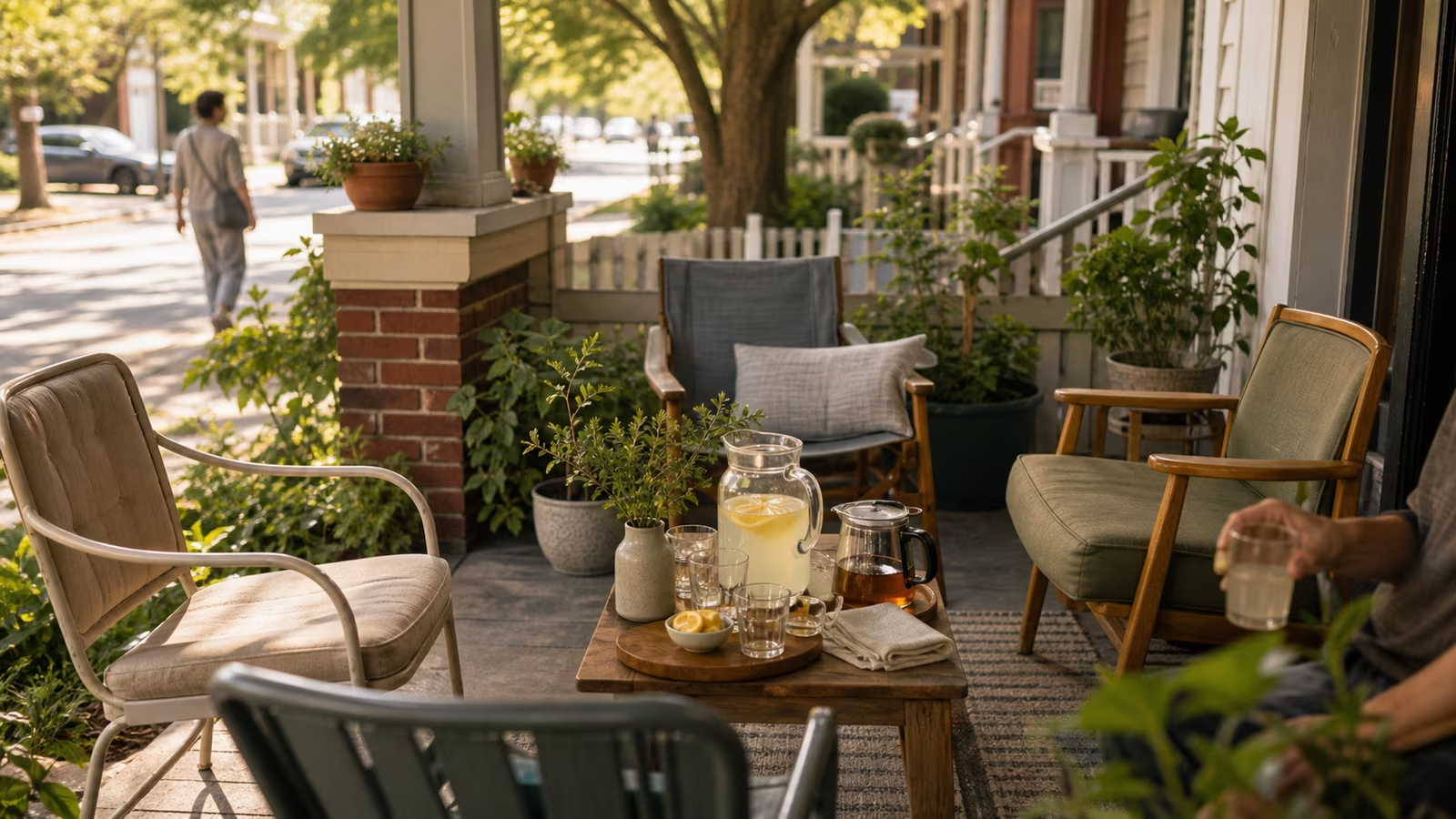
The physical spine is deliberately plain: visible chairs, water or tea, one snack, no tour of the house, no pressure to stay. Two of the chairs should be obviously spare, angled outward, clearly meant for whoever arrives. An empty chair that faces the street is an invitation written in furniture. Keep the snack singular and unfussy, a bowl of something, because the moment you set out a spread you have accidentally made it an event, and events require RSVPs and RSVPs require decisions. Part of holding the shape is having seating you will actually leave set up week after week, ideally something that folds flat when the hour is over, so the ritual never depends on hauling the dining chairs outside and putting them back.
The one rule that matters most: no tour of the house. The instant someone steps inside to see the kitchen, the semi-public magic collapses into an ordinary indoor visit, and the next person walking by can no longer tell whether they are welcome to join. Keep the whole thing on the edge. If a friendship deepens, there will be other, more private invitations for that, made deliberately rather than by accident.
The failure mode is quiet, not loud
Porch hours rarely fail with a blowup. They fail when the casual setting stops being legible about the boring practical things: privacy, noise, bathrooms, pets, and weather. A neighbor who is not sure whether the kids next door can hear everything, or whether there is a bathroom they can use, or whether your dog is friendly, will not raise the question. They will simply stop coming, and you will never know why.
So make the practical stuff quietly clear. If there is a bathroom a guest can use, mention it once so nobody is trapped rationing a glass of water. If your dog gets territorial, put the dog inside during the hour rather than making every arrival negotiate it. If the porch carries sound straight into a bedroom, keep the volume of both music and conversation modest, and be honest with yourself that a late porch hour on a shared wall is a noise problem waiting to happen. And have a weather backup that does not violate the no-tour rule, a garage with the door up, a covered landing, an awning, so a drizzle does not force the choice between canceling and moving the whole thing indoors.
Alcohol belongs even further to the edge here than usual
Because the porch hour is semi-public, a bottle out on the step reads differently than it would inside. People slowing on the sidewalk are making a snap judgment about what this gathering is, and a visible drink can quietly reclassify a neighbor hour into a happy hour, which excludes anyone who avoids alcohol before they have even reached the chairs. Lead with the tea and the water. If someone brings their own drink, that is their business and no cause for comment. But what sits on the table, in view of the street, should be the thing anyone can accept without a second thought.
You will host people whose reasons for skipping alcohol you will never learn, and on a porch you often will not know your guests well at all. Someone driving home in ten minutes, someone on medication, someone who simply does not want one on a weeknight: all of them should be able to stop by, take a glass of something cold, and stay as long as they like without a single moment where the beverage becomes a topic. That is not a compromise on hospitality. On a threshold shared with the whole neighborhood, it is the whole point.
Give the hour a soft close
End on time and end gently. Because there is no meal to clear and no formal program, the porch hour can dribble on until it becomes an obligation, which is the surest way to make people dread the next one. When your hour is up, start folding a chair or carrying the snack bowl in. That small motion tells the last lingerers that leaving now is not rude, it is simply the shape of the thing. People trust rituals that end cleanly, and they come back to the ones they trust.
Related guidebooks
- Walking Table: Gather Before You Sit Down
- Book-Passage Table: Read One Short Thing Together
- The Common Table Quickstart: Start a Repeatable Small Gathering
- Invitations Without Pressure: Ask Clearly, Let People Decline Easily
- The Common Table guidebook shelf
- Startable Life Lab for making recurring systems easier to begin and resume.
- Reality Check Desk for calm verification habits when social media advice turns hospitality into pressure.