
There is a habit built deep into most hosting advice: measure how well a gathering is going by how much everyone is talking. A lively room, we are told, is a good room, and a quiet person is a problem to be solved, drawn out, coaxed into the conversation for their own good. This confuses one style of participation with participation itself. Plenty of people are having a genuinely good time while saying very little, and the surest way to ruin that good time is to keep asking them why they are so quiet.
Quiet guests are not a monolith. Some are introverts who are perfectly happy but recharge by listening rather than performing. Some are tired, having spent all day being verbal at work. Some are new to the group and reading the room before they commit. Some are shy in a way that eases over several visits. Some are neurodivergent and find a fast overlapping conversation genuinely hard to enter, not because they have nothing to say but because the door keeps closing before they reach it. The design task is not to convert any of these people into talkers. It is to build a table where being quiet is a fully valid way to be present, visibly, so that the quiet guest knows they belong and the room knows it too.
Make participation wider than talking
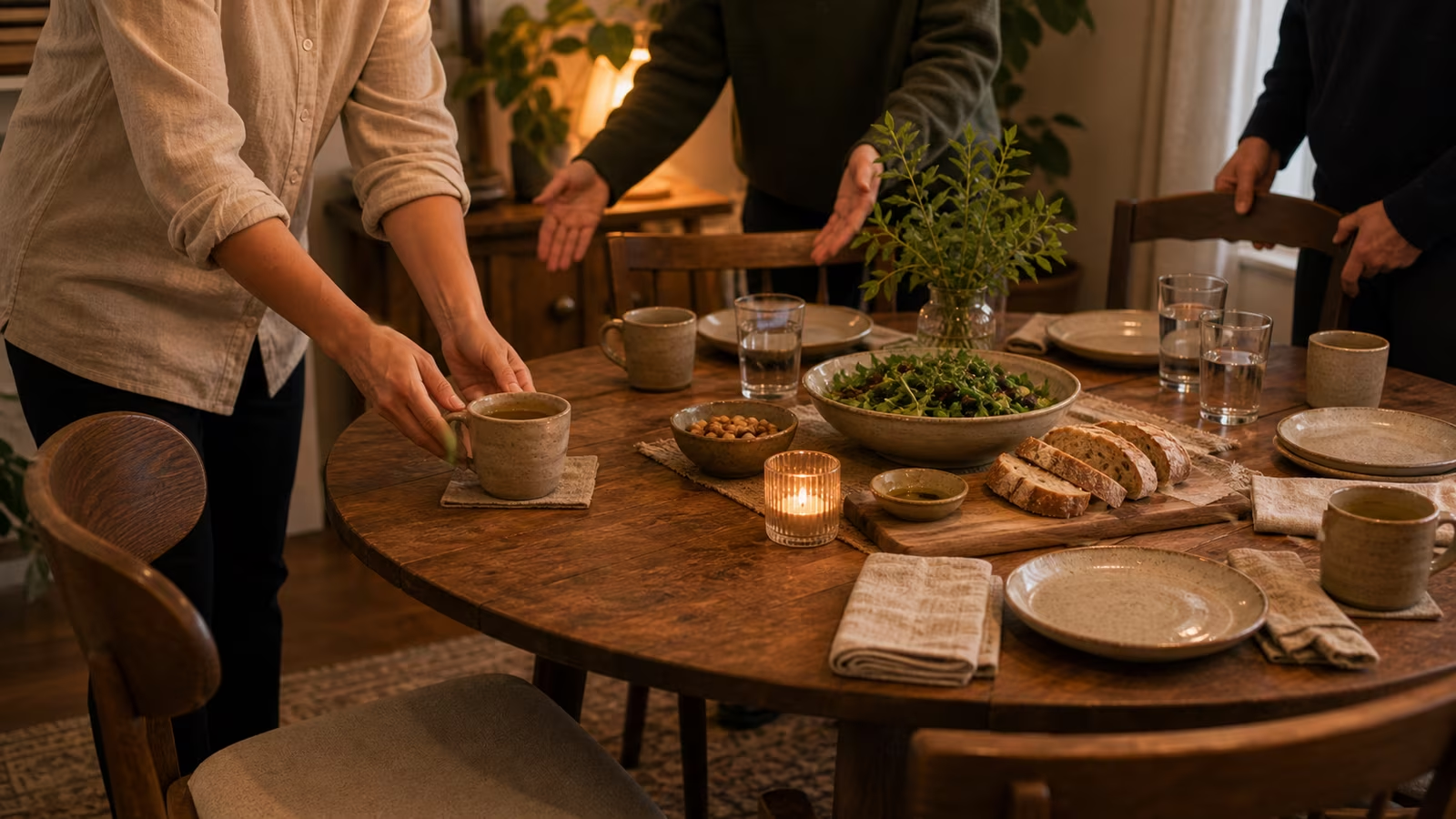
The core move is to widen what counts as taking part. If the only way to be in the gathering is to hold the floor, then quiet people are structurally excluded no matter how welcoming you are in tone. So build in other channels. Practical roles are the easiest: pouring the tea, choosing the music, reading the prompt off the card, plating the snacks, noting the date of the next gathering, tending the pot. These are real contributions to the evening, they are visible to everyone, and they let a person be woven into the room through their hands rather than their voice.
Side-by-side tasks are especially good for quiet guests, because they remove the pressure of face-to-face performance. It is far easier to talk to someone while you are both arranging bread on a board than it is to talk across a table with six people watching. Conversation that happens shoulder to shoulder, aimed at a shared task, gives a shy person a graceful way in and an equally graceful way to fall silent again without it reading as withdrawal. A guest who has a small job to do is never stranded, and never has to manufacture chatter to justify being in the room.
Offer turns without forcing them
Group conversation has a physics problem: the fastest talkers set the pace, and each new thread starts before a slower processor has finished forming a thought about the last one. You can correct this gently without turning the evening into a managed meeting. A host who notices someone leaning slightly forward can make a small opening, “did you want to add something?”, and then actually wait, holding the pause long enough for an answer to arrive. That two-second silence feels long to the host and feels like oxygen to the guest who needed it.
The crucial companion to offering a turn is making the pass just as visible and just as fine. An opt-in turn is only kind if declining it costs nothing. “No, I’m just enjoying listening” has to be a complete and honored answer, received with a nod and a genuine move onward, not a disappointed “oh, come on.” The moment a pass earns a flicker of the host’s face, every quiet person at the table registers it, and the invitation curdles into pressure. Name the norm out loud early, in passing: passing is normal here, listening is real participation. Said plainly, it releases the whole table. This same light touch is what keeps topic boundaries from becoming a fight; the skill of letting a person opt out of a moment is the same skill in both places.
Watch the pressures that stack on quiet guests
Two forces tend to gang up on the quiet person, and it is worth naming both. The first is the spotlight of concern, where a well-meaning host keeps checking, out loud, whether the quiet guest is okay, are you having fun, you’re so quiet, is everything alright. Each check draws the table’s eyes to exactly the person who wanted to stay out of the beam, and it frames their natural way of being as a worry the host is managing. If you want to reassure a quiet guest, do it by giving them an easy role and an easy exit, not by narrating their quietness back to them.
The second force is alcohol, which the standard party script uses as the social lubricant that is supposed to make quiet people loosen up. Leaning on that is a quiet form of coercion, and it excludes anyone who is not drinking. Build a table where the warmth does not depend on it. When the appealing drinks include real non-alcoholic options set out with the same care as everything else, and when nobody’s abstaining draws a comment, the quiet guest who is also the sober guest, for reasons that are entirely their own, gets to be doubly at ease. Their quietness is not a problem to fix with a drink, and their empty wine glass is not a question to answer. Both are simply allowed.
Belonging you can see without hearing
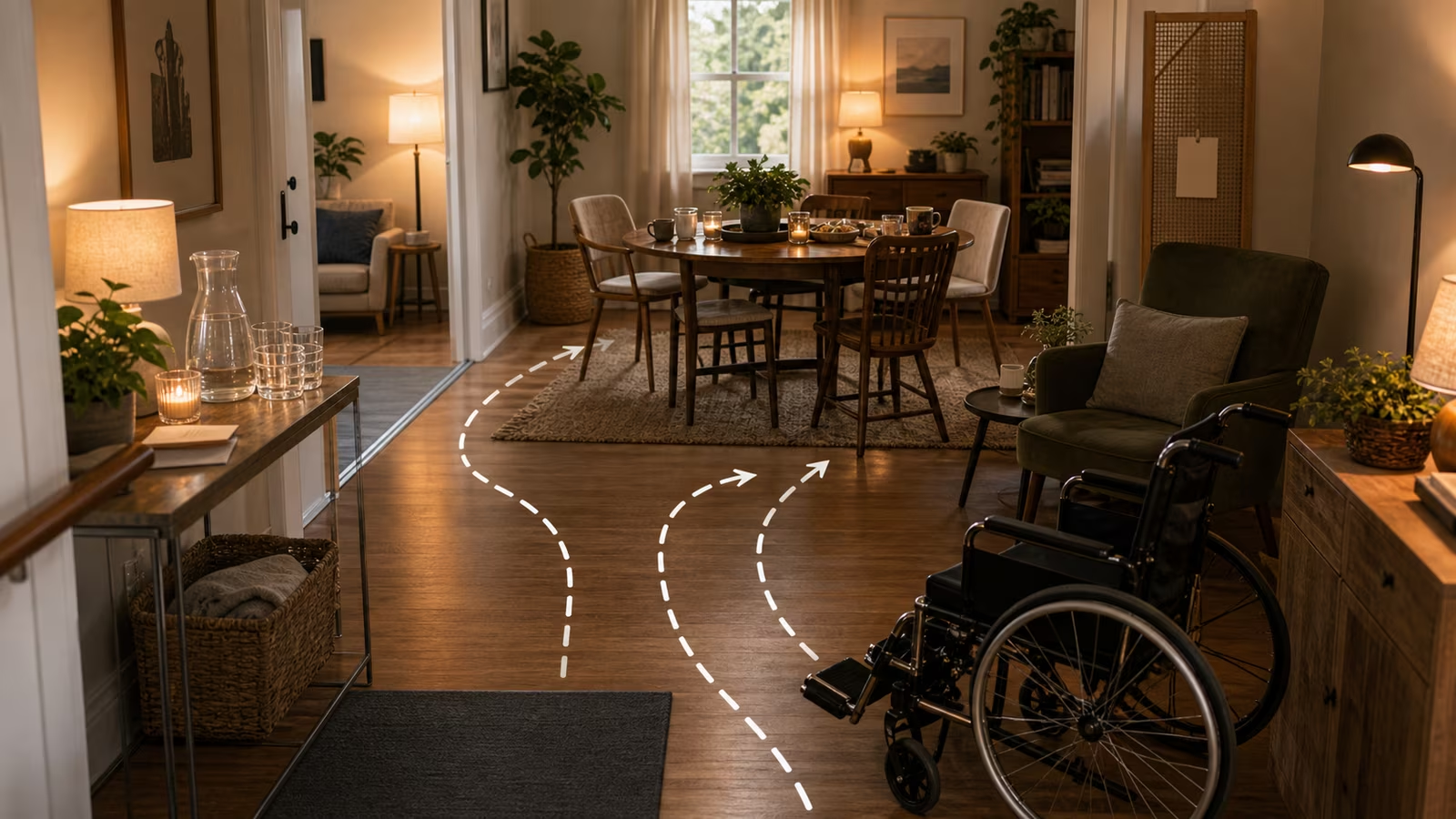
The measure of success here is not that the quiet guest eventually talked more. It is that they came back. A person returns to a table where they felt they belonged without having to become someone else for the evening, and belonging that survives silence is the sturdier kind. When you find yourself reaching for airtime as the metric, swap it for a better one: did everyone have a role, a graceful pass, and an easy way to be present? A guest who poured the tea, chose the record, and listened all night, then said the evening was lovely and meant it, participated completely. Let that count, out loud, and design for it on purpose. If you are lucky enough to have a co-host , one of the best things they can do is quietly hold space for the quieter side of the room while you keep the main conversation moving.
Related guidebooks
- Topic Boundaries Without Policing the Table
- Co-Host Roles: Stop Making One Person Hold the Whole Room
- The Common Table Quickstart: Start a Repeatable Small Gathering
- Invitations Without Pressure: Ask Clearly, Let People Decline Easily
- The Common Table guidebook shelf
- Startable Life Lab for making recurring systems easier to begin and resume.
- Reality Check Desk for calm verification habits when social media advice turns hospitality into pressure.