Recovery-aware hosting is mostly a matter of design, not conversation. The goal is a table where a guest who is not drinking never has to account for it, where the not-drinking is simply unremarkable, folded into the ordinary shape of the evening so completely that nobody clocks it as a thing at all. This is a lower bar than it sounds and a more useful one. You are not trying to run a support meeting or offer anyone care beyond hospitality. You are trying to remove the small, repeated moments where a person would otherwise have to explain a private choice to a room, and those moments turn out to be almost entirely designable in advance.
Start by naming who is actually at your table, because it is a much wider group than the word “recovery” first suggests. Someone is driving home later. Someone is pregnant. Someone takes a medication that does not mix with alcohol. Someone is observant in a tradition that does not drink. Someone is sober-curious and just trying a few months. Someone is early in something serious that they have told no one at this gathering, and never will. And someone simply does not want a drink tonight and owes no one a reason. A table designed so that every one of these people passes through the evening without a single awkward beat is just a well-designed table. The recovery-aware version is not a special mode; it is the good default, applied on purpose.
Design the defaults so no one has to opt out
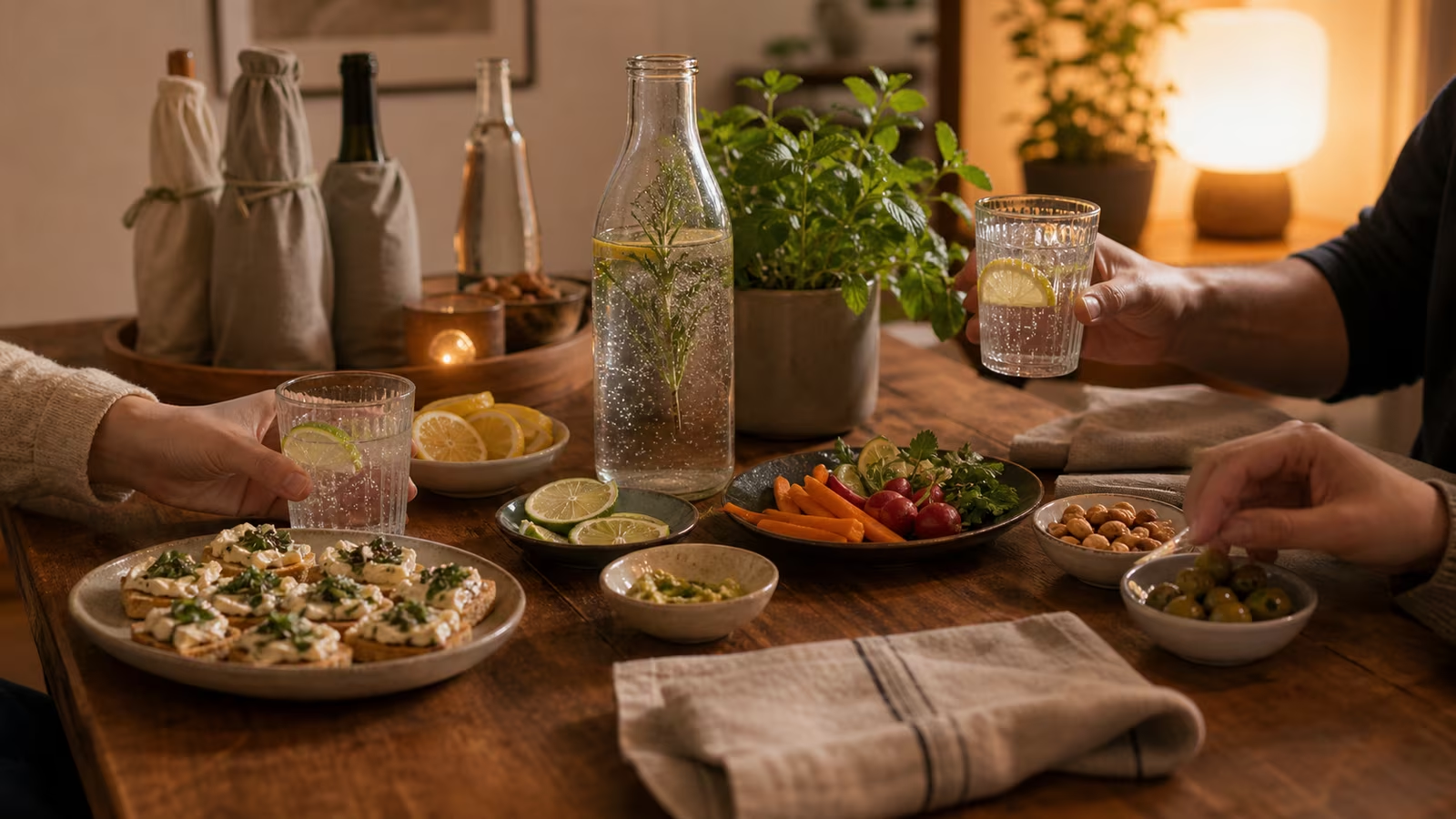
The mechanism that makes this work is the default. Whatever is easiest, most visible, and offered first is what most people will take, and it is what nobody has to request. So make the default something everyone can drink. The first thing you hand a guest at the door should be alcohol-free and genuinely appealing, sparkling water with something in it, a good tea, a proper cold drink that reads as a real choice rather than the thing left over for people who are missing out. When the appealing option is already in someone’s hand, they never have to scan the table, locate the non-alcoholic corner, and quietly ask where it is, which is exactly the small exposing moment you are trying to erase.
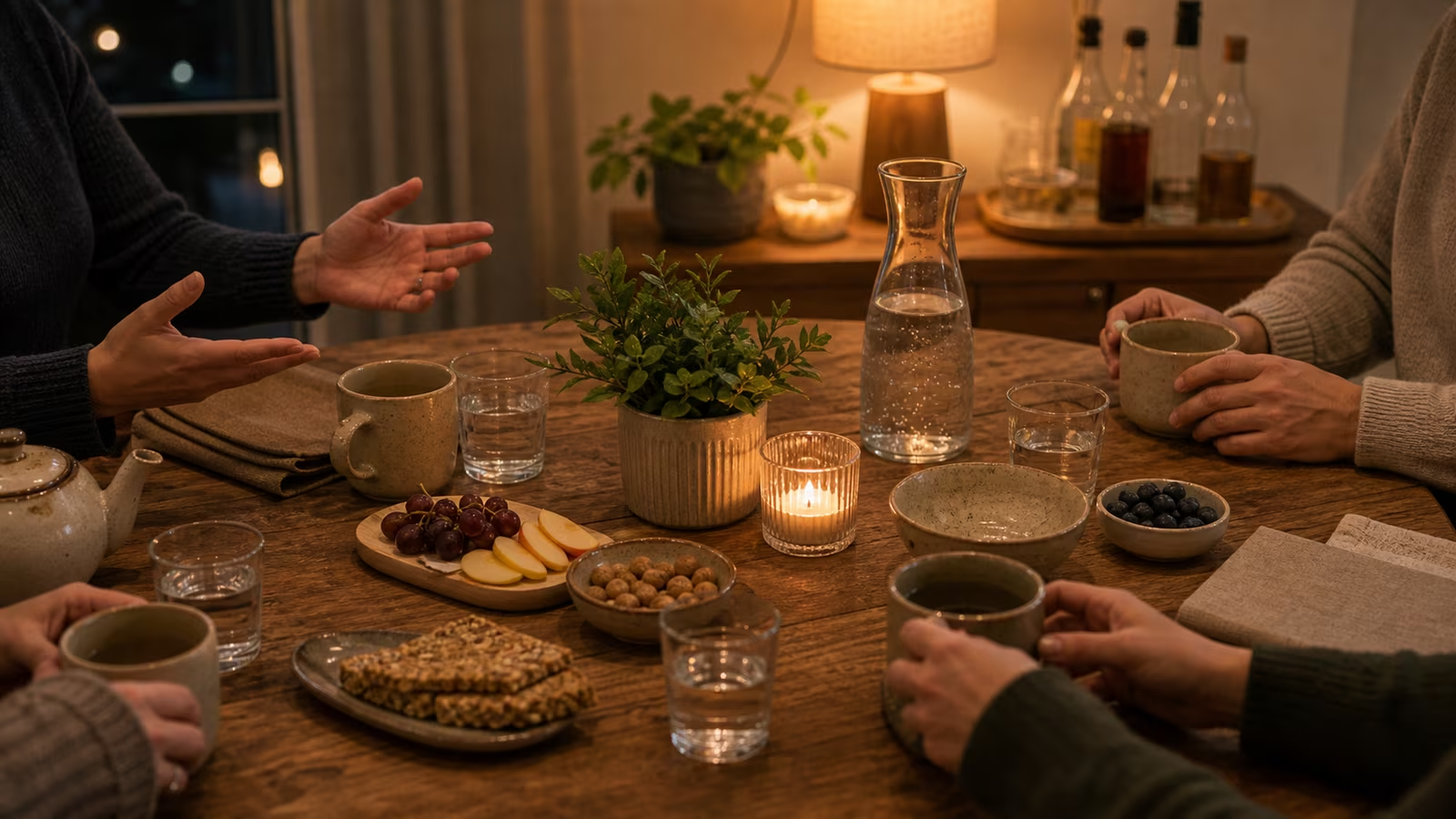
If alcohol is present at all, keep it off the center of the table and out of the center of the ritual. It can exist at the edge, available to whoever wants it, without being the thing the gathering is organized around. The tell is what happens when someone declines. At an alcohol-centered table, declining is an event; a glass gets pushed, a reason gets asked for, a joke gets made. At a well-designed one, declining is a non-event, because there was never a moment structured to require a yes. Retire the refill reflex entirely: offer once, believe the answer, and never top anyone up who did not ask. And drop the jokes about people who are not drinking, the “wow, staying responsible tonight?” and the raised eyebrow, because those are the exact remarks that make a private thing suddenly public.
Audit the invitation, not just the table
A surprising amount of the pressure lands before anyone arrives, in the language of the invitation itself. “Come for drinks,” “bring a bottle,” “wine night,” and “happy hour at mine” all quietly announce that alcohol is the point, and they force the non-drinking guest to make a decision at the RSVP stage: go and manage it, or skip it. Frame the gathering around the actual thing instead, the food, the conversation, the company, the reason you are gathering, and the beverage question never becomes the headline. “Come over for soup and a couple of hours at the table” welcomes everyone identically. If people want to bring something, invite them to bring anything, so the person arriving with sparkling cider is contributing exactly as much as the person arriving with wine. The invitation itself is the first place a guest reads whether they will be comfortable, so it is worth auditing as carefully as the table.
Exits deserve the same audit. Some guests need to leave early, and the reasons are often the same private ones that keep them from drinking, an early morning, a meeting they attend, a limit on how long they can be in a certain kind of room. Build a gathering that people can leave gracefully, without a speech and without the host performing disappointment. When the format has a soft, known shape rather than a mandatory arc that peaks late, slipping out at nine is just leaving, not a statement. An easy exit is a quiet kindness to more people than you will ever know about.
Stay in your lane, warmly
The honest boundary here is that a host offers hospitality, not care, and it is worth being clear-eyed that the two are different. A thoughtful table can make someone’s evening easier and more comfortable, and that is genuinely worth doing, but it cannot stand in for the support systems, relationships, and professional help that people rely on, and you should not try to make it. Pretending otherwise is the failure mode: it puts weight on a gathering that a gathering cannot hold, and it can nudge a host toward prying, monitoring, or amateur counseling that no guest asked for. Your job is narrower and more achievable. Set a table where not drinking is unremarkable, protect people’s privacy by never requiring an explanation, and let that be enough.
This restraint is also what protects the guest’s dignity. Recovery-aware hosting done badly turns into a spotlight, where the host makes a visible show of accommodating someone, points out the special non-alcoholic drinks they bought “for you,” or checks in with a concerned face that tells the whole room something is being managed. That is the opposite of what helps. The person who is not drinking, for whatever reason is theirs alone, wants to be a guest like any other, not a project. So make the good defaults quietly, mention nothing, and treat every guest’s beverage as equally uninteresting. If you want to give people other ways to feel part of the room that have nothing to do with a glass, a micro-volunteering table or the participation ideas in accessibility for small gatherings offer plenty. The measure of success is simple and modest: everyone got to be fully present, and no one had to explain themselves to do it.
Related guidebooks
- Micro-Volunteering Table: Do One Useful Thing Together
- Accessibility for Small Gatherings: Ask, Adapt, and Keep It Ordinary
- The Common Table Quickstart: Start a Repeatable Small Gathering
- Invitations Without Pressure: Ask Clearly, Let People Decline Easily
- The Common Table guidebook shelf
- Startable Life Lab for making recurring systems easier to begin and resume.
- Reality Check Desk for calm verification habits when social media advice turns hospitality into pressure.