Most gatherings do not fail on the night. They fail in the quiet week beforehand, when a warm invitation slowly loses its shape. Someone meant to come, then lost the date. Someone was not sure whether the thing was still happening. Someone assumed they had to bring a dish and felt too embarrassed to ask, so they simply went quiet. A reminder rhythm exists to catch all of that before it turns into an empty chair. Done well, it is not nagging. It is the host quietly carrying the logistics so the guest does not have to. If this is your first recurring table, the Common Table Quickstart will give you the format; this guide is about keeping people attached to it between one gathering and the next.
Why one invitation is never enough
We tend to imagine that a clear, heartfelt invitation should do the whole job, and that repeating ourselves is somehow needy. But an invitation and a reminder do different work. The invitation asks a question: will you come? The reminder answers the questions that arrive later: is it still on, what time again, do I bring anything, where do I park, can I still come if I am running late. If you never send those follow-ups, guests fill the silence with their own guesses, and guesses skew toward not showing up. The absence of a reminder does not read as relaxed confidence. It reads as maybe it fell through.
The trick is that reminders only feel like pressure when they carry emotion instead of information. “Are you coming?? I really hope you can make it!!” puts the guest on the spot and makes their yes feel owed to you. “Soup’s on at 7 Thursday, door’s open, come as you are” carries the same message and asks nothing. The rhythm below is built so that each message delivers a fact the guest actually needs, which is why it can repeat without ever tipping into a campaign.
The four beats
Think of the sequence as four beats spread across the run-up: the save-the-date, the week-of nudge, the day-before logistics note, and the after-note that closes the loop and quietly plants the next date. Each one has a single job, and the discipline is to resist stuffing extra feeling into any of them.
The save-the-date goes out early, and its only job is to claim the slot on someone’s calendar before other plans do. Keep it short and concrete: the day, the rough time, and the one-line promise of what the table is. People are far more likely to protect a date they wrote down than one they merely felt warm about.
The week-of nudge is the gentle resurfacing. Life has moved on since the save-the-date, and this beat simply floats the gathering back to the top of mind. It is a good place to add one human detail that makes the evening easy to picture, the pot of lentil soup, the fact that you will wrap by nine, so the guest re-decides to come rather than passively drifting.
The day-before note is pure logistics, and it is the message most hosts skip and most guests secretly want. This is where you name the exact time, the door or buzzer, what to bring or explicitly not bring, and the permission to arrive late or leave early. When this message is thorough, you will notice you stop getting anxious last-minute texts, because you already answered them.
The after-note is the beat almost everyone forgets, and it is the one that turns a single evening into a rhythm. A short thank-you the next morning, plus the next date, tells people two things at once: that their presence mattered and that this will happen again. Closing the loop is what makes the loop a loop. The Attendance Without Guilt guide pairs well here, because a forgiving after-note is what keeps someone who missed one week from quietly writing themselves out of the group.
Put the information in the invite, not in your nerves
The most common way a reminder rhythm goes wrong is that the original invitation was vague, so the host spends the whole week patching the gaps with emotional messages. If people do not know whether food is provided, you will end up sending a flurry of clarifying texts that all read, underneath, as please, please come. The fix is upstream. Load the concrete details into the first message so the later beats can stay calm. A guest who already knows the what, when, where, and how-to-leave does not need to be reassured; they just need a nudge.
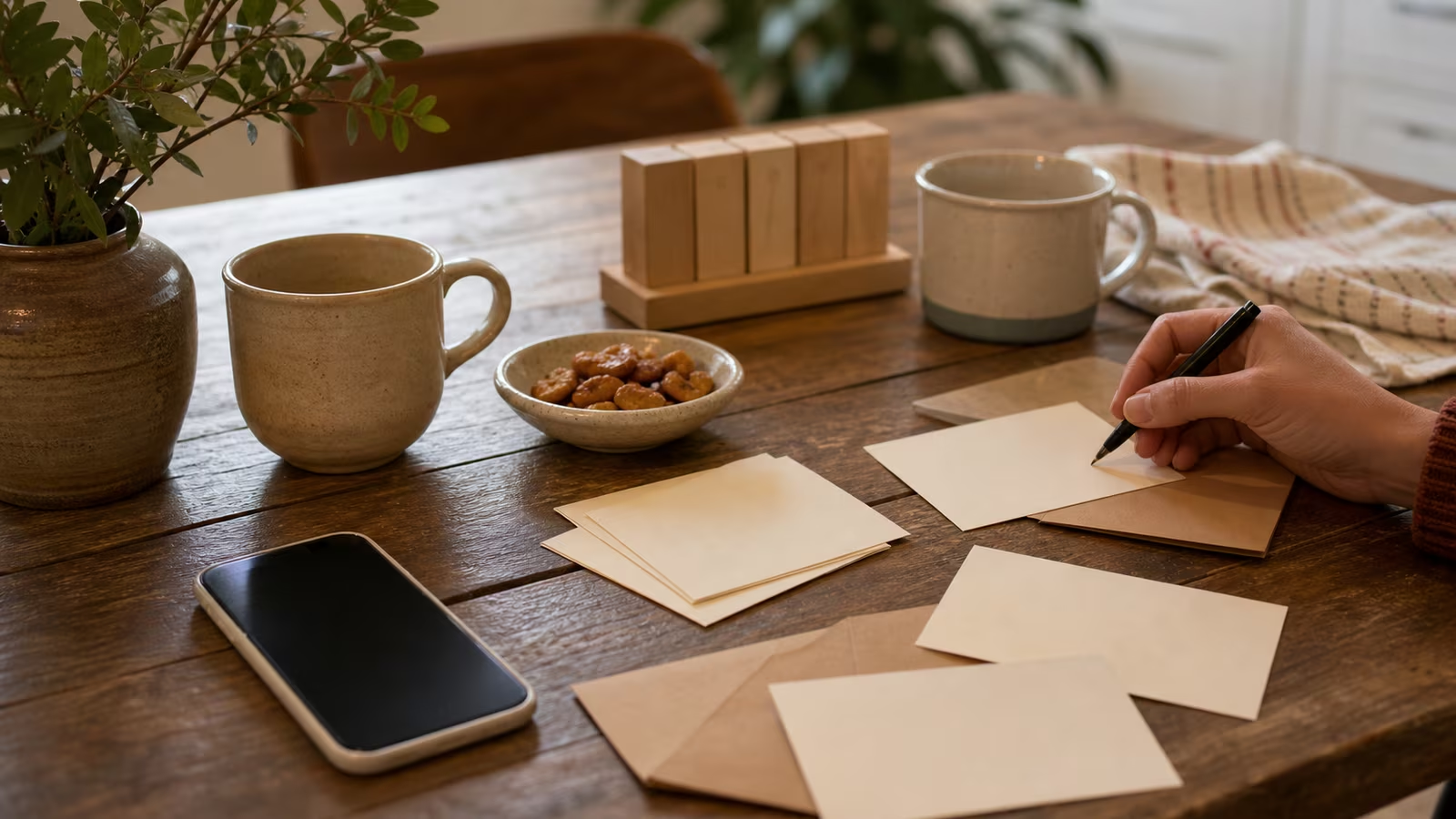
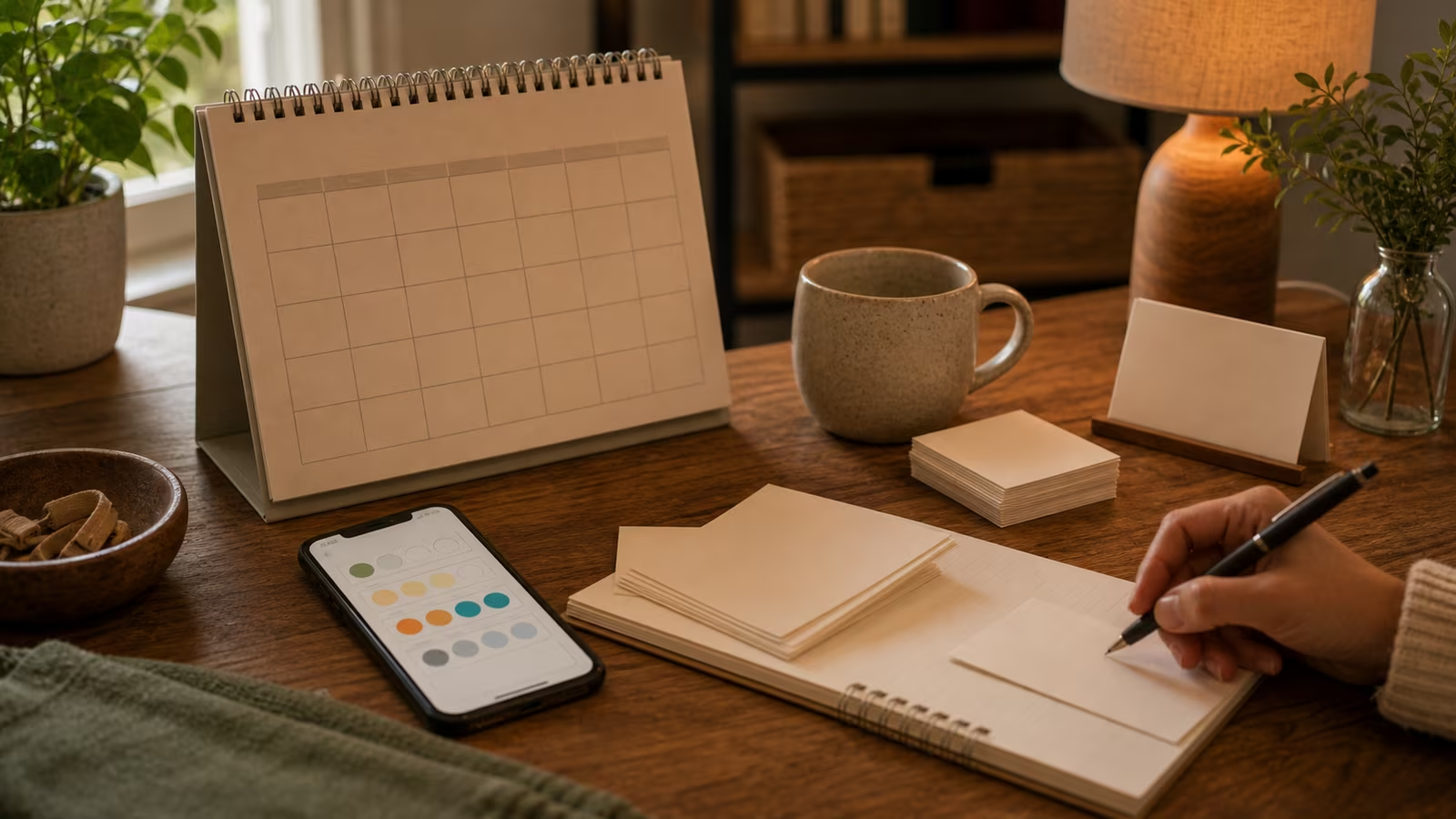
This is also where a light tool helps more than willpower. Scheduling the four messages in advance, or even drafting them all the moment you set the date, means the rhythm runs whether or not you feel socially energetic that week. A small pocket calendar or a set of reusable note cards on the desk works just as well as an app. Some hosts keep a simple undated desk planner so the next date has a physical home the instant one gathering ends. The point is not the object; it is that the rhythm should not depend on your mood.
Let nonalcoholic choices ride along quietly
Reminders are a natural place to signal, without a speech, that this is a come-as-you-are table. When your day-before note mentions “there’ll be tea, sparkling water, and something warm,” you have told every guest who does not drink that they are already accounted for, and you have done it before anyone had to ask. Nobody should have to send you a private message explaining that they are off alcohol this year. The considered default in the reminder does that work invisibly. If drinks appear at all, keep them at the edge of the message the way they sit at the edge of the evening, so no one reads the reminder and feels they are being invited to a drinking occasion they would rather skip.
The same restraint applies to how you handle a non-reply. Silence is not a slight, and it is not a cue to escalate. A guest managing a hard week, a caregiving stretch, or a private reason of their own does not owe you an RSVP with an explanation attached. Send the beats, keep them factual, and let people opt in at whatever level they can this time.
Practice this once
Before your next gathering, write the full four-message rhythm out in advance, and give yourself one rule: every message must carry a practical detail, and none may carry a guilt trip. Save-the-date gets the date. Week-of gets the picture. Day-before gets the logistics. After-note gets the thanks and the next date. Then run it once exactly as written and notice what changes, whether the anxious last-minute questions dry up, whether more people arrive on time, whether the room felt fuller for less effort on the night.
If it worked, resist the urge to elaborate. A rhythm earns its keep by being boring and reliable, not by being clever. Keep the four beats, refine the wording slightly each cycle, and let the predictability itself become part of what people trust about your table. For sharing this load across more than one host, The Rotating Host Model shows how to hand the rhythm off without it going silent, and Invitations Without Pressure covers keeping that very first message easy to say yes to. You can also browse the full Common Table guidebook shelf for the surrounding pieces.