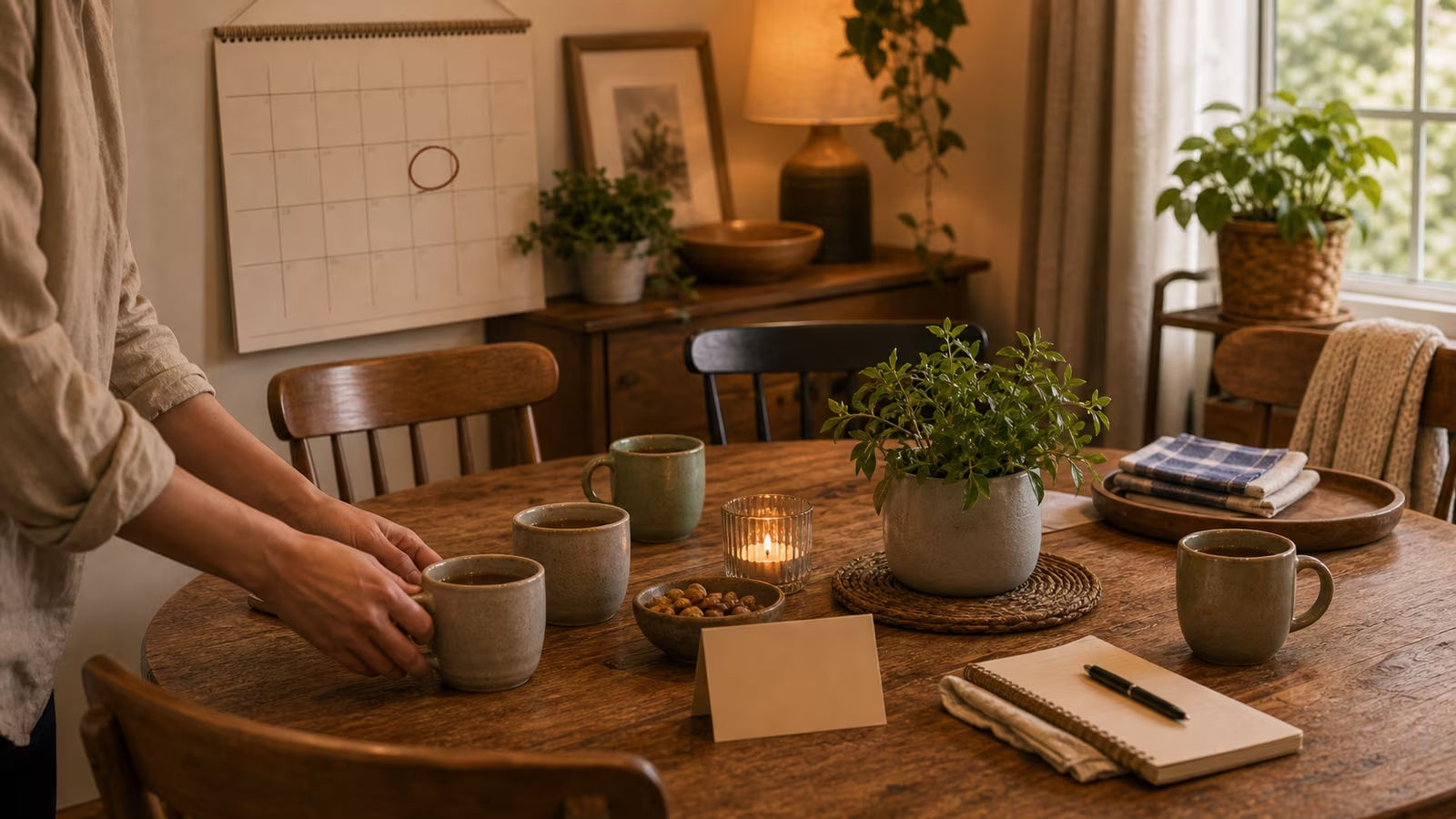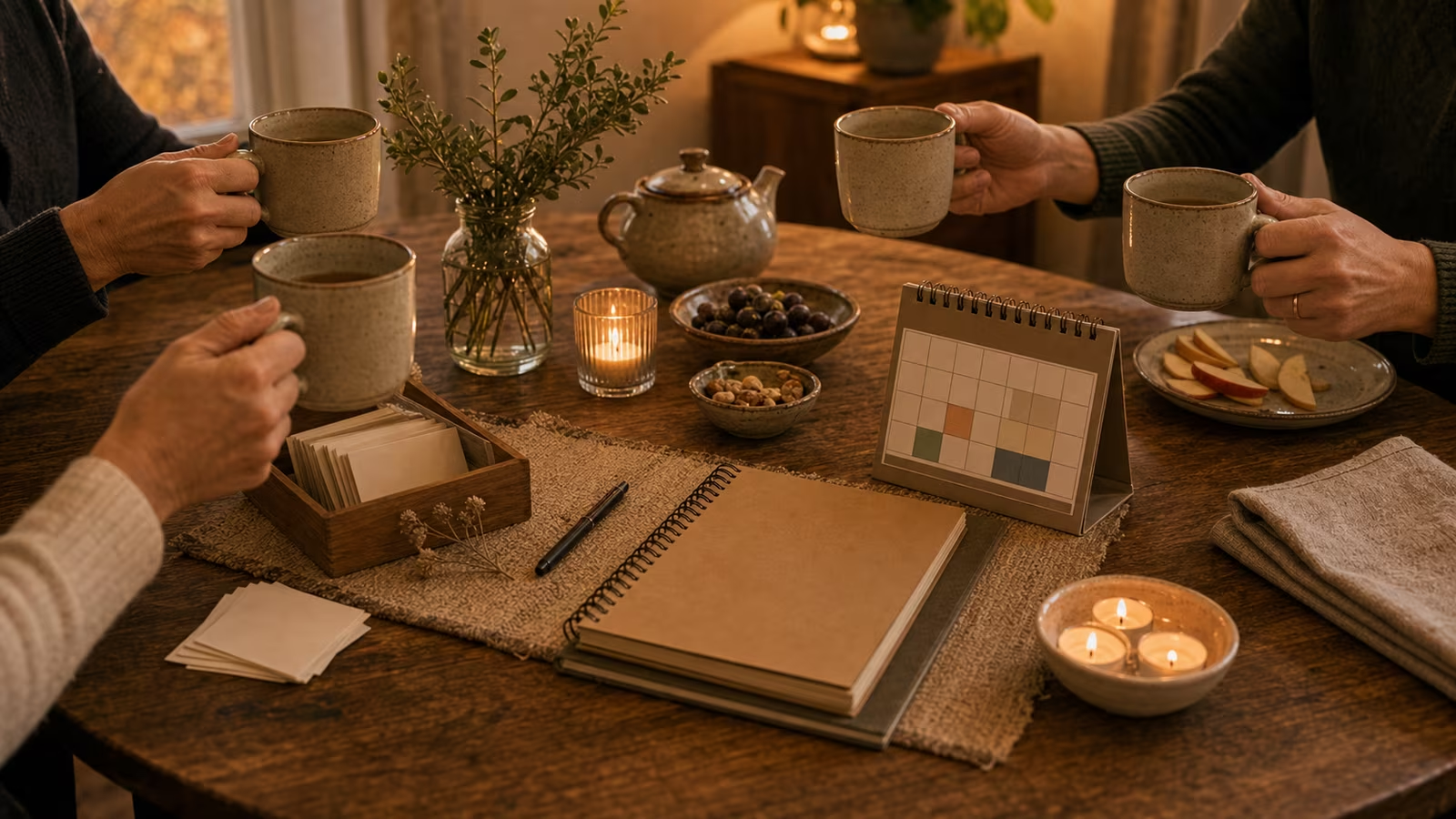
There is a particular kind of ease that only shows up when people are working with their hands and talking sideways rather than face to face. A repair share evening leans on exactly that. You gather a few people around one table, each with a small thing that needs mending, sorting, or tidying, and you let the work carry the conversation. Nobody has to sparkle. The shirt with the loose button, the tangled box of cables, the photo album that has been meaning to get labeled for a decade, these become quiet excuses to sit near each other for two hours. If you have not run a recurring gathering before, the Common Table Quickstart sets the baseline, and this format slots in as one of the gentlest ways to start.
Keep it small, dull, and safe on purpose
The single most important design choice here is the ceiling on risk. This is a mending table, not a workshop. The invitation should make that explicit, because otherwise someone will show up hoping you will help them rewire a lamp or sharpen a chef’s knife, and now you are supervising a hazard instead of hosting an evening. Say plainly that this is for low-stakes tasks: a hem, a hinge that needs a note taken so the right screw can be bought later, a drawer of receipts to file, a stack of buttons to match, a houseplant to repot into a pot someone brought. Nothing that needs a blade under real pressure, nothing electrical, nothing that produces fumes or flying debris.
The reason for the dullness is not caution for its own sake. It is that low-risk tasks are the ones people can do while half-attending, and half-attention is the social sweet spot. When a task is too demanding, the room goes silent and heads-down; when it is too trivial, people finish and start hovering. A modest mend, the kind that takes twenty or forty minutes of loose fiddling, keeps hands busy and mouths free. That is the whole mechanism.
What goes on the table
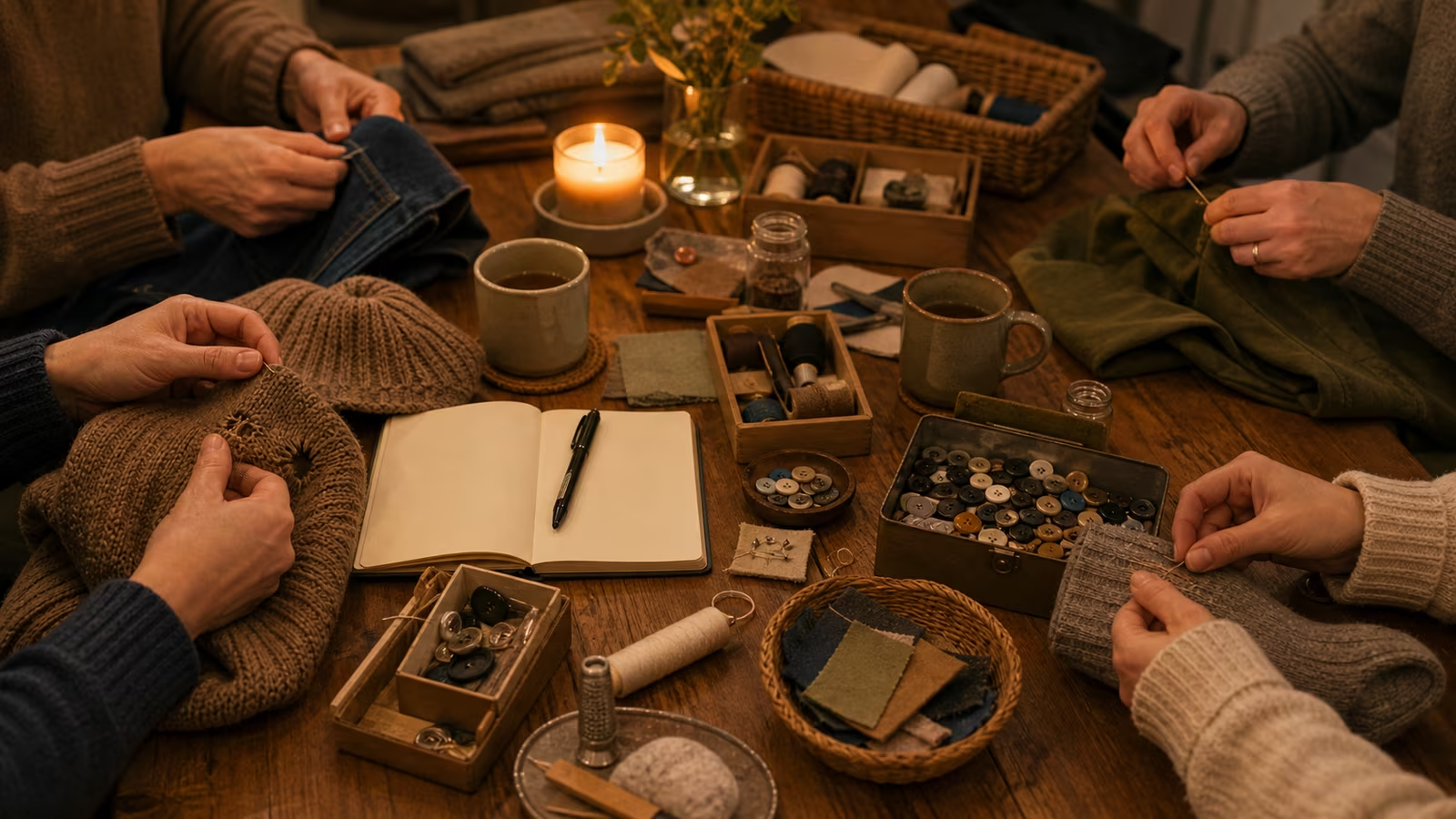
You do not need much. A few pairs of scissors, an assortment of needles and thread, some spare buttons, a couple of small screwdrivers, tape, a lint roller, a handful of resealable bags and a marker for sorting, and good light. That is genuinely it. Resist the urge to build a fully stocked maker station; a lavish supply table quietly tells guests that they should have brought a real project, and now the person who came with one sock feels foolish. Keep the kit humble so the humblest task still fits right in.
Light matters more than anything else, and it is the thing most living rooms lack. Mending in dim ambient light is frustrating and ages the mood of the room, so pull a lamp onto the table or set up one bright, warm work light in the middle. Warmth over harshness; you want people to look up and see faces they like, not a fluorescent glare. If you keep hosting these, a single portable clamp light earns its place faster than any other purchase.
Run the evening in three easy movements
Open by having everyone show the one thing they brought. This is the beat that does the most social work, because it turns a table of strangers into a table of people who now know a little something true about each other: one is fixing a child’s stuffed animal, one is finally sorting a parent’s letters, one just wanted an excuse to leave the house. The showing is low, warm, and quick. Nobody explains why the object matters unless they want to.
Then everyone settles into the work, and you let conversation find its own level. Some tables talk the whole time; some go quiet and companionable. Both are fine, and the host’s job is mostly to keep the tea moving and to help anyone who is stuck without taking over their task. If you do not know how to fix something, say so cheerfully. The point was never expertise. It was company.
Close with a show-what-changed round. Go around once more and let people hold up the mended sock, the sorted box, the labeled album. This is deeply satisfying in a way that is hard to overstate, because everyone leaves with visible proof that the evening produced something, however small. A gathering that ends with a tangible before-and-after is one people re-invite themselves to. For a natural sibling that swaps skills instead of objects, see the Skill-Swap Supper ; for one that trades quiet reading for quiet mending, the Book-Passage Table runs on the same low-pressure engine.
Guard against the shame drift
The failure mode specific to this format is subtle: it can curdle into a place where people feel judged for the state of their belongings, or pressured to attempt repairs beyond their skill. You will feel it start when someone apologizes for how neglected their thing is, or when a confident fixer starts insisting a nervous guest attempt something risky. Head both off early. Set the tone that everything here is welcome exactly as broken as it is, that sorting a drawer counts every bit as much as darning a heel, and that the correct answer to “I’m not sure how to fix this” is often “then let’s just take a note and buy the part, no shame in that.” Nobody’s competence is on trial. The table is for maintenance made social, not for a repair exam.
Nonalcoholic by nature, and better for it
This is one of the easiest Common Table formats to keep genuinely come-as-you-are, because hands full of thread and small parts do not want a drink in the way. Tea, coffee, and something cold and easy to reach fit the work perfectly, and nobody will feel a gap where alcohol might have been. Make the warm drink the obvious center of the table and you have quietly built an evening that makes complete sense for the guest in recovery, the guest who is driving, the guest on medication, and the guest who simply does not feel like it tonight, none of whom should have to say which they are. If someone brings a drink of their own, fine; keep it at the edge of the table and the edge of the evening, never the reason anyone came.
Practice this once
For your first run, keep the ask tiny. Invite three or four people and tell each of them to bring exactly one small, safe thing, a sock, a button, a folder of paperwork, a photo album, or an object that only needs sorting. Provide the humble kit, the good light, and the tea, and run the three movements: show, work, show-what-changed. Afterward, jot down what actually happened, whether the conversation flowed, whether the risk ceiling held, whether anyone drifted toward shame or tool pressure, and whether people asked when the next one is. That last question is your real signal. If they asked, keep it small and do it again the same way before you change a thing. Browse the Common Table guidebook shelf or the Invitations Without Pressure guide for help making that first ask easy to accept.