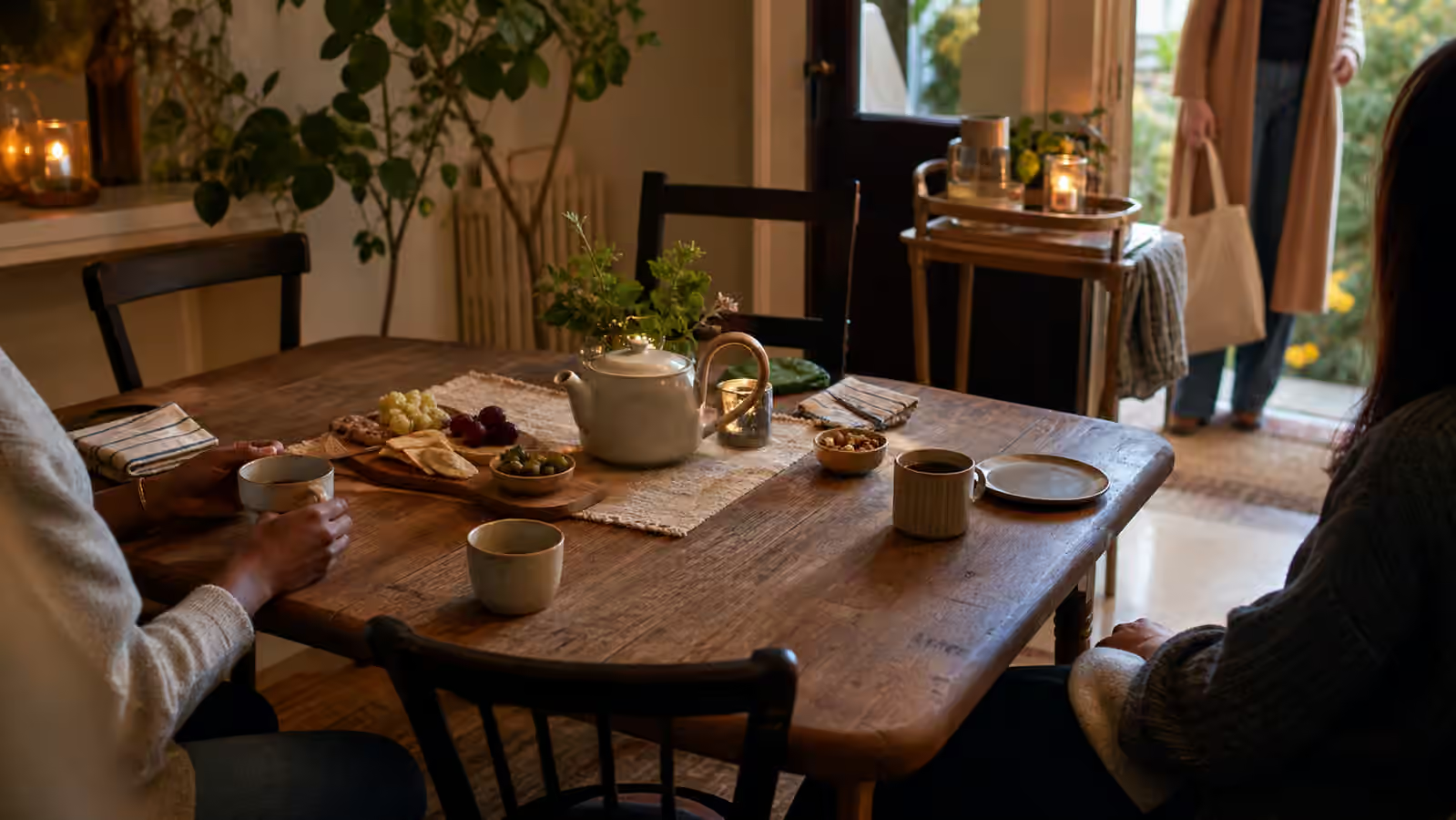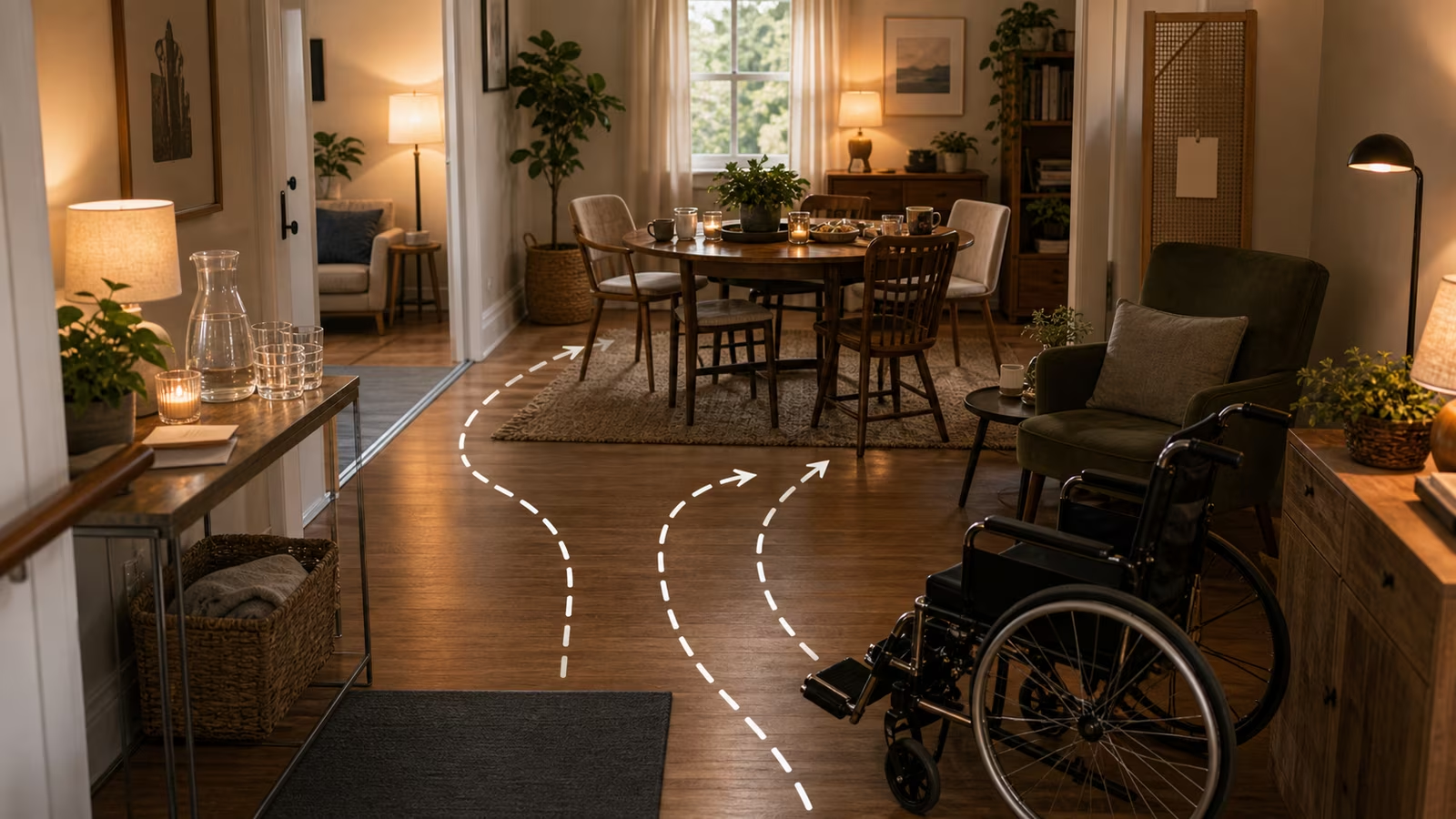

Closing Before It Drifts handles the emotional art of ending an evening while the room still feels good. This guide handles everything that happens in the fifteen minutes after that, the coats, the keys, the last bus, the dark stairwell, the ride that has not been sorted. A gathering is not over when you say the warm closing line. It is over when each guest is out the door with everything they came with and a clear way home. The gap between those two moments is where good evenings quietly go wrong, and it is almost entirely fixable in advance.
The reason departures deserve real design is that guests are at their most depleted precisely when the exit demands the most from them. They are tired, possibly full, sometimes overstimulated, and now expected to locate their belongings, calculate a route, and extract themselves gracefully from a room that keeps pulling them back into conversation. None of this is about promising anyone perfect safety or managing adult decisions for them. It is about refusing to treat the leaving as an afterthought, and instead lowering the amount of improvisation a worn-out person has to perform at the end of the night.
Begin the exit inside the invitation
The clearest exits start before anyone arrives. If the table wraps at nine, say nine in the invitation, so guests can plan the ride, the sitter, or the last train around a real number instead of guessing. If your building has a gate that locks, a buzzer that is finicky, stairs that are steep, or a neighborhood that gets harder to move through late, name the detail plainly up front. This is the same courtesy Arrival Logistics and Door Cues applies to the front of the evening, simply pointed at the back of it. A guest who knew the shape of the ending when they said yes never has to scramble to reshape it while tired.
Early in the gathering, you can float one gentle, room-wide question: “Does anyone have a train, a ride, or an early leave time I should help keep an eye on?” Asked once and lightly, this does something generous. It tells the whole room that leaving on time is not rude, that the door is not a test of loyalty. Some people will say they are fine. Someone will name a 9:40 bus, and now you can quietly protect it for them at 9:25 without their having to interrupt anyone. The question should never harden into surveillance; you are opening a door, not taking attendance.
Keep the doorway from becoming a trap
An astonishing number of otherwise lovely evenings fall apart in the last three feet. Coats are buried under other coats. Shoes have wandered. A fresh conversation ignites right as someone is balancing a bag and waiting for a gap to reach the hooks. The host keeps saying a warm goodbye but never quite releases anyone, and the entry becomes a place where leaving requires physically interrupting the warmth. The result is the strange purgatory where people are technically saying goodnight for half an hour and cannot actually go.
You prevent all of it by making the doorway usable before the room begins to close. Keep coats and bags somewhere a guest can retrieve them without asking three people to stand. Keep the path to the door clear of chairs and clutter. If your home is shoes-off, make the shoes easy to find rather than a scavenger hunt in a dim hall. Gather up the containers, books, or borrowed items people arrived with before the final goodbye, not during it. You can even fold retrieval into the closing rhythm out loud: “Let’s grab coats now so nobody has to dig at the door later.” It is a tiny line, and it changes the physics of the room, because it says leaving is expected and allowed.
Read the weather and the distance
Weather makes exits more emotional than hosts anticipate. Rain, ice, heat, wind, early darkness, and uneven sidewalks can turn a simple goodnight into a small crisis for someone facing a long walk or an exposed wait. Weather Backup Plan is mostly about keeping outdoor rituals repeatable, but its thinking belongs at the door too. An umbrella by the entry, a porch light left on, a dry path, an offer to wait inside while a ride approaches, an ending nudged fifteen minutes earlier because the storm is coming, these are not fancy touches. They are what makes the ritual livable for people who did not arrive by car.
Your job is not to solve every route. It is to make conditions visible before the final minute, when it is too late to plan around them. If the rain started during dinner, say so before people stand up in their good shoes. If the easy bus is coming, name the time for the person who asked you to watch it. If a guest parked far off, offer the porch light and a brief pause at the door while they call someone. Keep the tone flat and ordinary, because practical care becomes awkward the moment a host makes it grand.
Be careful with advice at this hour. Give information and low-pressure options, not instructions, unless there is a genuine house rule or an immediate practical need. “The side gate locks at nine-thirty, so take the front path after that” is a gift. “You shouldn’t walk that way” can be true and still land as control if the guest never asked for your read on their route. The Common Table stance is clarity without commandeering, and it matters most with adults heading into their own night.
Protect the early leaver
A real exit plan makes leaving early completely normal. Plenty of guests have work in the morning, caregiving at home, sensory limits, social fatigue, prayer times, medication routines, or private reasons they owe no one. They should not have to wait for the group close, and they certainly should not have to stage a dramatic goodbye that pulls the whole table’s attention. Build them a quiet door. A release line in the invitation, “come for any part of it, and we’ll make leaving easy,” does a lot of that work in advance. During the evening, “if you need to slip out, the path to the door is clear and we’re so glad you came” gives newer and quieter guests, who do not yet know your room’s customs, explicit permission to go.
Never ask for a reason unless the guest offers one. A good exit is not an interview. If someone says, “I need to head out,” the entire correct response is, “I’m glad you came, let me get your coat.” That is enough. Whether they are leaving because of an early shift, a hard day, or a boundary they will never explain, they walk out with their belonging intact. The Social Safety House Rules guide extends this same principle across the whole evening.
Let the last minute stay warm
Here is the quiet payoff. When the logistics are handled in advance, the emotional goodbye gets to be purely emotional. Coats are found, rides are named, the doorway is open, and so the host is free to say something true instead of a rushed cascade of reminders. “Thank you for making this table easy to repeat,” or “I’ll send the next date tomorrow,” carries far more warmth than “drive safe, text me, do you have your umbrella, watch the second step.” The care already happened; the closing line gets to be tender.
So practice it once. Before your next table, write three small things: one exit line you will actually say, one plan for where coats and bags will live so retrieval is easy, and one gentle question that lets guests surface a ride or transit need without any drama. Run it, then notice afterward whether people left more cleanly and whether the doorway purgatory shrank. If it did, fold the exit plan into your permanent ritual spine rather than treating it as an emergency measure you only reach for on bad-weather nights. You can find the surrounding pieces on the full Common Table guidebook shelf .