
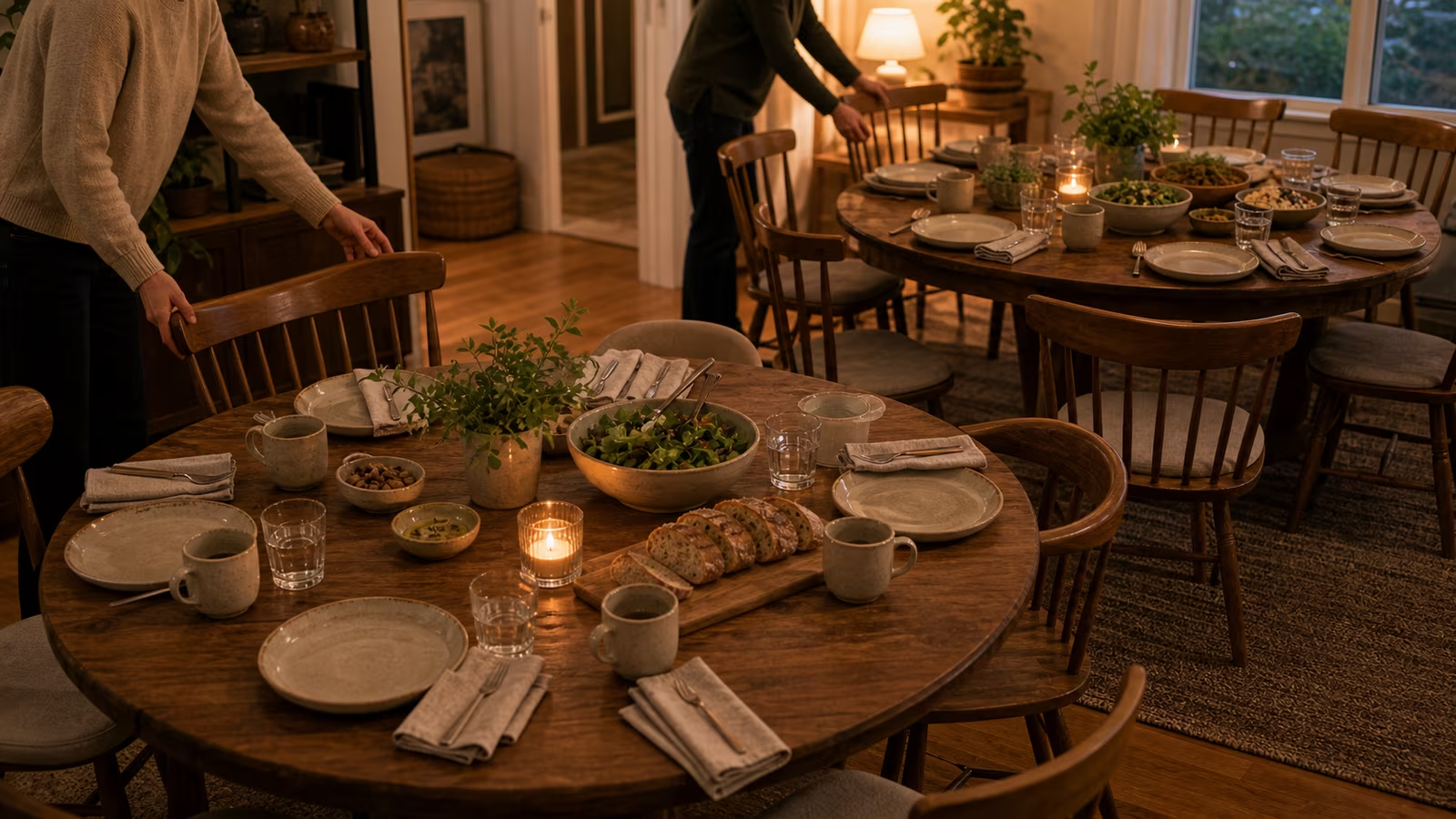
Four people around a table is a conversation. Eight people around a table is a different social animal entirely, and the mistake almost every host makes is assuming it is just the same evening with more chairs. It is not. Somewhere between five and seven, a single shared conversation stops being possible, the volume climbs, the quiet guest goes quieter, and the host who could once relax now spends the night ricocheting between the kitchen and a dozen half-finished exchanges. The gathering does not fail because eight is too many. It fails because the format built for four was never redesigned for eight. The fix is a rule worth memorizing: add structure before you add seats. If you are still establishing the format at four, the Common Table Quickstart comes first; this guide is for the good tiny table that is ready to grow.
Why four and eight are different species
The physics of conversation changes with the count. A group of four sustains one thread everyone shares. At five or six, that single thread starts to strain, and the group naturally wants to split, but a tight seating arrangement fights the split and produces the familiar overlap where two conversations compete for the same air. By eight, the group genuinely wants to be two clusters of four for stretches of the evening, coming together at the beats that matter. If you understand this, scaling becomes easy: you stop fighting the split and start designing for it. If you ignore it, you spend the night wondering why the room feels loud and scattered, and you may even blame the guests for talking over each other, when the real culprit is a room shaped for four.
Volume is the early warning sign. When people cannot hear the person across from them, they lean in and speak up, which raises the ambient level, which makes everyone else lean in and speak up too, until the quietest and most tired guests simply withdraw. A room that has gotten loud is not lively; it is under-structured. The remedies below are mostly about giving that energy somewhere organized to go.
Add structure before you add seats
The core move has five practical parts, and the point is to install them before the bigger guest list arrives, not after it has already gone sideways. First, plan for two conversation zones rather than one, so the natural split into smaller clusters has room to happen without collision, a sofa cluster and a table cluster, or two ends of a long table. Second, strengthen the opening beat, because a group of eight will not cohere on its own the way four does; you need a clear shared moment at the start, a go-around, a first question, a toast with the soup, to make the larger group feel like one table before it breaks into pieces.
Third, simplify the food. This is counterintuitive, since more people feels like it calls for more cooking, but the opposite is true: doubling the guest list while also raising the culinary ambition is how hosts burn out in a single evening. One generous pot, bread, and something easy scales far more gracefully than a multi-course plan. Fourth, sharpen the close, because a larger group drifts at the end and departures get messy; a clear closing beat gathers everyone back together and lets the evening end on purpose rather than dissolving. Fifth, and most important, add one co-host role. At eight, a single host cannot both tend the food and tend the room. A second person who greets latecomers, refills drinks, and keeps an eye on the quiet guest is the difference between a host who enjoys their own gathering and one who never sits down.
The co-host changes everything
Of all five parts, the co-host is the one that most reliably rescues a scaled-up table, because it fixes the hidden problem of attention. Four guests can all fit inside one host’s care. Eight cannot; someone always falls into the gap, usually the newest or quietest person, who arrives, is greeted, and then stands unattended near the wall while the host is trapped at the stove. A co-host closes that gap. Divide the labor plainly beforehand: one of you owns the food and the timing, the other owns the room and the people. It does not have to be formal or permanent, and it pairs naturally with sharing the load over time through the Rotating Host Model . What matters is that on the night, no arriving guest and no fading conversation is anyone’s afterthought.
Keep the come-as-you-are stance from getting lost in the crowd
Scaling introduces a quiet risk to inclusivity that is worth naming. At four, you probably know each person’s drink and food needs by heart. At eight, with new faces in the mix, that intimate knowledge thins out, and defaults start doing more of the work, which means the defaults have to be good. Make the nonalcoholic options as visible, plentiful, and considered as anything else on the table, so the newcomer who does not drink can serve themselves without flagging anyone down or explaining a thing. A bigger room makes it easier for a quiet boundary to go unmet, so build the care into the setup rather than relying on your attention, which is now spread across twice as many people. If alcohol is present, keep it at the edge, never the organizing center of a larger, louder evening where its presence is felt more. The same goes for access and food needs: at eight, ask on the invitation rather than trusting you will remember, and let people answer or not.
Practice this once
Before you invite four more people, do not just extend the guest list, sketch the redesign. On one page, work out where the two conversation zones will be, what your stronger opening beat is, how you will simplify the food, what the clear closing beat sounds like, and who your co-host is and what they own. Then run it once at eight and pay close attention afterward. Did the room split cleanly into clusters or collide? Did the opening pull everyone together? Did the quiet guest get reached? Did you, the host, actually get to sit down and enjoy it, or did you spend the night in the kitchen?
Use what you learn before you consider going any larger, because the jump past eight is another redesign again, not a simple addition. The Aftercare Follow-Up guide helps you check in with a bigger group afterward without it feeling like a survey, and Cancel and Reschedule With Grace matters more at eight, since a larger list means more life happening and more graceful drop-outs to absorb. For keeping the invitation to a bigger table easy rather than daunting, see Invitations Without Pressure , and the full Common Table guidebook shelf holds the rest.