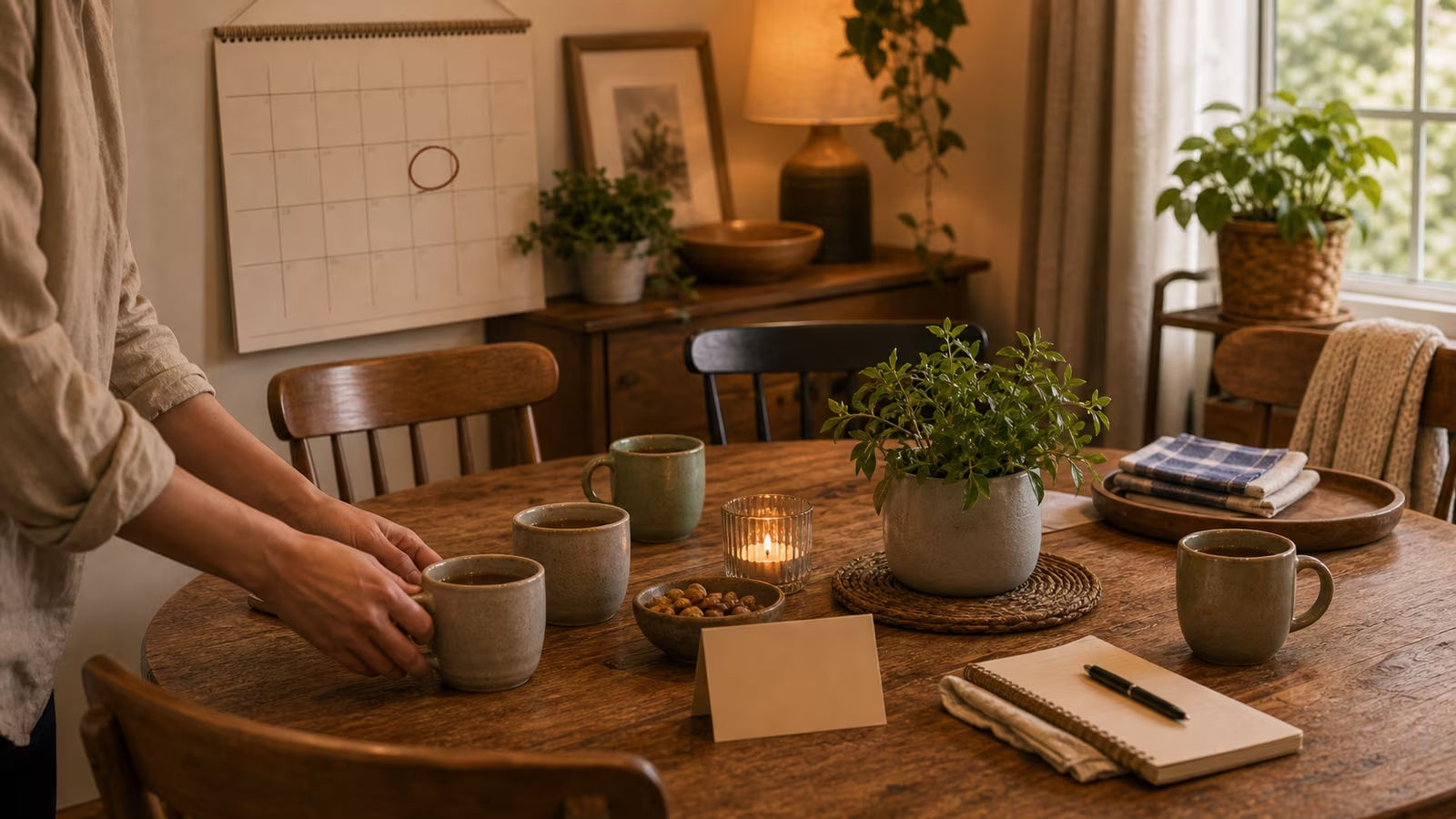
A table that meets for a year quietly accumulates a small store of knowledge, and most of it lives only in one person’s head. You remember that the quiet man in the corner turned out to be a beekeeper, that the lentil soup was the one everybody asked about, that someone said their mother was ill and you meant to follow up. When that knowledge sits in a single memory, the ritual is fragile: it forgets people the moment the host has a bad month. This guide is about giving the table a modest memory of its own, so returning feels easy and nobody has to reintroduce themselves every time. If you are just beginning, The Common Table Quickstart comes first; this one assumes you already have something worth remembering.
The goal is not minutes, a database, or a productivity system. It is a few durable notes that let the next gathering pick up where the last one left off. Done lightly, a table’s memory is one of the kindest things a host can build, because it means a guest who was here once is recognized when they come back, instead of starting from zero.
The memory a small table actually needs
The record you want is much smaller than you think. You do not need a transcript of the conversation, a tally of who ate what, or a photo album. You need enough to answer three practical questions before the next gathering: who has come before, what worked well enough to repeat, and what you told someone you would remember. That is the whole job. A note that a guest is allergic to walnuts, that the fall soup landed better than the summer one, that a newcomer said they would try to make it back once school settled down: three lines like that will do more for continuity than pages of careful minutes ever could.
Everything beyond that quickly becomes weight. The instinct to capture more is understandable, especially after an evening that went well, but a table is not a project, and the point of remembering is to make the next gathering warmer, not to build an archive you feel obligated to maintain.
Why one notebook beats a system
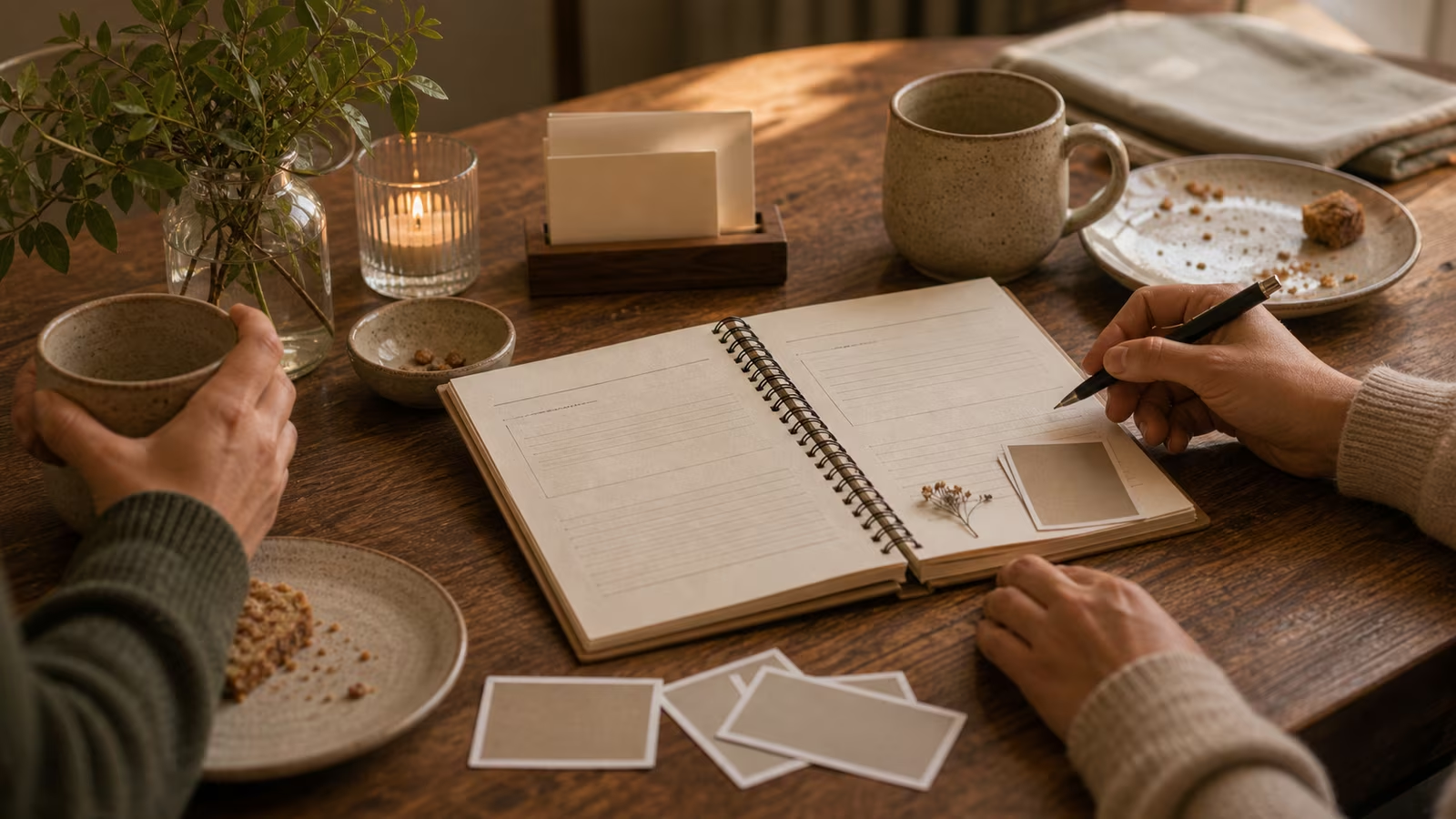
Pick one place and let it be humble. A cheap notebook that lives in the same drawer as the candles, a single shared document, or even a small box of index cards will all outlast anything more sophisticated. Elaborate systems fail for a predictable reason: they ask for effort at exactly the moment you have none left, when guests have just gone and you want to sit down. A notebook you can scrawl in for ninety seconds before bed survives that moment; an app with fields and tags does not.
The other virtue of one plain place is that someone else can use it. If you share the hosting, as The Rotating Host Model describes, the memory has to be legible to a co-host who did not run the last gathering. A private note buried in your phone helps no one but you. A shared page anyone trusted can open turns memory into a genuinely common resource, which is the difference between your table and a table.
Four fields and no more
When you make the page, give it four fields and stop there: the date, the anchor for that gathering, one good moment worth keeping, and the next possible date. The anchor is whatever centered the evening, the soup or the walk or the question. The good moment is your protection against redesigning something that was already working, because you will otherwise forget it by next month. The next date, even as a rough guess, is the single most useful line, because a table with a tentative next date on paper is far more likely to actually recur than one that ends each evening with a vague “we should do this again.”
Resist adding a fifth field. Every column you add is a small tax you will eventually resent paying, and the day you skip the notebook because it feels like homework is the day the memory stops accumulating at all.
Names and preferences are the highest-value notes
If you keep only one kind of note beyond the date, make it names and the small facts attached to them. Remembering that someone is called Priya, works nights, and does not eat pork is worth more than any summary of the conversation, because it lets you welcome her by name and hand her a plate she can actually eat without a single awkward question. This is where memory quietly becomes hospitality. Aftercare Follow-Up leans on the same store of notes: the short message that makes returning easy is only possible if you wrote down who you meant to send it to.
When the record becomes a burden
The failure mode is documenting so thoroughly that the gathering starts to feel like a meeting with an archive attached. You will notice it when you are taking notes during the evening instead of being in it, or when guests glance at the notebook and lower their voices. The moment the record changes how people behave in the room, it has stopped serving the table and started serving your anxiety about the table. Pull back to the four fields. A memory that costs the gathering its ease is not worth keeping, and no one ever felt more welcome because their host was diligent with paperwork.
Keep private things private
A shared memory carries an obligation. The moment you write down that someone’s mother was ill or that a guest is newly sober, you are holding a piece of another person’s life, and a notebook left open on the counter can betray it without meaning to. Keep the record where guests are not reading it during the gathering, and keep the tender facts vaguer than the practical ones. “Follow up gently” is enough; you do not need to spell out why. When it comes to preferences around drink, a quiet note that a particular guest does not drink is a courtesy to your future self, not a label to display, and it exists so that you can hand them something good without ever making it a question in front of the room. People abstain for reasons that are entirely their own, and a table’s memory should protect those reasons rather than catalogue them.
Start the page after your next gathering
Do not build the memory in advance; build it the first night you have something to remember. After your next gathering, before you go to bed, write four lines: the date, the anchor, one good moment, and a next possible date. That is the entire practice. Do it twice and you will already feel the difference, because the third gathering will begin with you knowing exactly who is likely to return and what they liked, instead of starting cold. A table that remembers a little is a table people find easy to come back to, and coming back is most of what continuity actually is.
For related reading, see The Common Table guidebook shelf , along with Startable Life Lab for making recurring systems easier to begin and resume and Reality Check Desk for calm verification habits when advice online turns hospitality into pressure.