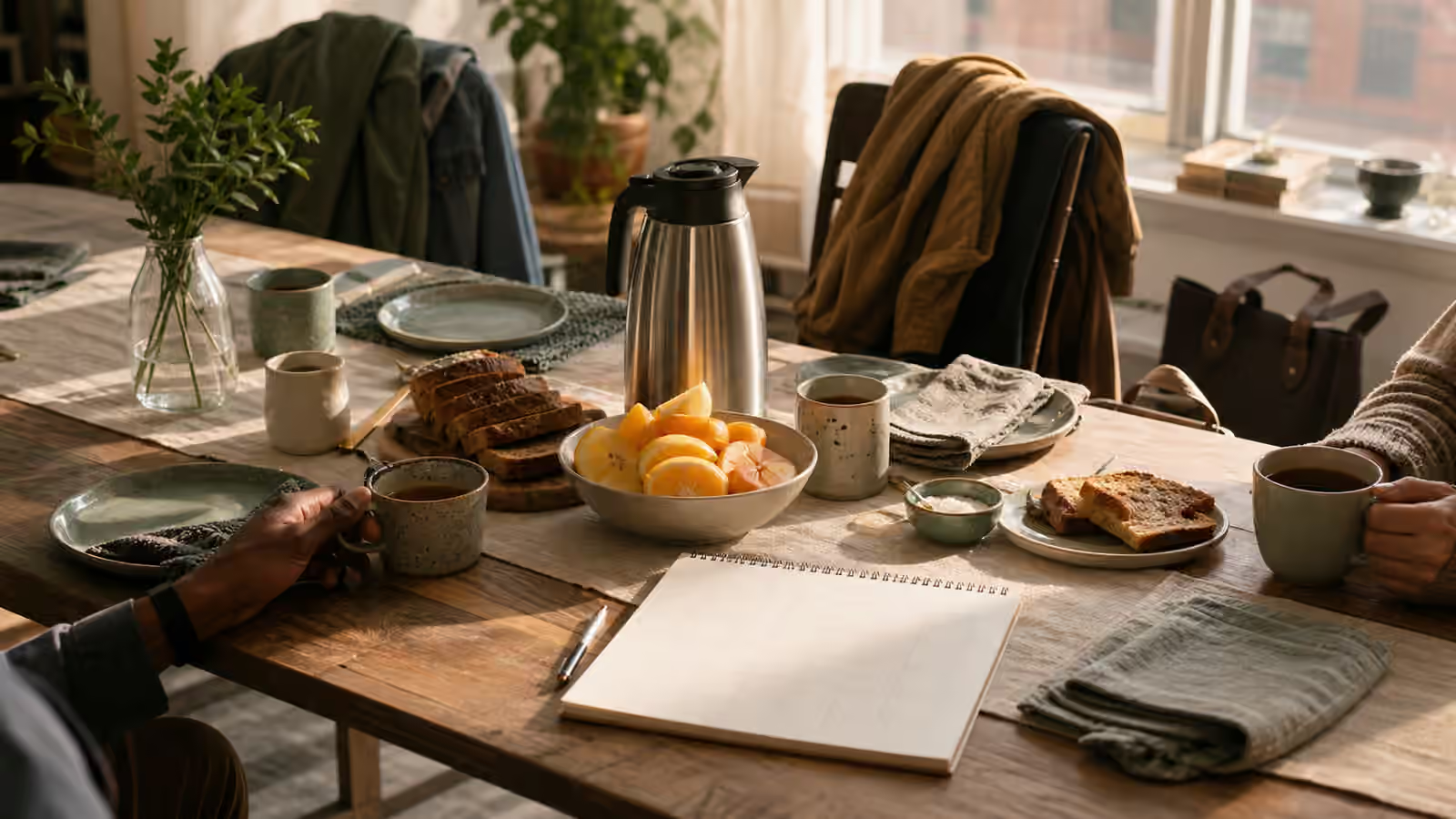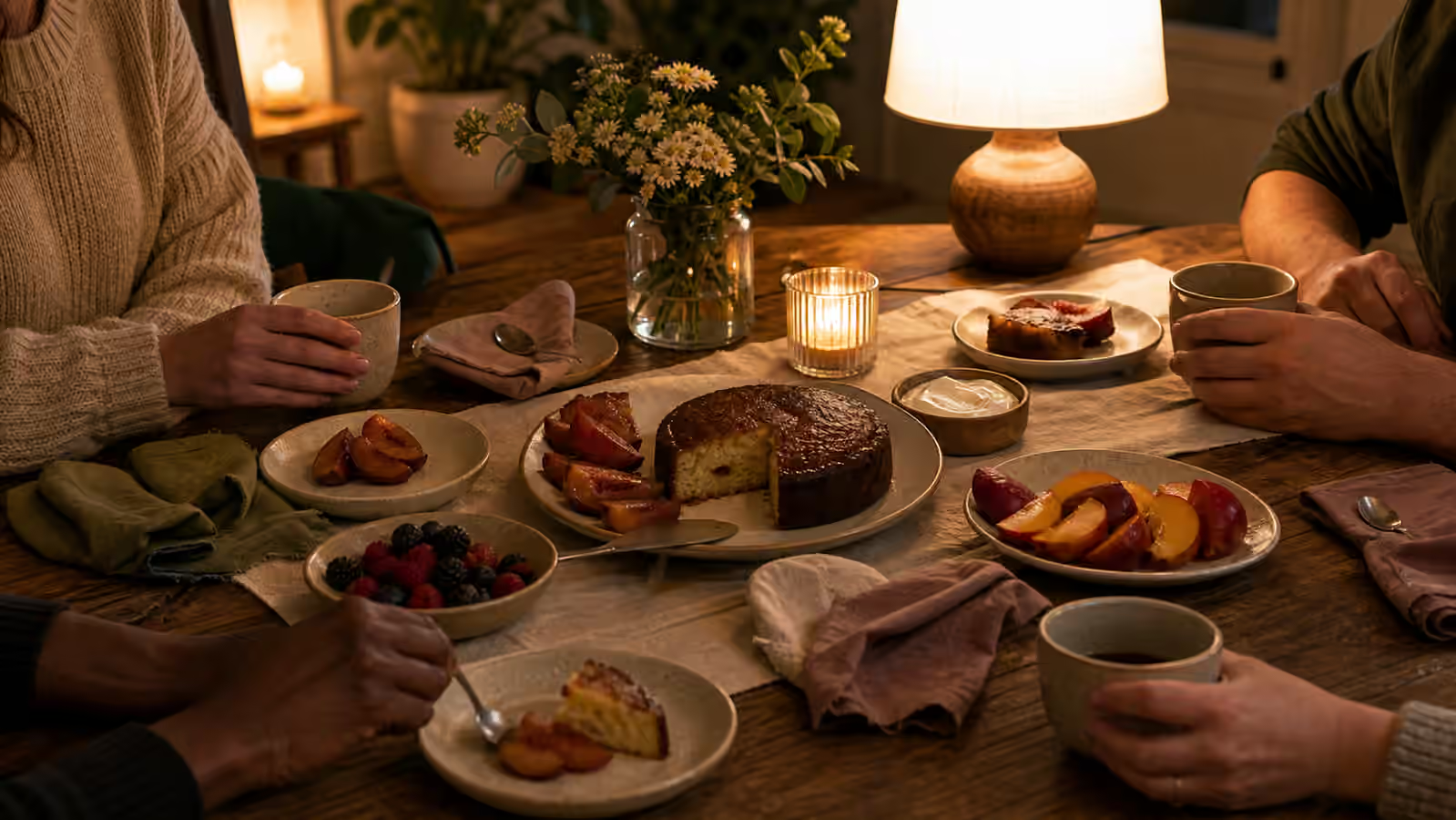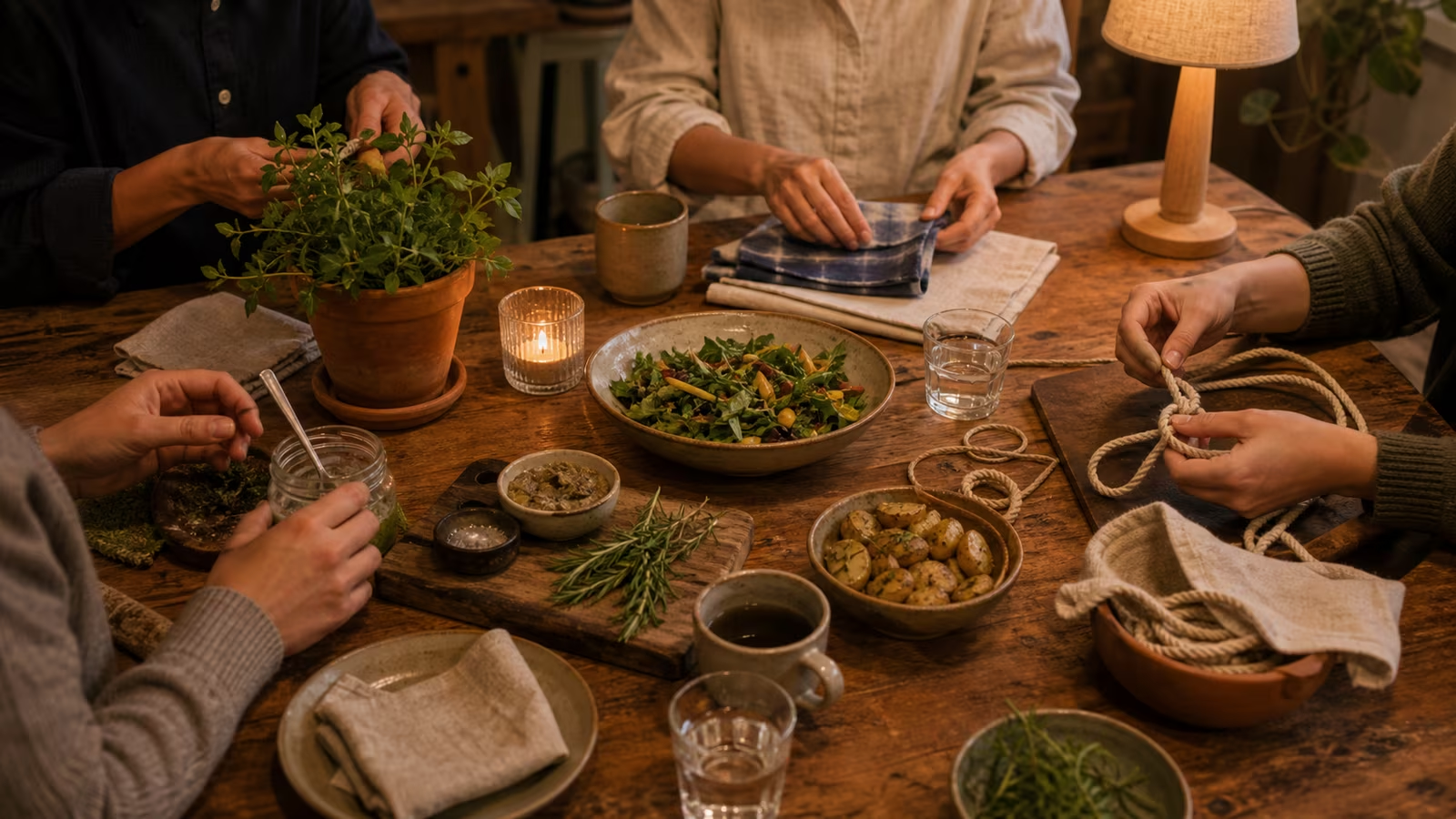
Everyone at your table knows how to do something small and useful that the person next to them does not. One folds a decent dumpling. One can get a stubborn knot to hold and then release. One saves tomato seeds every autumn out of an ordinary jar. A skill-swap supper is built on the quiet fact that these ordinary competencies are more interesting to share than most conversation topics, and far easier to be warm around, because hands are busy and nobody has to perform being fascinating. If you have never run a recurring gathering, The Common Table Quickstart is the place to begin; this guide assumes you are ready to try a format with a little more shape than a plain dinner.
The whole art here is restraint. Ask people to teach too much and the supper curdles into a class, complete with an expert at the front and beginners quietly deciding they have nothing to offer. Keep it tiny, optional, and hands-on, and the same evening becomes generous instead. The skill is really just an excuse to sit close, watch someone’s hands, and eat together afterward.
The difference between a supper and a class
A class has an expert and an audience. A supper has a table where everyone eats the same food and nobody is on stage. The skill-swap supper has to stay firmly on the supper side of that line, and the way you protect it is by keeping every demonstration short, casual, and squarely in the middle of an ordinary meal rather than before or after it as a special feature. The moment someone stands up to “present,” the temperature changes. The moment they lean over and say, “Here, hold it like this,” while the soup is still warm, it stays a meal that happens to teach you something.
Tell guests plainly what the evening is when you invite them, so nobody arrives braced to lecture or expecting to be lectured. The promise is simple: come for supper, and if you feel like it, show one small thing you know how to do with your hands. The permission to opt out is as important as the invitation itself.
Seven minutes, not seventy
Put a real ceiling on each demonstration and keep it low. Seven minutes is enough to fold three dumplings, tie one useful knot, or show how a jar of seeds gets dried and labelled, and it is not enough to drift into a history of the technique or a tour of every variation. The short window is a kindness in two directions: it keeps the teacher from over-preparing and it keeps the watchers from getting restless. Nobody has to be good at explaining, because there is barely time to explain; you just do the thing slowly enough to be followed.
Cap the whole evening at two demonstrations. Two is plenty for a table of six or eight, and it leaves the bulk of the night for eating and talking, which is what people actually came for. A supper with five demos is a workshop wearing a napkin.
Embodied beats explained
The reason this format works is that hands are disarming. A person who would never volunteer an opinion at a dinner party will happily show you how they get a knot to release under load, because their attention is on the rope and not on themselves. Choose and encourage skills that live in the hands rather than in a slideshow: folding, tying, sharpening, planting, mending, kneading, whittling. Anything that can be watched and imitated at close range keeps the group leaning in together instead of facing forward.
This is the same instinct that makes Repair Share Evening so easy to be around. When people work with their hands side by side, conversation loosens on its own, and no one has to manufacture the warmth that a plain circle of chairs would demand.
Protecting the beginner
The real danger in any skill-sharing evening is quiet hierarchy. If the demonstrations skew toward impressive expertise, the people who fold a crooked dumpling or have never tied anything more complex than a shoelace start to feel that they have nothing to contribute, and they go silent. Head this off by framing every skill as ordinary and by making sure the small, homely ones are as welcome as the polished ones. Knowing how to get a candle to stop dripping counts. Knowing a fast way to fold a fitted sheet counts. The point is not mastery on display; it is the pleasure of trading small competence with people you like.
As the host, you set the ceiling by going first with something genuinely modest. If your demonstration is humble, everyone else’s permission to be humble is granted without a word.
The meal carries the evening
Keep the food simple, because the food is not the event and the skills are not the event either; the table is. A single pot of something and some bread will do, and it should be easy enough that you are not exhausted before the first guest arrives. Leftovers Night shares this logic: the meal exists to give everyone a reason to stay seated and close, not to impress. If the supper becomes elaborate, the demonstrations start to feel like they have to earn their place alongside it, and the low-pressure ease you were building leaks away.
When it tips into a workshop
The failure mode to watch for is inviting people to teach too much, which builds a hierarchy and leaves beginners feeling exposed. You will sense it when demonstrations start running long, when one confident person’s expertise begins to set the bar for everyone, or when quieter guests stop offering anything at all. The correction is to shrink the ceiling again: fewer demos, shorter demos, and an explicit reminder that the smallest skills are the most welcome. A supper protects its own warmth by refusing to become a place where anyone has to prove they belong at the table.
Keep money and status out of it
One firm boundary keeps this format kind: nobody is here to market their expertise. The person who does this professionally is not giving a free consultation, and the person who is merely curious is not a prospective client. When money or reputation enters the room, the generosity drains out and the demonstrations start to feel like auditions. Make it plain that skills are traded for the pleasure of it, not to build a customer list. On the drink side, hold the same light touch: have a good nonalcoholic option out where everyone can reach it, let wine or beer sit at the edge if it appears at all, and never make what someone is drinking a topic. People decline alcohol for reasons entirely their own, and a supper built on small acts of trust should not turn a private choice into a question.
Try it with two friends first
Do not open with a full table. Ask two people you already like to each bring one seven-minute everyday skill, folding dumplings, sharpening a knife safely, tying a knot, or saving seeds, and keep the rest of the evening as plain supper. A single run will teach you whether your particular group leans in or freezes, how long is genuinely too long, and which of your friends surprises everyone. If the first attempt felt too small, resist scaling up; run it once more at the same size before you add anyone, because the second supper tests whether the format holds rather than whether one night happened to go well.
For related reading, see The Common Table guidebook shelf , along with Invitations Without Pressure , Startable Life Lab for making recurring systems easier to begin and resume, and Reality Check Desk when advice online starts turning hospitality into pressure.