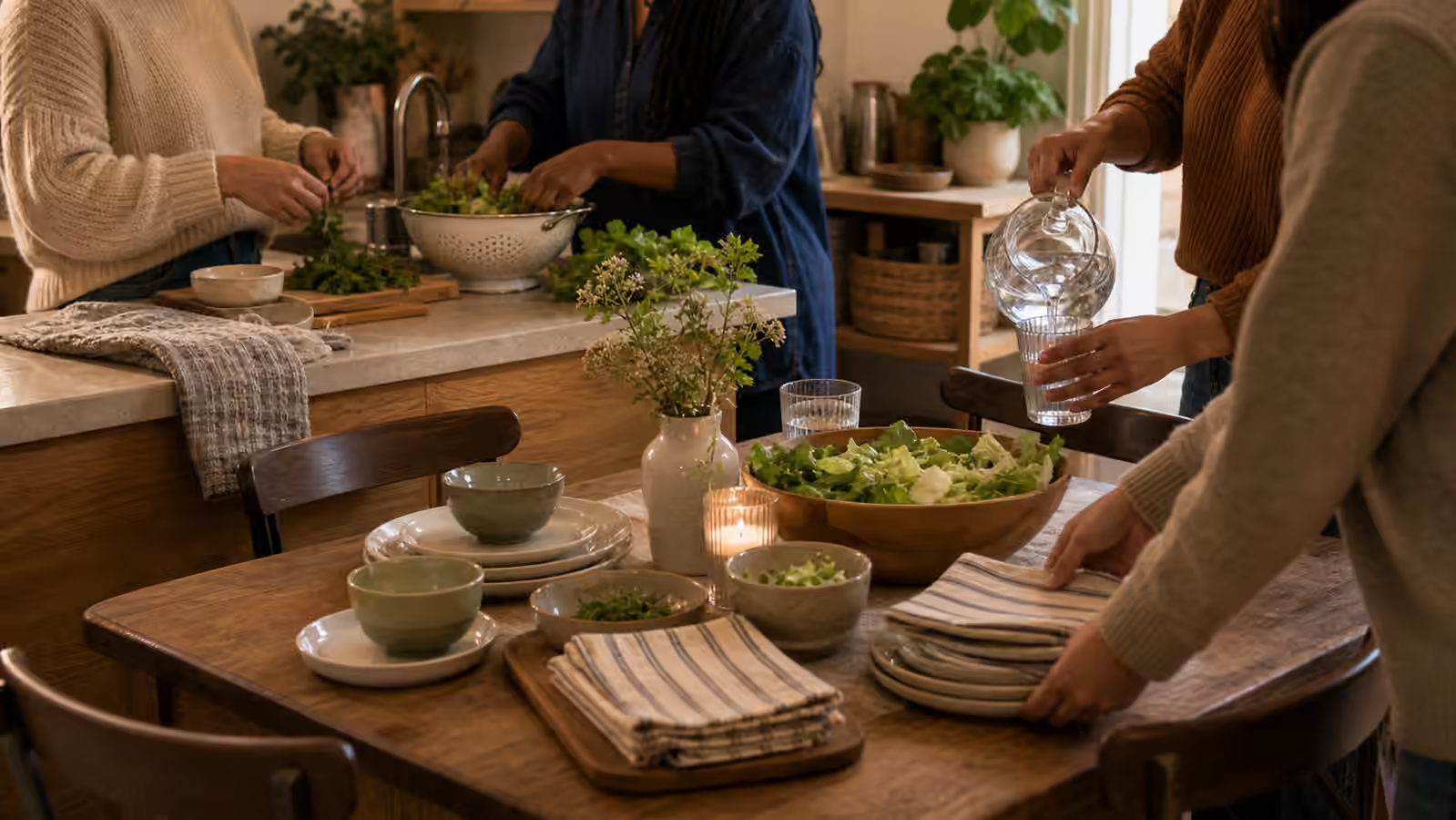
A small kitchen is where a gathering’s warmth and its friction show up in the same square metre. It is the room people drift toward, because it smells like food and the host is in it, and it is also the room where a single person opening the wrong cupboard can bring the whole evening’s flow to a halt. You reach for a spoon and someone is standing in front of the drawer. You go to fill the kettle and someone is at the sink, sleeves up, insisting on washing three cups you did not need washed yet. None of it is anyone’s fault. In a compact space, goodwill and gridlock look almost identical. This guide is about the kitchen; the main room is handled separately in Small-Room Seating Flow .
The move that fixes it is to treat the kitchen as a staging system you set up before anyone arrives, rather than a place where guests hover waiting to be told what to do. A tiny kitchen can carry a generous, repeatable table, but only if you decide in advance what the room is for. It does not have to become a hidden service galley you disappear into, and it does not have to swallow the whole gathering. It needs a couple of clear lanes, one or two quiet boundaries, and a way for willing hands to help that does not park them on top of your only working surface.
Make what is public obvious
Most of the hovering in a small kitchen comes from a single unanswered question: what am I allowed to touch? Is the kettle mine to refill, or yours to manage? Are the mugs in the cupboard or already set out? Can I get water from that tap, or is it buried under a colander of soaking beans? Is the fridge part of tonight or part of your household? When the answers are invisible, the careful guests freeze and the bold ones start opening drawers, and either way you spend the evening narrating your own kitchen.
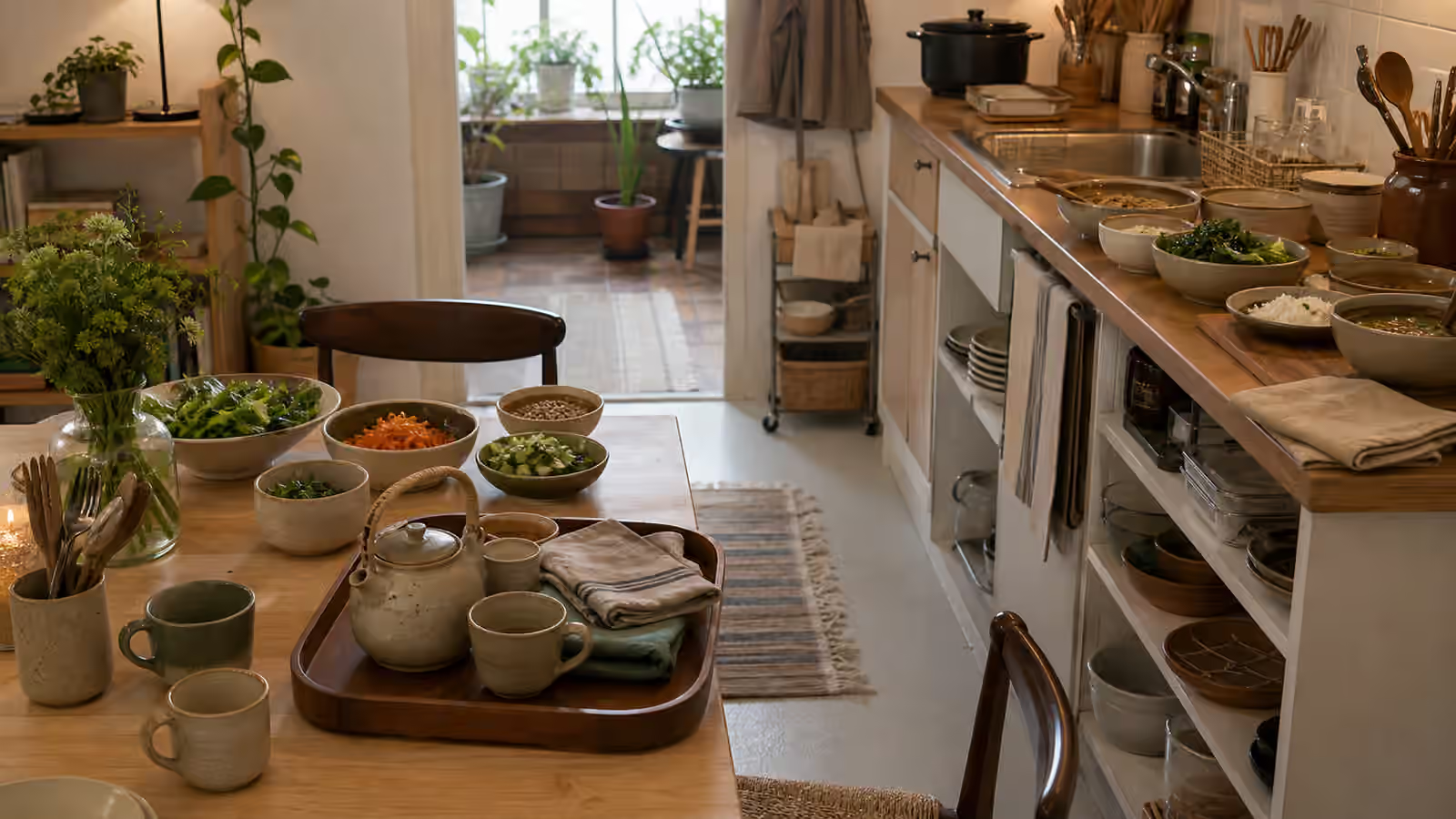
So make the public things unmistakable and leave the private things out of reach. Set the mugs, napkins, water, tea, serving spoons, and a clear place for scraps and rubbish where a guest can find them without hunting. If you would rather nobody opened the fridge, arrange things so that nobody has a reason to. If you need the stove clear, stage the food nowhere near it. A tray becomes a public station simply by being obviously offered; a folded towel beside a stack of cups quietly announces where dishes are meant to land. These are not fussy touches. They are how a room teaches people how to behave in it without anyone having to be corrected.
The stakes rise in a shared home, where the kitchen belongs to household members who are not part of the gathering. A roommate’s lunch, someone’s medication, a half-scrubbed pan, a school bag on a chair: all of it can be sitting inches from your guests. Clear staging keeps well-meaning visitors from wandering into parts of the household that were never theirs to handle, which is part of what Household Consent Before You Host Again asks you to protect.
One serving lane, pointing outward
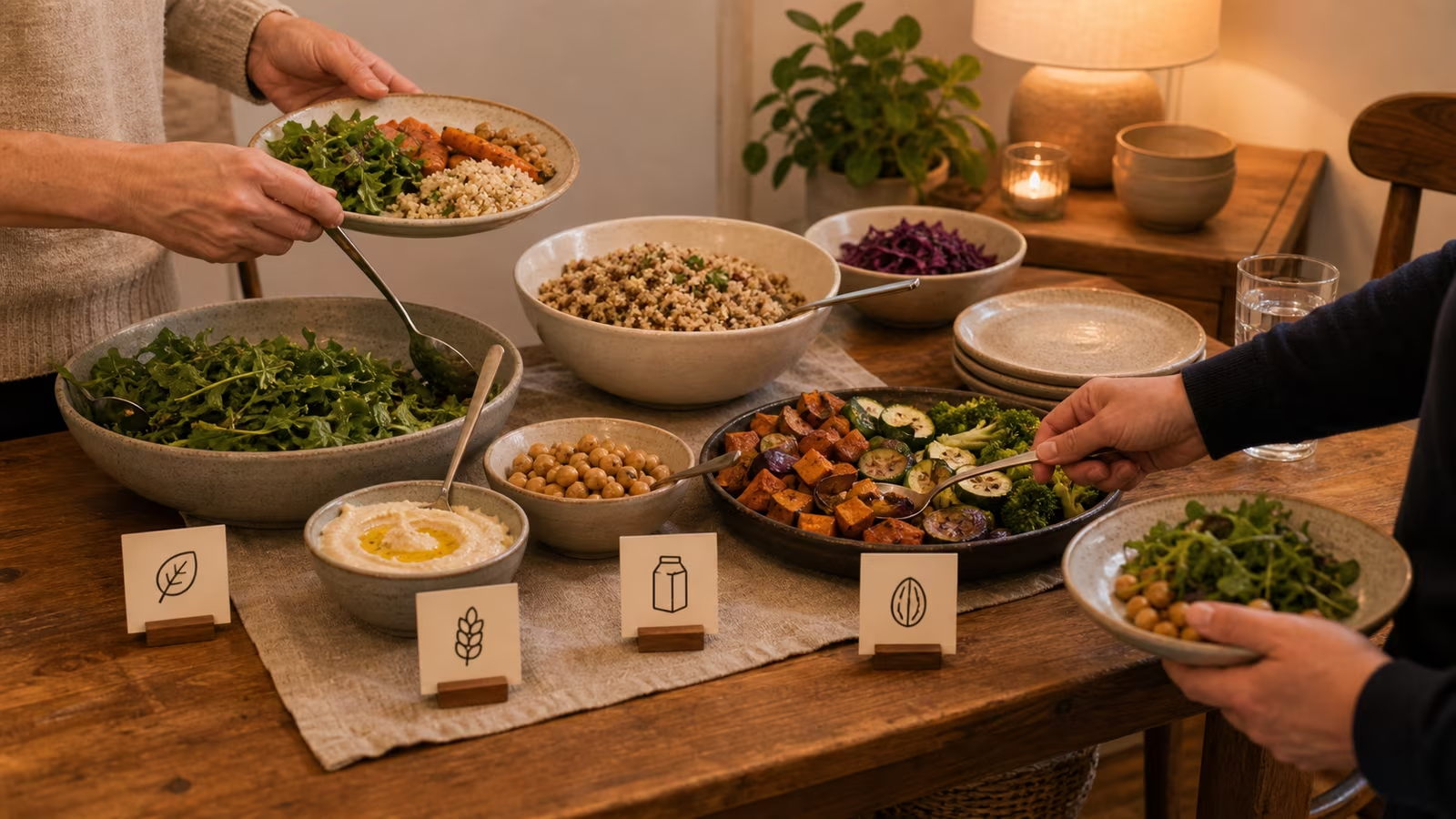
It feels counterintuitive, but more places to get food usually means more congestion, not less. In a narrow kitchen, two people serving themselves from opposite counters end up reaching across the only walkway at the same moment. A single lane is almost always calmer: stack the bowls at one end, the soup or the snacks in the middle, the spoons and napkins at the far end, and let people drift away as they finish. The lane can be a length of counter, the edge of the table, or a tray parked on a sideboard.
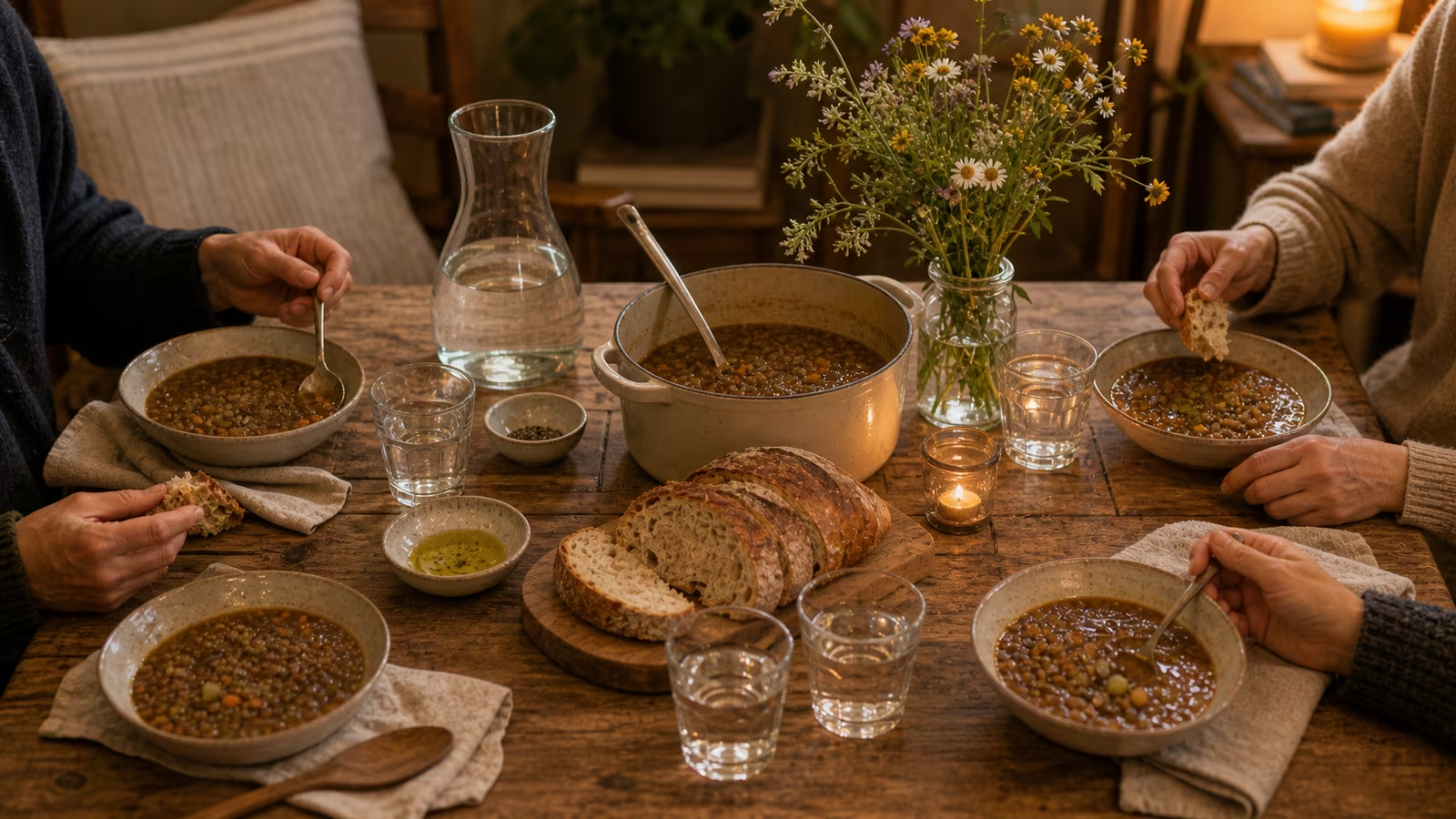
Point the lane out of the kitchen rather than deeper into it. If guests have to file past the stove, the sink, and the fridge to serve themselves, you will spend the night waiting for a gap to reach your own hob. Put the first item nearest the door and the last item nearest the seats, so the natural motion of serving carries people toward the table and away from your workspace. If the kitchen is genuinely tiny, plate the first round before anyone arrives and keep the counter free for refills only. Simple food helps here more than anything, which is why Low-Effort Shared Snacks pairs so well with a small kitchen: a bowl of fruit, some bread and olives, one baked dish, or a single pot of soup asks for far less choreography than a spread of components, and it keeps the social centre from getting trapped behind a queue.
Give help a beginning and an end
Guests come into the kitchen because they want to be useful, and if you have no shaped task ready for them, they will invent one that makes more work. They will wash the pan you still need. They will wipe the counter you are about to use. They will ask where each item lives, one at a time, while you are trying to count bowls. The kindness and the fix are the same: hand them a job with edges. “Could you fill these glasses and take them through?” beats “Can you help?” every time, because it has a clear finish. Tearing bread, setting spoons, carrying cups, taking coats, keeping the kettle going: each is a task that ends, so helping never quietly becomes a second shift. This is really an extension of your Host Energy Budget , because a host who has to supervise every helpful impulse ends up more drained than one who simply did the work alone.
Keep one corner that is yours
However small the kitchen, you need one patch where you can think, whether that is the stove, the sink, a cutting board, or a single stretch of counter. This is not about control. It is about hot pans, sharp knives, timing that will not wait, and the plain fact that you occasionally need ten seconds without a conversation. Claim it out loud and early, in the register of design rather than complaint: “I’m keeping this side as the cooking lane, everything for you is on the tray,” or “the sink’s my corner tonight, but cups can go on the towel.” A boundary offered before there is any trouble sounds like a plan; the same words snapped after the third interruption sound like irritation.
If people keep congregating exactly where you are working, move the thing they are drawn to rather than fighting the current. People gather around whatever feels most alive, so put the good lamp, the tea, the snacks, or the conversation away from your stove. When the kitchen is the only warm room in the place, make a standing edge that does not block your drawers, or spend five minutes together in the kitchen and then visibly carry the first shared action out to the table.
Let cleanup start with the first empty cup
Clearing up begins the moment the first cup is drained, not when the last guest leaves. Without an obvious place for used things to land, guests either ask you every single time or, worse, stack plates straight into the sink where you can no longer wash your hands or fill the kettle. Decide on a landing spot before anyone arrives, a towel on the counter, a small tub, a cleared end of the table, and name it once: “used cups can go on the green towel.” That one sentence gives people permission to tidy and protects your sink at the same time. If your gathering ends with a shared tidy, The Cleanup Ritual can turn that landing spot into a gentle closing beat rather than a heap of abandoned crockery.
Resist the urge to overbuild any of this. A small kitchen does not want labels, numbered stations, and a traffic plan fit for a canteen; it wants just enough clarity that guests stop asking, you stop guarding, and the table keeps its attention on people instead of drawers. When the flow is right, nobody remarks on it. They simply move through the room without thinking, which is exactly the sign that it worked. The seating side of the same problem is covered in Small-Room Seating Flow , and the wider guidebook shelf holds the rest.