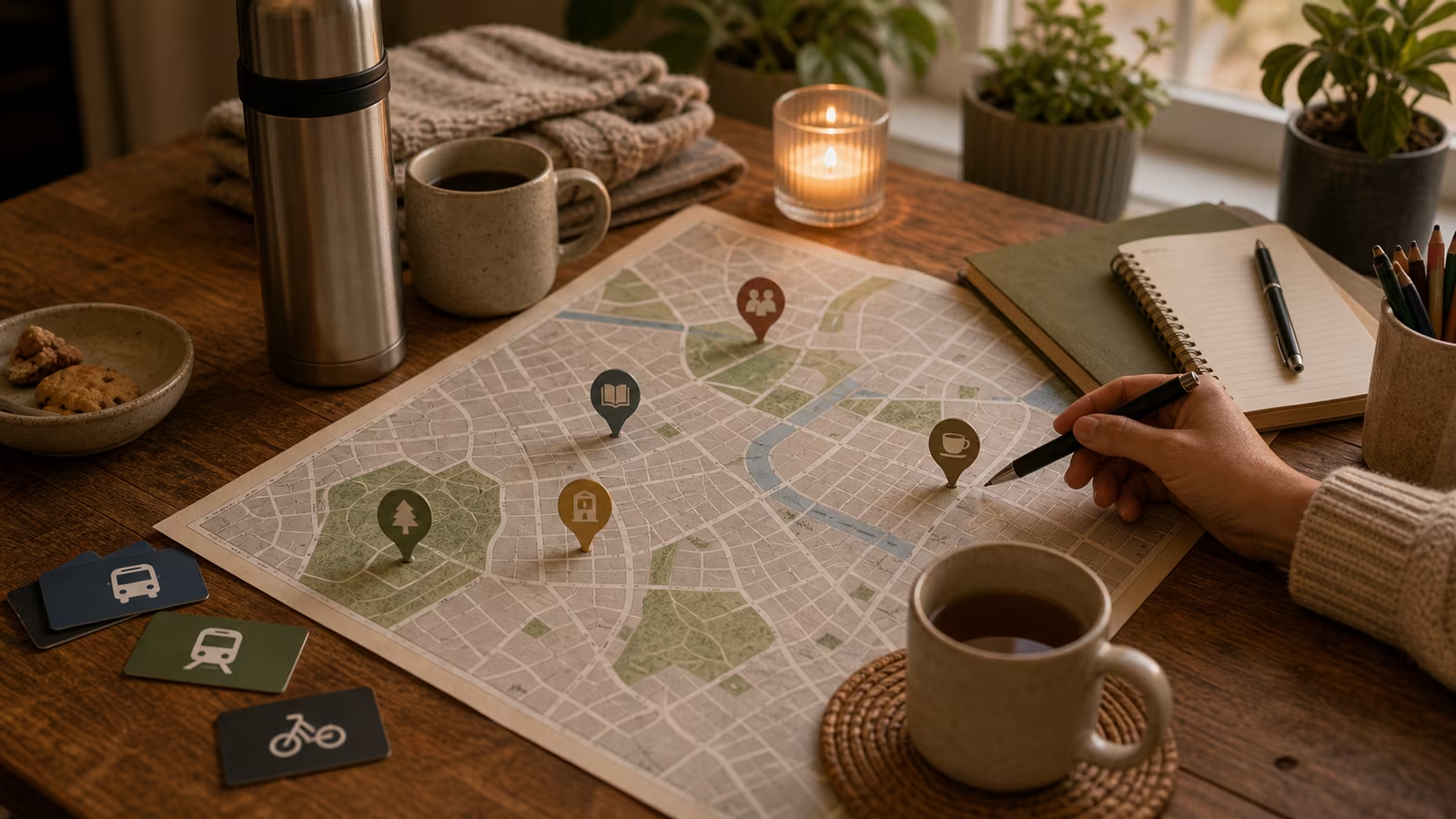
Not everyone can host at home, and plenty of people who technically can, still should not. Maybe the apartment is small, or shared with roommates who did not sign up for a monthly gathering. Maybe home does not feel safe to open, or the commute makes a weeknight table impossible for the people you most want to see. The sociologist’s term for the places that are neither home nor work is the “third place,” and building a recurring ritual in one is a real skill. This guide is a way to map the third places near you and match each one to the kind of gathering it can actually hold.
If you are still deciding what your gathering even is, The Common Table Quickstart will help you name the format first. It is far easier to choose a place once you know whether you are hosting a quiet tea for four or a noisier soup night for a dozen, because the two want completely different rooms.
The trap: assuming public space is the easy option
There is a seductive idea that gathering in public solves the hard parts of hosting. No cleaning, no letting strangers into your home, no worrying that your kitchen is too small. This is half true and half a trap. Public space removes some work and adds different work. A cafe solves seating but introduces a bill, a noise floor you do not control, and a table you may be quietly expected to give up after an hour. A park solves cost but adds weather, bathrooms that may be locked, and the question of what happens when it rains for the third meeting in a row. The correct posture is not “public space is easier.” It is “public space trades one set of problems for another, and I should pick the trade that fits my ritual.”
Read a place by fit, not by looks
The mistake is choosing a place because it is charming. Charm is real, but it is the last variable, not the first. Before aesthetics, run any candidate through the plain questions that decide whether a gathering can actually repeat there. How loud is it, and can four people hear each other without leaning in? Is there seating you can count on, or will you be circling for a table every time? Where is the nearest bathroom, and is it open to your group? How does someone without a car get there? Does it cost money to be present, and if so, how much per head? Are there rules about outside food, or about how long a group can stay? What is the plan when the weather turns? And can a guest who needs to leave early slip away without a scene?
A place that scores well on those questions can be homely and still work. A place that photographs beautifully but has one bathroom, no transit, and a manager who resents lingering groups will slowly wear your ritual down. Choose for the boring variables. The charm, if it is there, is a bonus.
A quick tour of the usual candidates
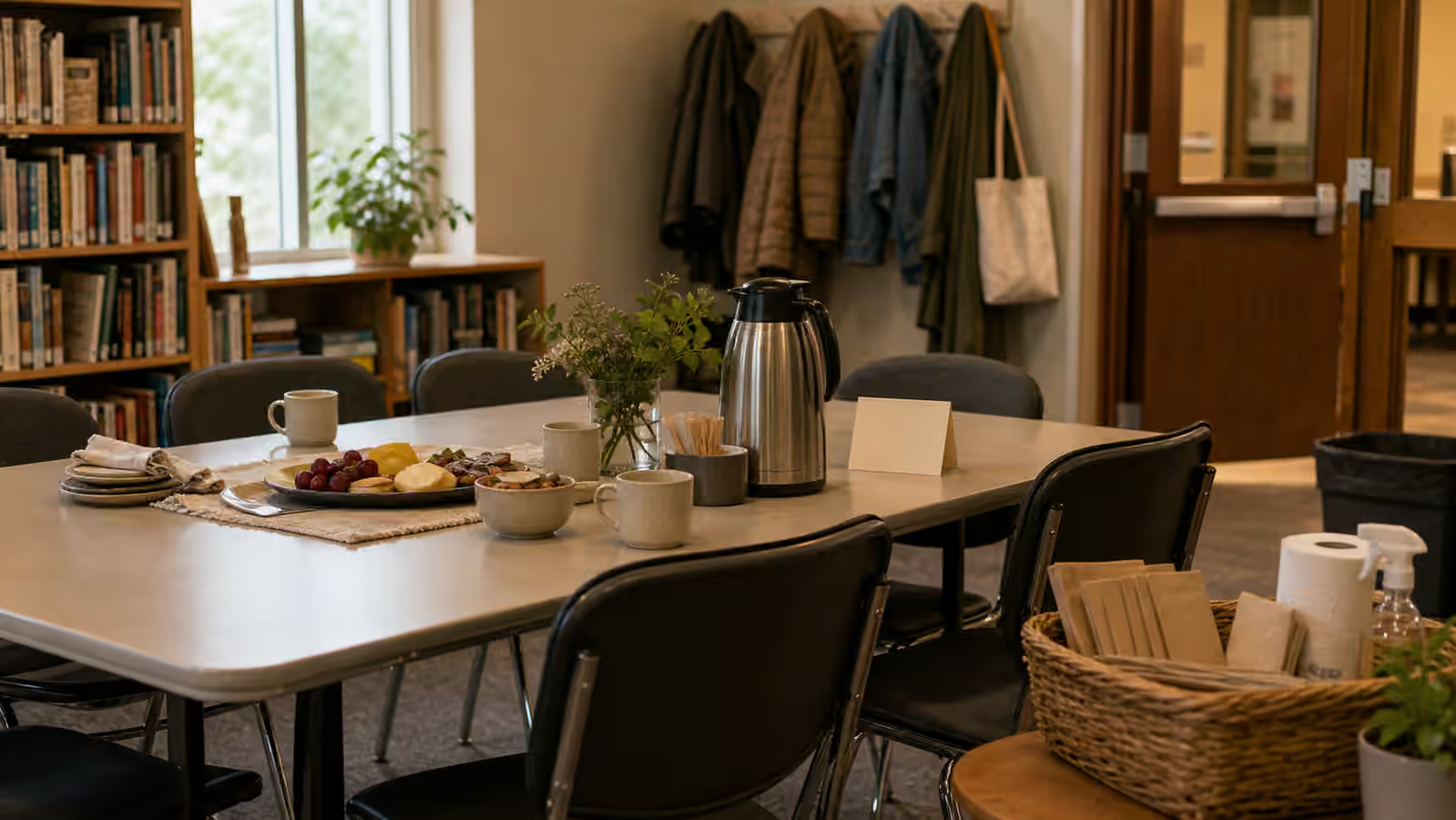
Libraries and their community rooms are underrated. Many have bookable spaces that are free or nearly free, warm, quiet, accessible, and pointedly alcohol-neutral, which makes them a naturally inclusive default. The catch is hours and booking rules, so you become part-scheduler. Parks and courtyards are generous and cheap and good for the walking or side-by-side formats , but they live and die by weather and daylight, so they want a real backup. Cafes are the obvious pick and often the wrong one for a recurring group: they are built for turnover, the noise is unpredictable, and the ongoing cost quietly filters out guests on tight budgets. They shine for a short, small, one-off table and strain under a standing monthly one. Community centers, faith halls rented as neutral rooms, makerspaces, and the back rooms some small businesses will lend in slow hours are the quiet winners, because they were built for groups and usually come with chairs, a bathroom, and someone who can unlock the door.
Permission is part of the map
The variable people forget is permission. A place can be public and still not be yours to use for a standing gathering. Ask. A librarian, a parks office, a cafe owner in the slow mid-afternoon, a community center coordinator, will often say yes to a small recurring group, and that yes is worth more than any amount of guessing. Getting explicit permission also turns a fragile arrangement into a stable one, which is the whole point of a community system rather than a one-time event. It is far better to hear “actually, not on Tuesdays” once than to be quietly resented every week.
Practice this once
Pick three real places near you and score each on the plain questions above: time box, conversation, cost, bathroom, transit, and permission. Do not do it from memory. Go stand in each one at roughly the hour you would gather, and notice what your body reports about the noise and the seating and whether you would be comfortable asking people to come here twice. The place that wins is rarely the prettiest; it is the one that removes the most friction for the most guests. Once you have it, Invitations Without Pressure will help you name the location clearly in the invite, and the Seasonal Ritual Calendar will help you plan the weather backup before you need it. More formats live on the Common Table guidebook shelf .