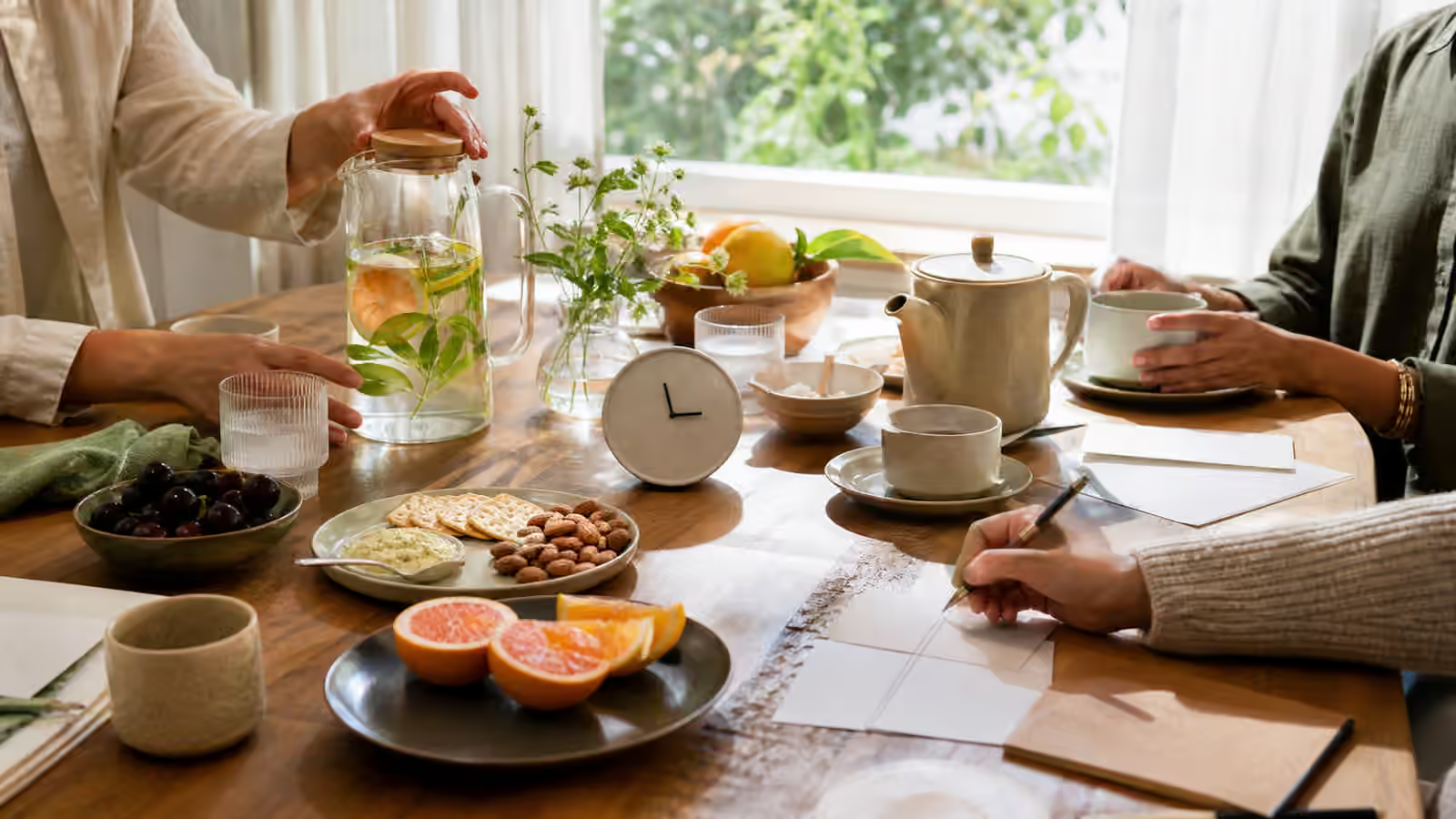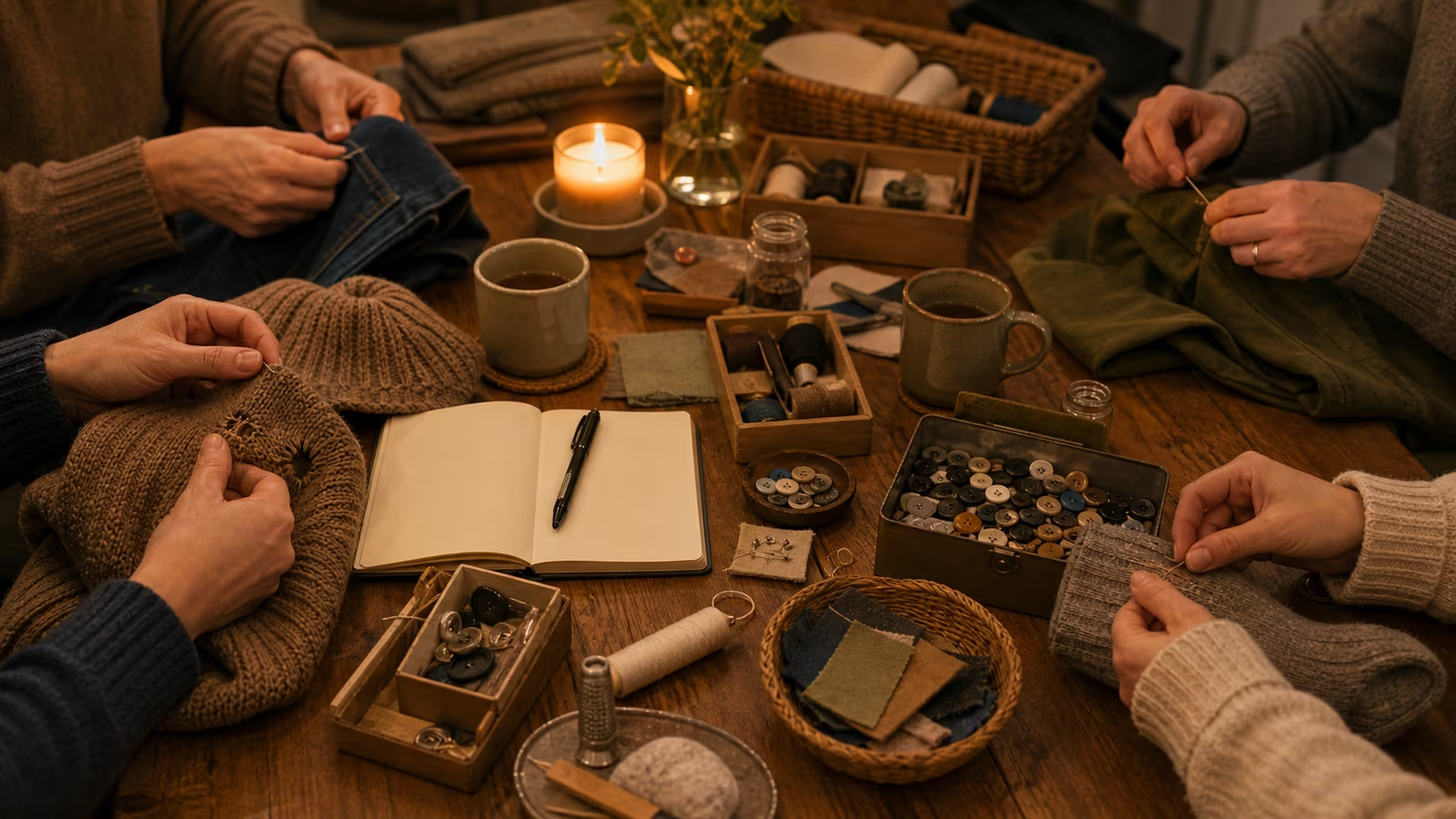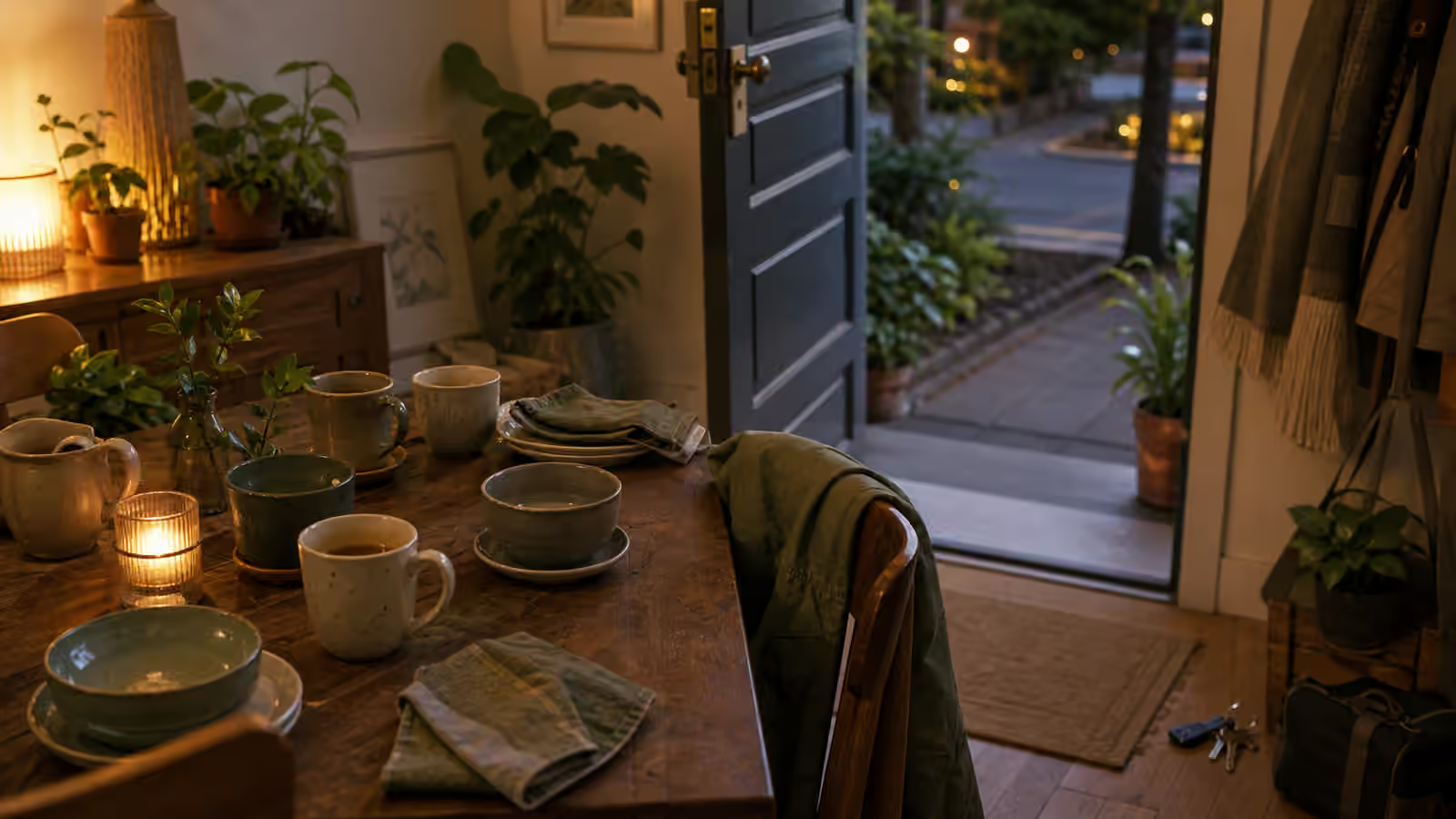
Some people freeze at a table. Sat down across from others, with nothing to do but talk and be looked at, they stiffen, and the first fifteen minutes of a gathering become a low, anxious hum of small talk that never quite catches. Put those same people shoulder to shoulder on a path, though, with somewhere to look and somewhere to go, and they open right up. The walking table is built on that simple truth: for a lot of people, conversation flows far more easily side by side than face to face. This guide is about using a short walk as the opening ritual, so that by the time anyone sits down, the awkward part is already behind them.
The format is one of the gentlest recurring gatherings you can run, which is why it belongs alongside the other low-threshold rituals like the Porch and Stoop Hour . If you have never hosted anything before, The Common Table Quickstart is a good primer, but the walking table is forgiving enough to be a fine first attempt on its own.
Why side by side is easier than face to face
Eye contact is intense, and a table maximizes it. Everyone is aimed inward, every pause is visible, and a lull feels like a small failure that the whole group witnesses. Walking dissolves all of that. You are pointed the same direction, so eye contact becomes optional and occasional rather than constant. The scenery supplies a steady drip of things to remark on, a dog, a garden, a strange building, so no one has to generate conversation from nothing. And a silence on a walk reads completely differently than a silence at a table: it becomes a comfortable, companionable quiet rather than an awkward gap someone must rush to fill. For introverts, for people who are meeting the group for the first time, and for anyone who arrives tired or self-conscious, the walk quietly removes the exact pressures that make gathering hard.
There is a second, quieter gift. Walking pairs and re-pairs people naturally. On a path, the group stretches and folds; you end up beside one person for a while, then the pace shifts and you are next to someone else. Nobody has to consciously “work the room,” because the route does the mixing for you. By the time you reach the table, most people have had at least one real one-to-one exchange, and the sit-down becomes a warm landing rather than a cold open.
The shape of the ritual
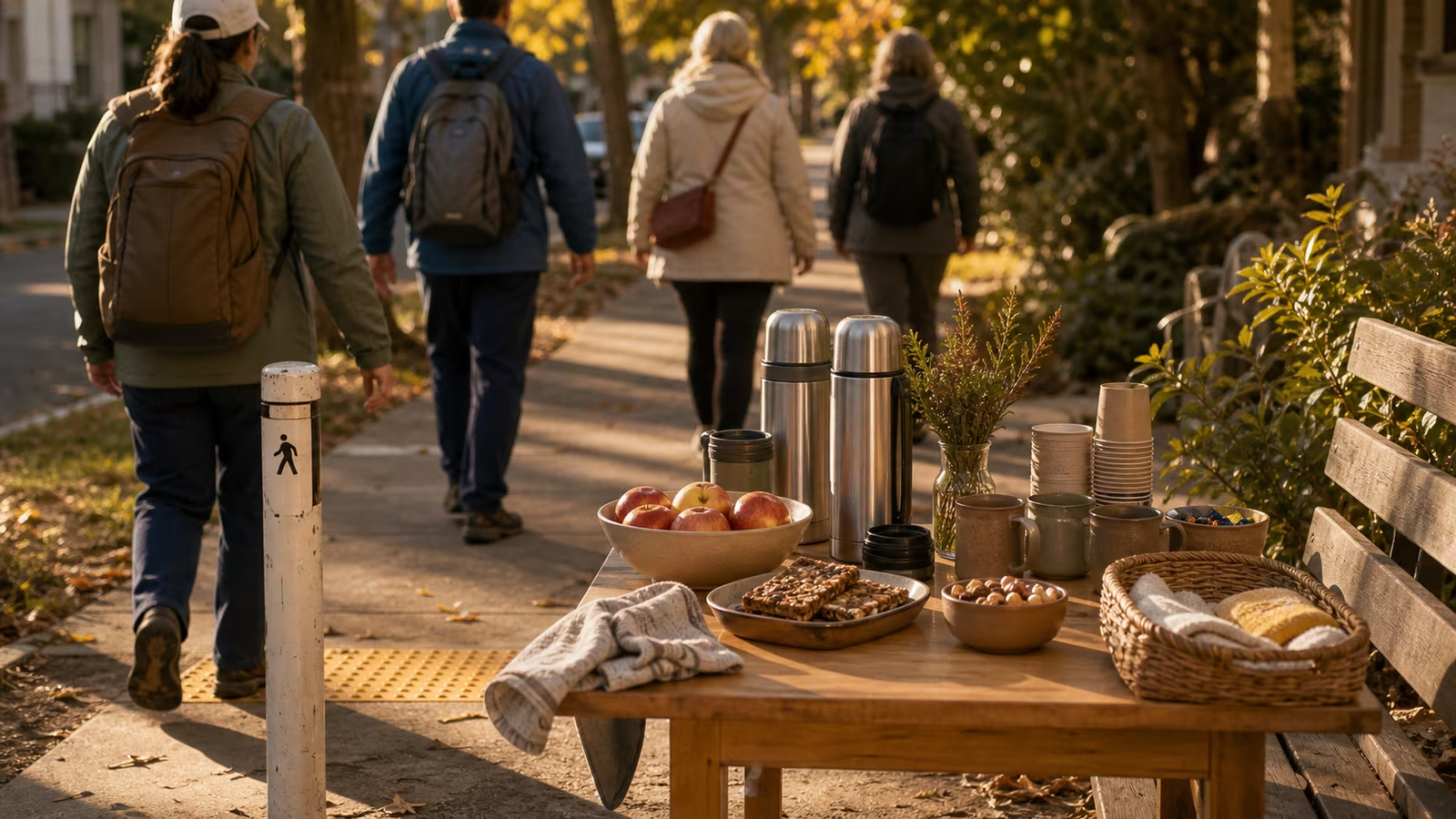
The repeatable spine is deliberately small: twenty to thirty-five minutes of walking, one regroup point along the way, and then a simple close at a table with tea, soup, or leftovers. The walk is the icebreaker and the sit-down is the reward, and keeping both modest is what lets the whole thing repeat on an ordinary week. The regroup point matters more than it looks. A bench, a corner, a fountain, somewhere you all pause and reassemble, lets faster and slower walkers rejoin as one group before splitting off again, so nobody is ever left straggling alone at the back, wondering if they are holding everyone up. Name that regroup spot at the start so people can pace themselves toward it.
The table close is what turns a walk into a gathering. Thermoses and cups on a park table, a shared snack, or a return to someone’s kitchen for soup gives the group a place to consolidate the ease the walk created. Do not skip it. The walk warms people up; the table is where a warmed-up group actually connects. If you want that final sit-down to feel like a real pause rather than a scroll, The No-Phone Dinner Window pairs beautifully with the close.
Accessibility is the whole design, not an afterthought
Here is where walking tables most often go wrong, and it is worth dwelling on because the failure is usually invisible to the person hosting. A host who walks easily picks a route by instinct, a nice loop, a decent pace, a pretty view, and never notices that it has quietly excluded people. A route that is too long, too fast, too hilly, or too rough locks out anyone with limited mobility, a stroller, a bad knee, or simply less stamina, and those people rarely say so. They just stop coming, and you never learn why. The remedy is to design for the slowest comfortable walker, not the average one. Choose a route that is short, flat where possible, and paved, with benches to rest on and a bathroom somewhere along the way. Make the pace explicitly gentle, and say so in the invitation so that no one has to ask whether they can keep up.
Weather is the format’s other structural weakness. An outdoor ritual that has no plan for rain is not really a recurring ritual; it is a fair-weather event that will collapse the first bad month and take your momentum with it. Decide in advance what happens when the sky turns: a covered route, a shorter loop, or a straight jump to the indoor table with the walk skipped entirely. A group that knows the rain plan keeps showing up. A group that gets rained out with no fallback quietly dissolves.
Practice this once
Before you invite anyone, walk the loop yourself and map it honestly: a bench to rest on, a bathroom, a transit option for people arriving without a car, and a clear bad-weather alternative. Time it at a genuinely relaxed pace, not your own brisk one. Then run it once with a few people and pay attention to who fell behind, whether the regroup point worked, and whether the table close felt like a natural landing. The route that repeats well is almost never the most scenic one; it is the one nobody found too hard. Invitations Without Pressure will help you state the distance, pace, and rain plan plainly in the invite, which is exactly the clarity that lets a cautious guest say yes, and the wider Common Table guidebook shelf has more low-threshold formats to try next.