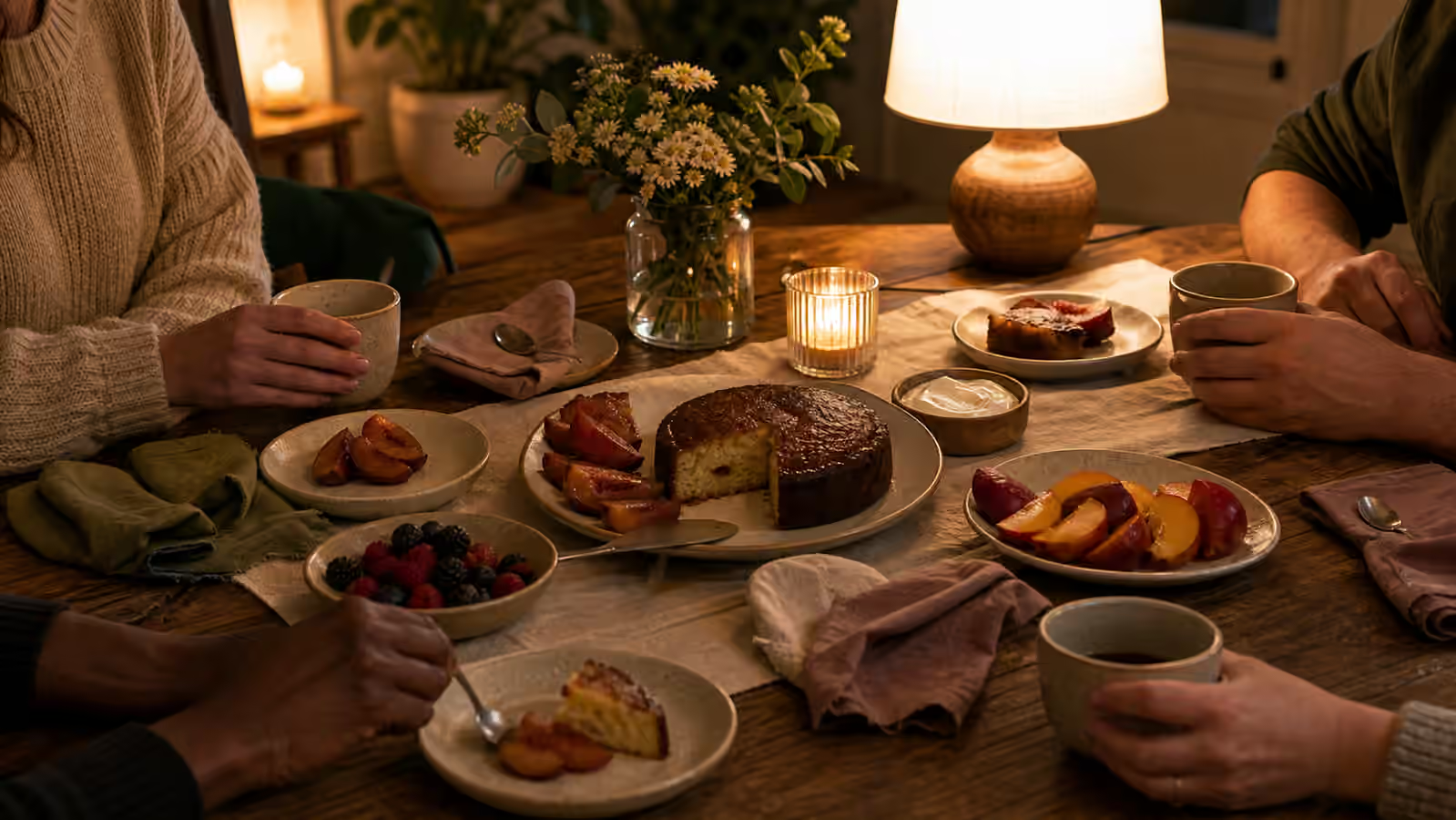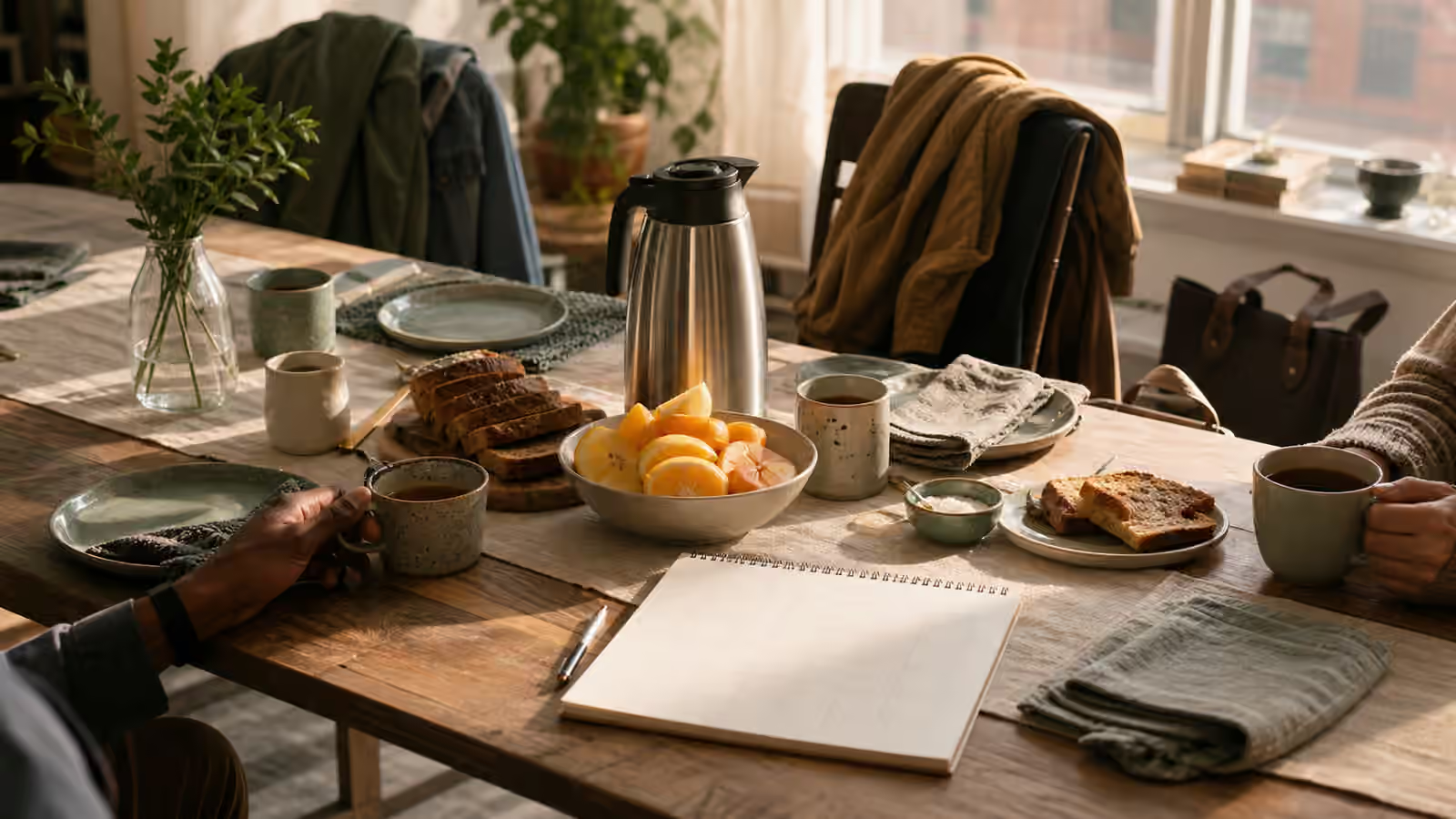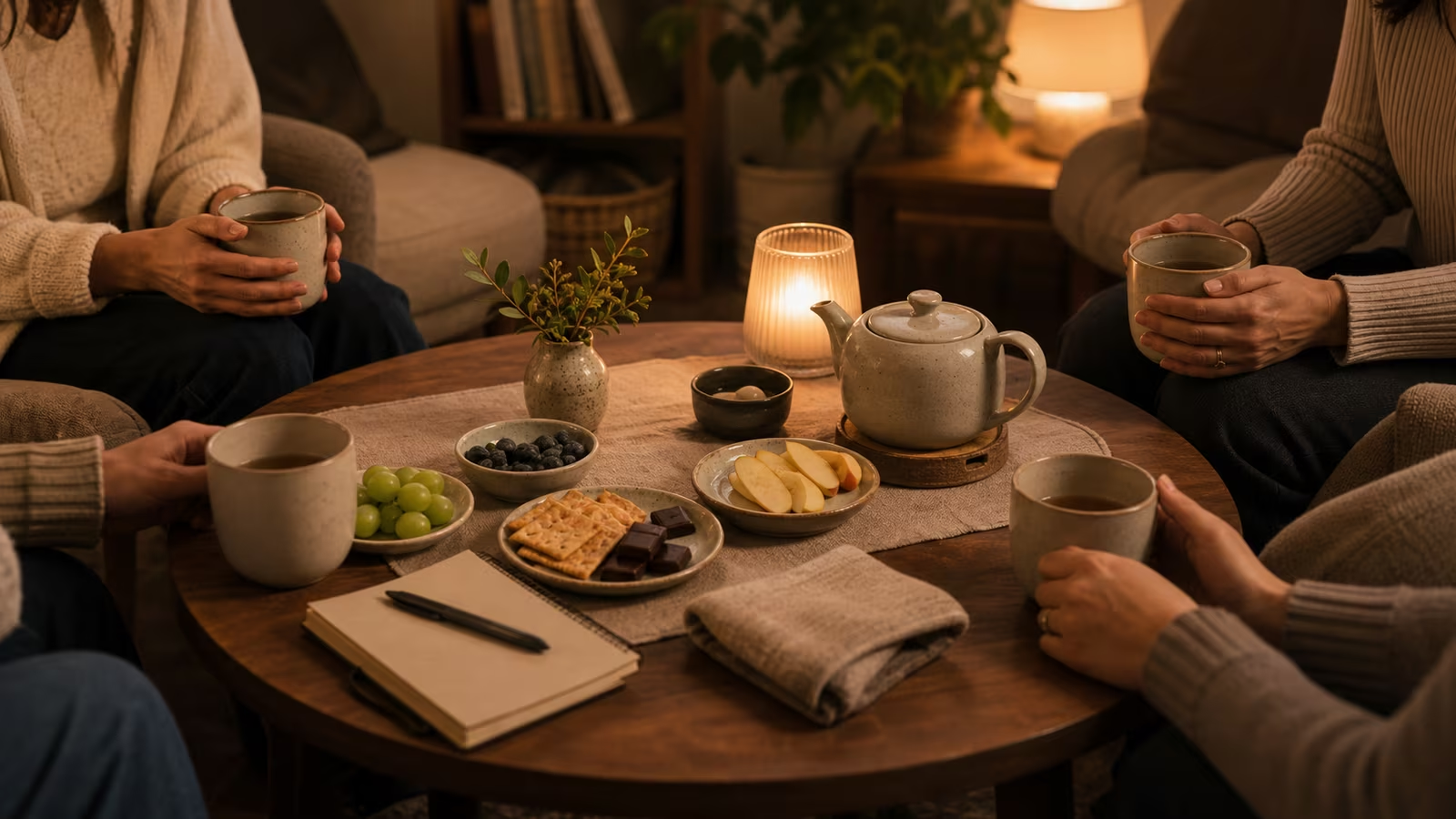
Most people already have the energy for one more good thing on a Tuesday. What they do not have is the energy for an event. The weeknight tea circle exists in that narrow gap: it is warm enough to be worth leaving the house for, and small enough that nobody wakes on Wednesday paying for it. The kettle does most of the work, the room stays lit low, and the whole thing ends while people still have something left in the tank. If you are building your first recurring table, the Common Table quickstart is the gentler on-ramp, but if you already know you want something you can run again next week without dreading it, tea on a weeknight is about the lowest bar there is.
The reason to keep it deliberately modest is not humility. It is arithmetic. A gathering people can repeat on an ordinary week does far more for a friendship over a year than a spectacular evening they can only summon once a season. Frequency beats intensity when what you are actually after is the feeling of having people in your regular orbit. A short tea you host eleven times will build more connection than one dinner party you host perfectly and then never manage again.
Why tea, specifically
Tea is not the point, but it is a remarkably good excuse. Boiling water asks almost nothing of a tired host: no chopping, no timing, no oven, no dish that can flop. It also gives everyone in the room something to do with their hands, which quietly solves the awkwardness that plagues the first fifteen minutes of any small gathering. A person holding a warm mug does not need to perform ease; the cup is already giving them a role. Choosing a tea, waiting for it to steep, wrapping both hands around it — these are tiny, low-stakes actions that let people settle before anyone expects them to be interesting.
There is also a rhythm built into a pot of tea that suits a short evening. A pot cools. A second pot signals a second act, and the absence of a third pot is a soft, wordless cue that the night is winding toward its natural end. You are not watching a clock so much as watching a kettle, and that feels less like management and more like weather. Warmth that arrives, warmth that fades. The format has a built-in tide.
The shape of a seventy-five-minute evening
Keep the arc simple and let people feel it without being told. The first stretch is arrival and pouring, which should run longer and looser than you expect, because latecomers straggle in from commutes and nobody is fully present for the first ten minutes anyway. Do not rush this part or try to make conversation happen; hand people tea and let the room fill in. The middle is where the real thing lives — settled, unhurried, everyone finally landed. If your group likes a little scaffolding, this is where a single easy question earns its keep, something like what small thing went right this week, the kind of prompt that invites a sentence, not a confession.
Then let it end before it should. Seventy-five minutes is short on purpose. The instinct of a host having a lovely time is to stretch the evening, to open one more thing, to let people drift toward a second wind. But the second wind of a Tuesday is borrowed against Wednesday, and every guest knows it even when they are enjoying themselves too much to say so. A visible, gentle close — “let’s wrap around nine so we all sleep” — is not you cutting the fun short. It is you protecting the reason people said yes in the first place, and it is the single move that makes them willing to come back next week.
Say the shape out loud
When people arrive, name the evening in a sentence or two. “We’ll pour tea and settle in, I might toss out one question if the room wants it, and we’ll wrap around nine.” This costs nothing and it relaxes almost everyone in the room at once. The guest who is anxious about staying too long now knows the ceiling. The one who cannot chat all night knows there is an exit. The tired one, the new one, the one who is not quite sure how well they know anyone here — all of them breathe easier when the shape of the thing is visible instead of something they have to guess at in real time.
This is especially kind to whoever is quietest. In an unstructured hangout, the loudest and most comfortable people set the tempo, and the quiet guest can spend the whole evening waiting for a gap that never comes. A short, named format with a couple of low-key roles — someone pours, someone passes the plate, someone picks the next tea — hands the quiet person a way to belong that does not require them to seize the floor. Belonging should be something you can do with your hands, not only with your voice.
Keeping alcohol off to the side
A weeknight tea circle is almost self-solving on the drink question, which is part of why it is such a forgiving format to start with. Nobody expects a cocktail with their Tuesday tea, so the evening never has to be built around a bar or apologize for the lack of one. If someone wants to bring a beer, fine — but the center of the gathering is a warm pot that everyone shares equally, and that is the whole trick. The most inviting thing in the room is the thing everyone can have.
Make the alternatives feel chosen rather than remedial. A second, more interesting tea, a plate of good fruit, something a little unexpected to sip — these tell every guest that the sober path through the evening is the main path, not a consolation. And leave people their privacy. Someone may skip alcohol because of medication, pregnancy, an early start, their faith, a past they are managing, a taste they never acquired, or simply because they do not feel like it tonight, and none of that is the room’s business. A good table gives them an easy, ordinary way through the evening and never asks them to explain it.
Run it once, then run it again
Try it exactly once with a real end time, and afterward ask your guests a single honest question: did knowing it would be short make it easier to say yes? That answer tells you more than your own read of how the night went, because your memory of a warm evening is unreliable and generous. Jot down a few lines while it is fresh — what felt easy, what dragged, what you would keep — and then resist redesigning anything. One good night is not a proof and one clumsy moment is not a verdict.
Most of all, do not scale it because it worked. The temptation after a lovely small evening is to invite more people, add real food, stretch the time, make it a bigger deal. That instinct is how a gentle recurring format quietly becomes the exhausting event you were trying to avoid. Run it again at the same modest size instead. The second time teaches you the things that actually matter — whether the invitation still lands, whether the cleanup stays tolerable, whether the close feels natural — and those are what turn a nice one-off into something you can genuinely keep doing. When you are ready to branch out, a monthly soup night scales the same low-drama spirit to a fuller table, and invitations without pressure will keep your asks easy to decline as the circle grows.