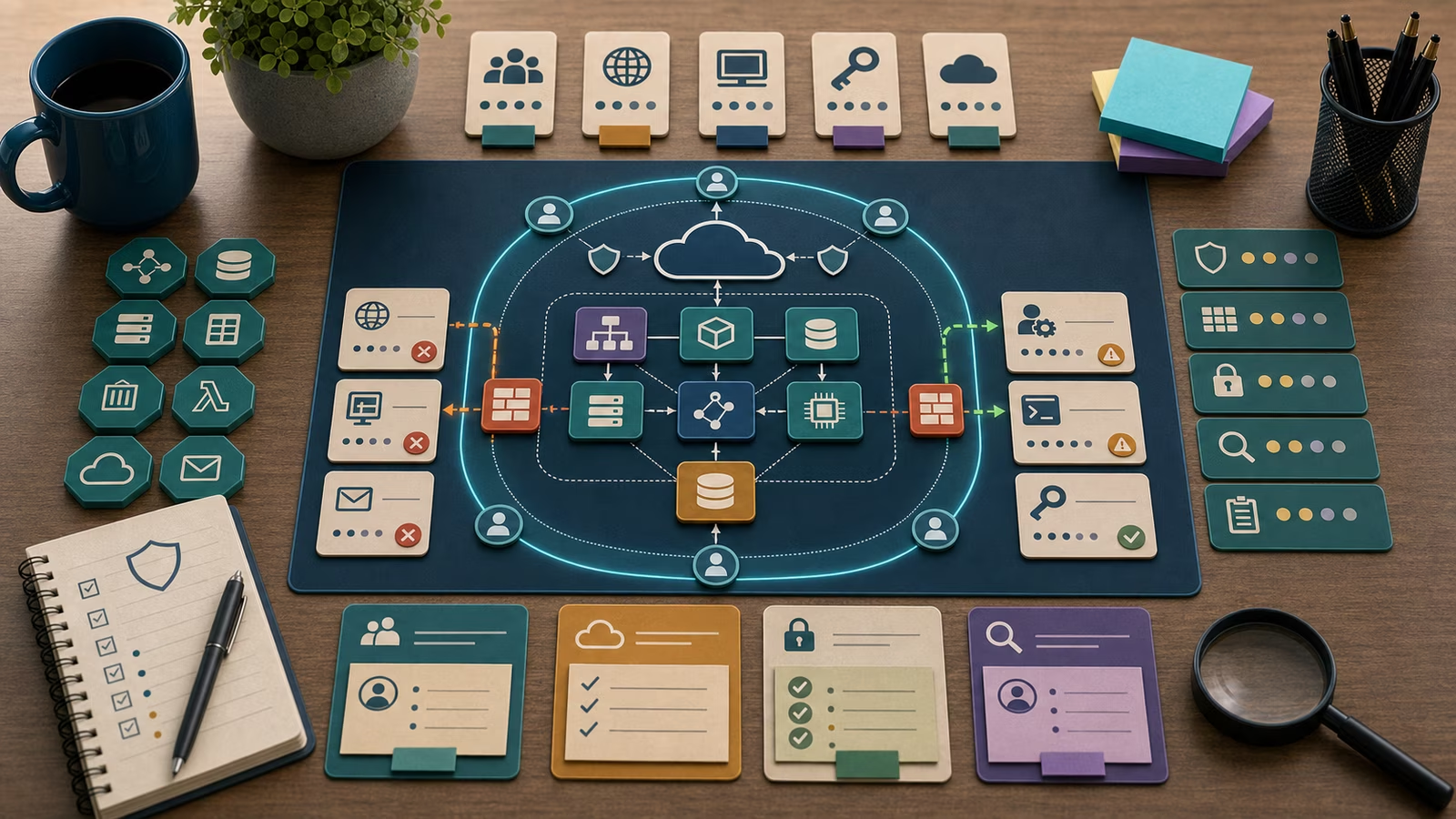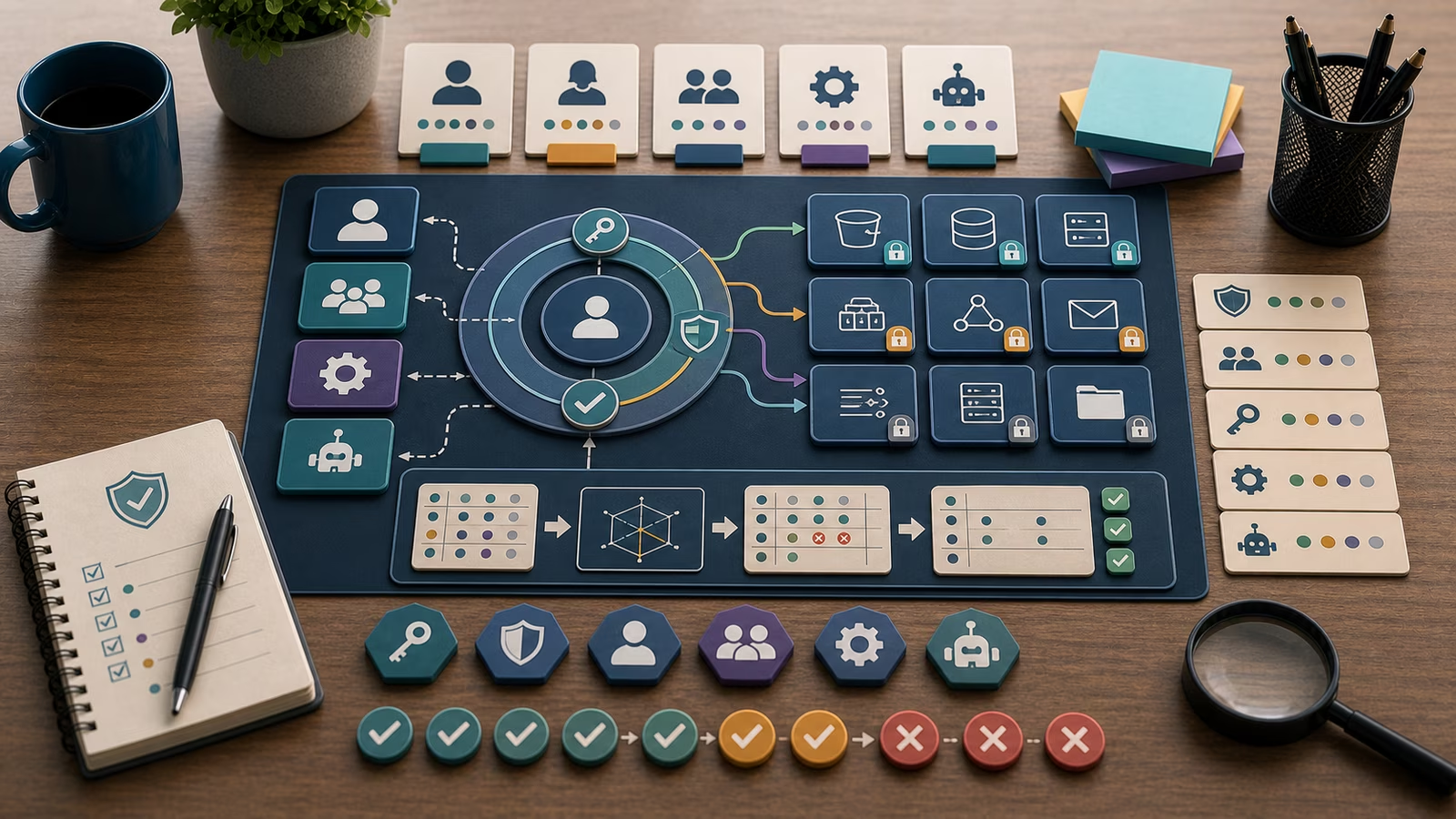
A permission is a promise about what an identity is allowed to touch. Most cloud accounts accumulate far more of those promises than anyone remembers making. A contractor gets full administrative rights “just to get unblocked,” a build pipeline is handed a role that can read every storage bucket, an old project keeps a broker identity that nobody has logged into since last winter. None of that is an attack. It is ordinary drift. But every unused permission is standing privilege, and standing privilege is the raw material an intruder assembles into reach once they hold a single valid credential. Least privilege is the discipline of shrinking that material so a compromised identity buys the attacker as little as possible.
This guide is defensive education. It uses toy examples, observable evidence, and safe reasoning. It does not provide exploit instructions, malware code, credential theft steps, evasion playbooks, target scanning procedures, or operational offensive workflows. If you are handling an active incident, preserve evidence, follow your organization's incident-response plan, and involve qualified responders and legal counsel where appropriate.
Roles, policies, and the shape of a permission
It helps to separate three ideas that people often blur together. An identity is the thing that acts: a person, a service account, a workload, an automation. A role is a named bundle of permissions that an identity can hold or assume. A policy is the written rule that says which actions the role may perform on which resources, sometimes under which conditions. Least privilege lives in the gap between what a policy grants and what the identity’s real job actually requires. The wider that gap, the more an attacker inherits if they land on the identity.
Two properties matter most when you look at any grant. The first is scope: does this role act on one project and one bucket, or on everything in the organization? The second is duration: is the privilege standing, sitting there permanently whether it is used or not, or is it just-in-time, granted for a task and revoked afterward? A role that is both broad and permanent is the worst combination, because it is always available and it reaches everywhere. A narrow, temporary grant is the friendliest to defenders, because even a successful theft of that credential expires and reaches little. Most of the work of least privilege is nudging grants from the first category toward the second.
Why standing privilege is the real exposure
Attackers rarely need to escalate if the account they already touched can do everything. The uncomfortable pattern in many intrusions is not a clever privilege-escalation trick but a boring over-grant: a developer identity that also happened to carry billing rights, or a monitoring role that could write as well as read. The concept of blast radius captures this well. When you ask “if this one identity were misused, what could reach what,” the answer is a map of the damage a single mistake permits. Trimming scope is simply making that map smaller before anyone has to draw it under pressure.
Non-human identities deserve special attention because they are easy to forget. Service accounts, CI/CD runners, and API integrations often hold long-lived keys and broad rights, and no human ever “logs in” to notice something is wrong. A dormant automation with a wide role is a quiet gift to anyone who finds its key in a repository or a stale environment file. Reviewing these identities alongside people, rather than treating them as furniture, is one of the higher-value habits in cloud defense.
Toy example
Imagine a fictional design studio called Marlowe Type Foundry running a small cloud tenant with a few laptops, a shared asset store, a customer database, and a handful of SaaS tools. During a routine review, a defender notices that a role named render-pipeline can read every storage bucket in the account, including one holding signed client contracts. The pipeline only renders font previews. Nobody assuming a breach; the first questions are ordinary ones. Who created the role? Was it always this broad, or did a permission get added during a rushed deadline? Is the contract bucket even reachable from the pipeline’s network, or only in theory?
The safe exercise is to write a four-column note: identity, current scope, needed scope, and evidence. For render-pipeline the identity is a service account, the current scope is “read all buckets,” the needed scope is “read the previews bucket only,” and the evidence is the pipeline’s own configuration plus the change history that shows when the wildcard grant appeared. Everything here is invented on paper. No real systems are touched, no keys are guessed, and no production policy is edited mid-investigation. The value is the reasoning: the gap between “read all buckets” and “read one bucket” is precisely the standing privilege worth removing.
What evidence matters?
The strongest evidence in a least-privilege review is the difference between granted permissions and used permissions. Many cloud platforms expose access analyzers or last-used data that show which permissions a role actually exercised over the past weeks. A role granted twenty actions but observed using three is telling you plainly where the scope can shrink. That gap is more persuasive than any opinion about what the role “probably needs.”
Beyond usage data, four records carry most of the weight. Change history says when a grant appeared and, ideally, who approved it, which separates a deliberate exception from silent drift. Role assumption or login records show whether an identity is even active, which is what tells a dormant service account from a live one. Resource sensitivity says whether the reachable data is contracts and customer records or throwaway previews, because the same broad grant means very different things depending on what sits behind it. And ownership says who can confirm the intent, because a permission that looks alarming to you may be a documented, understood exception to the person who runs the workload.
Evidence is most useful when it is timestamped, exported, and tied to a named source rather than remembered from a console you have since navigated away from. A screenshot helps you recall what you saw, but the exported policy document, the access-analyzer report, and the change-log entry are what let another reviewer reach the same conclusion later.
Worked defensive review
Turn a vague worry into a narrow, checkable claim. Not “our IAM is a mess,” which cannot be acted on, but “the render-pipeline service account holds read access to all buckets, has only ever read the previews bucket in ninety days of logs, and the wildcard grant was added eleven weeks ago without a linked ticket.” That sentence names the identity, states the observed usage, and flags the missing approval. It can be reviewed, disputed, or confirmed, and it points directly at the smallest fix: replace the wildcard with a single-bucket grant and note the exception if one is genuinely needed.
Set the threshold for action before you feel the pressure to act. A low-confidence finding on a low-sensitivity resource might only need an owner’s confirmation and a note. A broad grant that reaches sensitive data, or a live human identity carrying administrative rights it never uses, deserves a change ticket, preserved evidence, and a scheduled reduction. Anything that looks like active misuse rather than mere over-grant belongs in the incident-response process, not in a quiet cleanup. Reducing privilege is safest as a planned, reversible change with an owner watching, so that trimming a role never becomes the outage that teaches everyone to stop trimming roles.
Common mistakes and false positives
The most common error is fixing exposure at the network edge while ignoring the identity behind it. Closing a public port feels productive, but if the role reachable through that service still has organization-wide rights, the underlying risk barely moved. A second mistake is reading a broad grant as evidence of compromise. Over-provisioning is usually laziness or a forgotten deadline, not an intruder; the appropriate response is a scoped reduction, not an alarm. A third is forgetting that break-glass and emergency roles are supposed to be broad, and treating their existence as a finding rather than checking that their use is logged and rare.
False positives are ordinary here. A service account with sweeping rights might turn out to be a documented, monitored exception for a genuine batch job. That is not a wasted review. When you leave behind a clearer owner note, a tightened policy, or a confirmed baseline of what “normal” looks like for that identity, the next reviewer inherits a smaller problem. A least-privilege pass that ends in “this is fine, and here is why” is still progress.
What to do next
Pick one identity and follow it end to end rather than trying to boil the whole tenant at once. Human accounts pair naturally with MFA, Passkeys, and Recovery Paths , since strong sign-in is what protects the identity whose scope you just trimmed. Third-party and machine grants lead into OAuth Consent and SaaS App Risk , where the permission is delegated to an app instead of a person. When you want to see which over-privileged identities are also reachable from outside, move to Cloud Public Exposure Mapping and combine the two views. For a recurring cadence, Privileged Access Reviews turns one-off cleanups into a habit.
For anything that looks like active misuse rather than drift, stop experimenting. Preserve the logs, follow your incident-response plan, communicate through approved channels, and bring in qualified responders. For learning, keep every example fictional and keep asking the same five questions: which identity, which scope, which data it reaches, which evidence proves the current state, and what the smallest safe reduction would be.
How this guide was made
This page is defensive education assembled from public frameworks such as the NIST digital identity guidelines and the CIS Critical Security Controls, illustrated with an invented studio and toy identities. It makes no claim to certify your environment, provide legal advice, or grant incident-response authority. The examples avoid operational offensive detail on purpose, so the guide stays useful for safe study rather than becoming a how-to for anything harmful.
Official references
For grounding, the NIST SP 800-63-4 Digital Identity Guidelines frame how identities and their authenticators are meant to be managed, while the CISA Secure Cloud Business Applications Project offers baseline configurations for cloud tenants that touch directly on role scope. The CIS Critical Security Controls v8 describe account and access-control safeguards in practical terms, and the CISA Known Exploited Vulnerabilities Catalog is a reminder that over-privileged identities become far more dangerous when they sit on software an attacker already knows how to reach. Treat all four as orientation, not certification.
Related guidebooks
The closest companions here are MFA, Passkeys, and Recovery Paths for protecting the identities you scope, OAuth Consent and SaaS App Risk for delegated machine permissions, and Cloud Public Exposure Mapping for seeing which privileges are also internet-reachable. For deeper practice, Privileged Access Reviews and Service Accounts and Secrets both extend the least-privilege habit into the corners people forget.