
A thermometer is the single tool that turns grilling from a hopeful guess into a repeatable craft. Before you own one, doneness is a story you tell yourself out of color, firmness, and the timing on a recipe someone else wrote for a different grill on a different day. After you own one, doneness is a number you can read, verify, and hit again next weekend. Nothing else in the kit does more to make your food both safer and more consistent, and yet it is the tool beginners are most tempted to skip.
Why your eyes lie over a fire
The grill is an unusually deceptive place to judge doneness by sight. Smoke tints surfaces pink or mahogany. Sugary rubs and sauces darken fast and suggest a thoroughly cooked interior that may not exist. Intense radiant heat browns the outside so quickly that a burger can look charred while the center is still cool. The old tests fail in specific, predictable ways. Clear juices are not a reliable safety signal in poultry. A firm press tells you something about a steak’s doneness only after years of calibration, and even then it is a rough read. Cut into a piece to peek and you release the juices you spent the whole cook protecting, and you still only see the color at that one slice. The interior temperature is the honest answer, and a probe is the only thing that reads it directly.
The two thermometers that do the real work
Most home grillers are well served by understanding just two categories. An instant-read thermometer is a fast spot-checker: you open the lid, slide the tip into the thickest part, wait a few seconds for the number to settle, and close the lid again. It excels at burgers, steaks, chops, fish, and individual chicken pieces, where the cook is short and you want a quick verdict without leaving the lid open long enough to bleed away your heat. A leave-in probe thermometer stays buried in the food for the whole session, its cable running out to a display so you can watch a long cook climb without opening anything. That is the tool for a pork shoulder, a brisket, a whole turkey breast, or a roast, where every lid lift adds time and where the target arrives slowly enough to sneak up on you. A third type, the ambient or surface thermometer, reads the air near grate level rather than the food itself, and it is genuinely useful for learning your grill’s hot spots and holding a steady smoking temperature, but it never substitutes for an internal check.
Where you put the tip decides the reading
A thermometer only tells the truth if it is measuring the right spot. The target is always the geometric center of the thickest part, because that is the last place to reach temperature and therefore the place that governs safety. Bone conducts heat differently than meat and throws the reading off, so probe alongside bone rather than against it. Fat pockets and air gaps read low or erratic. On an irregular piece like a bone-in thigh or a lumpy tenderloin, check two or three spots, because one lucky reading in a thin edge can hide a cold core. Burgers are best probed from the side, sliding the tip toward the middle so the sensing area sits in the center of the patty rather than poking out the far face. Fish deserves a gentle hand and a probe into its thickest band, since its flakes tear if you dig around. These are small habits, but they are the difference between a number you can trust and one that only looks reassuring.
Carryover is real, so pull food early
Food does not stop cooking the moment it leaves the grate. Heat stored in the outer layers keeps flowing inward, and the internal temperature drifts upward during the rest. This carryover is modest in a thin burger and substantial in a thick steak or a large roast, where the center can climb several degrees after it comes off. The practical consequence is that you pull dense cuts a little before the target and let the rest close the gap, which is how you avoid the frustrating experience of hitting a perfect number on the grate only to slice into something overcooked ten minutes later. Resting also lets the texture settle so the juices redistribute instead of flooding the board. For some foods, official guidance folds a specified rest time into the safety recommendation itself, so always follow the current chart for whatever you are cooking. The rhythm of pulling, resting, and serving gets its own full treatment in Resting, Holding, and Serving .
Doneness targets belong to the chart, not to memory
It is tempting to memorize a handful of numbers and cook forever from recall, but the responsible move is to keep the current official guidance in front of you and read the target for the specific food before you light the fire. Poultry, ground meats, whole cuts, seafood, and reheated leftovers each carry their own recommendation, and those recommendations are set by food-safety authorities rather than by the confidence of a backyard cook. Keep FoodSafety.gov’s safe minimum internal temperatures and its clean, separate, cook, chill guidance within reach, and lean on the USDA FSIS grilling food safely resource for the outdoor specifics of holding, smoking, and leftovers.
Build a few thermometer habits and keep them
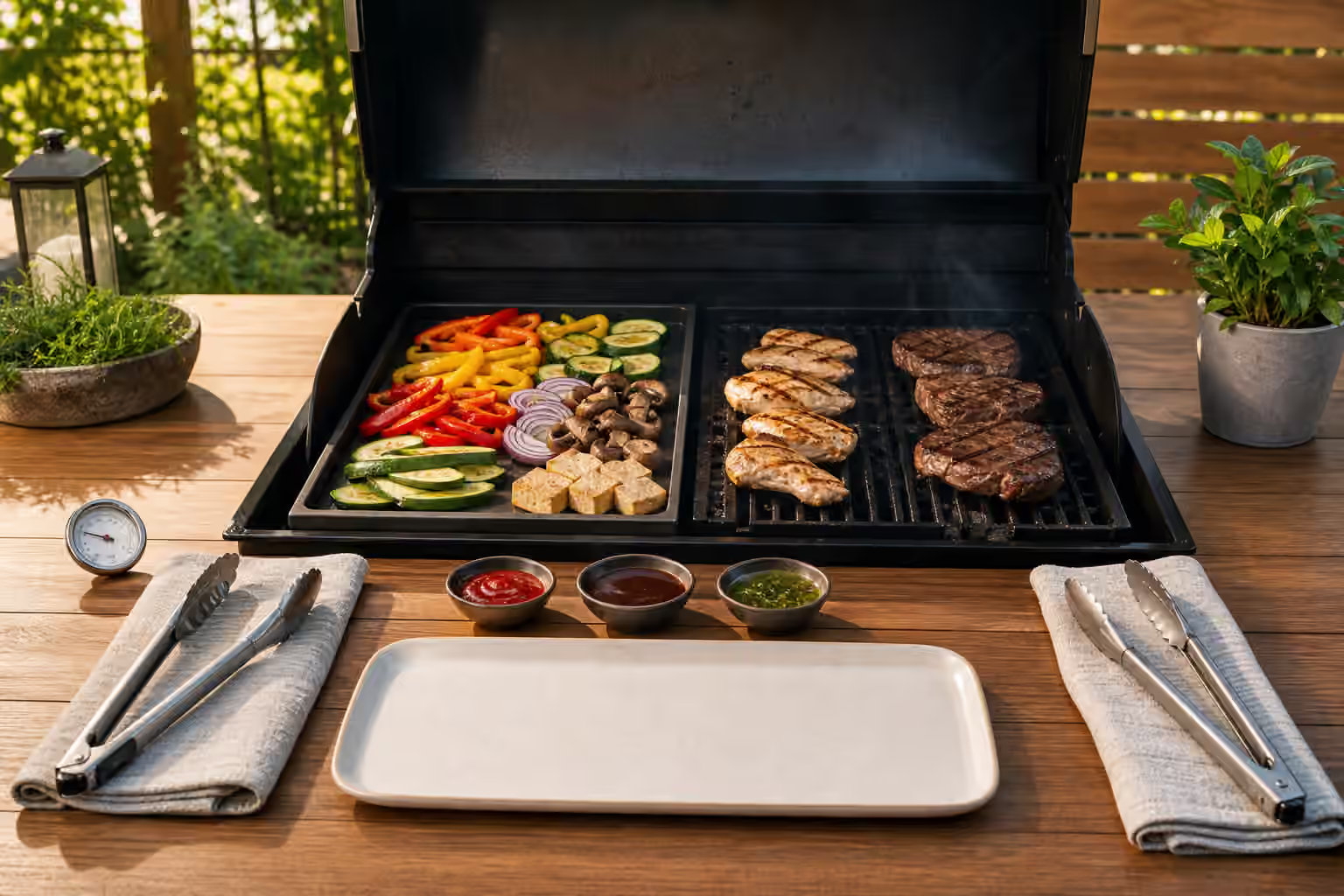
The tool only helps if it is close, clean, and calibrated into your routine. Keep it where you can grab it without hunting, wipe or wash the probe between raw and cooked contact so you are not ferrying bacteria across your food, and never let the cable of a leave-in probe rest across open flame. Use a fresh plate for cooked food rather than the tray that held it raw, a small discipline that matters most with poultry. Verify occasionally that your thermometer reads accurately, because a probe that drifts is worse than none at all since it lends false confidence. Once these motions become automatic, doneness stops being the stressful part of a cook and becomes the calm, mechanical checkpoint it should be.
From here, put the numbers to work on specific foods. Chicken Without Drying It Out shows how a probe lets you cook lean poultry to safe without overshooting into dry, and Burgers on the Grill is the fastest place to build the side-probing habit. Related seasoning timing, if you dry-brine, lives in Salt Works , and more protein-temperature framing sits in Boy Kibble Kitchen .