Introduction
There is a moment in every engagement ring journey when the vast universe of diamonds suddenly needs to make sense. How do you compare one stone to another? How do you know whether the price you’re being quoted is fair? How do you distinguish a mediocre diamond from an extraordinary one?
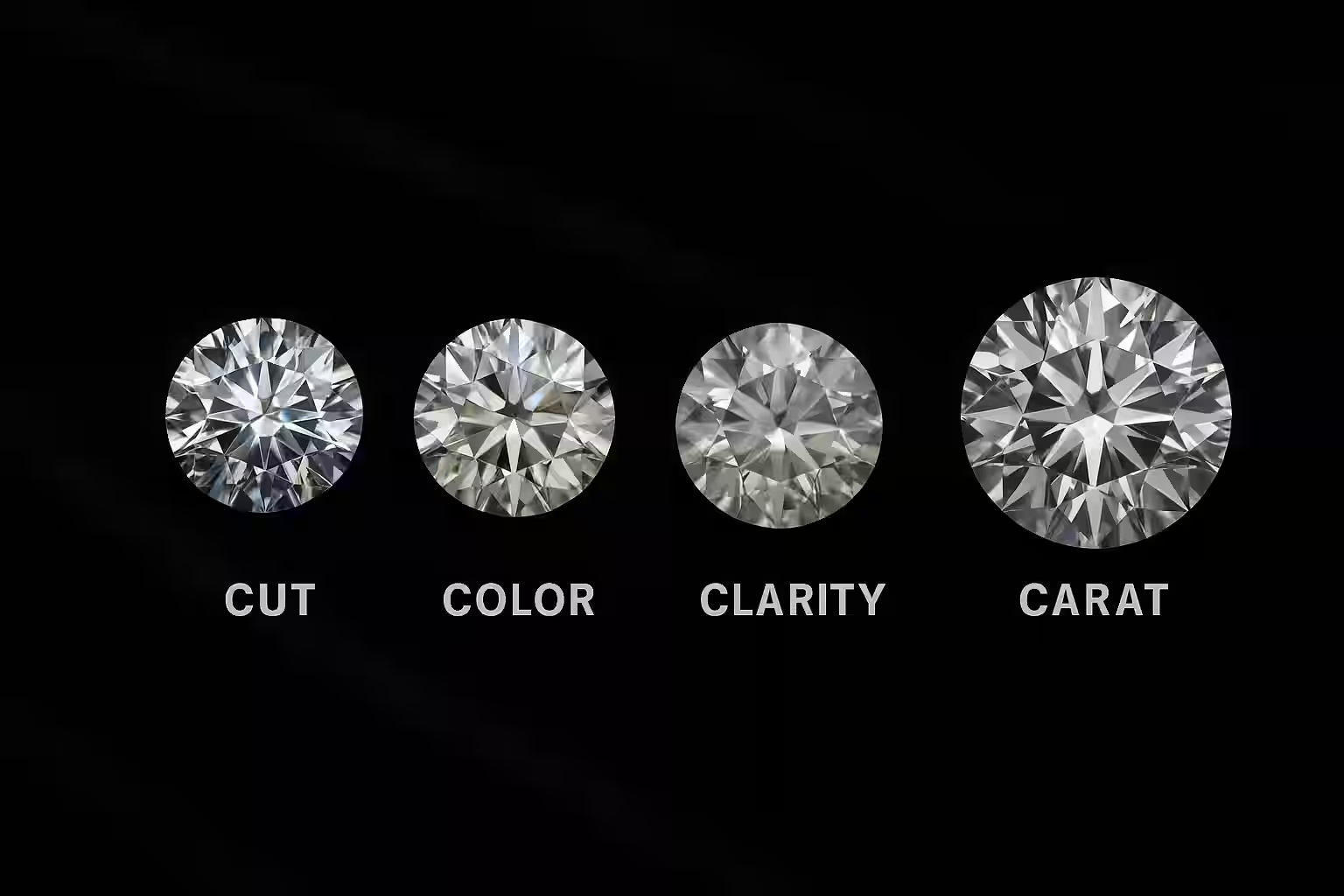
The answer lies in four characteristics that gemologists have spent decades perfecting into a universal language: Cut, Color, Clarity, and Carat. These four Cs form the grammar of diamond evaluation, and understanding them transforms you from a bewildered shopper into a discerning buyer.
Cut: Where Light Learns to Dance
If you remember nothing else from this guide, remember this: cut is everything. A diamond’s cut determines how it captures light, bends it through its facets, and returns it to your eye as brilliance, fire, and scintillation. A perfectly cut diamond becomes a living thing—catch it in sunlight and it explodes with rainbow flashes; watch it move and it winks and sparkles as if animated by some inner force.
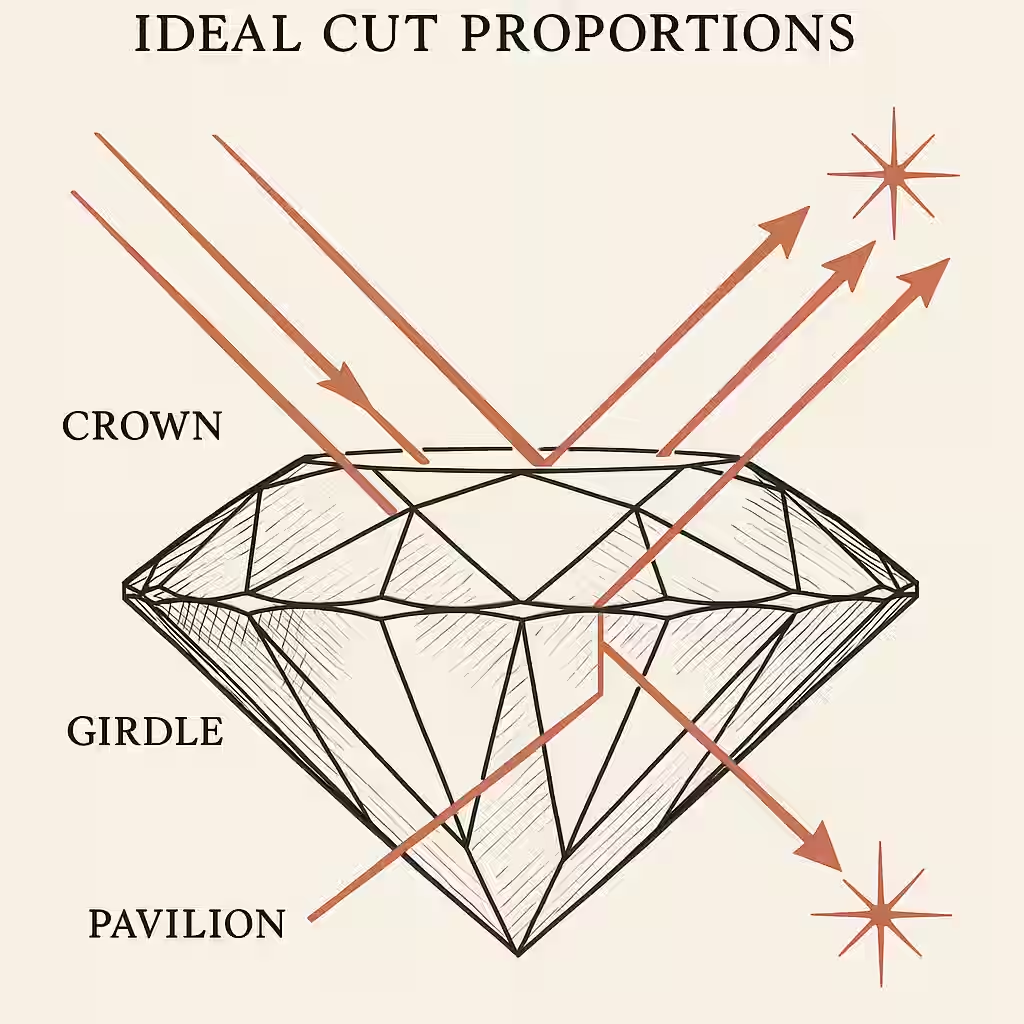
Cut is not the same as shape—round, princess, oval—though the terms are sometimes confused. Cut refers to the precision of a diamond’s proportions, the exactness of its angles, and the quality of its polish. When light enters a well-cut diamond, it bounces between facets and returns through the top in concentrated bursts. When light enters a poorly cut diamond, it leaks out the sides or bottom, and the stone sits dull and lifeless despite whatever its other qualities might be.
The grades tell the story: Excellent and Ideal sit at the summit, representing diamonds cut to maximize light performance. Very Good offers slightly less precision but still beautiful results. Good is acceptable but noticeable compromises begin. Fair and Poor should be avoided entirely for engagement rings—these diamonds will disappoint, no matter their size or clarity.
Here is the profound truth about cut: you cannot hide it. A lower color grade might go unnoticed in a well-chosen setting. Inclusions might be invisible to the naked eye. But a poor cut broadcasts itself constantly, in every lighting condition, from every angle. The diamond simply refuses to come alive.
Color: The Paradox of Presence Through Absence
In the world of white diamonds, color grading measures something counterintuitive: how little color a stone possesses. The most valuable diamonds are those that approach pure transparency, allowing light to pass through and return unaltered by any tint.
The scale runs from D to Z. D-color diamonds are exceptionally rare—colorless as arctic ice, as transparent as mountain water. As you descend through the alphabet, increasing amounts of yellow or brown become perceptible. By the time you reach Z, the tint is unmistakable.
The grading breaks down into meaningful ranges. D through F constitute the colorless range—these diamonds command premium prices because they reveal absolutely no warmth or tint, even under gemological examination. G through J fall into near-colorless territory, and here lies one of the smartest opportunities in diamond buying. These stones appear white to the untrained eye, especially once set in a ring, yet cost substantially less than their colorless siblings.
K through M begin to show faint yellow, visible to careful observers. N through Z progress from very light to light yellow or brown. These lower color grades work beautifully in yellow gold settings, where the warm metal complements rather than contrasts with the diamond’s tint. But in white gold or platinum, they can appear slightly off.
The practical wisdom: most people cannot distinguish between a D and an H color diamond once it’s mounted in a ring and viewed under normal conditions. The premium you pay for top color grades often purchases invisible improvement. A G or H color diamond in a white setting looks white—and that’s what matters when you’re wearing it, not what it reveals under gemological lighting.
Clarity: The Art of Invisible Imperfection
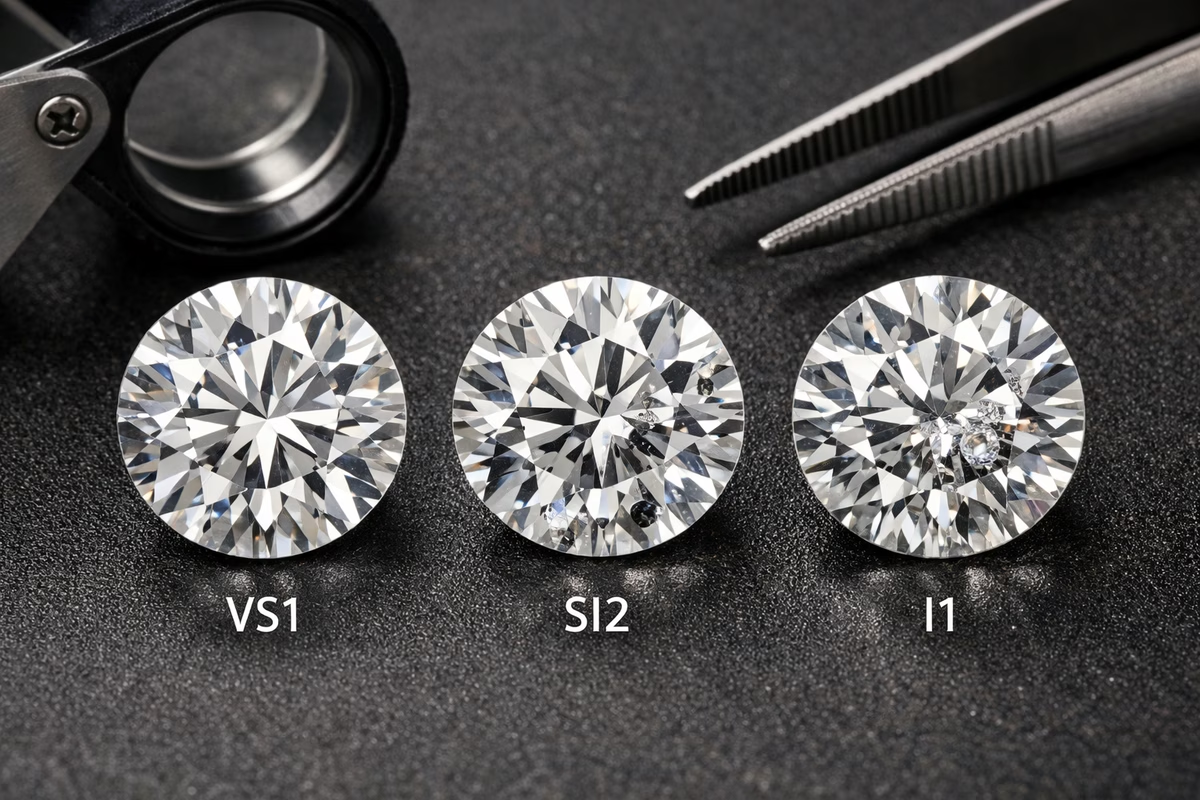
Every diamond carries within it a record of its violent birth—the immense pressures and temperatures that created it deep within the Earth left their marks. These internal characteristics are called inclusions: tiny crystals of other minerals, wisps of structural irregularity, clouds of microscopic features. External blemishes—scratches, polish marks, surface irregularities—also factor into clarity grades, though inclusions dominate the assessment.
The clarity scale descends from theoretical perfection through increasingly visible imperfection:
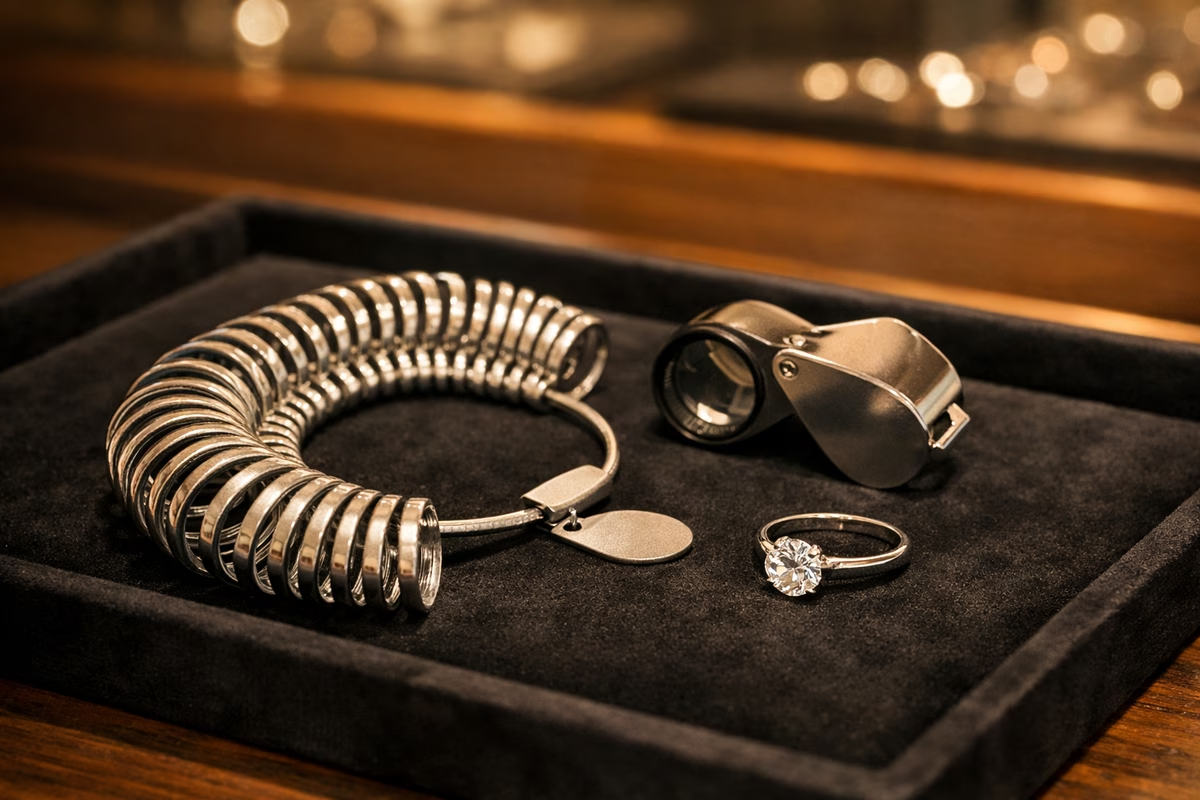
Flawless (FL) diamonds show no inclusions or blemishes under 10x magnification—the standard examination tool in gemology. These stones are extraordinarily rare and command prices to match.
Internally Flawless (IF) diamonds reveal no internal inclusions under magnification, though minor surface blemishes may exist.
VVS1 and VVS2 (Very Very Slightly Included) contain inclusions so minute that even experienced graders struggle to locate them under magnification.
VS1 and VS2 (Very Slightly Included) show inclusions that skilled graders can find under magnification but that remain invisible to the naked eye.
SI1 and SI2 (Slightly Included) contain inclusions visible under magnification and sometimes—though not always—visible to the naked eye in SI2 stones.
I1, I2, and I3 (Included) possess inclusions visible to the naked eye, with I2 and I3 showing inclusions that may affect transparency or structural integrity.
Here is the liberating truth about clarity: the diamond industry grades using 10x magnification, but you will wear your diamond with naked eyes. The concept of “eye-clean” captures what actually matters—whether a diamond appears flawless at normal viewing distances. Many VS2 and SI1 diamonds qualify as eye-clean, meaning you can purchase a technically imperfect stone that appears perfect in every practical sense.
This is not settling; it’s intelligent shopping. Why pay for perfection that requires magnification to appreciate?
Carat: The Weight of Desire
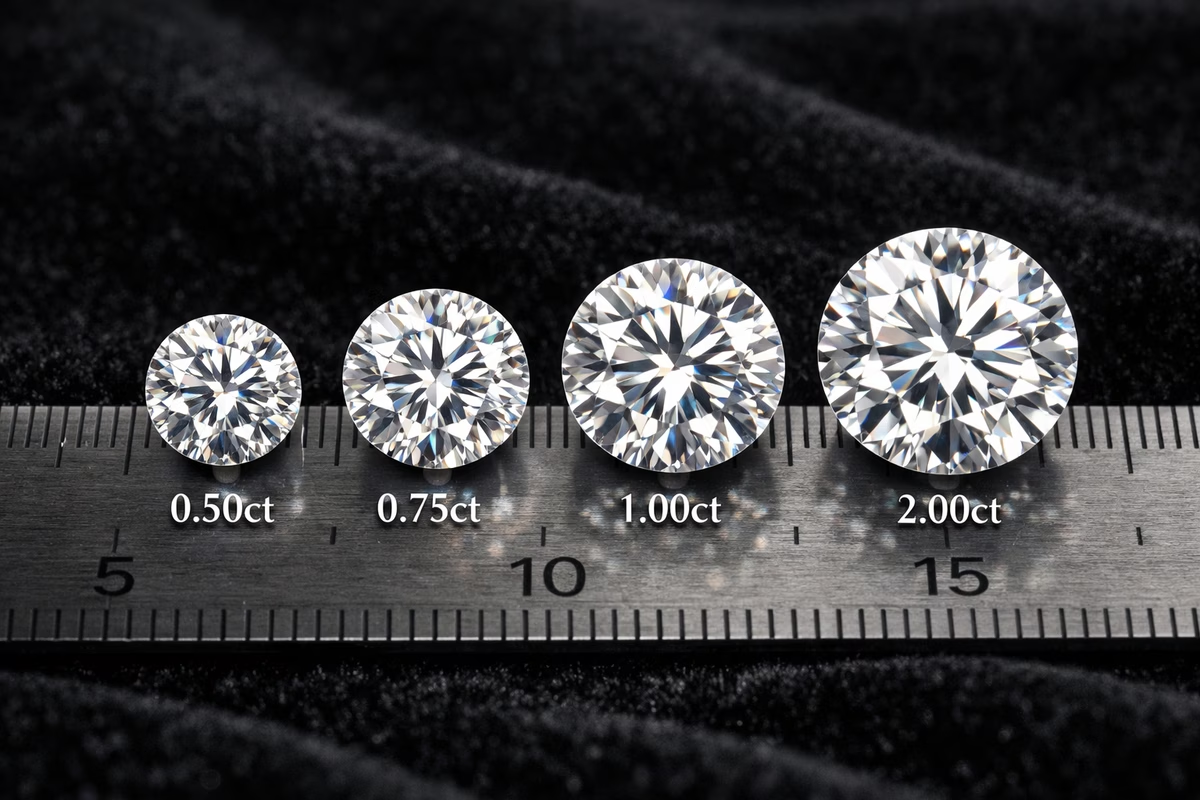
Carat is the simplest of the four Cs to understand and the most emotionally charged. It measures weight—one carat equals 200 milligrams or 0.2 grams—though we experience it as size. Larger diamonds are rarer than smaller ones, and rarity commands premium pricing. But the relationship between carat weight and price is not linear; it rises exponentially at popular thresholds.
Consider: a 1.0-carat diamond might cost significantly more than a 0.95-carat stone of identical cut, color, and clarity—far more than the 5% weight difference would suggest. These “magic numbers”—0.5, 0.75, 1.0, 1.5, 2.0—carry psychological significance that inflates prices disproportionately. A savvy shopper who purchases a 0.9-carat diamond instead of a 1.0-carat stone often saves 15-20% while acquiring a diamond that looks virtually identical.
Weight and visible size do not perfectly correlate, especially across different shapes. An oval or marquise diamond typically appears larger than a round diamond of equal weight because its elongated profile spreads across more finger area. Conversely, deep-cut diamonds carry weight in their pavilions—invisible from the top—and may appear smaller than their carat weight suggests. This is another reason why cut quality matters: a well-proportioned diamond maximizes face-up size for its weight.
Finding Harmony: Balancing the Four Cs
The art of diamond selection lies not in maximizing any single characteristic but in finding balance. Your budget imposes constraints; the four Cs offer flexibility in how you allocate resources.
Begin with cut. This is non-negotiable. An Excellent or Ideal cut grade ensures your diamond will sparkle as diamonds should. Compromising here undermines everything else—a large, colorless, internally flawless diamond with poor cut proportions will disappoint because it cannot perform the magic that makes diamonds captivating.
Next, choose color based on setting. White gold and platinum reveal any warmth in a diamond, so G or H color ensures a white appearance in these metals. Yellow gold is more forgiving; J or K color often looks beautiful because the warm metal complements rather than contrasts with any tint.
For clarity, seek eye-clean rather than technically perfect. VS2 offers safety—these stones essentially always appear flawless to the naked eye. SI1 requires individual evaluation but frequently delivers identical visual results at lower prices. Learn to inspect diamonds at normal viewing distances and trust what you see.
Finally, adjust carat weight to fit your budget. Consider weights just below popular thresholds. Remember that shape affects perceived size. A well-cut 0.9-carat diamond in a halo setting can appear larger than a poorly cut 1.2-carat solitaire.
The Path Forward
Knowledge of the four Cs empowers you to make informed decisions, but it cannot make decisions for you. The “perfect” diamond doesn’t exist in absolute terms—only the diamond that’s perfect for your priorities, your budget, and your partner’s preferences.
Some couples prioritize size; others prioritize quality over all else. Some find deep meaning in selecting a colorless stone; others prefer the warmth of lower color grades. There are no wrong answers, only uninformed ones.
What matters is that when you finally hold your diamond, you understand exactly what you’re holding: a tiny miracle of geology and human craftsmanship, graded and certified by exacting standards, chosen by you with intention and knowledge.
Continue Your Journey
Now that you understand how diamonds are evaluated, explore how they’re presented:
- Discover your options in our Diamond Database
- Test your knowledge with our Diamond Quiz
- Learn about Ring Settings that showcase your diamond
- Understand the Metals that will hold your stone