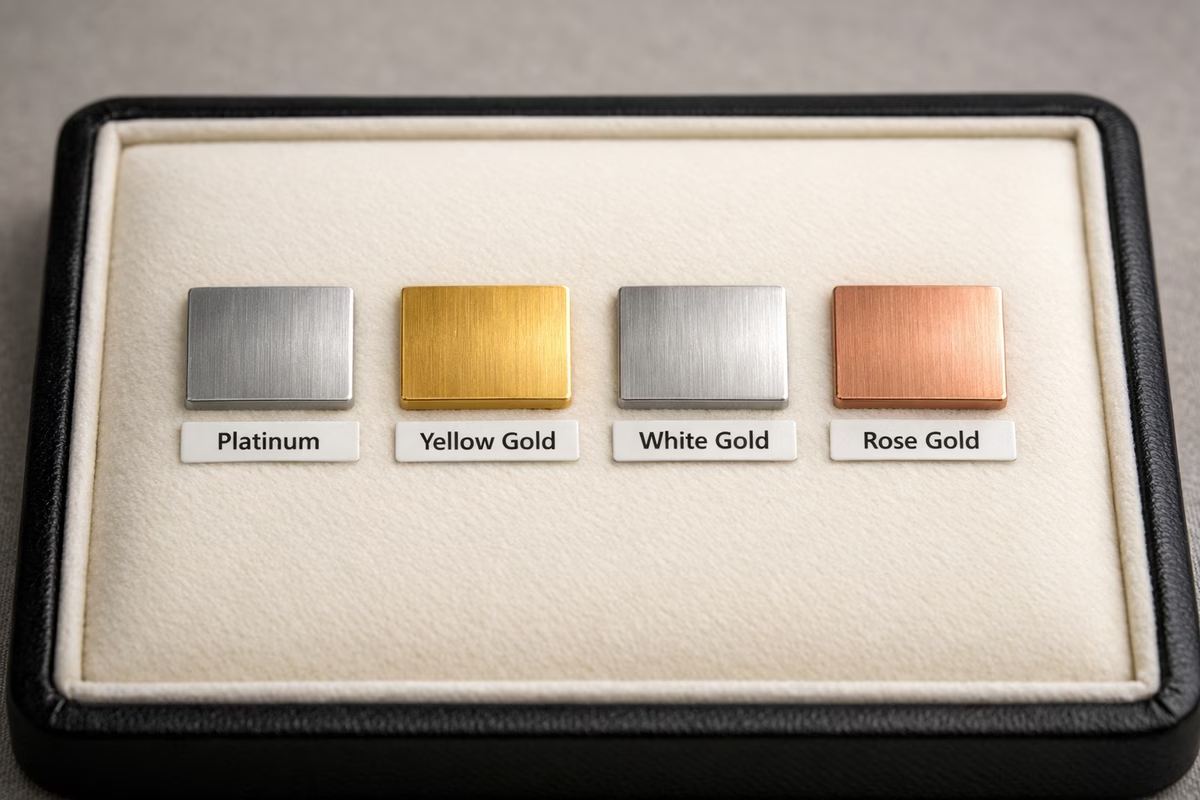
Complete Guide to Ring Metals
Long before diamonds became the centerpiece of engagement rings, it was the metal that carried the meaning. The ancient Egyptians wove rings from braided reeds, but when they wanted to express permanence, they turned to gold—imperishable, untarnishing, beautiful across millennia. Today, we choose from an array of precious metals that would have astonished those ancient craftsmen, yet the fundamental question remains unchanged: which material will best hold the promise you’re making?
The metal you choose shapes more than aesthetics. It determines how your ring feels on your finger, how it ages over decades of wear, how often it requires attention, and how it complements the stone it cradles. A diamond looks different against white gold than against yellow gold—the same stone, transformed by its setting. Understanding metals means understanding how to make all the elements of your ring work together in harmony.
What Makes a Metal Worthy of Forever
Not every metal can bear the weight of what an engagement ring represents. The right metal must possess durability to withstand the countless small impacts of daily life—setting down a coffee mug, gripping a steering wheel, gesturing in conversation. It must be hypoallergenic, or at least kind to most skin, because this ring will touch your body more intimately and continuously than almost any other object you own. It should maintain its appearance gracefully, requiring reasonable but not excessive maintenance. And it must work well with precious stones, holding them securely while enhancing their beauty.
The precious metals that have emerged from centuries of jewelry making—gold, platinum, and their variations—meet these criteria in different ways and to different degrees. Each has genuine strengths and real limitations. The goal isn’t to find the “best” metal in some absolute sense, but to find the best metal for you.
See How Metals Age
Every precious metal tells a story through time. Some develop a distinguished patina; others reveal warm undertones as surface treatments wear. Understanding how your chosen metal will evolve over decades of daily wear helps you choose the material that matches your expectations.
Platinum: The Prestige of the Purest White
There’s a story often told in jewelry circles about a woman who inherited her grandmother’s platinum engagement ring, worn daily for sixty years through a life that included farming, raising children, and factory work during wartime. When she brought it for cleaning, the jeweler noted with wonder that despite decades of hard use, the ring retained its structure beautifully. The metal had developed a soft patina, a distinguished frosted quality that spoke of a life fully lived, but it remained sound.
This is the promise of platinum: a metal so dense, so inherently durable, that it may well outlast everything else you own.
Platinum engagement rings contain typically ninety-five percent pure metal, far more than any gold alloy. This purity creates remarkable properties. The color is naturally white—not plated, not treated, but white through and through, the same shade at the core as at the surface. This means scratches don’t reveal a different color underneath, and no replating is ever required.
The density of platinum exceeds gold by about sixty percent, which you’ll notice immediately when comparing rings of similar size. That substantial weight feels like quality to many wearers—a constant, reassuring presence on the finger. The same density makes platinum extraordinarily durable. When you scratch white gold, tiny particles of metal are removed forever. When you scratch platinum, the metal merely displaces, moving from one spot to another. Nothing is lost; the material simply rearranges itself.
The practical advantages compound over time. Platinum holds stones more securely than softer metals because its density prevents prong wear. People with metal sensitivities find platinum entirely compatible with their skin—its purity leaves almost nothing to react against. The color never changes, never yellows, never requires the maintenance that white gold demands.
Yet platinum carries a higher price, typically thirty to forty percent more than fourteen-karat white gold for the same design. Its weight, while luxurious to some, feels excessive to others. And despite its durability, platinum does scratch—readily, in fact—developing that patina some adore and others find dull.
The ideal platinum customer values quality above all, plans to wear their ring through an active life, may have skin sensitivities to other metals, and appreciates the idea of a ring that requires minimal maintenance while improving with age.
Gold: Three Thousand Years of Trust
Gold requires no explanation. It has signified value, beauty, and permanence across virtually every human civilization, in every era, on every continent. When you choose gold for an engagement ring, you join an unbroken tradition stretching back to prehistory.
But modern gold jewelry is never pure gold. Twenty-four karat gold—one hundred percent pure—is too soft for rings that must endure daily wear. The gold bends, the prongs deform, the band warps. So jewelers alloy gold with other metals to create workable materials that retain gold’s beauty while gaining practical strength.
The karat number tells you the proportion of gold in the alloy. Eighteen karat gold contains seventy-five percent gold and twenty-five percent other metals—a high gold content that produces rich, saturated color and is popular in European jewelry. Fourteen karat gold, the American standard, contains 58.3 percent gold, offering an excellent balance of beauty, durability, and value. Ten karat gold, with 41.7 percent gold content, is the most durable and affordable, though its color is somewhat less intense.
For engagement rings, fourteen karat gold represents the sweet spot most jewelers recommend. It’s substantial enough to feel luxurious, durable enough to resist the demands of daily wear, pure enough to display beautiful color, and priced accessibly enough to leave budget for an exceptional diamond.
Yellow Gold: The Original Warmth
Before white gold existed, before rose gold became fashionable, there was simply gold—warm, yellow, unmistakable. Yellow gold engagement rings connect to a tradition older than recorded history, and they remain timelessly elegant in any era.
The alloys in yellow gold typically include silver, which preserves and enhances the warm hue, and copper, which adds strength. The result is a metal that glows with inner light, complementing warm skin tones beautifully and providing a rich backdrop for any diamond.
One jeweler tells of a couple who came in seeking something modern, having dismissed yellow gold as “old-fashioned” before even trying rings. When the woman slipped a yellow gold solitaire onto her finger, her expression changed. Against her skin, the warm metal transformed. “Oh,” she said quietly. “Oh, I see.” They left with the yellow gold.
The practical advantages of yellow gold are significant. The color is inherent to the metal, requiring no plating and revealing no different shade if scratched. Maintenance is straightforward—occasional polishing restores luster, but no replating appointments mark your calendar. Yellow gold also works with and complements slightly tinted diamonds, making it a smart choice if you’re selecting stones in the J-K color range.
Yellow gold scratches more readily than white gold or platinum because the silver in its alloy creates a softer material. But scratches in yellow gold polish out easily, and the warm color hides minor imperfections better than bright white metals.
White Gold: Modern Brightness
White gold emerged in the twentieth century as an affordable alternative to platinum, and it has become the most popular choice for engagement rings in America. Its bright, cool white color creates a clean, contemporary aesthetic that makes diamonds appear particularly brilliant.
The science of white gold involves more complexity than yellow gold. Pure gold is yellow; making it white requires alloying with white metals—palladium, nickel, silver, or zinc in various combinations. But even these alloys produce a grayish-yellow color, not the brilliant white consumers expect. The solution is rhodium plating: a thin layer of rhodium, a platinum-group metal, applied to the surface.
When freshly plated, white gold gleams with mirror-bright whiteness. The color is gorgeous, the price is accessible, and the ring sparkles beautifully. But rhodium wears away over time—typically one to three years of regular wear—revealing the warmer gray-yellow beneath. Replating restores the brightness, but it’s a recurring cost and inconvenience that platinum never requires.
Many couples accept this maintenance as reasonable. White gold costs substantially less than platinum—often hundreds of dollars saved on the setting alone. The aesthetic is exactly what many modern buyers want. And for those who enjoy periodic jewelry refresh, replating provides an occasion to have the ring professionally cleaned and inspected.
The wise approach to white gold: budget for replating every few years, understand that the metal between platings will show some warmth, and enjoy the significant savings while accepting the maintenance trade-off.
Rose Gold: Romance in Metal
Rose gold has experienced a remarkable renaissance. Once dismissed as dated, it has become perhaps the most sought-after metal among younger couples, bringing warmth, romance, and distinctive beauty to engagement rings.
The rosy hue comes from copper in the alloy—more copper than in yellow or white gold, creating that characteristic blush. The same copper makes rose gold remarkably durable; it’s actually the hardest of the gold colors. The metal resists scratching better than yellow gold, holds its shape well, and maintains its color without any plating.
A young woman recently described why she chose rose gold: “I wanted something that felt like mine, not like everyone else’s ring. When I saw rose gold against my skin, it looked alive somehow—warm and glowing. White gold and platinum felt cold to me, like jewelry. Rose gold felt like it belonged to me.”
The color variations in rose gold are worth noting. Different copper proportions create everything from subtle pink to deep rose. Examine several options to find the shade that resonates with you. The color will remain stable over time, potentially deepening very slightly as the copper develops its own gentle patina.
Rose gold pairs beautifully with vintage-inspired designs, where its warmth evokes earlier eras. It complements warm skin tones magnificently and looks surprisingly good with cool skin tones too—the contrast can be striking. Diamonds appear warm against rose gold, so if you’re selecting a colorless stone, know that the metal will influence how cold or warm the diamond appears.
Alternative Metals: Modern Options
Beyond the precious metals, several alternatives have found a place in engagement rings, each offering distinct advantages and limitations.
Palladium
Palladium belongs to the platinum family but weighs about forty percent less, creating a comfortable ring with similar properties. The color is naturally white, requiring no rhodium plating, and the metal is completely hypoallergenic. Pricing falls between white gold and platinum, making palladium an attractive compromise.
The lighter weight appeals to many wearers, particularly those who find platinum’s substantiality excessive. A palladium engagement ring feels present without feeling heavy. The metal holds stones securely, resists tarnish, and requires minimal maintenance.
The main limitation is availability. Fewer jewelers work in palladium, and design options may be more limited. If you find a palladium ring that appeals to you, however, it offers excellent value.
Titanium and Tungsten
These contemporary metals attract buyers seeking something decidedly modern. Titanium is remarkably lightweight—strong yet barely there on the finger. Tungsten offers extreme scratch resistance; the surface remains polished through years of wear with almost no maintenance.
But both metals share a significant limitation: they cannot be resized. Your finger today must be your finger forever, or you’ll need an entirely new ring. For many couples, this eliminates titanium and tungsten from engagement ring consideration. The symbolism of resizing a ring to fit a changing body, rather than replacing it entirely, matters to those who value continuity.
Simple designs work best in these metals. Complex settings, intricate details, and secure stone mounting prove challenging in materials this hard. If you’re drawn to modern aesthetics and don’t require elaborate design or future resizing, titanium and tungsten deliver durability at accessible prices.
The Interplay of Metal and Stone
Your metal choice affects how your diamond appears. This isn’t metaphorical—it’s optical reality.
White metals (platinum, white gold, palladium) provide neutral background that allows diamonds to display their true color. A well-graded diamond will appear brilliantly white against these settings. However, white metals also expose any warmth in lower-colored diamonds. A J-color stone that looks white against yellow gold might show its tint against white gold.
Yellow gold does the opposite. Its warmth complements and somewhat masks tint in lower-colored diamonds, making J, K, and even L-color stones appear more colorless than they technically are. This creates buying opportunities: you can select a lower color grade, save money, and achieve beautiful results because the metal works with the stone.
Rose gold warms everything it touches. Colorless diamonds gain a slight blush; warm diamonds appear warmer still. If you’re pairing rose gold with a diamond, consider whether that warming effect enhances or diminishes the stone’s appeal to your eye.
Mixing Metals: Two-Tone Designs
The rule that all your metals must match has gracefully expired. Mixed-metal engagement rings combine materials for visual interest and practical benefits.
A popular approach uses platinum for the setting head—the portion holding the diamond—while using white or yellow gold for the band. This provides platinum’s security for the stone while reducing overall cost. The color difference is subtle and often invisible to casual observers.
Two-tone designs intentionally contrast metals for aesthetic effect. Yellow gold paired with white creates classic elegance. Rose gold with white achieves a romantic, contemporary look. These rings stand out and make strong style statements.
The practical consideration: different metals wear at different rates. A two-tone ring may require maintenance attention where the metals meet. This is manageable but worth understanding before choosing an overtly mixed design.
Matching Metal to Life
Beyond aesthetics, your lifestyle should influence your metal choice.
Active lifestyles favor durable metals. If you rock climb, garden extensively, work with your hands, or play impact sports, platinum’s density and palladium’s resistance serve you well. White gold requires more careful treatment; rose gold’s copper content provides additional strength.
Careers matter too. Healthcare workers who wash hands constantly will wear down rhodium plating on white gold faster than office workers. Those working with chemicals should understand how different metals react. Physical laborers face impacts and abrasions that test any material.
Skin sensitivity demands attention. If you’ve ever reacted to costume jewelry, nickel may be your nemesis—choose platinum, palladium, or nickel-free gold alloys. If you’ve worn jewelry without issue, most options remain open.
Budget constraints often drive decisions. Platinum costs significantly more than gold. If choosing between a larger diamond in white gold or a smaller diamond in platinum, most couples prioritize the stone. The setting matters, but it’s not the centerpiece.
Caring for Your Metal
Every metal ages, but proper care extends beauty indefinitely.
Platinum requires the least maintenance but benefits from occasional professional polishing to restore high shine if you prefer it to patina. Gold rings need periodic polishing to remove scratches and restore luster. White gold specifically needs replating every one to three years, which typically includes polishing and inspection.
All metals benefit from removing your ring before exposure to harsh chemicals, chlorinated pools, or situations involving impact risk. Store your ring separately from other jewelry to prevent scratching—diamonds are harder than gold and will mark your band if they touch.
Professional inspection twice yearly catches developing issues before they become problems. A jeweler examines prong integrity, checks for loose stones, identifies worn areas, and addresses minor damage before it escalates.
The Decision That Lasts
Choosing a metal for your engagement ring means choosing what will touch your skin more consistently than any other object for potentially the rest of your life. The decision deserves thoughtful consideration of all factors—aesthetics, durability, maintenance, budget, lifestyle, and personal meaning.
There is no objectively correct answer. Platinum offers unmatched durability and purity. White gold provides similar aesthetics at lower cost with maintenance requirements. Yellow gold connects to tradition while requiring minimal upkeep. Rose gold delivers distinctive romance and surprising durability. Alternative metals serve specific needs and modern tastes.
The right metal is the one that makes you happy when you look at your hand, that ages gracefully through the years you’ll wear it, that fits your budget without causing stress, and that complements the stone it holds. Trust your preferences, understand the trade-offs, and choose with confidence.
Your ring will be with you through everything that comes—the ordinary days and the extraordinary moments, the challenges and celebrations, the quiet evenings and the grand occasions. The metal that carries your stone through all of it should be one that you’ve chosen with intention and knowledge, for reasons that matter to you.