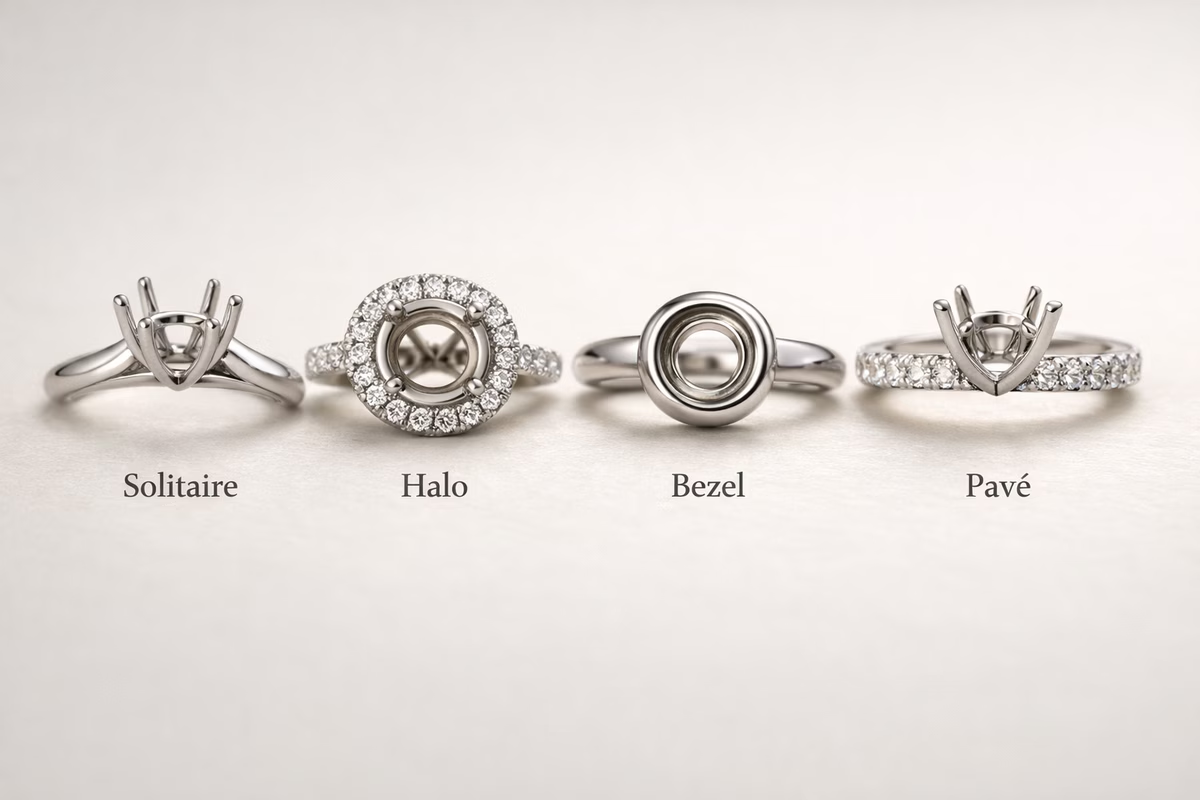
Ring Settings and Styles Guide
Every diamond, however brilliant, needs a stage. The setting is where craftsmanship meets engineering, where aesthetic vision translates into physical reality, where metal learns to hold light. Your choice of setting determines not only how your diamond appears but how it lives on your hand—how it catches attention, how it resists the small dangers of daily life, how it pairs with the wedding band that will someday join it.
The history of ring settings traces the evolution of jewelry craft itself. Medieval rings often used simple bezels, metal collars wrapping entirely around the stone. Victorian designs introduced elaborate prong work and ornate galleries. Art Deco brought geometric precision. Each era contributed techniques that modern jewelers continue to employ and refine.
Understanding settings means understanding how they work—the engineering of stone security, the optics of light performance, the ergonomics of comfortable daily wear. But it also means understanding how they feel, what they communicate, how they age. A setting is not decoration; it is the architecture of meaning.
The Anatomy of a Ring
Before exploring specific settings, it helps to know the vocabulary of ring construction. When you can name the parts, you can discuss them with jewelers, understand descriptions, and evaluate what you’re seeing.
The center stone is the star—typically the largest and most prominent diamond in the design. The setting, sometimes called the head, is the structure that actually holds this stone in place. The prongs are the metal tips that grip the stone, rising from the setting to secure it from multiple angles. In other designs, a bezel—a rim of metal—encircles the stone instead of prongs.
Below the center stone lies the gallery, the open framework that allows light to enter the diamond from below and provides structural support. The basket is a related term, describing the cage-like structure that cradles the stone. The shank is simply the band—the circular part that wraps around your finger. The shoulders are where the shank rises to meet the center setting, often a canvas for additional design elements.
Understanding these terms transforms jewelry shopping from a passive experience into an informed dialogue.
The Solitaire: Eloquence in Simplicity
There is a reason the solitaire remains the most popular engagement ring style after more than a century: it does one thing perfectly. A single diamond, elevated by slender prongs, rising from a simple band—nothing competes, nothing distracts, nothing clutters. The solitaire trusts the diamond to carry the moment.
A young man once described standing in a jewelry store, overwhelmed by options, when an older jeweler guided him toward a plain solitaire. “If your diamond is beautiful,” the jeweler said, “let it be beautiful. Everything else is furniture.” The simplicity clarified everything.
The classic solitaire features four or six prongs rising from a minimal basket. Four prongs show more of the diamond and create a somewhat square appearance from above—each prong sits at a corner, leaving the sides exposed. Six prongs offer additional security and create a rounder visual impression, with the stone held more snugly. The famous Tiffany setting, introduced in 1886, elevated the diamond on six prongs above the band, revolutionizing how light could enter and exit a stone.
For many couples, the solitaire’s greatest virtue is its versatility. It pairs with any wedding band—curved, straight, diamond-studded, plain. It suits every hand shape and finger length. It transcends trend, looking as elegant today as it will in fifty years. When you don’t know precisely what someone wants, a solitaire is never wrong.
The potential drawback is the very simplicity that defines it. Some find solitaires too plain, lacking the drama or detail they desire. A solitaire with a small center stone can appear modest in a way that more elaborate settings might overcome. And tall prong settings, while beautiful, can catch on clothing and require awareness during daily activities.
Settings range from three hundred to two thousand dollars depending on metal choice and construction quality. The simplicity should not suggest cheapness—excellent solitaires feature precisely cut prongs, smooth gallery work, and perfectly balanced proportions that inferior versions lack.
The Bezel: Security as Aesthetic
The bezel setting wraps a collar of metal completely around the diamond’s edge, holding it in place through continuous contact rather than discrete prongs. This ancient technique—older than prong settings by centuries—has found renewed popularity among those who prioritize practicality alongside beauty.
A nurse once explained her bezel engagement ring this way: “I wash my hands forty times a day. I work with patients who grab, who scratch, who need gentle handling. Prongs would catch on everything—gloves, patients, equipment. My bezel is smooth all around. It goes with me everywhere my hands go.”
The security of a bezel is undeniable. The diamond cannot snag or catch because no part of the setting protrudes. The metal rim protects the diamond’s vulnerable girdle—the thin edge where crown meets pavilion—from chips caused by impact. For active lifestyles, outdoor work, or healthcare careers, bezels offer peace of mind that prong settings cannot match.
The contemporary aesthetic suits those drawn to clean, modern design. A bezel ring presents unbroken lines and architectural precision. It sits low on the finger, feeling substantial without rising high enough to interfere with daily tasks. The look is distinctive—immediately recognizable as something chosen with intention.
The trade-off involves light. A bezel covers more of the diamond’s perimeter than prongs do, blocking some light from entering through the sides. A bezeled diamond may display slightly less brilliance than the same stone in a prong setting. For some buyers, this matters; for others, the difference is imperceptible or acceptable given the other benefits.
Partial bezels offer a compromise. Metal wraps the stone on two sides, leaving the remaining sides open. This provides some of the security and aesthetic of a full bezel while allowing more light into the diamond. Half-bezels suit those who want the bezel look without full commitment to its constraints.
The Halo: Amplifying Brilliance
When a circle of small diamonds surrounds your center stone, something magical happens. The center diamond appears larger—sometimes dramatically so. The combined sparkle of center and accent stones creates a shimmer that catches light from every direction. The halo effect transforms presence.
The mathematics are straightforward. A halo adds roughly a half-carat’s worth of visible diamond to your ring’s appearance. A one-carat center stone in a halo setting appears closer to one and a half carats. For couples who want impact without the price of a larger center diamond, halos deliver exceptional value.
But halos are more than an optical trick. They protect the center stone’s edge with a perimeter of smaller diamonds and metal. They add texture and visual interest where a solitaire presents simplicity. They create vintage resonance—halos were beloved in earlier eras—while remaining entirely contemporary in execution.
The variations are nearly endless. Single halos feature one ring of diamonds surrounding the center. Double halos add a second concentric ring, creating an even more substantial appearance with more intensive sparkle. Hidden halos position diamonds beneath the center stone, visible only from the side, adding surprise sparkle without affecting the face-up appearance. Cushion halos modify the shape around the center stone, creating a squared appearance even around a round diamond.
The considerations worth weighing: halos require more maintenance than solitaires. Those tiny accent diamonds can loosen over years of wear, requiring periodic professional inspection. Halos also limit wedding band options—the halo’s profile may require a curved band or custom fitting rather than a simple straight match. And while halos add presence to modest center stones, they can overwhelm very small diamonds or create an overly busy appearance when paired with stones over two carats.
The Three-Stone Setting: A Story Told in Diamonds
Some rings don’t just adorn—they narrate. The three-stone setting, with its center diamond flanked by two matching stones, carries inherent symbolism: past, present, and future. The journey of your relationship rendered in light and metal.
The meaning resonates deeply with many couples. A three-stone ring acknowledges that love exists in time—it has history, it occupies this moment, and it extends into all the tomorrows you’re promising each other. The visual presence is substantial, creating a ring that commands attention without shouting.
Proportions matter in three-stone designs. The traditional approach uses a larger center stone flanked by smaller side stones, typically half to three-quarters the center’s size. This creates visual hierarchy while maintaining balance. Equal-sized stones across all three positions represent a more modern interpretation, creating symmetry rather than focus.
Side stones can match the center stone’s shape or intentionally contrast. Round center with round sides creates classic harmony. Round center with trillion (triangular) sides adds geometric interest. Princess center with baguette sides evokes art deco. Oval center with pear sides creates flowing organic lines.
A grandmother’s story captures the emotional weight of three-stone rings. Her engagement ring featured three diamonds—her own mother’s engagement diamond flanking a new center stone. When her daughter became engaged, she passed down the ring, which was reset with the daughter’s own center stone while keeping the grandmother’s original side stones. The ring now carried three generations of love, each diamond representing a different marriage, a different era, a different love story—yet all part of one family’s continuity.
The practical considerations: three-stone settings cost more than solitaires because you’re purchasing additional diamonds and more complex construction. They create wider profiles that may not suit all finger types—those with very slender fingers sometimes find three-stone designs overwhelming. Wedding band pairing requires thought; many couples choose curved or notched bands that nestle against the three-stone profile.
The Pavé Band: A River of Light
When you see a ring where tiny diamonds seem to flow like stars across the band, you’re witnessing pavé work—from the French word for “paved,” describing how small stones are set so closely that they seem to form a continuous glittering surface.
The technical achievement is remarkable. Each tiny diamond—often under 0.01 carats—sits in its own microscopic setting, held by minute metal beads carefully positioned by skilled craftspeople. The goal is minimal visible metal, maximum visible diamond. Done well, pavé bands capture light from every angle, adding sparkle to the entire ring rather than just the center stone.
Variations in pavé exist. Traditional pavé uses slightly larger stones with visible metal beads between them. Micro-pavé employs even smaller diamonds with nearly invisible beads, creating a more seamless diamond surface but requiring more intensive craftsmanship. French pavé cuts small V-shaped grooves between stones, creating a distinctive pattern that some find more elegant than traditional bead-setting.
A jeweler described the appeal this way: “When a woman moves her hand—writing, gesturing, lifting a cup—a pavé band catches light from everywhere. The center stone sparkles, but so does her whole hand. The effect is glamorous without being ostentatious.”
The maintenance reality deserves honest acknowledgment. Those tiny stones can loosen over time. A prong that holds a solitaire center is substantial; the beads holding pavé diamonds are delicate. Annual professional inspection catches problems before stones are lost. Some warranties cover pavé stone replacement; understand your coverage before purchasing.
Resizing pavé bands is more challenging and expensive than resizing simple bands. The stones must be removed, the metal adjusted, and the stones reset. This is manageable but something to consider if you anticipate significant finger size changes.
The Channel Setting: Protected Beauty
Channel settings line the band’s shoulders with diamonds held between two parallel walls of metal. No prongs are visible; the diamonds sit in a groove, their tops flush with the metal surface. The look is clean, architectural, and wonderfully practical.
For those who work with their hands—or who simply want minimal worry about snagging—channel settings offer smooth surfaces without protruding elements. The diamonds are protected within their metal channel from impacts that might chip exposed stones. Daily wear poses fewer risks than it would with other setting styles.
The geometric precision of channel settings suits modern and art deco aesthetics particularly well. The clean lines create contemporary elegance that pairs beautifully with step-cut diamonds like emeralds and Asschers. But channel settings also work with round diamonds, creating contrast between the stones’ brilliance and the setting’s architectural restraint.
The limitations: channel-set diamonds receive less light from the sides, potentially appearing slightly less brilliant than prong-set stones. The setting cannot be easily modified—adding or removing stones requires significant work. And while the smooth surface resists snagging, it still requires periodic cleaning to maintain maximum sparkle.
The Cathedral Setting: Arched Elegance
When the band’s shoulders arch upward to meet the center stone—like the flying buttresses of Gothic architecture—you have a cathedral setting. The profile is instantly recognizable and enduringly elegant.
The arches do more than create visual interest. They elevate the center stone, allowing more light to enter from below. They protect the stone’s sides with metal supports. They provide structural reinforcement, making cathedral settings remarkably durable. And they create a beautiful side view that many other settings lack.
The height of the arches varies from subtle to dramatic. Lower cathedrals add gentle elevation and delicate protection. Higher cathedrals make bold statements but may catch on clothing more readily. Finding the right proportion depends on preference and lifestyle.
Cathedral settings pair magnificently with wedding bands. The arched shoulders create natural space for a band to sit flush against the engagement ring, while the elevation ensures the band doesn’t compete visually with the center stone. This harmony makes cathedrals popular among those who plan their wedding band pairing from the start.
The Tension Setting: Suspended Impossibility
The first time you see a tension-set diamond, you may not believe what you’re looking at. The diamond appears to float, suspended between two ends of the band with nothing visibly holding it in place. Magic made metal.
The engineering is precise and demanding. The band is manufactured with a gap slightly smaller than the diamond’s girdle. The metal is then stretched open, the diamond inserted, and the metal allowed to close around the stone. The pressure of the metal—its tension—holds the diamond in place.
The visual effect is stunning. Light enters the diamond from all directions, unimpeded by prongs or bezels. The diamond seems to hover, defying gravity and expectation. Modern, architectural, and undeniably dramatic, tension settings attract those who want something genuinely different.
The practical realities temper enthusiasm. Tension settings cannot be resized—the precise calibration of pressure cannot survive metal addition or removal. Only certain diamond shapes work well; rounds and princess cuts suit the mechanics, while more unusual shapes present challenges. And while quality tension settings are secure, they require jeweler expertise that not all shops possess.
For the right buyer—someone who values avant-garde aesthetics, whose finger size is stable, who appreciates precision engineering—a tension setting provides uniqueness that more traditional styles cannot match.
Vintage and Specialized Styles
Beyond the primary categories, several styles merit attention for their distinctive character.
The bypass setting wraps the band around the center stone in an asymmetrical embrace, creating a flowing, organic design. The effect is artistic and unusual, often incorporating two stones that pass each other without meeting. Bypass rings suit those who find traditional settings too predictable.
The cluster setting groups multiple smaller diamonds together to create the appearance of one larger stone. Popular in vintage jewelry, clusters offer substantial presence at accessible prices. The trade-off is maintenance—many small stones require more attention than one larger stone—but for those drawn to vintage aesthetics on limited budgets, clusters deliver charm and value.
Milgrain detailing adds tiny beaded edges to metal surfaces, creating texture and vintage resonance. The technique dates to ancient jewelry making and remains beloved today. Rings with milgrain seem to hold history, connecting modern wearers to traditions spanning centuries.
Split shanks divide the band into two or more strands as they approach the center stone. The effect creates visual interest and can make center stones appear larger by contrast. The divided band provides space for additional accent stones if desired, allowing elaborate designs while maintaining elegant proportions.
Choosing What Suits You
With so many options, how do you decide? The question deserves thoughtful consideration rather than impulse response.
Begin with lifestyle. Your ring will accompany you through everything—work, exercise, sleep, cooking, cleaning. An active lifestyle benefits from low-profile settings like bezels. Desk jobs permit taller settings and more delicate constructions. Think honestly about how you live and what your ring needs to survive.
Consider your hands. Larger hands and longer fingers can support bold settings—substantial halos, wide three-stone designs, split shanks with presence. Smaller hands and shorter fingers often look better with more delicate designs that enhance rather than overwhelm. Try rings on before committing; what you imagine may differ from what you see on your hand.
Think about maintenance tolerance. Pavé bands require regular inspection. Halos have many small stones to monitor. Solitaires and bezels need minimal attention. Be honest about whether you’ll remember and prioritize professional check-ups, or whether you’ll wear your ring for years between jeweler visits.
Factor in wedding band compatibility. Some settings pair easily with any band; others require specific curved or custom-fitted companions. If you have a vision for your wedding set, consider how your engagement ring choice enables or constrains that vision.
Finally, trust your emotional response. After all the practical considerations, there’s a ring that makes you catch your breath, that you keep looking at, that feels right in ways you can’t entirely articulate. That feeling matters. The ring you choose will represent one of the most significant moments of your life; it should be one that moves you.
The Setting as Collaborator
A great setting doesn’t compete with the diamond—it amplifies it. The metal becomes a collaborator in the stone’s performance, supporting its light return, protecting its integrity, presenting it to the world in the best possible frame.
Think of settings the way photographers think of lighting. The same subject, lit differently, creates entirely different images. A diamond in a solitaire reads as classic and pure. The same diamond in a halo reads as glamorous and substantial. The same diamond in a bezel reads as modern and secure. The stone doesn’t change; the context does, and context shapes perception.
The best setting for your engagement ring is the one that presents your diamond exactly as you want it to be seen—that matches your partner’s aesthetic, suits their lifestyle, fits your budget, and will continue to feel right as years pass. Every setting in this guide has made countless couples happy. What matters is which one will make you happy.
Your diamond waits to be set. The question is how you want to introduce it to the world.